4 Shots From 4 Films is just what it says it is, 4 shots from 4 of our favorite films. As opposed to the reviews and recaps that we usually post, 4 Shots From 4 Films lets the visuals do the talking!
Today, I’m using this feature to take a look at the history of the Academy Award for Best Picture. Decade by decade, I’m going to highlight my picks for best of the winning films. To start with, here are 4 shots from 4 Films that won Best Picture during the 1960s! Here are….
4 Shots From 4 Best Picture Winners: The 1960s
The Apartment (1960, dir by Billy Wilder, DP: Ernest Laszlo)
Lawrence of Arabia (1962, dir by David Lean, DP: Freddie A. Young)
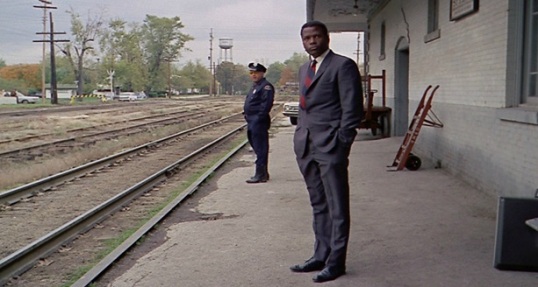
In The Heat of the Night (1967, dir by Norman Jewison, DP: Haskell Wexler)
Midnight Cowboy (1969; Dir by John Schlesinger, DP: Adam Holender)
4 (or more) Shots From 4 (or more) Films is just what it says it is, 4 (or more) shots from 4 (or more) of our favorite films. As opposed to the reviews and recaps that we usually post, 4 (or more) Shots From 4 (or more) Films lets the visuals do the talking.
117 years ago today, Billy Wilder was born in what was-then Austria-Hungary and what is today Poland. Having started his film career as a screenwriter in Germany, Wilder fled to the United States after the rise of Hitler. (Many members of Wilder’s family would subsequently die in the Holocaust.) He went on to establish himself as one of the great studio directors, a filmmaker who could seemingly master any genre and whose films were often distinguished by an irreverent wit and a welcome skepticism when it came to accepting any sort of conventional wisdom. He made the type of films that could only be made by someone who had seen humanity at its worst but who also understood what people were capable of at their best. Wilder made dramas that could make you laugh and comedies that could make you cry. He was a master filmmaker, one whose work continues to influence directors to this day.
Today, in honor of Billy Wilder’s legacy, the Shattered Lens presents….
4 Shots From 4 Billy Wilder Films
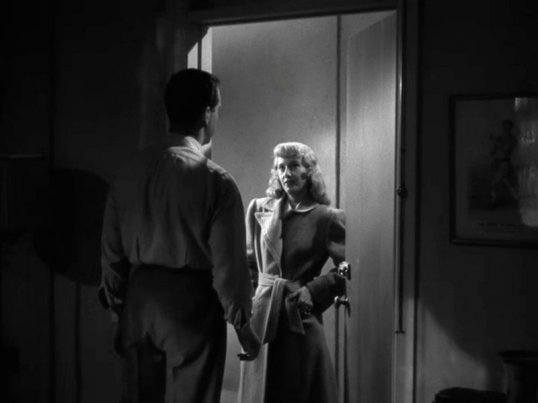
Double Indemnity (1944, dir by Billy Wilder, DP: John Seitz)
Sunset Boulevard (1950, dir by Billy Wilder, DP: John F. Seitz)
The Apartment (1960, dir by Billy Wilder, DP: Ernest Laszlo)
The Private Life of Sherlock Holmes (1970, dir by Billy Wilder, DP: Christopher Challis)
4 (or more) Shots From 4 (or more) Films is just what it says it is, 4 (or more) shots from 4 (or more) of our favorite films. As opposed to the reviews and recaps that we usually post, 4 (or more) Shots From 4 (or more) Films lets the visuals do the talking.
115 years ago today, Billy Wilder was born in what was-then Austria-Hungary and what is today Poland. Having started his film career as a screenwriter in Germany, Wilder fled to the United States after the rise of Hitler. (Many members of Wilder’s family would subsequently die in the Holocaust.) He went on to establish himself as one of the great studio directors, a filmmaker who could seemingly master any genre and whose films were often distinguished by an irreverent wit and a welcome skepticism when it came to accepting any sort of conventional wisdom. He made the type of films that could only be made by someone who had seen humanity at its worst but who also understood what people were capable of at their best. Wilder made dramas that could make you laugh and comedies that could make you cry. He was a master filmmaker, one whose work continues to influence directors to this day.
Today, in honor of Billy Wilder’s legacy, the Shattered Lens presents….
4 Shots From 4 Billy Wilder Films
Double Indemnity (1944, dir by Billy Wilder, DP: John Seitz)
Sunset Boulevard (1950, dir by Billy Wilder, DP; John F. Seitz)
The Apartment (1960, dir by Billy Wilder, DP: Ernest Laszlo)
The Private Life of Sherlock Holmes (1970, dir by Billy Wilder, DP: Christopher Challis)
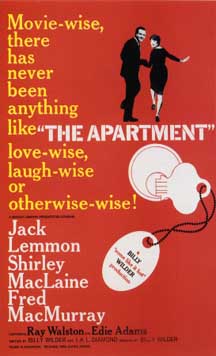
After the Nun’s Story, I continued to experience TCM’s 31 Days of Oscar by watching the 1960 best picture winner, The Apartment. The Apartment is unique among Oscar winners in that it’s one of the few comedies to win best picture. (Though, in all honesty, it would probably be more appropriate to call The Apartment a dramedy.) It was also, until the victory of The Artist, the last completely black-and-white film to win best picture.
(And, as long as we’re sharing trivia, it was also the first best picture winner to feature a character watching a previous best picture winner. At the start of the film, Jack Lemmon deals with insomnia by watching Grand Hotel.)
The Apartment tells the story of C.C. “Bud” Baxter (Jack Lemmon), an anonymous officer worker who is determined to climb the corporate ladder despite not being very good at his job. However, Baxter does have one advantage over his co-workers. He’s single and therefore, his apartment has become the place to go for corporate executives who need a place where they can safely cheat on their wives. Bud spends his day trying to coordinate who is going to be in his apartment and when. Meanwhile, he spends his nights exiled from his own home and wandering around New York. In fact, the only beneficial thing about this arrangement is that all of Bud’s supervisors have been giving him good evaluations in return for using his apartment. (Well, that and Bud’s neighbor, played by Jack Kruschen, is convinced, based on the thinness of the apartment walls, that Bud must be a great lover.)
When Bud finally does get his promotion, it’s only because the personnel director, Jeff D. Sheldrake (an amazingly sleazy Fred MacMurray), wants to use Bud’s apartment. Bud celebrates his promotion by finally working up the courage to ask out Fran (Shirley MacClaine), an elevator operator who works in the office. What Bud doesn’t realize is that Fran is also the woman who Sheldrake wants to bring to the apartment….
Fran is convinced that Sheldrake is going to leave his wife for her. What she doesn’t realize — and what Fred MacMurray’s performance makes disturbingly clear — is that Jeff Sheldrake is basically just a guy having a midlife crisis. He’s the type of middle-aged guy that every woman has had to deal with at some point, the guy who pulls up next to you in a red convertible and stares at you from behind his sunglasses, attempting his best to entice you into helping him relive the youth that he never had. When Fran eventually learns the truth about Sheldrake, it leads both to near tragedy and to Bud having to decide whether he wants to be a decent human being or if he wants to keep climbing the corporate ladder.
When one looks over a chronological list of all of the best picture winners, it’s a bit strange to see The Apartment listed in between Ben-Hurand West Side Story. As opposed to those two grandly produced and vibrantly colorful films, The Apartment is a rather low-key film, one that devotes far more time to characterization than to spectacle. And while both Ben-Hur and West Side Story are ultimately very idealistic films, The Apartment is about as cynical as a film can get. The Apartment may be a comedy but the laughs come from a place of profound sadness.
Because it’s more interested in people than in spectacle, The Apartment holds up better than many past best picture winners. We’ve all known someone like Bud. We’ve all had to deal with men like Sheldrake. And, in one way or another, we all know what it’s like to be someone like Fran. The Apartment remains a truly poignant and relevant film.





 Through the Shattered Lens