Retro Television Review: Decoy 1.14 “Bullet of Hate”


Welcome to Retro Television Reviews, a feature where we review some of our favorite and least favorite shows of the past!  On Thursdays, I will be reviewing Decoy, which aired in Syndication in 1957 and 1958.  The show can be viewed on Tubi!
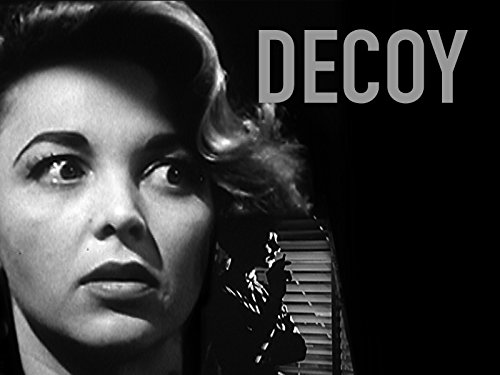
This week, Casey solves her easiest case yet!

Episode 1.14 “Bullet of Hate”

(Dir by Teddy Sills, originally aired on January 13th, 1958)

This week, Casey doesn’t go undercover.  Instead, she’s just a uniformed police officer who responds to fight between teenage Stella (Sandra Whiteside) and her adoptive aunt, Mary (Joanna Roos).  Casey takes sympathy on Stella, who isn’t a bad kid but who is rebelling against her heartless Aunt Mary and Uncle Lester (Alfred Ryder).  When Mary ends up getting shot, Stella is the number one suspect and Stella herself even thinks that she’s responsible.  But, of course, it turns out that Stella has been framed by Lester.

The main problem with this episode is that we watch as Lester frames Stella by giving her a gun.  When Stella fires the gun during an argument, Mary isn’t injured but she does faint.  Stella flees.  Lester then uses the gun to actually shoot Mary.  Since we know that Lester committed the crime, there’s not really any suspense when Casey starts to suspect that Stella’s been set up.  We already know she’s been set up and we also know that, since Lester is an idiot, Casey is going to be able to easily solve the case.  And since we know that Casey is good with a gun, we’re not that surprised when Casey ends up taking Lester out (in self-defense, of course!).  This isn’t like Columbo or the first season of Poker Face where the killer is so diabolically clever that we can’t wait to see how the hero manages to trick them into confessing.  Lester’s just a dummy.

Joanna Loos and Alfred Ryder both went overboard as the villainous aunt and uncle but Sandra Whiteside was effective as the desperate Stella.  Apparently, this was one of only two roles that Whiteside played in her career.  She gives a strong performance.

This is my final Decoy review for 2025.  Retro Television Reviews is going on break for the holidays so that I can focus on Awards Season and Christmas movies!  Decoy will return on January 8th, 2026.

Retro Television Review: Decoy 1.12 “Queen of Diamonds”


Welcome to Retro Television Reviews, a feature where we review some of our favorite and least favorite shows of the past!  On Thursdays, I will be reviewing Decoy, which aired in Syndication in 1957 and 1958.  The show can be viewed on Tubi!

Casey goes undercover at nightclub.

Episode 1.12 “Queen of Diamonds”

(Dir by Teddy Sills, originally aired on December 30th, 1957)

Casey is working undercover, pretending to be a photographer named Judy.  She’s been working at a run-down nightclub for two months, trying to find evidence that the club’s owner, Frank (James Mitchell), was responsible for a payroll theft.  Frank has an alibi but Casey is able to get her man when she convinces Frank’s second-in-command, Chi Chi (Al Lewis), to turn on him.  Chi Chi is in love with Frank’s girlfriend, Georgia (Kay Medford).

This was not a bad episode.  Casey got to wear a pretty dress and Beverly Garland got to show off her acting skills as she flirted with Frank and worked to turn Chi Chi against him.  Interestingly enough, this episode ended on something of a melancholy note.  Casey managed to send Frank to jail and Chi Chi and Georgia left for France together but the night club closed and blind pianist Alex (Richard Ward), the only truly decent person in this episode, ended up out of a job.  In the end, Casey looked almost as if she was about to cry.  It’s not easy, working undercover.

Retro Television Review: Decoy 1.10 “The Scapegoat”


Welcome to Retro Television Reviews, a feature where we review some of our favorite and least favorite shows of the past!  On Thursdays, I will be reviewing Decoy, which aired in Syndication in 1957 and 1958.  The show can be viewed on Tubi!

This week, Casey makes the mistake of being nice.

Episode 1.10 “The Scapegoat”

(Dir by Teddy Sills, originally aired on December 16th, 1957)

Call this one “Casey Screws Up …. Again.”

Casey and Detective Hank Hopkins (John Connell) are escorting embezzler Dorothy Boyer (Lenka Peterson) to jail.  As they wait at an airport, Casey cannot help but feel sorry for Dorothy.  Everyone who sees Dorothy recoils from the sight of her handcuffs.  (“She’s a crook!” one little girl yells.)  Casey agrees to take off the handcuffs as long as Dorothy doesn’t try to run away.  Of course, as soon as Casey is distracted, Dorothy runs.

Casey and Hank try to track down Dorothy.  They discover that Dorothy was embezzling the money so that she could afford a special school for her son, who is repeatedly described as being “retarded” but whose noncommunicative behavior suggests that he would probably, today, be diagnosed as having some form of autism.  Casey and Hank fear that Dorothy is going to murder her child, to spare him from being sent to a “public institution” while she’s serving time in prison.

They’re right.  Dorothy is on the verge of throwing her son off a bridge when Casey, Hank, and the cops track her down.  Casey says that she understand why Dorothy is scared.  “You think your son will be sent to a public institution and people will be cruel to him!” Casey says.  “What about me?  I work for a public institution!  Was I cruel to you?”

“Who’s going to give love to a backward child!?” Dorothy cries.

Casey then taunts, “Go ahead, throw him over!”

This causes Dorothy to realize that she loves her son too much to toss him over the bridge.  The episode ends with Casey speaking directly to the camera.  Dorothy will only have to serve six months in prison.  As for Casey and Hank, they’re put on official probation for three months for letting Dorothy escape.  “You live and you learn,” Casey says.

This episode was a real time capsule.  Yes, it was weird to hear the term “retarded” tossed around so casually, though I found the term “backward child” to be far more offensive.  But, let’s be realistic here.  This show aired 1957 and it’s a bit silly to expect a 68 year-old television program to sound like it was written in 2025.  To me, what was really upsetting was how everyone that Casey talked to seemed to feel it was perfectly understandable that the father of Dorothy’s child abandoned Dorothy because of their son.  Everyone, except for Casey and Hank, acted as if Dorothy should be ashamed of her child.  To make clear, the show did not endorse that attitude but still, the callousness of almost everyone in Dorothy’s life was hard to take.  I was glad that Casey cared.

That said, I did cringe a bit at that “I work for a public institution” line.  One nice person does not signify a change in culture.

Retro Television Review: Decoy 1.9 “Necklace of Glass”


Welcome to Retro Television Reviews, a feature where we review some of our favorite and least favorite shows of the past!  On Thursdays, I will be reviewing Decoy, which aired in Syndication in 1957 and 1958.  The show can be viewed on Tubi!

This week, Casey discovers that New York can be a lot of fun when you know the right people.

Episode 1.9 “Necklace of Glass”

(Dir by Teddy Sills, originally aired on December 9th, 1957)

Casey goes undercover as a rich socialite in order to investigate a spree of jewelry thefts.  Unfortunately, Casey isn’t very good at her job in this episode.  Not only does she suspect the wrong person, a shady gigolo named Larry Babson (Martin E. Brooks), she also comes on too strong while trying to trick Larry into confessing.  Larry figures out that she’s a cop, finds the microphone that Casey hid in the apartment, and then storms out.  Fortunately, Larry’s wife (Rita Grapel) then shows up shortly afterwards and, not having had a chance to talk to Larry, reveals that she’s the one who has been masterminding the jewelry thefts.  Casey, who had been feeling pretty bad up until that point, promptly pulls out her badge.

I actually appreciated the fact that Casey basically blew her assignment in this episode.  Characters who are flawless and who never make mistakes are boring.  In the episode, Casey says that she was distracted by how much fun it was to pretend to be rich and it makes perfect sense.  Why wouldn’t the working class Casey enjoy the chance to live the high life for once?

The important thing is, even though she initially screwed up, Casey solved the case.  This was a good episode.  Casey wasn’t flawless but, in the end, luck was on her side.

Retro Television Review: Decoy 1.8 “Escape Into Danger”


Welcome to Retro Television Reviews, a feature where we review some of our favorite and least favorite shows of the past!  On Thursdays, I will be reviewing Decoy, which aired in Syndication in 1957 and 1958.  The show can be viewed on Tubi!

This week, Casey pursues her neighbor and nearly dies.

Episode 1.8 “Escape Into Danger”

(Dir by Teddy Sills, originally aired on December 2nd, 1957)

Casey Jones (Beverly Garland) returns home from a night shift, hoping to get some rest so that she can get over a bad cold.  (I’ve had enough bad colds that I’m fairly confident that Garland herself was suffering from a cold when she filmed this episode and it was written into the script.)  She discovers that her neighbor, Mary (Madeline Sherwood), has hit her abusive and drunken husband across the back of his head.  Mary is convinced that she’s killed her husband and is terrified that she’ll go to jail.  When Casey informs her that her husband is just knocked out and that everything is going to be okay, Mary doesn’t believe her because Casey is a cop and a cop will say anything to make an arrest.  While Casey is in her apartment calling for an ambulance, Mary flees the scene.

Mary’s husband does die but he dies of acute alcohol poisoning so Mary’s off the hook.  (Apparently, this episode take place in a world where assault isn’t a crime.)  Despite her cold, Casey takes to the streets and searches for Mary.  Knowing that Mary is masseuse, Casey checks out all the massage parlors.  In a move that kind of makes me wonder if Casey is really that good at her job, she decides that she might as well get a massage as well.

The woman who gives Casey the massage is Katy Olin (Virginia Kaye), who is Mary’s sister and a bitter ex-con who hates all cops.  While Katy massages Casey, Mary hides in the changing room.  When Casey says that she’s looking for Mary, Katy has Mary sneak out of the dressing room and choke Casey into unconsciousness.  Mary steals Casey’s gun and then makes her escape.

A few thoughts:

First off, after years of being spoiled by shows like Law & Order, I have to say that I was initially surprised that Casey didn’t know that Mary had a sister or that the sister was an ex-con.  But then I remembered that this episode was filmed in 1957, back before all of that information was available at just the touch of a key.

That said, what type of police officer is going to get a massage while on duty?  Even if Casey had looked up from the massage table and seen Mary trying to escape the room, what was Casey going to do?  Chase her through the streets of New York while wearing a towel?  Also, Casey often seems to just drop her purse anywhere, despite the fact that her purse contains a loaded gun.

Third, Katy mentions to Mary that there’s no way for her to leave the room without walking right past Casey.  So, how did Mary get into the room in the first place and how come Casey didn’t notice her when she first arrived?

Fourth, once Casey wakes up, she takes Katy down to the police station.  Katy’s interrogated and refuses to answer any questions.  She asks if she’s being charged with anything and, because she’s not, she’s allowed to go.  Is she not an accessory for hiding Mary and then just standing by while Mary attempted to murder a police officer?

Katy decides that the best thing for Mary to do would be to hide out in her old apartment, the one that is next door to the police officer who Mary just tried to strangle.  (Neither Katy nor Mary appear to be that smart.)  Casey, of course, discovers that two of them hiding there.  She and the neighborhood priest (John McLiam) talk Mary into putting down the gun.  They assure her that she did not kill her husband.  Mary finally believes that Casey is telling the truth….

….which is all good and well except Mary ASSUALTED A POLICE OFFICER!  Indeed, one could argue that what Mary did to Casey counts as attempted murder.  So, really, it seems like Mary should be going to jail regardless.  Unfortunately, we never learn about what happened to Mary after she stop pointing the gun as Casey.  If I was Casey, I would prefer a neighbor who hasn’t tried to kill me.

This episode didn’t really make sense but I’m glad that Casey got over her cold by the end of it.

Retro Television Review: Decoy 1.7 “Deadly Corridor”


Welcome to Retro Television Reviews, a feature where we review some of our favorite and least favorite shows of the past!  On Thursdays, I will be reviewing Decoy, which aired in Syndication in 1957 and 1958.  The show can be viewed on Tubi!

This week, Casey goes to prison!

Episode 1.7 “Deadly Corridor”

(Dir by Teddy Sills, originally aired on November 25th, 1957)

A murder has occurred in the medium security wing of a woman’s prison.  The Warden (Agnes Young) and the District Attorney (John Newton) asks Casey to go in undercover to discover who killed a prisoner.  Casey will pretend to be a prisoner and only the Warden will know that she’s actually a cop.  Casey won’t have her gun, her badge, or her usual backup.  It’s a dangerous assignment but the medium security wing will be shut down if there’s another incident.  The District Attorney starts to explain the importance of rehabilitation.  Casey replies, “I’m a police woman, not a sociologist.”  Casey accepts the assignment because that’s her job.

Casey’s in jail!  She has a really nice cell.  It comes with a dresser, a vanity mirror, a bed, a lamp, and a desk!  She’s even allowed to wear makeup in prison.  Sign me up!  Casey comes to suspect that the murder was committed by the butch Taffy (Colleen Dewhurst) but instead, it turns out the killer was the mentally-fragile Lois (Lois Nettleton).  Lois is a kleptomaniac and killed the other prisoner after she ratted Lois out to the warden and caused Lois’s sentence to be lengthened.  Lois subsequently attacks Casey because she’s worried that Casey is also “a fink” and Lois doesn’t want to end up spending any more time in prison.  She wants to be released in three months so she can finally visit the grave of her baby.  (Awwww!)  Unfortunately, by the end of this episode, it’s looking like Lois will be lucky to escape the electric chair.

This episode has all of the usual women-in-prison cliches but they were all handed in a way so as to not upset the 1950s television viewing audience.  For instance, the episode never came out and said that Taffy was a lesbian but the way she stared at Casey and ordered her to “come and see me,” didn’t really leave much doubt.  When Taffy beats up Casey, she’s establishing her dominance and reminding the viewer that no one can walk away from a fight in prison.  When Casey snitches to the warden, it’s because she wants to get Taffy out of the way for 24 hours so that Casey can investigate the murder.  Casey can get away with that because she’s a cop and she can always just go to the Warden and ask to be released from the prison.  If Casey were an actual prisoner, being labeled a snitch (or a “fink” as they apparently put it back then) would be a fatal error.

This episode had its campy moments but Lois Nettleton and Colleen Dewhurst both gave excellent performances and the final confrontation between Casey and Lois was actually pretty suspenseful.  To my surprise, this turned out to be a good episode.

Retro Television Review: Decoy 1.6 “The Savage Payoff”


Welcome to Retro Television Reviews, a feature where we review some of our favorite and least favorite shows of the past!  On Thursdays, I will be reviewing Decoy, which aired in Syndication in 1957 and 1958.  The show can be viewed on Tubi!

This week, Casey gets involved in the shady world of college athletics.

Episode 1.6 “The Savage Payoff”

(Dir by Teddy Sills, originally aired on November 18th, 1957)

When a college basketball player is killed in a car accident, the police discover evidence that he may have been throwing games for the mob.  Lt. Franklin (Bill Zuckert) suspects that the dead player’s best friend and roommate, Dave Carter (Don Hastings), might be taking money as well.  Disguising herself as the dead player’s sister, Casey introduces herself to Dave and befriends him in an attempt to discover the truth.  It turns out that the gangsters have been paying Dave off but, at the last minute, Dave decides not to throw the game and instead leads the team to victory.

This episode bothered me a little.  When the episode begins, there is no real evidence that Dave has been taking money from the mob.  Instead, Lt. Franklin just assumes that Dave is guilty and, with only his hunch to go on, he assigns Casey to befriend Dave and try to prove his guilt.  Obviously, there are times when the police have to go undercover but it was still hard not to feel that the police should have at least had some sort of solid evidence before upending Dave’s life.  The fact that Dave was both mourning his friend and was obviously attracted to Casey just made the whole thing feel all the more icky.  Indeed, a lot of Casey’s action in this episode seem like they would be considered to be entrapment.

Probably the most interesting thing about this episode was that Dave was played by a young Don Hastings.  If you’re like me and you grew up with an aunt who loved As The World Turns, you’ll immediately recognize him as Dr. Bob Hughes.  Hastings played Dr. Hughes for a record-setting 50 years and even spoke the show’s final lines when he said, “Good night” on September 17th, 2010.  Hastings gave a convincing performance as Dave.  I was happy to see him take a stand and refuse to fix the game.  I was also happy that Casey didn’t have to take him to jail.  That would have been depressing.

Speaking of jail, there’s where Casey’s going next week!  We’ll see what happens!

Retro Television Review: The Decoy 1.5 “Dream Fix”


Welcome to Retro Television Reviews, a feature where we review some of our favorite and least favorite shows of the past!  On Thursdays, I will be reviewing Decoy, which aired in Syndication in 1957 and 1958.  The show can be viewed on Tubi!

This week, Casey goes after a drug dealer.

Episode 1.5 “Dream Fix”

(Dir by Teddy Sills, originally aired on November 11th, 1957)

This week’s episode opens with Casey walking down a city street.  She tells us that she’s working Juvenile undercover, which apparently means that she just walks around the city and waits for a teenager to do something strange.  When she sees a teenage girl collapse on the sidewalk, Casey runs over to her and looks at the powder in her hand.  Casey tastes it.

“Heroin!” Casey snaps.

(How are cops always able to dip their fingers in random powers and then taste it without anything bad happening?  What if the cocaine turned out to be strychnine?  It just seems like a poor training and an unnecessary risk.)

Joanne Kittridge (Phyllis Newman) is indeed hooked on cocaine and heroin.  However, neither her rich father (Les Damon) or her attorney (Frank Bandimer) want her to work with the police to track down her dealer.  Her attorney arranges for Joanne to be sent to a rehab.  Casey’s lieutenant (played, in this episode, by Simon Oakland) assigns Casey to undercover as a nurse.

In the end, Joanne not only gets straight but she reveals that her drug dealer is her lawyer!  When the attorney pulls a gun on Joanne, Casey pulls her gun and shouts, “Freeze, police!”

This was a good episode, one that was well-acted by the entire cast and which featured Beverly Garland at her best.  (Garland even gets to show off some karate moves when she disarms the attorney.)  That said, it’s starting to bother me how almost all of Casey’s assignments seem to involve her pretending to be someone’s friend.  I get that she’s working undercover but it’s sometimes hard not to wonder what’s going to happen to people like Joanne after they realize that the only reason Casey talked to her in the first place was because someone ordered her to.

Retro Television Review: Decoy 1.4 “To Catch A Thief”


Welcome to Retro Television Reviews, a feature where we review some of our favorite and least favorite shows of the past!  On Thursdays, I will be reviewing Decoy, which aired in Syndication in 1957 and 1958.  The show can be viewed on Tubi!

This week, Casey investigates a case of insurance fraud.

Episode 1.4 “To Catch A Thief”

(Dir by Teddy Sills, originally aired on November 4th, 1957)

A thief and his girlfriend mug a business owner named Mr. Whitaker (John McGovern).  When the police capture the thief, Mr. Whitaker claims that more money was stolen from him than was recovered.  Casey is sent undercover to discover whether or not Whitaker is lying or if a cop actually skimmed the cash that they recovered.

Pretending to be the thief’s girlfriend, Casey approaches Mr. Whitaker and tries to blackmail him.  When Mr. Whitaker appears to be innocent, his secretary (Mary James) falls under suspicion.  Mr. Whitaker, however, is eventually exposed as trying to commit insurance fraud when he has a conversation with his secretary at the police headquarters.  Unfortunately, for him, the room was bugged.

This episode bothered me.  On the one hand, I didn’t want an innocent police officer to be suspended for stealing money that he didn’t steal.  On the other hand, having Casey go undercover as a blackmailer felt almost as if it verging on entrapment.  As well, I found it hard to understand why Mr. Whitaker would be fooled into thinking Casey was the one who had robbed him earlier.  Didn’t Mr. Whitaker see the people who mugged him?

This episode just didn’t work for me.

Retro Television Review: Decoy 1.3 “The Phoner”


Welcome to Retro Television Reviews, a feature where we review some of our favorite and least favorite shows of the past!  On Thursdays, I will be reviewing Decoy, which aired in Syndication in 1957 and 1958.  The show can be viewed on Tubi!

This week, Casey help to stop an obscene phone caller.

Episode 1.3 “The Phoner”

(Dir by Teddy Sills, originally aired on October 28th, 1957)

Betty Hodges (Pat Englund) has been getting obscene phone calls.  It’s the 1950s.  That means there’s no caller ID, there’s no cell towers to ping signals off of, there’s no way to block a number, the phone rings until its answered, and every call is made and taken on a landline phone.  This is the era when most calls were still connected by an operator.  Terrified of the calls but determined not to be chased out of the city like so many other young women who have targeted by the so-called Phoner, Betty calls the police.  Casey (Beverly Garland) moves in with Betty, pretending to be her sister.  When the phone rings, it’s Casey who will answer and it’s Casey who will have to keep the guy talking for five minutes while the phone company traces the call.

We don’t ever learn the name of the man making the calls.  In the credits, he’s listed as the Phoner.  Played by Frank Sutton, the Phoner is a sweaty man who makes his calls from a phone booth and who brags about how many girlfriends he claims to have  had.  (He’s the 50s version of an incel.)  We’re told that he says disturbingly obscene things over the phone but, this being a 50s show, we don’t hear any of them.  Of course, we don’t have to hear them.  Betty’s terrified reactions are all we need to see.

Eventually, Betty is attacked leaving work.  She stumbles out of an alley, her face beaten and her clothes torn.  And again, it’s the 50s.  So all we hear is that Betty has been attacked but anyone watching would understand what had happened.  In the hospital, Betty whispers to Casey.  When Casey is asked what Betty said, Casey replies, “She wishes she was dead.”

Eventually, the Phoner calls Casey back.  They set up a date in the park.  The Phoner doesn’t show up at the park but he does show up at the apartment later.  After a struggle, he’s subdued by Casey and the other cops watching the apartment.  Even though common sense tells the viewer that nothing too bad is going to happen to the show’s lead character, it’s still a tense scene, largely because of Frank Sutton’s feral performance as the Phoner.

This is a poignant episode, even if it did obviously have to hold back due to the censorship rules of the time.  Just as frightening as Sutton was as the Phoner, Garland was equally impressive as the determined Casey.  If I did have any problem with this episode, it’s that when she’s initially confronted by the Phoner, Casey doesn’t recognize his voice.  When a man threatens you, you never forget the voice.

This was a good episode.  Hopefully, the Phoner died in prison.