Film Review: American Boy: A Profile of Steven Prince (dir by Martin Scorsese)


In Martin Scorsese’s 1976 film, Taxi Driver, there’s a scene where homicidal Travis Bickle (Robert De Niro) has a meeting with an extremely helpful gun dealer.  The dealer’s name is Easy Andy and if you want to buy it, Andy’s got it.  Andy’s the type who not only has every gun imaginable in his attaché case but he’ll also toss in a specially made holster for free.  “Ain’t that a little honey?” Andy asks as Travis aims a gun out a window and imagines what it would be like to shoot a random passerby.

It’s only a 4-minute scene but it’s one of the most memorable moments in a film that’s full of them.  Easy Andy was played by a man named Steven Prince and, for those 4 minutes, Prince easily stole the picture from De Niro.  As soon as Easy Andy shows up on screen and starts taking, you can’t look away from him.  He’s a bit like the chemist that Patrick McDermott played in The French Connection.  He’s sleazy but he’s got an undeniable charm.

Just based on his performance in Taxi Driver, you would think that Steven Prince was one of those 70s character actors who split their time between Scorsese, Altman, and the occasional big studio film.  However, Steven Prince was actually not an actor.  Instead, he was a member of Martin Scorsese’s entourage, a friend who was something of a personal assistant to the director in the 70s.

In 1978, two years after Prince stole 4 minutes of Taxi Driver away from Robert De Niro, Martin Scorsese directed a documentary about his friend, American Boy: A Profile of Steven Prince.  Essentially a 55-minute conversation between Prince, Scorsese, and actor George Memmoli, American Boy was Scorsese’s homage to Shirley Clarke’s 1967 documentary, Portrait of Jason.  Both documentaries feature a night spent with a New York-based raconteur and both feature plenty of stories about drugs, death, and celebrity.  The main difference is that you watch Portrait of Jason frightened that Jason is on the verge of having a mental breakdown whereas you spend most of American Boy expecting Steven Prince to drop dead at any second.

From the minute that Steven Prince arrives at George Memmoli’s house, he looks like he’s on the verge of collapsing.  He’s painfully thin and his face is skeletal.  His eyes are sunk deep into his head and surrounded by dark circles and his teeth are noticeably brown and rotten.   Prince was only 29 or 30 when American Boy was filmed but one look at his face and you know that he’s lived a lifetime in those three decades.  When he speaks, his voice is a nasal croak.

When Prince first shows up, he and Memmoli get into a wrestling match that seems to go on forever.  Watching the heavy-set Memmoli collapse onto the cadaverous Prince, you find yourself worrying about what’s going to be left of Prince once they’re finished.  (At first, the wrestling seems terrible self-indulgent but actually, it’s classic Scorsese.  His feature films have often dealt with men who, because of their hang-ups, still act like children.  Why should a documentary be any different?)  When the wrestling finally ends and Prince starts to talk about his life, his charisma is evident but you’re still weary.  Prince is the type of story teller who knows how to bring you into his world but, whenever you start to get too close to what’s actually going on inside of him, he pushes you away with a sudden punchline or a sarcastic quip.  It’s appropriate that Prince starts things off by telling a story about getting stoned because he has an addict’s charisma.  He has the charm of a man who has to be charming because, otherwise, he’d probably be dead.

And yet Prince is such a skilled story teller that, despite your better instincts, you do start to let your guard down.  He talks about growing up and how much he loves his family and Scorsese shows us home movies so we can compare the happy child that Steven Prince was to the recovering addict who is now talking to us.  He tells a story about tricking a man into drinking vodka, little realizing that the man was an alcoholic who was trying to stay away from booze.  He tells us about a female friend who OD’d and how he had to use a medical book, a magic marker, and a shot of adrenaline to bring her back to life.  (That story was later recreated in Tarantino’s Pulp Fiction.)  He talks about the time he spent working for Neil Young and he talks about his own struggle with heroin.

He also talk about the time that he killed a man.  Prince was working at a gas station when he caught a man stealing tires.  Prince ended up shooting the man in self-defense and, for a few brief moments, we see one of the reasons why Scorsese and Memmoli find Prince to be so intriguing.  What they’ve only done in the movies, Steven Prince has done in real life.

Much as with Portrait of Jason, you find yourself wondering how much of American Boy was spontaneous and how much of it was planned out beforehand.   Were Prince and Memmoli really wrestling or were they just following stage directions?  Is Prince really telling us the story of his life because he wants to or because Scorsese keeps asking him questions?  Throughout the film, Scorsese continually reminds us that everyone in the film — including himself — is essentially performing for the cameras.  (Early on, we see and hear Scorsese asking if the camera’s rolling.  At another point, he says that he’ll just edit an awkward moment out of the film.)  And so, we’re left to wonder: are we seeing a true profile of Steven Prince or are we seeing what Scorsese wants us to see of Steven Prince?  Is Steven Prince a real person or is he just another one of Scorsese’s troubled outsiders?

It’s not always an easy film to watch.  Charismatic or not, a little bit of Steven Prince can go a long way.  And yet, it’s still a film that, once you start watching it, you really can’t look away from it.  It’s a bit like Prince himself; imperfect but always intriguing.  And, as unwell as Prince often appears to be in American Boy, he’s still with us.  (In 2009, he even did a follow-up to American Boy, American Prince.)  Steven Prince survives.

Shattered Politics #39: Taxi Driver (dir by Martin Scorsese)


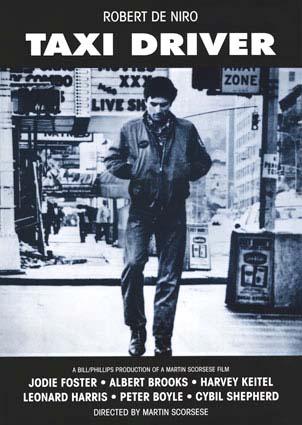
Taxi_Driver_poster

We’ve never had a President named Charles.  We’ve had several Presidents named John and a quite a few named James.  We’ve even had three named George.  But we’ve never had a Charles.  We’ve come close.  Charles Evans Hughes nearly beat evil old Woodrow Wilson in 1916.  Charles Cotesworth Pinckney was nominated two times in a row by the Federalists but lost to Thomas Jefferson and James Madison respectively.  We’ve had three Vice Presidents names Charles — Fairbanks, Dawes, and Curtis — but never a President.

And, if we ever do elect a President named Charles, he’s probably go by either Charlie or Chuck.  The United States has always liked to think of itself as being a country that has no official royal family and, as a name, Charles probably sounds far to aristocratic for most voters.

That’s why I’m sure that, once U.S. Sen. Charles Palatine won the Democratic presidential nomination back in 1976, he probably insisted that people start calling him Chuck.  Of course, Sen. Palatine probably had no idea how lucky he was to win that nomination.  If not for a few secret service agents, Sen. Palatine could very well have fallen victim to a psychotic taxi driver named Travis Bickle.

Sen. Palatine’s presidential campaign is a major subplot of Martin Scorsese’s 1976 masterpiece of paranoia, Taxi Driver.  As played by an actor named Leonard Harris, Sen. Palatine appears to be the epitome of a politician.  He may smile at the right moment but his eyes are always shifty.  Even his campaign slogan (“We Are The people!”) is vapid in an all too plausible way.  (How different is “We Are the People” from “We Are The People We’ve Been Waiting For?”)  For the most part, Palatine remains a remote figure, giving speeches and appearing in television commercials.  The only time that we get to know Palatine as a person is when he gets in a taxi being driven by Travis Bickle (Robert De Niro).

Travis recognizes him immediately and tells him that he tells everyone who gets in the cab that “they gotta vote for you.”  Palatine smirks a little as he asks Travis what he thinks the most important issue of the election is.  Travis goes on a bit about how someone needs to destroy all of the scum and filthy lowlifes who seem to populate Travis’s section of New York.  As Travis rambles, Palatine’s smile disappears and it becomes obvious that he’s realized that he is essentially being driven by a psycho.  Oh shit, Palatine is probably thinking, this guy is telling people that they gotta vote for me?  However, Palatine quickly regains his composure and assures Travis that the wisest people that he’s ever met have been taxi drivers.

Of course, what Palatine doesn’t realize is that Travis only knows about the campaign because he happens to be obsessed with a Palatine campaign worker named Betsy (Cybill Shepherd).  And Betsy even goes out with Travis a few times.  But then Travis, who spends the majority of the film showing how little skill he has when it comes to understanding and relating to other people, takes Betsy to an adult film.

With Betsy refusing to take his calls, Travis’s attention shifts to Iris (Jodie Foster), a teenage prostitute.  Obviously seeing himself as being a knight in shining armor, Travis tells Iris that she has to go back home to her parents.  As Travis talks, it becomes apparent that he’s simply repeating talking points that he’s heard on TV.  (If Taxi Driver was made today, Travis would be one of those people constantly sharing “inspirational” Facebook posts.)  Iris laughs at Travis and goes back to her pimp, Sport (Harvey Keitel).

And, of course, Travis goes even crazier than before.

38 years after it was first released, Taxi Driver remains a disturbing and powerful film.  However, what makes it effective is that, in many ways, it’s perhaps the darkest comedy ever made.  Throughout the entire film, Travis essentially tells everyone that he meets that he’s disturbed and potentially dangerous and, throughout the entire film, everyone seems to be determined to ignore all of the signs.

Critics always talks about the scene where Travis points a gun at his mirror and asks, “You talkin’ to me?”  And that’s a great scene.  It deserves to be famous, just as De Niro deserves all of the praise that he’s gotten for his iconic performance in Taxi Driver.

However, for me, there are two other scenes that are just as brilliant.  The first is where Travis attempts to get some advice from an older cabbie named Wizard (Peter Boyle).  Travis says he’s been having a lot bad thoughts.  Wizard shrugs and says that everyone has those.  What makes this scene particularly memorable are the lengths that Wizard goes to in order to avoid acknowledging that Travis is obviously disturbed.

And then, there’s the scene where Travis buys a gun from Easy Andy (Steven Prince).  Andy is such a salesman and is so nonchalant about all of his weaponry that, for a few brief minutes, Steven Prince actually manages to steal the spotlight from Robert De Niro.

Whenever one thinks about Taxi Driver, one automatically pictures Robert De Niro.  That’s why it’s all the more interesting that De Niro was not the first choice for Travis.  When Taxi Driver was in pre-production and a pre-Jaws Steven Spielberg (of all people) was thinking about directing it, Jeff Bridges as briefly attached to the role.  And while it’s always tempting to think about what a Spielberg/Bridges version of Taxi Driver would look like, I think we’re all right to be happy that the actual film was directed by Scorsese and starred De Niro.  They truly made Taxi Driver into one of the most memorable films ever made.

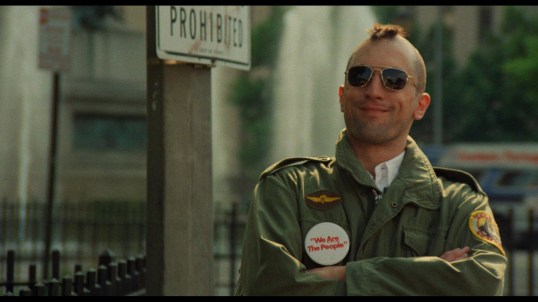
taxi-driver-mohawk

Scenes I Love: Taxi Driver


Everyone always talks about the “You talkin’ to me” scene or the final shoot out at the end but, for me personally, the scene that I always look forward to whenever I see Taxi Driver is the scene where demented cabbie Travis Bickle (Robert De Niro) buys an arsenal from the friendly and sleazy Andy (Steven Prince).  I’ve always felt that Taxi Driver was meant to be more a comedy than anything else and this scene manages to be funny and disturbing at the same time.

Apparently, Prince was a former heroin addict-turned-personal assistant to director Martin Scorsese.  His appearance here is proof of how the right actor in the right part in the right scene can totally dominate even with only 3 minutes of screen time.