If there was ever a horror film in the last ten years or so that has garnered so much love/hate responses from those who watched it then I will say that Alexandre Aja’s debut film Haute Tensiondefinitely reign on top. It’s also from this very controversial film (at least amongst genre fans) that my latest “Scenes I Love” comes from.
It’s actually fairly early in the film with a brutally, gruesome kill by the film’s serial killer that helps establish the tone Aja was going for. We have the scene of Cécile de France as Marie unable to go to sleep and hearing the house’s doorbell ring and her bet friend’s father going downstairs to answer. Unbeknownst to everyone in the house it’s a brutish figure played by Philippe Nahon who proceeds to brutalize and decapitate the father in a very ingenious and very bloody fashion.
This scene was quite shocking when it first appeared on the big-screen especially since it was from a French horror film that usually didn’t have such extreme violence. Well, this scene definitely helped establish the arrival of the so-called “New French Extremity” film movement of the 2000’s and which continues on to this day. One nice trivia about this establishing scene for this film is that the man responsible for the visual effects for the death is none other than Giannetto De Rossi who also happened to have done much of the effects work for noted Italian horror maestro Lucio Fulci.
Last November I posted news about plans to remake William Lustig’s classic grindhouse slasher flick, Maniac, and how the most unexpected choice of Elijah Wood for the role of the serial killer Frank.
The film had it’s premiere at this year’s Cannes Film Festival and the response to the film by filmmaker Frank Khalfoun seem to be positive. Horror remakes have always been hit-or-miss. If such positive reactions are to be believed then 2012’s Maniacmay just be the horror hit of the year.
The film hasn’t been picked up by a North American distributor so any sort of release date for the US is still up in the air. Until then enjoy the first trailer of the film and a good red band trailer to boot.
Last summer, I decided to watch and review all 50 of the films to be found in Mill Creek’s Chilling Classics box set. Mill Creek, of course, is a company that’s best known for releasing box sets that seem to primarily feature low-budget films that, for whatever reason, have now found themselves in the public domain. If you’re a fan of old school B-movies in general, then you probably know just how fun it can be to read the back of a Mill Creek boxset and discover what obscure films are waiting inside. The thing that I especially love about Mill Creek is the fact that — in the best grindhouse tradition — they describe every film that they distribute (whether it’s George Romero’s Night of the Living Dead or something like Las Vegas Bloodbath) as being a “classic.”
So, anyway, I started to watch and review the films in the Chilling Classics box set but, as 2011 drew to a close, things got rather hectic and busy here at the TSL Bunker. In between covering the Oscar season and keeping the world supplied with weekly trailer posts, I had to set aside my plans to review the entire boxset for another day.
Well, I’m happy to say that day is here! Last night, I dug out the old Chilling Classics box set and I watched a South African slasher film from 1981, The Demon.
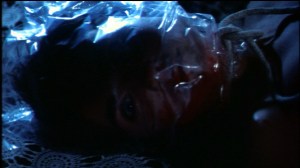
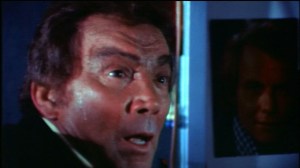
The Demon actually tells two separate but connected stories. In the first story, a teenage girl is kidnapped from her bedroom by a masked killer. Her distraught family calls in a tormented psychic who quickly proves himself to so superfluous and useless that you’d forget all about him except he’s played by the late Cameron Mitchell.
If you’re a fan of old school grindhouse and exploitation films then you’ve undoubtedly seen a handful of films featuring Mr. Mitchell. A former “legitimate” actor who, early on in his career, appeared in things like Death of a Salesman, Mitchell eventually became better known for appearing in low-budget exploitation films. Mitchell could always be counted on to shamelessly overemote and, regardless of the film he was appearing in, he was always a lot of fun to watch. If nothing else, Mitchell always seemed to be rather amused by the films he found himself in. It’s a shame that Cameron Mitchell died before Quentin Tarantino could engineer a comeback for him.
In The Demon, Cameron Mitchell spends most of his limited screen time standing on a rocky cliff while staring down at the ocean below and having psychic visions that don’t really seem to have much to do with anything else happening in the film. Actually, visions is the wrong word. As Mitchell says, “Sometimes…I get these feelings. Vibes, as the kids would say.”
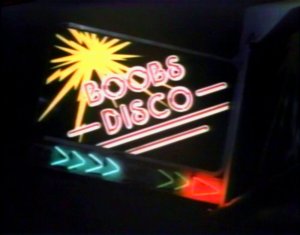
And the kids are in a lot of trouble because our nameless killer has moved on to the city where he spends his time hanging around outside of a place called Boobs Disco and stalking two teachers named Mary (Jennifer Holmes) and Jo (Zoli Markey). This is the film’s second storyline and it mostly consists of Mary spotting the killer out of the corner of her eye and Jo pursuing a relationship with the most boring man on the planet.
Like quite a few films that seem to pop up in various Mill Creek box sets, The Demon is technically a pretty bad film but, once you accept that fact, it’s also an occasionally entertaining mess that delivers a handful of effectively creepy moment.
The scenes featuring Cameron Mitchell are entertaining for exactly the reason that you think they are. These scenes are such obvious filler and were so obviously added as an excuse to get a “name” actor to join the cast that it’s impossible not to admire the nerve of the filmmakers. They weren’t going to let a silly thing like narrative cohesion get in the way of producing a 90 minute film. Playing the world’s worst psychic, Cameron Mitchell delivers his lines with such a truly unfocused intensity that I actually spent the first half of the movie convinced that he was the murderer. The final fate of Mitchell’s character is truly shocking (if just because it kind of comes out of nowhere) and Mitchell plays his final scene as if he’s starring in a dinner theater production of some lost Shakespearean play.
If the scenes featuring Mitchell are mostly entertaining for being so bad, the scenes in which the nameless killer stalks Mary and Jo are actually pretty well done and the final confrontation between the final girl and the killer is handled surprisingly well (though I couldn’t help but roll my eyes at the fact that the film contrives to have the final girl fight for her life while topless). The killer’s lack of personality makes him all the more intimidating and both Jennifer Holmes and Zoli Markey are likable and believable in the roles of Mary and Jo. If nothing else, The Demon proves that even a really poorly produced horror film can be partially redeemed (if not saved) by a likable cast of potential victims.
Finally, and perhaps most importantly, The Demon — like many forgotten exploitation flicks — serves as a valuable time capsule of the society that produced it. To offer up just one example:
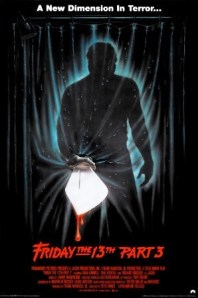
Today, we continue to consider the Friday the 13th film franchise with Friday the 13th Part 3, a film that many (like me) consider to be one of the worst slasher films ever made. Certainly, it’s a contender for the title of the worst Friday the 13th film.
Taking place a day after the end of Part 2 (and with John Furey still nowhere to be seen), Friday the 13th Part 3 tells the story of Chris Higgins (Dana Kimmell), her annoying friends, and their weekend at Crystal Lake. Her friends include pregnant Debbie (Tracie Savage) and her boyfriend Andy (Jeffrey Rogers), who is cute but for some reason is always walking on his hands. There’s also the fat and rather depressing Shelly (played by Larry Zerner) and Vera Sanchez (Catherine Parks), who comes from the wrong side of the tracks and has been recruited to serve as Shelly’s date. And then finally, there are two hippies (David Katims and Rachel Howard) who appear to be in their late 30s and who appear to just pop up mysteriously in the back of Andy’s van at one point. Seriously, I’ve seen this film a few dozen times and I’ve never figured out just why the hippies are there.
Anyway, once at Crystal Lake, Chris goes off with her ex-boyfriend Rick (Paul Kratka) while her friends spend their time having sex, smoking weed, and dealing with three angry bikers who apparently belong to the Red Herring Motorcycle Gang. Chris tells Rick about how, two years previously, she was attacked by a disfigured maniac who just happens to hang out around Crystal Lake…
Anyway, pretty much what you would expect to happen happens. Soon Jason Voorhees (played in this one by Richard Brooker, who is very physical and intimidating in the role) is killing everyone. Along the way, he puts on his hockey mask for the first time and the legend, as they say, is born.
Friday the 13th Part 3 was originally filmed in 3-D and was apparently initially released under the title Friday The 13th 3-D. This makes it a somewhat weird experience to watch the film on video because you spend the whole time spotting scenes that were obviously included just to exploit the 3-D. Sometimes, the scenes shot for the 3-D are still effective even in 2-D. The scenes where an arrow flies straight at the camera and poor old Rick’s eye literally pops out of his head remain surprisingly effective. However, for the most part, the film is made up of scenes where Andy plays with a yo-yo or some weird kid points a softball bat the camera. Seen in 2-D, the majority of these scenes feel weird but yet they still have an oddly ludicrous appeal to them. If nothing else, spotting these scenes make for a fun drinking game.
So, why is Friday the 13th Part 3 widely considered to be the worst of the Friday the 13th films? There are several reasons but a lot of it comes down to the fact that the film is badly acted even by the standards of Friday the 13th. Whereas previous (and future) installments featured casts that, at the very least, seemed to be trying to at least keep things interesting, the cast of this one seems to be incredibly bored with the whole thing. (In their defence, I’m sure the filming was more about getting the 3-D right than worrying about crafting an interesting ensemble dynamic.) As portrayed by Dana Kimmell, Chris Higgins is probably one of the least sympathetic final girls in the history of the slasher genre. Essentially, she drags all of her friends off to a place that she knows is inhabited by a maniac (though she apparently doesn’t bother to say anything about it until they’re already there) and then — surprise, surprise — all of her friends get killed! Good job, Chris. Way to go.
Oddly enough, everything I’ve read about Friday the 13th Part 3 seems to suggest that Dana Kimmel actually played a surprisingly large role in the production of this film. Kimmel was reportedly pretty religious and somehow talked the filmmakers into removing several scenes of excessive violence and gratuitous sex, which kind of seems to defeat the whole purpose of making a film like Friday the 13th in the first place. Strangely, even after the film was watered down, it’s still probably the most mean-spirited of the entire franchise. This after all is the film where Jason kills a pregnant girl, an outspoken chicana who has bravely defied her mother just so she can take part in the Chris Higgins Weekend of Death, a poor fat kid who is desperate to be loved, and not one but two comic relief hippies.
Director Steve Miner, who did such a good job keeping Part 2 creepy and exciting, seems to have been bored when he directed this film and the whole thing has a harsh, YouTube feel to it. Some of that may be due to the fact that the film was originally done in 3D but it’s hard to deny that Friday the 13th Part 3 is exactly everything that its many critics claim it to be. Luckily, in the next chapter of the Friday the 13th saga, a new director would breathe new life into the franchise even as he attempted to kill it for good.
Coming tomorrow…my review of Friday the 13th: The Final Chapter.
There’s several very good films that I need to review over the next few days but, at the moment, I really need to write about Basement Jack, a low-budget 2009 slasher film that I watched on Chiller. Why do I need to write about Basement Jack? Well, I’m already hesitant to go to sleep because I know I’m going to have nightmares about this film. So, consider this to be my attempt at a quickie exorcism. Indulge me because I need to get this film out of my system.
Why Was I Watching This:
I love horror movies and, even though they always seem to end up giving me nightmares, these old school slasher films are like catnip to me. I can’t resist watching them, if just to see if they can keep the inherently predictable conventions of genre interesting.
What’s The Movie About:
Basement Jack (Eric Peter Kaiser) is a serial killer because when you’ve got a name like Basement Jack, it’s not like you’re going to become an accountant. Anyway, Jack’s thing is that he goes from town-to-town, selects a family to kill, and then secretly moves into their basement until there’s a thunder-storm. Once it starts raining, Jack proceeds to brutally kill the family.
Karen (Michelle Marrow) is only person to have ever survived being attacked by Jack. Now, Jack is obsessed with Karen and follows her from town to town. So, Karen decides to turn the tables and she starts following Jack. Except, of course, Jack was already following her so it would seem like for her to follow him, all she would really have to do would be turn around. But anyway, I guess the important thing is that Karen-and-Jack have one of those hunter/hunted connections.
Jack and Karen both end up in a new small town where Jack sets off on another murder spree while Karen hunts for him. She does this by teaming up with a seriously incompetent cop named Chris (Sam Skoryna). Unfortunately, all of Chris’s fellow officers are 1) convinced that Karen is the murderer and 2) kinda stupid. Will Karen be able to convince the cops that Jack is real? Will Jack continually manage to stand back up after taking more damage than anyone should, realistically, be able to take? And most importantly, will Lisa be able to sleep tonight?
What Worked?
Oh my God, this film should not have disturbed me as much as it did. Seriously, I’ve seen thousands of horror movies that all had better production values, better gore effects, and better acting. And yet, Basement Jack really made me paranoid. I think that’s because director Shelton does manage to create a legitimate feeling of dread that saturates every ludicrous frame of this movie. There is remarkably little humor in this film and, as opposed to a lot of slasher films, all of the victims here just come across as normal, likable people (as opposed to being slasher movie stereotypes).
Kaiser is a genuinely scary killer and Morrow makes for a sympathetic protagonist. She brings a lot of conviction to her role. Exploitation vet Lynn Lowry (remember her from the original Crazies and I Drink Your Blood?) plays Basement Jack’s domineering mother and wow, she is scary.
Now, I’m going to admit there’s one image in this film that I know is going to give me nightmares tonight. It’s of a policewoman who, after being gutted by Jack, is seen lying on the floor, trying to stuff her intestines back into her body and oh my God, I wish I hadn’t seen that because it really got to me. I’ve read several other reviews that have all criticized the CGI gore effects as looking fake. Maybe they do, I’m not really an expert on anatomy. All I know is that image of those intestines sprouting out across a twitching body; that image is trapped in my head. It’s something that I truly wish I hadn’t seen but I still have to list it as something that worked because film horror is supposed to leave the viewer uncomfortable.
What Didn’t Work:
Oh, trust me, a lot didn’t work. Like most slasher films, this one was riddled with a combination of plot holes and characters just acting as stupid as can be.
As our male lead, Sam Skoryna displayed all the charisma of a spilled intestine and, to be honest, most of the other actors gave performances that were fairly atrocious. For some reason, one of the film’s detectives is played by musician Billy Morrison and his English accent is just so jarringly out-of-place in the film’s middle American setting. (What makes the situation especially odd is that no one in the film ever comments on his accent. Trust me — I live in middle America. Hell, I’ll be really pretentious — I mean like Sasha Stone pretentious — and say that I am Middle America. No, actually, forget I said that. That sounds really stupid. Anyway, my point is that if you’re the only Englishman in town, people are going to remind you of that every chance they get.)
An attempt was made to give Basement Jack some backstory and to explain why he does what he does. And by that, I mean that this is one of those movies where the action comes to a sudden halt every few minutes juts so we can be told that a man,who hides in people’s basements and only kills when it’s raining, is mentally ill. Gee, filmmakers, thanks for clearing that up.
And finally (SPOILER!), I am so sick of seeing slasher movies that end with a close-up of the killer’s signature killing tool just so we can suddenly see the killer’s hand come out of nowhere and grab the weapon. I mean, is anyone ever surprised by this anymore? I guess, at one time, this seemed like a twist ending but today, it just comes across as being lazy. (END OF SPOILER!)
“Oh my God! Just like me!” Moments:
Just like our heroine Karen, I usually try to flirt my way out of traffic tickets as well.
Director Michele Soavi is probably best known for directing the last great Italian horror film, Dellamorte Dellamore. However, his word in that film has been so praised that, to a certain extent, Soavi’s earlier horror films have been overshadowed. This is a shame because Soavi was (and is) a great director and — before he temporarily retired from films in the mid-1990s — he directed four of the greatest Italian horror films ever made. The first of these films (and Soavi’s directorial debut) was the 1987 slasher film Stagefright.
As written by Luigi Montefiore (who, as an actor, was better known as George Eastman), Stagefright’s basic story function almost as a parody of a stereotypical 80s slasher film. On a dark and stormy night, an eg0-crazed, cocaine-addicted theatrical director (played by David Brandon) is running a rehearsal for his latest show, a campy musical about a fictional serial killer. However, even as his cast performs fictional mayhem on stage, a real killer escapes from a nearby mental hospital and makes his way to the theater. After the real killer murders the production’s wardrobe mistress, the director decides it would be a brilliant idea to rewrite his show to make it about the real killer. Not realizing that the real killer has snuck into the building, the director secretly locks his cast inside the theater and forces them to rehearse his new show. As you can probably guess, mayhem ensues and blood (a lot of blood) is spilled.
That the film worked (and continues to work over 20 years later) is a tribute to the talent of Michele Soavi. Obviously understanding that he was working with a genre piece, Soavi embraced the expectations of the slasher film and then pushed those expectations as far as he could. The end result is a film that works as both an old school slasher film and as a commentary, of sorts, on the genre as a whole. Soavi’s camera prowls every corner of the film’s theater, creating an atmosphere of truly claustrophobic dread. To me, the most effective thing about the film is that, for once, our victims actually do the smart thing. They stick together and try to fight off the killer as a group. And they end up failing miserably in a scene of horrific choas that shows Soavi at his best.
Soavi started his career as an actor and appeared in a countless number of Italian horror films in the late 70s and early 80s. (For whatever reason, Soavi always seemed to be getting killed in some awful way…) Perhaps that’s why, of all the great Italian horror directors, Soavi always seemed to have the best instincts when it came to casting. For a slasher film, Stagefright is well-acted by a cast made up of horror regulars. Barbara Cupisti is a properly likable protagonist in the role of “final girl” while the great Giovanni Lombardo Radice does good work in the small role of Brett, a flamboyantly gay actor. However, the film is dominated by David Brandon who snorts cocaine and barks out orders as if the fate of the world depended upon it.
(Soavi, himself, appears in a small role as an ineffectual policeman who, while people are dying all around, is more concerned with whether or not anyone else agrees that he looks like James Dean. And, it should be noted, there was a resemblance.)
As opposed to a lot of other directors involved with the Italian horror genre, Soavi had (and, I hope, still has) a genuine love of film and that love is obvious in his stylish direction here. There’s something truly exhilarating about seeing a movie made by someone who is truly in love with the possibilities of film and, because of that love, has no fear of pushing genre “rules” to their extreme.
The penultimate choice for this week’s horror-themed “Song of the Day” feature brings one of the best theme songs ever composed and put on film. I am talking about the Main Title theme for John Carpenter’s classic horror film (also one of the best grindhouse films ever made) and one which launched a whole new horror subgenre with Halloween. This theme would become synonymous with the “slasher film” that when the many copies and imitators of the film came out in droves a year later they would try to replicate this keyboard synthesizer-based theme and fail miserably.
It’s actually a pretty simple theme. Carpenter composed the theme as a piano melody played in a 5/4 meter that even the most novice piano player could play with ease. This theme could be heard throughout the film whenever Michael Myers appears and/or in the vicinity. Some have even started calling it the Michael Myers theme and they wouldn’t be far off. It’s become the film’s leitmotif that Carpenter ends up relying on it to set the mood and tension in the film. Other kids of songs could be heard throughout the film but outside of the Blue Oyster Cult’s “Don’t Fear the Reaper” the rest of the score is forgettable until this theme kicks in.
This theme will be the final of the instrumental themes for the week. With one more day left in this special week-long horror-themed week for “Song of the Day” the last one will definitely usher in another awesome Halloween and help kick off the premiere of what will probably be the best thing to ever grace the tv screen past, present and future.
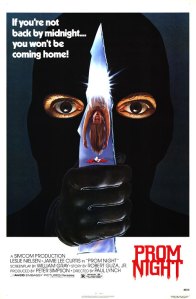
As I mentioned in another post, my sister Erin and I spent Tuesday night watching the Killer Party Marathon on Chiller. One of the movies we saw was the original 1980 Prom Night, starring Jamie Lee Curtis and directed by Paul Lynch. Prom Night, of course, was remade two years ago with cross-eyed dumbfug Brittany Snow as the star. If, like me before Tuesday night, you’re only familiar with the tepid and bland remake than the original Prom Night is a surprise indeed.
The original Prom Night is an old school slasher film, one of the many that came out in the two years immediately after Halloween. It even stars the star of Halloween, Jamie Lee Curtis. Prom Night also stars a lot of Canadians because it was one of the many low-budget B-movies that was made in Canada in the early 80s. Apparently, Canada was offering tax breaks to film companies willing to shoot up north. Several web sites have said that the setting is obviously Canadian but I couldn’t really tell. Of course, I’m from Texas. Anything above Arkansas looks like Canada to me.
Plotwise, the film is pretty much your traditional old school slasher film. There’s a terrible tragedy in the past, an innocent man is blamed for it, and ten years later, teenagers end up getting killed at some communal event. In this case, the tragedy is the death of a young girl who is killed during a truly demonic game of tag. The children responsible for her death lie about what happened and a disfigured drifter is convicted and imprisoned for her murder. As for the communal event, in this case, it’s prom night. The killer stalks the prom, which is what I suggested my classmates call our prom way back when. They disagreed and that’s their loss. The Killer Stalks The Prom would have been a story to remember.
Anyway, here’s a few random thoughts about the original Prom:
1) As with all old school slasher films, it’s interesting to see just how much of the early products of this all-American genre borrowed from the Italian giallo genre. Everything from the elaborate, past tragedy to the black gloves worn by the killer to the attempts to keep audiences guessing who the killer actually is to even the supporting character of the burned out cop simply screams giallo. The main thing that the Americans brought to the giallo format was the idea of having the murders revolve around a previously innocent gathering or holiday.
2) Especially when compared to recent “slasher” films, Prom Night is a relentlessly grim film. Prom Night’s killer doesn’t waste any time with comic relief or one-liners. He’s too busy savagely killing people. And our victims aren’t the usual collection of bimbos and soulless jocks. No, this is the type of movie where even the token virgin ends up getting her throat ripped out with a gigantic shard of glass. There’s not a lot of deaths in Prom Night, just six. But they all hurt.
3) I usually just think of Jamie Lee Curtis as the crazy woman selling Activia on Lifetime but this movie shows that she’s actually a pretty good actress. Even working with a script that isn’t exactly full of brilliant dialogue or multi-faceted characters, Curtis is a sympathetic, likable, and most of all, believable heroine (which is all the more remarkable when you consider that she, like everyone else in this film, appears to be far-too old to still be worrying about the prom). She even manages to make the film’s ending rather touching and even poignant. And how many slasher films can you say that about?
4) Prom Night is as much about tacky — yet insanely catchy — disco music as it is about spilling blood. Seriously, if I owned the soundtrack to this film, I would listen to it 24/7 for two years straight. I’d force all of my friends to listen to it too and eventually we’d all go insane and just spend the rest of our lives wandering around going, “Prom night! Everything is alright!”
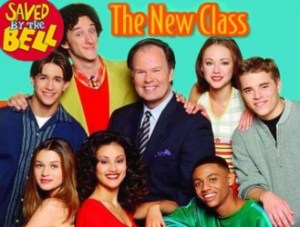
5) One last thing — Prom Night showcases what has to be the most believable, cheap, and tasteless prom ever put on film. The theme is Disco Madness and the students are all very chic in that way that even they know will be painfully dated in another two years. Indeed, this is one of the rare films that understands that the perfect prom is nothing less than an unintentional camp spectacular. For someone like me who, as the result of seeing too many episodes of Saved By The Bell: The New Class, grew up with an unrealistic expectation of what the senior prom would be, the original Prom Night remains a refreshing breath of fresh air even 30 years after it was made.
And always remember: “Prom Night! Everything is all right…”
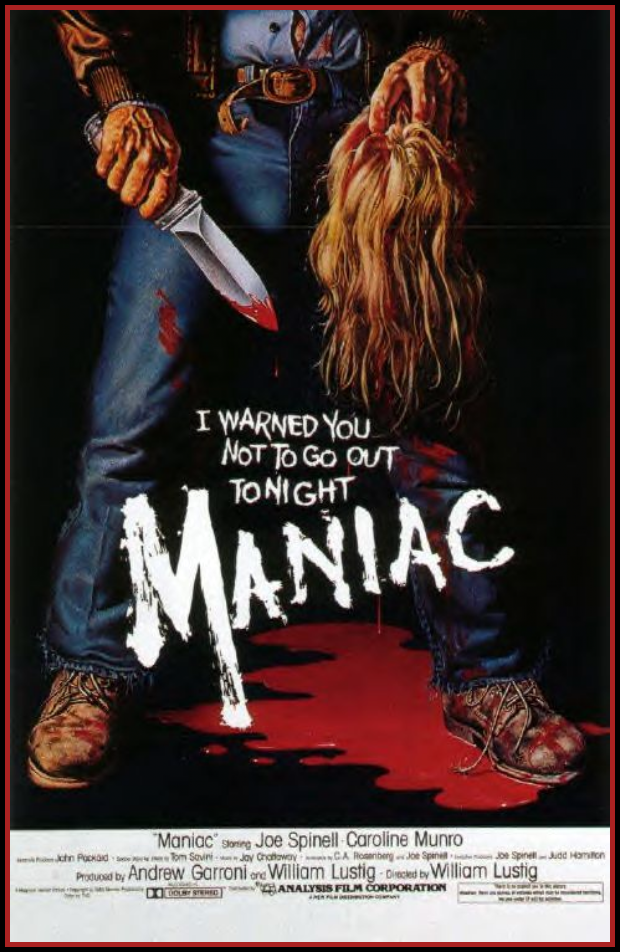
The newest flick to make “The Daily Grindhouse” is the controversial slasher/splatter offering from one of the 1980’s masters of the American grindhouse cinema. William Lustig’s Maniac definitely fits the criteria of what makes a grindhouse flick.
Lustig’s flick helped start the so-called “splatter film” subgenre in horror. While more mainstream (and I used that term very loosely) horror like Friday the 13th and Black Christmas brought the “slasher film” genre to the public eye it was the release of Maniac which gave “splatter” the notoriety it craved. It was a flick which was released by it’s distributor as unrated since they refused to let the MPAA screen it for certification knowing the it would automatically get the dreaded “X-Rating”. This rating would kill off any attempt for it to get shown in cinema theaters (even some owners of grindhouse theaters would deny to screen it). But it was a colleague of special effects and make-up artists (also an actor in Maniac) who gave Lustig and it’s distributor the backdoor way to get the flick seen.
George A. Romero’s classic epic zombie film Dawn of the Dead was released unrated and it still made quite the box-office haul that it gave future filmmakers a way out of the MPAA’s X-Rating hell. Maniac would get the same treatment and, while it didn’t get quite the box-office success as Romero’s zombie opus, it did make enough coin to be become one of Lustig’s moderate successes.
The flick was controversial not just for the decision to release it unrated but also for the label of misogyny it received from film critics who did see it. It didn’t help Lustig’s cause that the film was practically about a pyschotic and schizophrenic man who murders and scalped beautiful women to help decorate the mannequins he kept in his home. This flick was the grindhouse version of Hitchcock’s Psycho (to me a film that would be grindhouse if not for Hitchcock being the filmmaker thus given classic status by the elite cineaste crowd) and where Hitchcock kept the violence as something to be imagined Lustig went for the jugular and showed everything.
The most controversial scene would forever be the slow-motion sequence of Joe Spinelli’s killer, Frank Zito, taking a shotgun and shooting Tom Savini’s character point-blank in the head. The scene was so horrific and realistic in its execution that people left the theater right after the scene ended thinking even worse things were to be shown for the next hour (acclaimed film critic Gene Siskel left right after that scene). Tom Savini’s experience as a combat photographer during the Vietnam War gave him the necessary know-how to create the “Disco Boy Scene” so realisticly and which made him one of the early “fathers of the splatter genre”.
Maniac would propel Lustig to cult-status in the horror genre not because of the quality of his work, but for how he pulled no punches in showing the violence in his films even if got him labeled misogynistic and exploitative in mainstream cinema. His flicks were average for the most part, but they were definitely grindhouse in that they spoke to the most base denominator and that’s sex and violence sells and he didn’t sugarcoat it.
1) Scream and Scream Again — This is actually a pretty good British horror film from 1970. It even has a political subtext for those of you who need your horror to mean something. I love the whole “swinging” vibe of the trailer.
2) The Spook Who Sat By The Door — This 1973 film apparently used to be something of a legend because it was extremely difficult to see. It was sold, obviously, as a blaxploitation film but quite a few people apparently saw it as being a blueprint for an actual revolution. I’ve never seen this movie though, believe it or not, I did find a copy of the novel it was based on at Half-Priced books shortly after I first saw this trailer. I bought the book but I haven’t read it yet.
3) The Black Gestapo — This is another one of those old school blaxploitation trailers that, to modern eyes, just seems so wrong. I’ve actually seen this film. It’s surprisingly dull, to be honest.
4) Sunset Cove — This one of the many trailers that I first came across on one of Synapse’s 42nd Street Forever compilations. I’ve never seen the actual film and probably never will as apparently it’s like the uncut version of Greed — lost to the ages. That’s okay because the film really does look really, really bad. However, the trailer fascinates me because it has got such an oddly somber tone to it. Just from the narration and one or two of the clips shown, you get the feeling that this movie ends with the National Guard gunning down a lot of teenagers while the tide comes in. However, I think that might just be my own overactive imagination. The film was apparently directed by Al Adamson who, in the mid-90s, was apparently murdered and buried in wet cement.
5) Autopsy — This 1975 Italian classic is one of my favorite examples of the giallo genre. I can’t recommend it enough. This is one of the most intense and disturbing films ever made. The trailer’s pretty good too.
6) Visiting Hours — I don’t know much about this movie, other than it appears to be a slasher film from the early 80s. I’m posting it here for one reason and one reason only — the skull.

 Through the Shattered Lens