Welcome to Retro Television Reviews, a feature where we review some of our favorite and least favorite shows of the past! On Saturdays, I will be reviewing The American Short Story, which ran semi-regularly on PBS in 1974 to 1981. The entire show can be purchased on Prime and found on YouTube and Tubi.
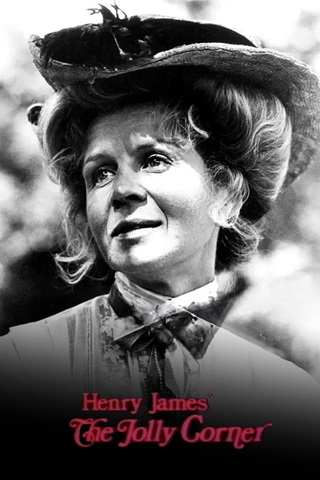
This week, we have an adaptation of a Henry James short story.
Episode #3 “The Jolly Corner”
(Dir by Arthur Barron, originally aired in 1975)
In 1906, Spencer Brydon (Fritz Weaver) returns to America from Europe, where he’s spent the majority of his adult life. Brydon has specifically returned to oversee some properties that he has inherited, including his childhood home and an adjacent building that’s going to be turned into an apartment complex. The middle-aged Brydon reconnects with his old friend, Alice Shaverton (Salome Jens), and finds himself wondering what type of man he would have come if he had stayed and worked in America as opposed to living a life of leisure in Europe.
Soon, Spencer comes to feel that his alternate “American” self is actually haunting his childhood home, his so-called “Jolly Corner.” His American self haunts him like a ghost, a menacing shadow that continually forces him to ask “what if?” He becomes obsessed with both his former home and his shadowy alter ego. But is this American version of Spencer Brydon real? And if it is real, what does it want from the Spencer Brydon who went to Europe?
This was a really well-done adaptation of a Henry James short story, one that was full of gothic atmosphere and which featured a compelling lead performance from Fritz Weaver. As directed by Arthur Barron, this episode did a good job of portraying the story’s horror elements while also reminding us that James’s story, for all of its talk of ghosts and alternate realities, is ultimately a portrait of a really bad midlife crisis. Spencer did what a lot of rich Americans do. He went to Europe to escape the responsibilities of his home country. And now, in middle-age, he’s asking himself, “Is this all there is?”
If nothing else, watching this episode might inspire the viewer to read more Henry James. That’s a good thing.
 Through the Shattered Lens