I don’t know how long, or how I did it, but for a long time I thought this song, and Only The Lonely by Roy Orbison were the same song. If that isn’t dumb enough for you, my parents also used to watch the movie Only The Lonely (1991) when I was a kid, which prominently featured the Orbison song. Also, my mom is a big Orbison fan, so I grew up listening to his music. I guess that means it shouldn’t come as any surprise that it took till high school before I realized that when people were saying “ultimatum”, they weren’t saying “old tomato”.
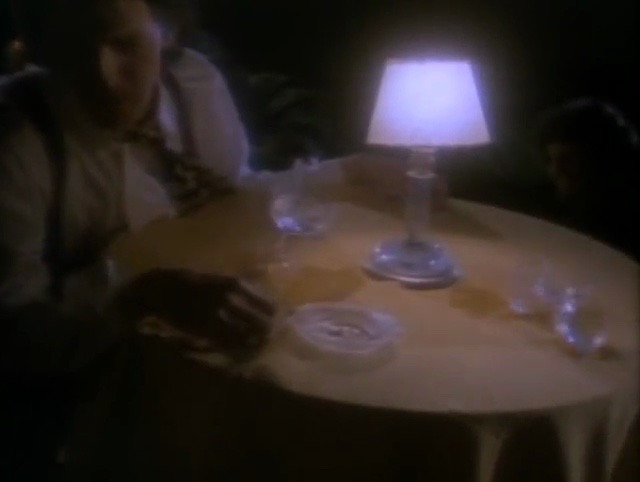
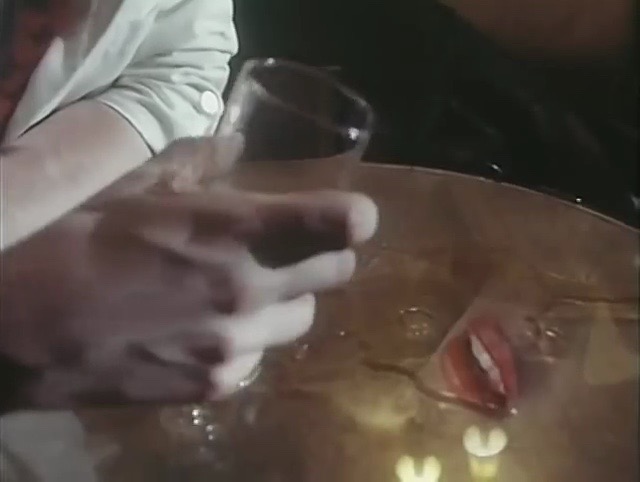
Still, I am surprised it took me this many Mulcahy videos before I started noticing things he likes using. We get several of them in Only The Lonely. First, the use of tables.
Hungry Like The Wolf by Duran Duran (1982)
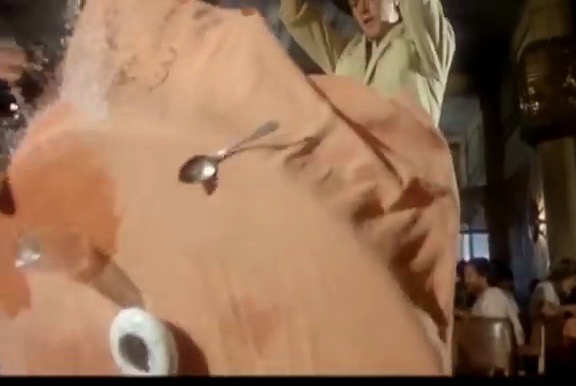
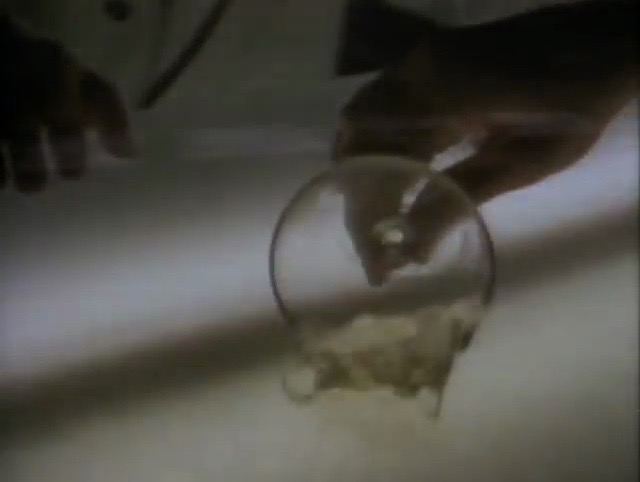
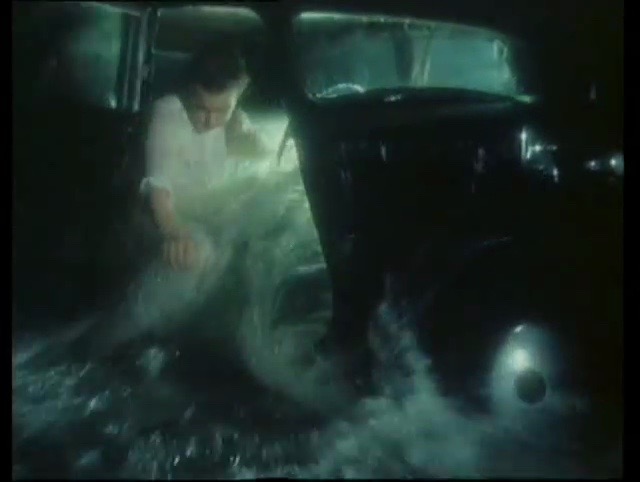
Second, liquids used as metaphors.
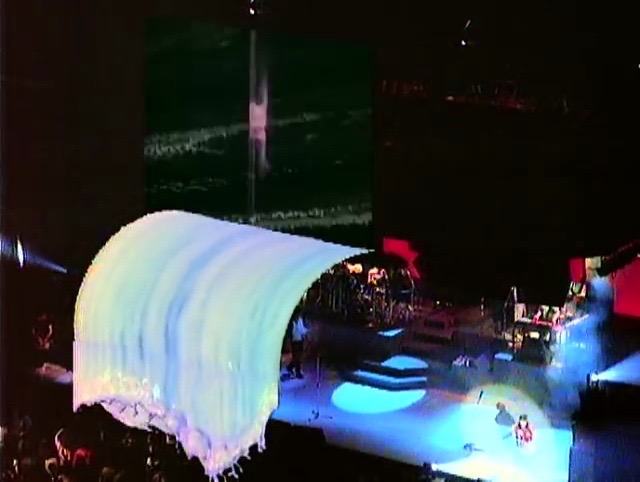
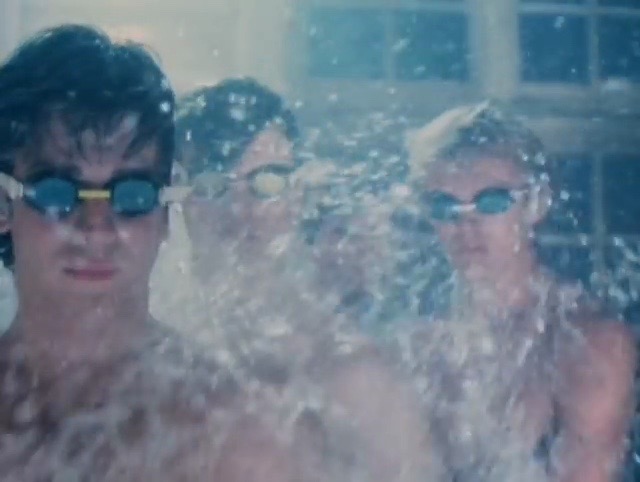
The Reflex by Duran Duran (1984)
The Reflex by Duran Duran (1984)
Total Eclipse Of The Heart by Bonnie Tyler (1983)
She Loved Like Diamond by Spandau Ballet (1982)
The Thin Wall by Ultravox (1981)
He really seems to like liquids and tables. Finally, we get the most obvious–isolation. In Only The Lonely, it’s the person wandering around a place that may or may not be filled with people, but the person is alone regardless.
Total Eclipse Of The Heart by Bonnie Tyler (1983)
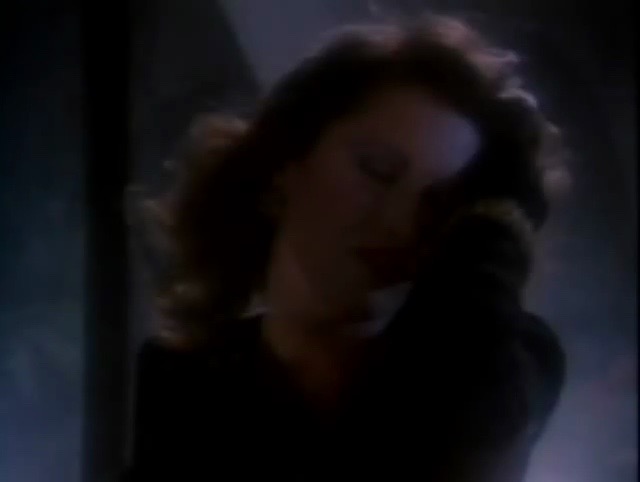
We also get a repeat of the ending of Bette Davis Eyes by Kim Carnes.
Bette Davis Eyes by Kim Carnes (1981)
Lead-singer Martha Davis won a Best Performance in a Music Video for this at the American Music Awards. The song also did well, but it looks like their biggest hit was Suddenly Last Summer, which also has its own music video. The band is still around today under the name of Martha Davis and The Motels.
The video was shot by Andrew Dintenfass, edited by Doug Dowdle, and produced by Jackie Adams. In other words, the usual crew you would expect on a Mulcahy video.
There is a little bit of a complex story leading up to why I chose to do this music video, so let me try and walk you through it. I wanted to do Oh Sherrie by Steve Perry. I went to my trusty source of background on the first ten years of MTV–I Want My MTV by Craig Marks and Rob Tannenbaum. I figured there might be some background as to why Oh Sherrie is such a great early example of the early anti-video. I certainly found that information in the form of “discussion” about the music video for Separate Ways (Worlds Apart). In particular, Adam Rubin–after going on a rant involving calling for the execution of the director of the video and the band’s manager–said, “But this is my point, there really wasn’t a music-video aesthetic yet.” Really? I read that, and I wanted to started laughing. That’s right up there with people saying The Jazz Singer (1927) was the first sound film. Maybe if he had said there wasn’t an established way to make videos for any artist, rather than the select few who were onboard with making them prior to 1983 like ABBA; Bee Gees; Earth, Wind & Fire; Funkadelic; Van Halen; Rainbow; Judas Priest; and many more, then I could buy it. However, let’s have some fun at his expense by doing as many music videos prior to 1983 that I can find to continue to break up the ABBA retrospective so that it is not everyday.
Up to this video, we have already covered 75 pre-1983 music videos. These are videos such as the many beautifully constructed ABBA music videos of all types (which you’ll find a lot of Separate Ways comprised of), the stage performances of Meat Loaf and Van Halen, the special effects laden video for Let’s Groove by Earth, Wind & Fire, the video filled with visual tie-ins to the the title for Goody Two Shoes by Adam Ant, Run To Hills by Iron Maiden that broke un otherwise static stage performance video with relevant stock footage, the metaphor-laden Pressure by Billy Joel, and many more. Oh, and that little video for Rio by Duran Duran that went under everyone’s radar, which is why even early Def Leppard was shot like they were Duran Duran. I would include Michael Anthony as a samurai in Oh, Pretty Woman, but I haven’t done that video yet.
With that in mind, here is Young Turks by Rod Stewart, brought to us by the infamous Russell Mulcahy. As far as MTV goes, Rod Stewart was an early darling of there’s. He came prepackaged with so many music videos that he dominated the first day of MTV. The stories about him in I Want My MTV range from crazy dinners to stumbling upon jars of cocaine in his home. It’s interesting, but would you expect anything less from Rod Stewart. It’s not exactly shocking as it is, “That’s my Stewart!”
This song is probably burned into the memories of most people around my age (33). It was included on the Grand Theft Auto: San Andreas soundtrack. For whatever reason, this song would play again and again every time I had to repeat a mission that involved flying a plane. I don’t recall why I kept failing or what it kept playing this song instead of another; I just remember this song playing on an endless loop. However, it is a good song. Hearing it as many times as I did, didn’t change that fact.
Young Turks is a slang term referring to rebellious youth. According to the description on the YouTube video, this was the first video to feature break dancing.
I know I say it a lot, but it is a simple video. Two young lovers encounter dancers choreographed by Kenny Ortega and they are lead to Rod Stewart who is having a concert on a slab of concrete. In between, we get cuts to the young lovers trying to make it on their own. The restaurant that Billy emerges from is the Licha’s Santa Fe Girll at the northeast corner of 7th and Santa Fe streets in Los Angeles. The Hotel Hayward also shows up in the video. One of the things that sticks out at me the most in the video is the use of the split screen.
You may or may not recognize Patti who was played by Elizabeth Dailey. She has down mostly voice-work, but has appeared in numerous films over the years. She’s probably best-known for playing Dottie in Pee-wee’s Big Adventure (1985). But that’s only one of 185 acting credits.
Dale Pauley played by Billy. I couldn’t find any information about him except a shot of him kissing Holly Penfield. That’s it.
There is a second music video for this that is bland stage performance that Wikipedia says was aired one-third of the way through Dick Clark’s three-hour American Bandstand 30th Anniversary Special Episode on October 30th, 1981.
I’ll probably do that one in a couple of days, just so you can contrast the two.
Paul Flattery produced the video who we’ve already talked about.
Peter Lippman was the production manager who we’ve also already talked about.
They are prolific as both directors and producers.
Since I did the concert video version of this yesterday, I thought I would do the original version directed by Russell Mulcahy. Or as I like to call it, Mulcahy for some reason shooting the music video like it’s Madhouse by Anthrax after watching Balls To The Wall by Accept. Also, it looks to me like Mulcahy introduces them at the start of the music video the way I would expect Depeche Mode to be. I don’t know what made him think of the first one, but the second makes some sense. The song is already filled with sexual metaphors.
According to mvdbase, they did this music video a year before they must have decided that a concert video would go over better in the United States. With this music video, they could have also just been trying to break from the image of early metal videos looking like new wave bands. In fact, the book I Want My MTV actually says:
“If you watched MTV with the sound off, you might not have been able to tell the difference between Duran Duran and Def Leppard except that women in Duran Duran videos weren’t in cages”
I can see that when I watch the music video for Photograph. I don’t see that with this music video, but you have to remember that MTV was like the mainstream movie industry. Only a few years after this video was made, you had the rise of directors like Kevin Kerslake who took the medium in an entirely different direction. This meant that as a side effect, bands moved with the year-to-year changes to appear relevant. They probably looked at the video, then looked at Bon Jovi concert videos, remembered their early new-wave-looking music videos, and decided to get with the new-style for bands of their kind in order to get the most positive reception at MTV.
In general, Def Leppard seems to have had a rough history when it comes to music videos. They started off with David Mallet who was coming off of making many music videos for Blondie in the late-1970s. They did a few music videos with the team of Jean Pellerin & Doug Freel. They did this music video with character and storyline director Russell Mulcahy. Then they did some videos with Wayne Isham who had been working with Ozzy Osbourne, Mötley Crüe, Judas Priest, and Bon Jovi for years. He would also go on to work with Megadeth, Metallica, Van Halen, and KISS. However, by that time, Smells Like Teen Spirit and grunge were just around the corner. They never seemed to have had a chance to settle on a particular image like Bon Jovi did. Bon Jovi became so associated with their concert videos that they even made a concert video making fun of the fact that they made endless concert videos.
I think we are seeing a failed attempt with a director they shouldn’t have been working with at this point in their career, and that they realized it and quickly had a more appropriate video made in 1988-plain and simple.
I know I have already done two Billy Joel music videos this year, but I opened my big mouth and brought up this one up a couple of posts ago. I figure I’d get it over with now.
Even though I burst through a bunch of the book I Want My MTV when I first got it, I’ve slowed down significantly, and I’m still stuck at the part where people are telling stories of drugs, alcohol, blow jobs, shrooms, cocaine, and even using a penis to sing a Rolling Stones song. I’m not joking about that last one. I’ll get to that Van Halen music video eventually. The point is that I am still stuck in the period numerous people in the book refer to as the Old West with lunatics running the asylum.
I bring that up because this music video has become notorious in the past decade or so for being one of the most homoerotic music videos of the early 1980s. People interviewed in the book bring up that this was a highly experimental period for music videos. That’s how you get crazy music videos like Anger Is My Middle Name by Thor. It’s also how you got Huey Lewis & The News singing to a woman in a bed who must be an incredibly heavy sleeper (Do You Believe In Love). Lewis thought it was ridiculous, but it was hit, so he figured that if that was what people wanted, then that would be their thing. That’s how we got things like Huey becoming Frankenstein’s Monster, The News getting decapitated, Huey finding a Lumiere brothers film behind a door at a party, and a sand shark trying to eat a family, among other things.
So, you take a highly experimental time when people were trying all sorts of things with some people deliberately making nutty music videos, and you wind up not being able to real say that this music video was intentionally homoerotic. Considering all the early music videos I have seen, I think not. One of the early appeals of MTV was that then exotic acts like ABC were suddenly being broadcast in the midwest.
Back then there seemed to be two masters of music videos. You had the women who were at the high-level because the music industry was largely a man’s game, but music videos had to be made, so they pawned the job off on women. Russell Mulcahy is basically the father of the modern music video. He tried all sorts of things. A good example being Total Eclipse Of The Heart for Bonnie Tyler. I think the stuff that is homoerotic was put in because it seemed to fit, and they were trying things no matter how crazy they seemed.
The most interesting part about this music video to me is that while it does have the mostly naked guys, the construction workers, and the unnecessary dancers at the end, it still is a good representation of what Billy Joel’s song is about. Even the homoerotic parts fit just fine into Joel’s intended message until you get to the end. I think the dancers at the end were probably choreographer Kenny Ortega’s idea to go with the whole thing looking like a play rather than reality.
Why the guy in white briefs? You got me. I get why there’s the guy in black briefs throwing the guitar around him in Faster Than The Speed Of Night. Bonnie Tyler’s best music videos are filled with what people perceive as binary, and sexual orientation is just another one of those things. They could have left out the white briefs guy. That just doesn’t have any reason I can think of to be there.
In summary, I suggest you watch the music video three times. The first time watch it how it was intended. The second time watch it for the homoerotic material. The third time combine the two to find that it still comes together.
Jackie Adams was the producer on the music video. You might recall her as the producer of both Rio for Duran Duran and Pressure by Billy Joel.
Doug Dowdle was the editor on the music video. He did a mix of editing, directing, and writing for music videos. He apparently even directed a music video for his own song Burning In Me. We’ll see him again when I finally get around to doing Bonnie Tyler music videos because he directed Holding Out For A Hero.
For tonight’s excursion into televised horror, we present you the premiere episode of the 6th season of HBO’s Tales From The Crypt!
In Let The Punishment Fit The Crime, attorney Geraldine Ferrett (Catherine O’Hara) is pulled over while driving through a small town in upstate New York. It turns out that Geraldine didn’t have enough numbers on her licence plate. (That’s because she has a vanity plate that reads, “Sue me.”) It doesn’t sound like a huge crime but, as everyone at the courthouse keeps trying to warn her, she is in “a very strict town.” Let The Punishment Fit The Crime is a satirical look at our overregulated and overlitigious society.
This episode originally aired on October 31st, 1994 — hey, this is a Halloween episode!
I had to do a Queen music video eventually, so why not do one of my all-time favorites from one of my all-time favorite movies. Plus, I think that Clancy Brown as The Kurgan is scary enough for October. I’ve tried to pick out music videos that fit with the month somehow if I could.
Going in to watching this music video, I figured it would just be Queen performing with cutaways to footage from the movie. I wasn’t too far off, but they actually bothered to do more than that. We get to see them performing on the set of one of the final battles that took place on the Silvercup rooftop stage at Elstree Studios, London. We also see Brian May play guitar as the castle from the film collapses. But more than that, we actually get to see Christoper Lambert clash swords with Freddie Mercury at almost exactly the two minute mark. Do you need more of a reason to take four minutes out of your day to watch it just to see that?
That’s really it. All the sources I find say that Russell Mulcahy not only directed the film, but also the music video on February 14th, 1986. I couldn’t find any other credits.
I wish there was more to say, but it’s a simple music video for a great song. Enjoy!
I’m really not sure what to say about this other than to watch it. It is one of the best music videos I have spotlighted so far. That shouldn’t be a big surprise since it is Russell Mulcahy directing a Billy Joel music video. For whatever reason, Billy Joel’s music videos are some of the best I have seen. Russell Mulcahy is an excellent director of music videos. It’s a winning combination.
I guess there are two things I want to make particular note of in the music video. First, is that it uses a modified version of the training montage from The Parallax View (1974) at the beginning. The second thing is that I love how Mulcahy used water and liquids in general as something that not only builds up pressure when attempts to contain it are made, but also as something that can consume you if you cannot handle pressure as the song says. It is much like the television that winds up capturing the kid within it since it is also a source of pressure along with magazines and other mass media.
This is another one of those music videos where we know more than just the director.
Andrew Dintefass was the cinematographer on Pressure. He shot a few other music videos with Russell Mulcahy, some other music videos, and did a few other things as well.
Doug Dowdle edited Pressure. He also edited, directed, and wrote a few music videos.
Keith Williams wrote Pressure. He wrote over 60 music videos, which includes a bunch of Russell Mulcahy ones. I found an IMDb entry that I am pretty sure is him and includes numerous producer credits.
Jackie Adams was the producer of Pressure. She seems to have exclusively produced music videos directed by Russell Mulcahy.
I love when I come across a music video that has this much documentation available.
Would you believe that until a week or so ago I didn’t know we had an Olympics coming up? I only realized it because the Diet Coke cans I pulled out of the fridge had changed and had the rings on them. This is seriously my life. So is trying to figure out how to talk about a Russell Mulcahy masterpiece that everyone has seen.
I’m going to go ahead and call it now. Russell Mulcahy is the father of the music video. They existed before he started making them sure. There were films going back to at least the 1940s that were essentially music videos hung on a clothesline plot. I’m watching this music video over and over while I write this, and I have yet to see a single shot that isn’t perfectly done. The angles, the use of iris shots, split screens, the incredible use of color, and everything I’m seeing in every frame is perfect. The music video even goes into black and white widescreen as if you have suddenly stepped into The Longest Day (1962). I love the two guys playing the sax–Nick Rhodes and John Taylor–who are paired via a split-screen. There’s also the part where we think he is going to slip on a banana peel, but he misses it only to be hit by a giant bowling ball. I can only imagine being alive in 1982, turning on MTV, and seeing this. This was probably the first exposure most people had to a truly well-made short film that happened to be built around a song. It certainly would have been for a child who was lucky enough to have cable in 1982. My first exposure was Hungry Like The Wolf, but that’s another Duran Duran/Russell Mulcahy collaboration we’ll get to eventually.
This is one of those music videos where we know more than just the director. Jackie Adams produced this music video. She seems to have worked with Mulcahy on a total of five music videos, and made an appearance in Mama by Spice Girls. Those music videos range from something surreal like Billy Joel’s Pressure that starts off with a version of The Parallax View (1974) training montage to something simple like Only The Lonely by The Motels. By the way, what the heck is it with Billy Joel music videos being some of the most interesting and well-made ones that never get enough attention? Just saying that I’m looking at Pressure right now, and it is amazing.
But back in Rio, we have to mention the band itself because Duran Duran are more than just a band that stood around and played their song in this music video. This is an embodiment of their music and style. As I’m sure you all know by now, Duran Duran are a group of guys from the UK who came over to the US bringing style over substance synthpop with very well-crafted songs. We mentioned synthpop when we spoke about Ministry. I contend that we had style over substance with Duran Duran. We then made it substantive with Depeche Mode, but it was still quite radio friendly, and hadn’t shed the legacy of groups like Duran Duran. Then we had Ministry forced to try and be like them, but then had them turn to something very much on the fringes before evolving synthpop into industrial metal. Ultimately, we had groups like Nine Inch Nails who came along and broadened it into an almost orchestral sound with industrial rock. At least that’s my excuse for the next four music videos I intend to feature after this one.
Sit back and enjoy this classic music video directed by one of the best in the business with all the style and 80s dripping off your screen while a wonderful Duran Duran song plays.
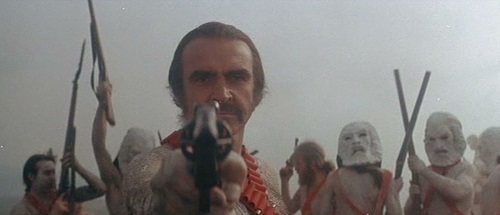
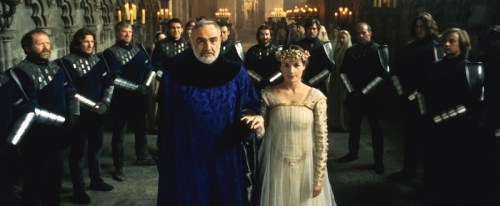
4 Shots From 4 Films is just what it says it is, 4 shots from 4 of our favorite films. As opposed to the reviews and recaps that we usually post, 4 Shots From 4 Films is all about letting the visuals do the talking.
This edition of 4 Shots From 4 Films is dedicated to Sean Connery, on the occasion of his 85th birthday!
4 Shots From 4 Films
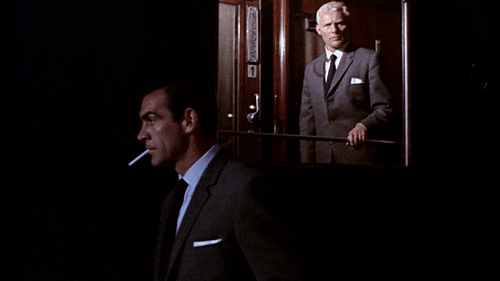
From Russia With Love (1963, directed by Terrence Young)
“Cherry ice cream smile I suppose it’s very nice.”
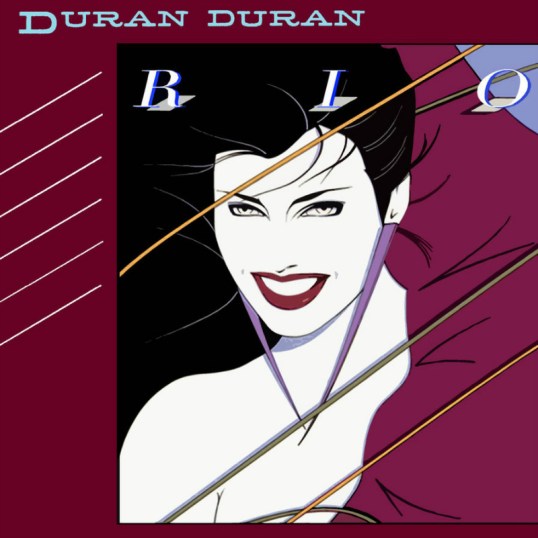
Yes, I listened to Duran Duran as a wee lad and I must say that they were quite awesome then and even now. “Rio” was the song that I enjoyed listening to the most out of their whole 80’s work.
One thing that Duran Duran could never be accused of would be that they were subtle. The band was a great example of 1980’s excess. From the Miami Vice cocaine-fueled and candy-colored fashion right up to the Gordon Gecko flaunting of wealth and luxury. Whoever said new wave and synthpop was suppose to be all just about happy songs and easy on the eyes videos.
This band and their songs might sound all peppy and such, but they were just as hardcore and debauch as the next hardcore rock band. They just did it in a much different set of fashion style and attitude. No overly hairsprayed glam rocker hair or crotch-tight leather pants. They preferred their attire to be Sonny Crockett and Rico Tubbs style.



 Through the Shattered Lens