With Mass Effect 3 now over a year gone it’s time for BioWare to concentrate on moving forward with it’s fantasy rpg franchise which seems to have languished on the sidelines after the very controversial second title in the series. I speak of BioWare’s Dragon Age series and what fans of the title seem to consider a lost opportunity to make it the fantasy equivalent of Mass Effect.
The first game in the franchise was well-received but not without some complaints about the title’s gameplay mechanics being too reliant on micromanaging and less on intuitive controls. The second title was suppose to fix the problem when it came to combat which it did, but then this sequel brought up complaints about a storyline that felt rushed and game environments which relied too much of reusing the same backgrounds and layouts.
Now we have the announcement from EA and BioWare that the third game in the franchise will look to combine the good things about the first two games while looking to fix the problems which many saw as keeping the franchise from reaching great status.
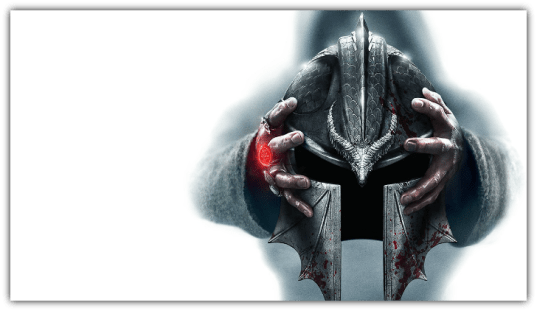
Dragon Age: Inquisition arrives at this year’s E3 with a trailer which looks to be pre-rendered cinematics but with the title set to be released on the upcoming nextgen systems of the Xbox One and PS4 there’s a good chance that future gameplay trailers will look exactly like this trailer. Only time will tell whether that’s the case or not.
Dragon Age: Inquisition looks to drop on the Xbox 360, Xbox One, PS3, PS4 and Microsoft Windows in the Fall of 2014.
Decade of last.fm scrobbling countdown:
45. 東野美紀 (Miki Higashino) (705 plays)
Top track (31 plays): Beautiful Golden City, from Suikoden (1995)
Ms. Higashino is the first of a handful of video game music composers to have risen through my ranks over the years, thanks almost entirely to her beautiful contributions to the soundtracks of Genso Suikoden I and II. (Funny, I would rank Suikoden II in a three way tie for my favorite video game ever, and all three relevant composers made it onto the charts.) Her discography is small but compelling, showcasing an appreciation for traditional Asian and European folk music that rarely surfaces with such force among her contemporaries. Paying special attention to Japanese and Irish folk in particular, she managed to imbue the first two Suikoden titles with a lively earthiness ideal for an unprecedented model of gameplay made possible by the Playstation. The Suikoden games eschewed fantasy in the raw for an appeal to political and military strife in which the hero moves from town to town gathering an army and waging war along grey lines, the quintessential naivete of the RPG hero being frequently exploited to generate scenarios in which the moral high ground stood open to debate. If the main plots centered around those characters most aware of war’s many faces, the hero and the bulk of his officers–108 recruitable characters in all–were simple folk, fighting for personal reasons without a grasp of the big picture. Miki Higashino’s success in the Suikoden soundtracks rested in her ability to score appropriate music for the simple majority–those characters with deep ties to the land, who lacked a grand vision and swallowed whole the political propaganda which cast their homes and country in jeopardy. Songs like Beautiful Golden City capture what the majority of the Suikoden cast fought to preserve.
Higashino has a long history in the video game music industry in spite of her short list of works. She composed her first two soundtracks–Gradius and Yie Ar Kung-Fu–in 1985, at the surprisingly young age of 17. Yie Ar Kung-Fu in particular reveals that Higashino bore an appreciation for folk music from the very beginning of her career. I’ll leave you with the NES version of this remarkably early score.
VGM Entry 12: Zelda and Dragon Quest
(Thanks to Tish at FFShrine for the banner)
Two fantasy-style games in 1986 achieved massive retail success and thereby brought the genre to the attention of the masses. These, it should be fairly obvious, were The Legend of Zelda (Nintendo) and Dragon Quest (Enix). Both games are likewise frequently cited among the most important soundtracks for the Famicom/NES. I think this can be a bit misleading.
The Legend of Zelda had a truly epic main theme, with which Koji Kondo almost certainly surpassed his work in Super Mario Bros. Whether it was the best video game song written up to that point is really a matter of personal preference; it is not as though it had no competition. Regardless, this was the first installment of Nintendo’s second major franchise gaming series, and the sort of anthem Koji Kondo was able to craft for Link had enormous marketing benefits. It’s not as though lead characters in Nintendo’s games became popular out of the shear force of the company’s good name. No one really remembers say, Professor Hector (Gyromite and Stack-Up) or Mr. Stevenson (Gumshoe). If Link was going to become a franchise character, he was going to need a theme song, and in that regard Koji Kondo pulled through once again.
What else did The Legend of Zelda have going for it musically? Well… very little. I mean, the Underground Level theme (3:18) is pretty cool–all 18 seconds of it. It reminds me of some of Uematsu and Mitsuda’s later works. But there just isn’t much else to this game. The title screen and overworld theme are variations on the same (awesome) melody. Death Mountain (3:48) sounds like it was thrown together in five minutes, and the ending theme (1:42), while catchy, is simply in the wrong game. It is Mario music.
Koji Kondo is one of the most important figures in the history of video game music, no doubt about it, but the bar had not been raised quite so high on the NES in 1986 as it had been in the home computing world. Thus The Legend of Zelda sounds great within the context of its system, but a little primitive in the larger scope of things.
The interesting thing about Dragon Quest to my western ears is that the game series was never all that hot here. I seem to recall reading at the time of Dragon Quest VIII‘s Japanese release–and we’re talking 2004 so I may be very much mistaken–that the game franchise had sold more copies than Final Fantasy. At any rate, it is important to recognize that this series was huge in Japan. The original Dragon Quest formalized nearly every stereotype of traditional RPGs. This video should make that fairly clear, and it’s pretty significant to note that this was not a product of Eastern adventure/RPG traditions. Yuji Horii took his inspiration from the Ultima and Wizardy series on the Apple II, and it’s at this point that the two genres really diverge. Japan would become the centerpoint of both Eastern and Western traditions, and just a Legend of Zelda served as the quintessential starting point for the modern adventure game, Dragon Quest permanently defined the RPG.
Like The Legend of Zelda‘s overworld theme, Dragon Quest‘s title theme became a series staple, but “Overture March” took quite a while to grow on me. A good many other ears might hear delicious nostalgia, but its quality does not immediately jump out at me. It’s really how Koichi Sugiyama continually developed and improved upon it in future games that makes the original fun to revisit. The rest of the soundtrack was, like Ultima III and Ultima IV, perfectly well suited for the RPG experience, and wider distribution meant that Sugiyama would be much more influential in standardizing this approach. I would be shocked if “Unknown World” (1:40) did not heavily influence Nobuo Uematsu. It could be a chiptune take on a Final Fantasy VII track, and it’s quite pleasant. Still, and unlike Kenneth W. Arnold’s works, the original soundtrack does have its flaws. The combat music (2:22) is terrible, grating on the ears on the first listen let alone after the constant encounters one expects in an RPG.
But in setting the standards for the series he would faithfully continue to compose for the next twenty five years (the man is now 81 years old and still making music), Koichi Sugiyama also set the standard for what RPGs should sound like. The standard was already in practice, as I hope I have shown, but the enormous influence that the Dragon Quest series would have on video games in Japan probably prevented a lot of deviation from this norm in the future. And much to Koichi Sugiyama’s credit, the music definitely improved over time. Dragon Quest II, released by Enix in January 1987, less than a year after the series debut, would retain the original’s best tracks while replacing the obvious duds with significant improvements.
By Dragon Quest III (Enix, 1988), Koichi Sugiyama had firmly established himself as one of the best RPG composers of the 1980s. His emphasis on continuity and improvement of past works rather than wholly original soundtracks allowed each game to feel both refreshing and entirely familiar. In the cases of the best tracks, the changes are barely even noticeable. “Overture March” in Dragon Quest III begins almost identically to the original for instance. The melody is a little more staccato, and that’s it. If it’s not broke, why fix it?
I don’t know that I would call either The Legend of Zelda or Dragon Quest great soundtracks. The Legend of Zelda contained an especially great song, but I feel like allowing one song to carry a game was beginning to be a cop-out by 1986. Dragon Quest formed a more complex whole, and it’s definitely closer to excellence, but I feel like it still lets the shortcoming of the NES get the better of it at times in sound selection for what were certainly wonderful melodies. It’s also got the Combat theme to deal with, and such a reoccurring flaw is hard to ignore. Koichi Sugiyama would continually improve, and Koji Kondo too would be stepping up his game before the Famicom expired, particularly with Super Mario Bros. 2 in 1988.
VGM Entry 11: Ultima
(Thanks to Tish at FFShrine for the banner)
Ultima I, Wizardry, Bokosuka Wars, and Dragon Slayer–if we ignore this last title’s half-hearted attempt–all lacked my topic of interest here: music. When music first came to Eastern-style adventure/RPGs is as difficult to pinpoint as a precise definition of the type of game itself. The NES port of Bokosuka Wars had continuous music, albeit much to its detriment, but a December 14, 1985, release date renders this historically insignificant; Koji Kondo’s work in The Legend of Zelda would take the Japanese gaming world by storm only two months later. There may have been others with some music of worth, but they have evaded my notice. Western RPGs are an entirely different matter.
Kenneth W. Arnold’s work experience summary on LinkedIn claims that “Ultima III was the first game for personal computers (Apple II originally) with a musical score.” I have found no reason to doubt this claim. If I have overlooked an earlier RPG with music, it should nevertheless stand that Arnold’s work on Ultima III: Exodus (Origin Systems, 1983) is among the very first.
Much more importantly, it’s amazing. The songs are exquisitely attuned to the properties of the Mockingboard A sound chip. The deep tones carry a real sense of depth into the gameplay, and the natural distortion is wholeheartedly embraced to create a sense of something hinged between danger and mystery–this idea of an old world that is never entirely safe or wholly understood. The style of each song is ideal. It’s got everything you could expect in an RPG soundtrack: an adventurous overworld theme, a peaceful tune for towns, a haunting dungeon, and an especially noteworthy tense combat melody. In what is quite possibly the first RPG soundtrack ever written, one finds style-scenario associations which are pretty much the same today. Kenneth W. Arnold deserves a lot more credit for Ultima III than the history books grant him, not because he invented RPG music–I am inclined to believe such games naturally lend themselves to particular musical styles–but because he did everything right the first shot out the gate, without any previous standard having been set. And he did it so well that his works still stand among the finest today. Cheers to that.
It just got better from there. Ultima IV: Quest of the Avatar (Origin Systems) was released on September 16, 1985, and with it Kenneth W. Arnold achieved a level of quality in RPG music that even Nobuo Uematsu would not be topping any time soon. The Castle theme especially (3:09) is one of the most commanding of its kind for any RPG. Shopping (1:34) presents an audio vision of some medieval market place filled with crooked old cranks peddling dubious potions. The combat theme (5:27) is a mere 12 seconds long, yet its exciting, adventurous spirit lends itself to continuous repetition better than nearly any other RPG non-boss battle music I’ve heard.
Credit goes to Apple Vault for actually reproducing this music. It wasn’t easy to come by. Ultima must be one of the most heavily ported series in history, with Ultima III appearing on the Atari 800, Commodore 64, IBM PC, Amiga, Atari ST, Mac, PC-8801, PC-9801, FM-7, NES, and MSX2, and Ultima IV appearing on the Atari 800, Commodore 64, IBM PC, Amiga, Atari ST, PC-8801, PC-9801, FM-7, FM Towns, Sharp X1, Sharp X68000, NES, MSX2, and SMS. Most of these ports contained the original music adapted for different sound chips, and you can see how the original Apple II Mockingboard take might get lost in the clutter. Some of these ports are pretty good approximations. Others, like the NES version, inexplicably toss out Arnold’s soundtrack altogether. But the game was originally intended to be heard on an Apple II Mockingboard, and I believe this is the most accurate version you’re going to find. Accuracy does matter here, I think. Given the amount of attention to tone quality I think Arnold put into this, preserving the medium is just as important as preserving the melodies themselves.
It’s no matter of chance that many of the best game soundtracks were RPGs. By nature among the most diverse games in setting, they naturally demand a diverse score. Thus it was the case that Ultima III, possibly the first RPG soundtrack ever, might also have been the longest soundtrack up to that time, clocking in at about six and a half minutes in 1983. But it’s the shear quality that deserves most of the attention. Kenneth W. Arnold was brilliant. These are the first truly great RPG soundtracks, and it’s a shame that they have been largely forgotten.
VGM Entry 10: The RPG
(Thanks to Tish at FFShrine for the banner)
The music of Super Mario Bros. was also somewhat unique in that it merged flawlessly with a game which had nothing to do with sports or space aliens. The electronic nature of early video game music generated futuristic sounds, and a whole ton of early games being space shooters, the music naturally lent itself to synthesis. Konami’s 1983 space shooter Gyruss is a perfect example of a harmonized audiovisual experience of this sort. But good synthesis also meant stylistic relativity. Not every game on the market involved shooting down space invaders, outrunning enemies through a maze, or bashing in faces with a pixilated club. Many innovative new ideas were in the works which would require a very different sort of soundtrack.
The style of most lasting consequence for video game music was the adventure/role playing game, and it has an extensive history. Link did not spring forth from the head of Shigeru Miyamoto clad in shining armor, and someone somewhere out there still goes around telling people that he was larping as Legolas years before this fancy shmancy new “Dungeons & Dragons” game came along. I think it correct to say that The Legend of Zelda and Dragon Quest, both released in 1986, were respectively the first adventure game and the first RPG to have massive market success, but both distinct styles emerged from long-standing traditions, and their music was a sort of natural consequence of the nature of the games, not a single individual’s revolutionary new idea.
All joking aside, if you want to go all the way back, you really do have to look at D&D. The first computer RPGs were under construction less than a year after the pen and paper game’s initial publication (TSR, 1974), and they were directly inspired by it and the works of J.R.R. Tolkien. These were private affairs, designed by programmers in their spare time, and there were quite a few of them. Gary Whisenhunt and Ray Wood’s dnd, Rusty Rutherford’s pedit5, and Don Daglow’s Dungeon seem to be the most frequently cited surviving 1974-1976 creations, and there are plenty of rumors of slightly earlier lost works.
A lot of the features of “traditional” video RPGs are direct descendents of tabletop games. They evolved fairly linearly, reaching a proto-modern format by the time of Richard Garriott’s Ultima I: The First Age of Darkness (California Pacific) and Andrew Greenberg and Robert Woodhead’s Wizardry: Proving Grounds of the Mad Overlord (Sir-tech Software), both released for the Apple II in 1981.
RPG-esque evolutions in Japan were far more diverse, but perhaps a bit less exciting. With no D&D tradition rendering particular game features canonical from the very beginning, developers were more experimental, merging all sorts of features from western RPGs, simulations, strategy games, and standard action types. The earliest examples are quite difficult to find samples of, perhaps in part because of the language barrier, but the tradition does appear to have begun a bit later than in the west. Koji Sumii’s Bokosuka Wars, released by ASCII for the Sharp X1 home computer in 1983, is an interesting example of a strategy game set in a Zelda-esque overworld of forests, mountains, and castle walls.
Yoshio Kiya’s Dragon Slayer, released for the PC-8801 by Nihon Falcom in 1984, is a more obvious inspiration for The Legend of Zelda, with its strong emphasis on puzzle solving, though the graphics are deplorable for its time and the sound a travesty. (Scott Joplin? Really?) But whatever their flaws, these games were the prototypes. They set the stage for great things to come. And at least in the west, RPG music would appear on the stage in fairly perfected form in the first instance.
The next E3 2011 Edition of the “Song of the Day” is the intro and main theme to the follow-up game to The Elder Scrolls III: Morrowind. This song is called “Reign of the Septims” and it sets the epicness of what was, and is, The Elder Scrolls IV: Oblivion.
“Reign of the Septims” actually sounds similar in certain areas to the Morrowind intro of “Nerevar Rising”. Where this intro differs is how it’s less about hope (a term and emotion that Lisa Marie mentioned she felt listening to the previous song) but about rising up to take one’s destiny and become the leader the game’s storyline requires of the player. There’s a certain martial aspect to the song which could be heard in the brass section and strings working in concert right in the beginning and throughout most of the song until they begin to fade to give “Reign of the Septims” a simpler and more mellow ending.
I really can’t imagine any future games in this series having its soundtrack being composed by anyone other than Jeremy Soule. It’s a good thing that he will be on hand for the next game, Skyrim, and from what I’ve heard of the initial theme to that game it’s a nice progression from the intro for both Morrowind and Oblivion.
One of the titles which I look forward to losing several hundreds of hours playing is the fifth entry in Bethesda Game Studios The Elder Scrolls role-playing game franchise: Skyrim.
I’m proud to say that the previous game in the series I had spent nearly a total of 1500+ hours playing using several created characters over a span of 6 years. I would say that 3/5 of that total time was played within 6 months of buying Oblivion. The developers of Skyrim are promising fans of the series no less than 300+ hours of gameplay (though they didn’t specify if that means just the main storyline or also includes side quests and such) so that’s a comfort to hear.
This role-playing game series has always been known for it’s very expansive and complex world which allows it’s player to roam it’s confines however they want. It’s this open-world gameplay dynamic which makes this game and the series, in general, such a favorite with gamers worldwide.
Lead designer for Bethesda, Todd Howard, gave G4TV an in-depth look at Skyrim. The videos you’re about to watch has Howard showing the extreme and beautiful detail rendered by the game’s new graphics engine in the Creation Engine. He also shows just how some of the changes in combat, skill leveling and the type of creatures the player will end up fighting makes this latest entry in The Elder Scrolls series the best to date.
The Elder Scrolls V: Skyrim has a set release date of November 11, 2011.
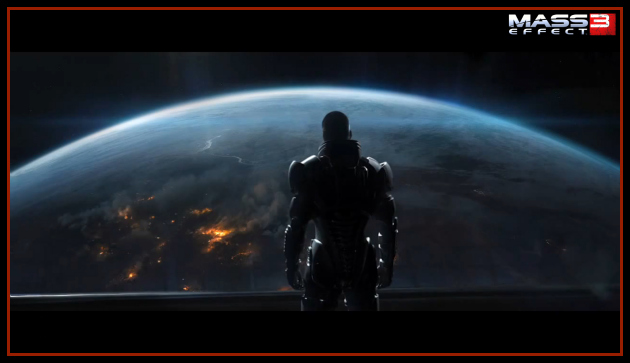
To say that Mass Effect 3 is one of the most-anticipated titles in the next 9 months would be an understatement. The franchise has been one of the most popular and critically-acclaimed video game series of the past five years and this third game looks to cap off a trilogy that many consider the Star Wars (original trilogy) of video gaming. The third game was highlighted not just in the Microsoft E3 Press Conference but also in EA’s own Press Conference which just goes to show how much this game means not just to EA but to Microsoft (even after the franchise finally became available to PS3 users I still consider it an Xbox 360 franchise).
In both conferences so many trailers were unleashed on those who were in attendance. Whether it were gameplay trailers, more trailers hinting at the story, trailer’s showing the game in demo right up to certain gameplay changes made for this final leg of the trilogy. One piece of news that was interesting was announced during Microsoft’s press conference and that was Mass Effect 3 having Kinect (the hands-free Xbox 360 controller system) capabilities.
One piece of news that every fan of the game was waiting for and finally got was this: Release Date – 03.06.2012. I may end up catching a virulent case of the blahs and call off work on that date and the rest of the week.

 Through the Shattered Lens