Retro Television Review: Broken Angel (dir by Richard T. Heffron)


Welcome to Retro Television Reviews, a feature where we review some of our favorite and least favorite shows of the past!  On Sundays, I will be reviewing the made-for-television movies that used to be a primetime mainstay.  Today’s film is 1988’s Broken Angel!  It  can be viewed on YouTube.

Chuck Coburn (William Shatner) has a nice house in the suburbs, a nice job, a nice car, and a nice Bruins jacket.  He’s hoping that he can once against have a nice marriage with his wife (Susan Blakely), despite the fact that she cheated on him and she still thinks that he spends too much time at work.

Chuck is proud of his teenage daughter, Jaime (Erika Eleniak).  Jaime seems like the perfect suburban and angelic teenager.  But then Jaime goes to prom and her best friend, Jenny (Amy Lynne), is gunned down in front of her.  Jaime runs from the scene and vanishes.  As Chuck searches for his daughter, he is stunned discover that Jaime, Jenny, and their boyfriends were all a part of a gang!  His perfect daughter was smoking weed, doing cocaine, selling crack, and taking part in rumbles with a rival Asian gang.  Even worse, Jaime’s gang was called …. LFN!

LFN?  That stands for Live For Now.  The Live For Now Gang.  Whenever we see the members of the gang preparing to get into a fight with another gang, they all chant, “LFN!  LFN!”  LFN is a gang of white suburban teenagers and they look just as dorky as they sound.  I mean, I think it would be bad enough to discover that your child is in a gang but discovering they were in a dorky gang would probably make it even worse.

The majority of Broken Angel is made up of scenes of Chuck searching the mean streets of Los Angeles.  He partners with a social worker (Roxann Dawson) who is herself a former gang member.  Chuck discovers that his daughter’s street name was — *snicker* — Shadow.  He also befriend a member of the LFN’s rival Asian gang and tries to encourage her to go straight.  This leads to scene in which he is attacked by Al Leong.  Somehow, middle-aged William Shatner manages to beat up Al Leong.  That, in itself, is worth the cost of admission.

Broken Angel deals with a serious issue but it does so in such an overwrought and melodramatic fashion that most viewers will be moved not to tears but to laughter.  In Broken Angel, William Shatner gave the type of overly dramatic and self-serious performance that he routinely pokes fun at today.  If you’re one of those people who enjoys listening as Shatner emphasize random syllables and takes meaningly pauses, this movie will give you a lot to enjoy.  In every scene, Shatner seems to be saying, “Notice me, Emmy voters!  Notice me!”  Of course, it wouldn’t be until Shatner learned how to laugh at himself that the Emmy voters would finally notice him.

The film ends on an abrupt note but with the promise of better days ahead.  Just remember — keep an eye out for the LFN!
True Grit: A Further Adventure (1978, directed by Richard T. Heffron)


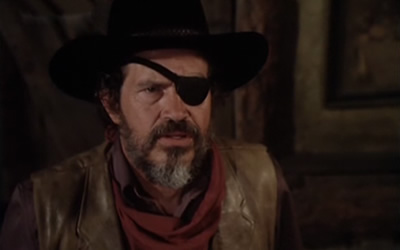
Warren Oates as the legendary, one-eyed old west lawman Rooster Cogburn?

That was the idea behind True Grit: A Further Adventure, a made-for-TV movie that was meant to serve as a pilot for a potential television series.  The film is a direct sequel to 1969’s True Grit and it features Warren Oates stepping into the role of Rooster Cogburn, the character that John Wayne famously played in the original film and who Jeff Bridges later played in the 2010 remake.  In A Further Adventure, Cogburn is once again hired to escort teenager Mattie Ross (Lisa Pelikan) across the country.  Along the way, Rooster gambles away all their money, meets an attractive widow (Lee Meriwether), and gets a job in a mining town.  With the help of Mattie, he also gets a job as a bounty hunter and the two of them go after a group of wanted outlaws.  Mattie tries to reform Rooster and make him act like more of a traditional western hero while Rooster drinks and gambles and complains.

I am a huge Warren Oates fan but even I have to admit that he’s miscast of Rooster Cogburn.  In both Charles Portis’s original novel and the two films that were adapted from it, Rooster was overweight and physically imposing,  He wasn’t book-smart but he was wise in the ways of the frontier.  Physically, Warren Oates is too slightly built and his trademark nervous energy feels out of place in the role of Rooster.  Wayne and Bridges were both believable as men who would draw first and ask questions later but Oates was a natural-born talker.  That’s one of the things that made him one of the best actors of the 70s but it doesn’t serve him well in the role of Rooster Cogburn.

On the plus side, Lisa Pelikan is a considerable improvement on Kim Darby in the role of Mattie, though she’s nowhere near as good as Hailee Steinfeld would later be in the 2010 film.  Lee Meriwether and Warren Oates shares some good scenes together but the film’s made-for-TV origins makes Meriwether’s overall performance feel like a special guest star diversion.  True Grit: A Further Adventure is a throw-back to the type of formulaic western television programs that were popular in the late 60s.  It’s easy to see why the pilot didn’t get picked up.  It was miscast and it was too late.  If it had aired a few years earlier, it’s possible to imagine Oates and Pelikan traveling to a different town and getting involved in a different story on a weekly basis and perhaps the role would have been changed to better suit Oates’s style of acting.  But, by 1978, television was heading in the direction of Hill Street Blues and the days of the western were over.

Unfortunately. Warren Oates would die just four years after this film aired, a tragically early passing that robbed the world of a unique actor who was in his prime.  Though Oates may not have been right for Rooster Cogburn, he will always be remembered for films like Badlands, Bring Me The Head of Alfredo Garcia, Stripes, Dillinger, and Two-Lane Blacktop.  He was truly a one of a kind talent.

Cleaning Out The DVR: Outlaw Blues (dir by Richard T. Heffron)


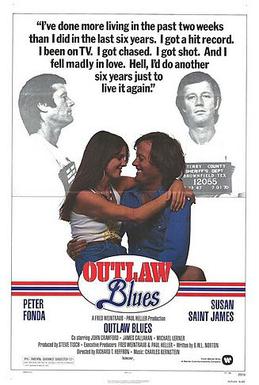
The 1977 film, Outlaw Blues, opens in Huntsville State Prison. An arrogant country music star named Garland Dupree (James T. Callahan) is about to perform for the prisoners. He’s hoping his Huntsville concert will do for him what playing at Folsom did for Johnny Cash. The warden insists that Garland listen to a song written and performed by a soft-spoken prisoner named Bobby Ogden (Peter Fonda). A visibly annoyed Garland agrees but he doesn’t actually listen while Bobby performs. Instead, Garland is too busy arguing with the manager of his record label, Hatch (Michael Lerner). However, the members of Garland’s backup band record Bobby as he sings.

Several months later, Bobby is about to be released from prison when he learns that Garland is performing his song. Not only has Garland made it a hit but he’s also taking credit for writing it! Garland and Hatch even copyrighted the song, something that Bobby was never able to do because he was in prison.

Released from prison, Bobby ends up in Austin. He wants to stay out of prison and get his life straightened out. He wants to pursue a career as a singer. And he wants Garland to admit that he stole Bobby’s song. Unfortunately, when Bobby confronts Garland, things escalate and Garland ends up accidentally getting shot. Garland survives but now Bobby has the police after him. With the help of one of Garland’s former backup singers, Tina Waters (Susan Saint James), Bobby tries to become a star while staying one step ahead of the cops. Like the outlaws of old, Bobby and Tina sneak around Texas, performing where they can. (Knowing that any publicity is good publicity, Tina often calls the cop just as Bobby finishes his show, all the better for her and Bobby to make a dramatic escape.) Hatch is eager to record and release a Bobby Ogden record but both Bobby and Tina know that he can’t be trusted. But with the cops closing in, what choice do they have?

For a film about criminals on the run, Outlaw Blues is a surprisingly loose and laid back movie. It’s definitely a product of the 70s. It celebrates rebellion and doing your own thing, it mixes drama and comedy and, because it was made in the 70s, you know there’s always a good chance that, regardless of how pleasant the majority of the film may be, everyone’s going to die at the end of the movie. That definitely adds some tension to the film’s story that might not otherwise be there. For the most part, though, this is an enjoyable little lark of a drive-in movie. It celebrates individualism while also finding time for a few songs and a car chase or two.

A good deal of the film’s charm is the result of the chemistry between the two stars. Peter Fonda and Susan Saint James just seem as if they belong together and they both play characters who are written with slightly more depth than you might otherwise expect from what was obviously meant to be a cheap, drive-in film. Tina may appear to be a hippie but, as played by Saint James, she eventually turns out to be a clever businesswoman and promoter. As for Peter Fonda, he definitely had his acting limitations but he also had a nice smile and a far more likable screen presence than you might suspect if you only know him from his remote performance in Easy Rider. In Outlaw Blues, Fonda’s inexpressive manner feels right for someone who has spent most of his life in prison and who is still adjusting to being on the outside. Fonda wins you over and, once his character falls in love with Saint James, Fonda starts to relax and you get the feeling that both he and Bobby Ogden are having fun.

Outlaw Blues may be a minor 70s film but it’s likable. It has an amiable spirit which makes it worth watching.