Rancher Bob “Utah” Neyes (Russell Hayden) heads into Canada to meet up with his business partner. Unfortunately, his partner has been murdered by outlaw Nails Nelson (Douglas Fowley). Mountie Jack Craig (Lyle Talbot) almost arrests Utah for the crime but he becomes convinced that Utah is innocent and Nails is guilty. Along with fur trader Ivy Jenkins (I. Stanford Jolley), Craig and Utah try to break up Nails’s fur-smuggling operation.
While I was watching it, I thought this movie seemed even more familiar than the usual Poverty Row western. I realized that’s because I had actually seen Russell Hayden and most of the rest of the cast in another movie that had a similar plot, right down taking place on the other side of the border. That other movie was called ‘Neath Canadian Skies. Both it and North of the Border are among the four Canadian western films that Robert Lippert produced in 1946, all of which starred Russell Hayden and were directed by B. Reeves Easton. Supposedly, it took 20 days to shoot all of them.
As for North of the Border, it’s only 42 minutes long and none of those minutes are wasted. There’s all of the usual horse chases and gunfights that fans want from these films. For me, the most interesting thing about the film was getting to see Lyle Talbot play something other than a boring authority figure. Also, this film features Inez Cooper, a pretty redhead who had a short career but whose beauty and personality as well-remembered by fans of Poverty Row westerns. She plays the love interest in this one and there’s no doubt that most men would give up living in Utah for her.
Corrupt Sheriff Chris Bradley (Homer Murphy) sends letters to three outlaws, asking them to come to his town and to work for him. Sheriff Bradley wants to use them to kick some homesteaders off their land. What Sheriff Bradly didn’t count on was one of the outlaws being an undercover Texas Ranger! Johnny Mack Brown plays Johnny, a.k.a. The Dog Town Kid.
The Kid takes a liking to homesteader Marian Henley (Beth Marion) and her infant son. When the Kid and the other two outlaws don’t move out the homesteaders to the sheriff’s liking, Bradley hires fearsome outlaw Lobo Joe (Roger Gray).
This is a pretty typical Poverty Row western. After you see enough of these, you realize that every plot is going to be about a corrupt sheriff and a businessman teaming up to try to steal the land away from the settlers. What makes these film work (or not) is the quality of the stars and Johnny Mack Brown was one of the best, someone who seemed authentic when he was riding a horse or shooting a gun but who was also a good enough actor to bring some life to the familiar plots. As usual, with this film, Johnny Mack Brown is better than his material.
Everyman’sLaw is best-known for the scenes of Brown and the other two outlaws having to babysit Marian’s baby. The “comedic” scene where the baby puts the barrel of Johnny’s six-shooter in his mouth probably had the audience rolling in 1936 but today, it would undoubtedly get the film banned.
Brock Masters (Mark Roberts) has been awarded a contract to supply the army with horses. Corrupt businessman Grat Hanlon (Clayton Moore) wants that contract for himself so he sends his henchmen to kill Brock. Because Brock has no known relatives, Grat believes that both the horses and the contract will soon be his.
However, Brock does have an heir! He adopted an Indian child named Johnny (Louis Lettieri). Johnny inherits the contract and both the Durango Kid (Charles Starrett) and Smiley Burnett are going to make sure that Johnny is able to deliver the horses. Smiley is also going to find some time to sing some songs that have even less to do with the story than usual.
Cyclone Fury was one of the later entries in the Durango Kid series. By the time it was made, Colombia was no longer willing to spend much money on the series so that majority of the film’s action scenes are lifted from other Durango Kid movies. If you’ve never seen another Durango Kid movie, the action scenes are exciting and feature some impressive stunts. If you have seen another Durango Kid movie, this one is going to seem really familiar.
For western fans, the main appeal here will be seeing Clayton Moore playing a bad guy. Moore had already played The Lone Ranger when he appeared in this movie. At the time Cyclone Fury was made, Moore had been unceremoniously fired from his most famous role and The Lone Ranger was being played by John Hart. Hart would only last a season and Moore would subsequently be invited back to play the role that defined his career. As for Cyclone Fury, Moore is convincing as Grat, though the character himself is just a typical Durango Kid bad guy. The Durango Kid was always going up against seemingly respectable businessmen who were actually outlaws.
One final note: Moore’s Lone Ranger co-star, Jay Silverheels, appears in this film but only in archival footage from an early adventure of The Durango Kid.
“When it comes to dying for your country, it’s better not to die at all!”
— Paul Baumer (Lew Ayres) in All Quiet On The Western Front (1930)
Tonight, I watched the third film to ever win the Oscar for Best Picture, the 1930 anti-war epic, All Quiet On The Western Front.
All Quiet On The Western Front opens in a German classroom during World War I. Quotes from Homer and Virgil, all exalting heroism, are written on the blackboard. The professor, a man named Kantorek (Arnold Lacy), tells his all-male class that “the fatherland” needs them. (It’s all very patriarchal, needless to say.) This, he tells them, is a time of war. This is a time for heroes. This is a time to fight and maybe die for your country. He beseeches his students to enlist in the army. The first to stand and say that he will fight is Paul Baumer (Lew Ayres). Soon, almost every other student is standing with Paul and cheering the war. Only one student remains seated. Paul and the others quickly turn on that seated student, pressuring him to join them in the army. That seated student finally agrees to enlist, even though he doesn’t want to. Such is the power of peer pressure.
A year later, a visibly hardened Paul returns to his old school. He’s on furlough. He’s been serving in a combat zone, spending his days and nights in a trench and trying not to die. He’s been wounded but he hasn’t been killed. He can still walk. He can still speak. He hasn’t gone insane. He is one of the few members of his class to still be alive. (That student who didn’t want to enlist? Long dead.) When Kantorek asks Paul to speak to his new class, Paul looks at the fresh-faced students — all of whom have just listened to Kantorek describe the glories of war — and Paul tells them that serving in the army has not been an adventure. It has not made him a hero. The only glory of war is surviving. “When it comes to dying for one’s country, it’s better not to die at all!” Kantorek is horrified by Paul’s words but he needn’t have worried. The students refuse to listen to Paul, shouting him down and accusing him of cowardice and treason.
(This scene is even more disturbing today, considering that we live in a time when accusations of treason and calls for vengeance are rather cavalierly tossed around by almost everyone with a twitter account.)
What happened between those two days in the classroom is that Paul saw combat. He spent nights underground while shells exploded over his head. He watched as all of his friends died, one by one. One harrowing night, spent in a trench with a French soldier who was slowly dying because of Paul stabbing him, nearly drove Paul insane. In the end, not even his friend and mentor, Kat (Louis Wolheim), would survive. From the first sound of bombs exploding to the film’s haunting final scene, the shadow of death hangs over every minute of All Quiet On The Western Front. By the end of it all, all that Paul has learned is that men like Kantorek and the buffoonish Corporal Himmelstoss (John Wray) have no idea what real combat is actually like.
All Quiet On The Western Front may be 87 years old but it’s still an incredibly powerful film. There are certain scenes in this pre-code film that, after you watch them, you have to remind yourself that this film was made in 1929. I’m not just talking about a swimming scene that contains a split second of nudity or a few lines of dialogue that probably wouldn’t have made it past the censors once the production code started to be enforced. Instead, I’m talking about scenes like the one where a bomb goes off just as a soldier attempts to climb through some barbed wire. When the smoke clear, only his hands remains. And then there’s the sequence where the camera rapidly pans by soldier after soldier falling dead as they rush the trenches. Or the scene where Paul literally watches as one of his friends, delirious and out-of-his-mind, suddenly dies. Or the montage where a pair of fancy boots is traded from one doomed soldier to another, with each soldier smiling at his new boots before, seconds later, laying dead in the mud. Or the harrowing scene where Paul tries to keep a French soldier from dying.
All Quiet On The Western Front remains a powerful film. It’s perhaps not a surprise that, when it briefly played in Germany, the Nazis released live mice in the theaters to try to keep away audiences. (Both the film and the book on which it was based were later banned by the Nazi government.) Sadly, we’ll never get to see All Quiet On The Western Front the way that it was originally meant to be seen. A huge hit in 1930, All Quiet On The Western Front was rereleased several times but, with each rerelease, the film was often edited to appease whatever the current political climate may have been. Over the years, much footage was lost. The original version of All Quiet On The Western Front was 156 minutes long. The version that is available today is 131 minutes long. But even so, it remains a harrowing and powerful antiwar statement.
With all due respect to both Wingsand Broadway Melody, All Quiet On The Western Front was the first truly great film to win the Oscar for Best Picture. Sadly, it remains just as relevant today as when it was first released.
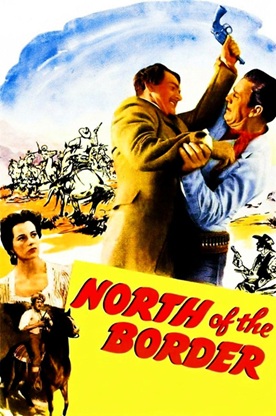 Rancher Bob “Utah” Neyes (Russell Hayden) heads into Canada to meet up with his business partner. Unfortunately, his partner has been murdered by outlaw Nails Nelson (Douglas Fowley). Mountie Jack Craig (Lyle Talbot) almost arrests Utah for the crime but he becomes convinced that Utah is innocent and Nails is guilty. Along with fur trader Ivy Jenkins (I. Stanford Jolley), Craig and Utah try to break up Nails’s fur-smuggling operation.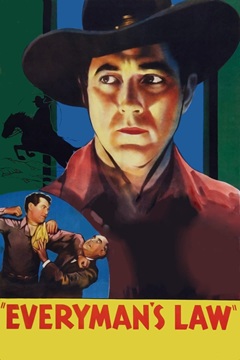


 Through the Shattered Lens