October Positivity: Play The Flute (dir by Rich Christiano)


In 2019’s Play the Flute, Brett Varvel plays Brandon Cobb.

Brandon has just been hired as youth minister at a suburban church.  Brandon is young and ambitious and his hope is to build the church’s youth ministry into one of the largest in the city.  Instead, he discovers that the church’s teenagers are, for the most part, a bunch of spoiled brats who refuse to read and learn their assigned Bible verses.  Apparently, they’ve managed to chase off every youth minister they ‘ve had.  Will Brandon be able to get through to them?

My question, though, is why Brandon is the one who has to get through to them.  Where are the parents in this mess?  Loretta Swit does turn up as one concerned parent but her daughter, who speaks with a stammer, doesn’t even want to go the youth group because of some boys who keep making fun of the way she talks.  (I stuttered up until I was about 12 so I could relate.)  But where are the other parents?  A church youth group is not like high school.  You’re not legally required to attend.  Your parents aren’t going to be charged if you get caught skipping.  The kids are obviously in the youth group because their parents took them to church and told them to attend.  So, shouldn’t the parents be the ones who get yelled at when their out-of-control brats chase off a youth minister?

Brandon struggles.  No one laughs at his Dad jokes.  His attempts to open up about his past are met with stony silence.  This youth group is hardcore!  Finally, Brandon challenges the worst member of the youth group gang to a race.  Brandon loses the race to the younger man but everyone is impressed by his determination.  He was willing to humiliate himself just to get them to listen to him.  And so, they start to listen.

The film is narrated by one of Brandon’s former students, who explains that Brandon has recently died.  At first, I thought maybe Brandon had a heart attack after challenging a much younger man to a footrace.  Instead, Brandon died of cancer.  Brandon may be gone but his students will always remember him and cherish the memory.  That’s kind of sweet.

This is another Rich Christiano film.  Christiano, along with his brother Dave, was one of the pioneers of modern faith-based filmmaking.  He’s been directing and producing films since the early 90s and the format has always remained the same.  A Christiano film is usually rather talky, has a few moments of boomer humor, and typically ends on a sentimental note.  That’s certainly the case with Play the Flute, a very slow movie that seems to have its heart in the right place.

Christiano did manage to get a few familiar faces for the film.  (At least, they’re familiar if you watch a lot of old television shows like I do.)  I already mentioned Loretta Swit as one of the mothers.  Clint Howard shows up as the manager of a restaurant who is upset to learn that his employees have been screwing with the time clock.  And Fred Grandy — GOPHER! — shows up as a minister.  One thing I recently learned is that Fred Grandy actually served in the U.S. House of Representatives after he appeared on The Love Boat.  We need more former sitcom stars in politics.  I’m looking at you, Matt LeBlanc!

Anyway, where as I?  Oh yeah.  This movie was inoffensive but not particularly compelling.  Who knew church youth groups were such a hotbed of rebellion?
October Positivity: Mindreader (dir by Rich Christiano)


2022’s Mindreader start out telling the story of the Great Dexter (Hamish Briggs).

In 1974, Dexter amazed audiences with his mid-reading tricks.  He also amazed his fellow magicians, none of whom could figure out how Dexter performed his tricks.  Dexter insisted that they only needed to consider his catch phrase — “I don’t really do magic, I just read minds,” — to understand how he was able to know what people were thinking.  Dexter said that his fellow magicians just needed to have faith that he could do what he could do.

But the other magicians, because they were so used to the idea of tricking their audiences, would not accept what Dexter said.  They launched an investigation into how Dexter was able to read minds.  A particularly jealous magician tried to fool Dexter by lying about what he was thinking.  Dexter, of course, saw right through him and humiliated the magician in front of his peers.  Those who worked at the same theater as Dexter were offered money to spy on and betray Dexter.  Dexter’s story eventually ended with tragedy.

Years later, Dexter is a revered figure.  The same organization of magicians that persecuted him now wants to honor him.  They interview those who knew Dexter.  They hear about Dexter’s powers.  They hear about how Dexter’s ability to read minds helped countless people.  And they still demand to know how Dexter could have read minds.  Dexter’s now aged assistant tells them that they can either believe it was a trick or they can accept that Dexter could do what he said he could.

Now, it’s pretty obvious what this film is getting at.  Dexter is obviously meant to be a Christ figure and his persecution is meant to parallel the betrayal and crucifixion of Jesus.  It’s not at all subtle but it’s still fairly well-done.  For a Rich Christiano film, the first hour of Mindreader is well-directed, well-acted, and nicely paced.

However, the film takes an abrupt turn when the end credits suddenly roll at the 60 minute mark and a whole new film begin.  Suddenly, the viewer finds themselves watching as a bunch of college students as they stand up and leave a movie theater.  They agree the movie was interesting but they don’t say much else about it.  The student who invited them to the movie goes to his dorm room and feels like a failure for not talking to them about the film’s message.  But, the next day, he discovers that at least one of them is interesting in what the film was really about and they proceed to discuss it.

Two things about this ending:

Number one, it feels more than a little self-congratulatory.  One gets the feeling that this ending was Christiano’s way of clapping back at every critic (like me!) who has ever suggested that a lot of faith-based films don’t really do much to reach people who don’t already agree with their point of view.

Number two, as the magicians in this film could have told you, you should never reveal how it’s done.  There’s a difference between getting people to think about something and telling people to think about it.  After an effective hour, Mindreader gets too heavy-handed for its own good.

Sometimes, you have to have faith in your audience.

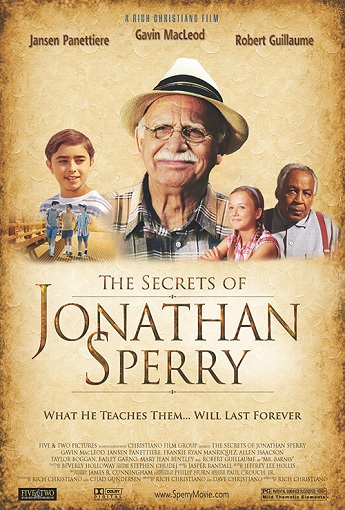
October Positivity: The Secrets of Jonathan Sperry (dir by Rich Christiano)


First released in 2008, The Secrets of Jonathan Sperry is a true rarity.  It’s a Christiano feature film that’s actually not that bad.

The film takes place in 1970, with the implication being that it’s based on a true story.  (The film ends with an epilogue, in which we learn what everyone did with their lives after the final scene.)  Three adolescent friends are trying to enjoy their summer.  One of them has a crush on the local waitress and is trying to figure out how to tell her.  All of them are trying to avoid getting on the bad side of Nick and his gang.  Nick is the type of bully who takes your last piece of pizza and then refuses to let you finish your game at the pinball machine.  He is one bad dude.

Jonathan Sperry (played by Gavin MacLeod) is a nice old man who needs his lawn mowed.  One of the three boys becomes his lawn guy and soon, all of them are hanging out at Mr. Sperry’s house.  Mr. Sperry gives them lemonade and encourages them to read the Bible.  At one point, he send the three of them on a race around the town, with the winner earning a piece of cake.  The catch is that he gives each of the boys different directions in order to highlight that you can only get what you want (in this case, the Cake) if you have the right directions.  Mr. Sperry explains that he’s teaching a lesson about how the only way to become a Christian is to read the Bible (i.e., only the Bible has the right directions).  Personally, I would think that the two boys who didn’t get cake because they were intentionally given bad directions would have every right to be extremely upset with Mr. Sperry but this is a movie so they’re not.

Eventually, Mr. Sperry sends one of the boys over to his neighbor’s house.  Even though his lawn looks awful, Mr. Barnes (Robert Guillaume) announces that he doesn’t want anyone to mow it for him.  Eventually, of course, Mr. Barnes relents and reveals that he’s not quite as fearsome as everyone thinks.  Meanwhile, Mr. Sperry takes it upon himself to minister Nick and Nick is also revealed to be not quite as fearsome as everyone thinks.

As I said, when compared to the other films that Rich Christiano’s been involved with, The Secrets of Jonathan Sperry isn’t that bad.  While the message is a bit heavy-handed and I doubt the film is going to change the mind of anyone who doesn’t already share the filmmaker’s beliefs, The Secrets of Jonathan Sperry is well-acted and good-natured.  (As opposed to other Christiano films, there’s very little talk of Hell or politics.)  The film makes good use of its two veteran performers, with both Gavin MacLeod and Robert Guillaume giving believable performances as two men who are dealing with their own mortality in very different ways.  In the end, the film may be about faith but it also celebrates friendship.  It’s all done surprisingly well.

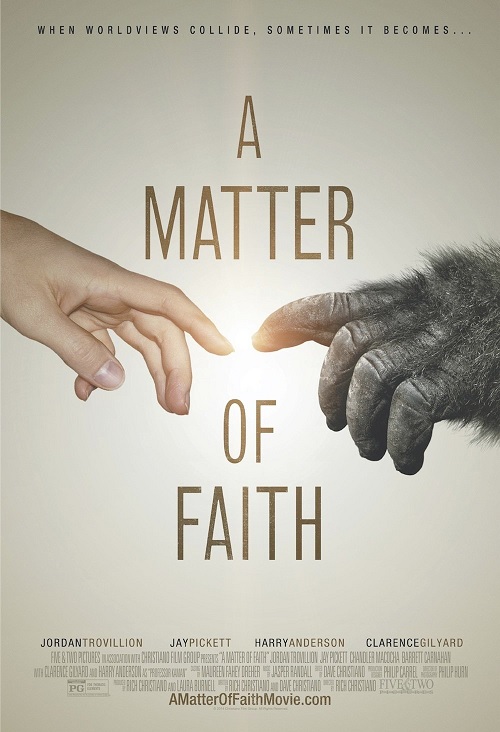
October Positivity: A Matter of Faith (dir by Rich Christiano)


“Does your mother look like a gorilla?” Evan (Chandler Macocha) demands of one of his fellow college students.  “Do your grandmother look like an ape?  WHO IN YOUR FAMILY IS THE MONKEY!?”

Normally, you might think that Evan sounds like a jerk but, since he is a character in the 2014 film A Matter of Faith, he’s presented as being a hero.  No one can come up with anything to say when he demands to know why no one in their family looks like a gorilla.  Because Evan is apparently the first person to ever use the “Why don’t humans look more like apes?” argument, he wins every theological debate that he gets involved with.

A Matter of Faith is all about a theological debate.  Professor Kamen (Harry Anderson) is a popular college biology professor who teaches that evolution is the only possible way that life could have been created.  He even brings a rubber chicken to class to illustrate that the egg came before the children.  However, one of his students, Rachel Whitaker (Jordan Trovillion), has always been taught that the chicken came first because God created the chicken.  When Rachel’s father, Stephen (Jay Pickett), discovers what Kamen has been teaching and that Rachel hasn’t even opened her Bible since going off to college, he heads down to the campus.  When Stephen objects to what Kamen teaches, Kamen challenges Stephen to a debate.  Stephen agrees, though you have to wonder why a college would sponsor a debate between a professor and some random guy that no one has ever heard of before.  It would be one thing if Stephen were an activist with a huge following.  But really, Stephen is just a guy who no scientist background and stepped into a professor’s office and was challenged to campus date.  Is it even ethical for Kamen to debate the father of one of his students like this?

Soon, the Evolution vs. Creationism debate is the hottest ticket on campus, because apparently it’s a very boring campus.  Everyone is planning on attending!  Rachel wishes her father would just drop out while Evan, who works for the school newspaper, tries to help Stephen prepare.  Evan discovers that the college’s former biology professor, Joseph Portland (Clarence Gildyard, Jr.), lost his job when he refused to each the theory of evolution as established fact.  In fact, Kamen was the one who got Portland fired.  Can Stephen convince Portland to set aside his bitterness and help him win the debate?  And can Evan help Rachel see that her jock boyfriend, Tyler (Barrett Carnahan), is a no-good frat boy who doesn’t even go to church?  And will Rachel ever develop a personality beyond sitting in her dorm room and studying?

Yes, this is a Christiano Brothers production, with all of the awkward dialogue and heavy-handed sermonizing that one would normally expect.  Rich and Dave Christiano wrote the script while Rich directed.  The debate aspect of the film will undoubtedly remind many viewers of God’s Not Dead, though the film deserves some credit for not resorting to the old trope of having Professor Kamen be a former believer who became an atheist due to family tragedy.  That said, the debate itself is a bit of let down as neither side makes much of a case for itself.  When Kamen uses Freud to dismiss the existence of God, Portland shouts out, “Freud was wrong!” and the stunned gasp from the audience made me laugh out loud.

The actors playing the college students are all fairly boring.  Watching the film, one wonders when the last time was that the Christianos ever talked to anyone under the age of 40.  Not surprisingly, the best performances in the film come from Harry Anderson and Clarence Gilyard, Jr.  Anderson, in particular, deserves a lot of credit for bringing some nuance to the role that was probably not present in the script.  (Sadly, this was his final acting role.  He died four years later.)  Gilyard, as well, has a good moment towards the end of the film when Portland apologizes for his previous refusal to only teach creationism, saying that the job of the college is not to push either creationism or evolution but to allow both sides to be heard.  That’s not a sentiment that you would necessarily expect to hear in a Christiano film.

That said, once you get past Anderson and Gilyard, you’ve still got Evan demanding to know if anyone has a monkey in their immediate family and one gets the feeling that, despite all of the talk of letting both sides be heard, the film has more sympathy for Evan’s abrasiveness than Portland’s fair-mindedness.  As well, it’s hard not to feel that, as a character, Rachel is never really allowed to make up her own mind about anything.  At first, she looks up to Kamen.  Eventually, she looks up to her Dad.  At first, she wants to spend all of her non-studying time with Tyler.  By the end of the film, she’s falling in love with Evan.  In the end, Rachel’s decision is never about what she believes but instead about which man she’s going to follow.  For Rachel, it’s less a matter of faith and a more a matter of, “Hey, he’s cute!”

In the end, when I think about this film, I’ll probably think less about the debate and mostly just remember Harry Anderson and the rubber chicken.

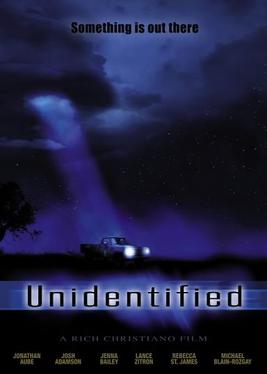
October Positivity: Unidentified (dir by Rich Christiano)


All across America (but mainly in Texas and California) people are seeing bright lights in the sky and reporting that they’ve been abducted by aliens.  Most of the abductees stop telling their stories after they are visited by mysterious men in black but enough are willing to talk about their experiences that eventually, Both Sides Magazine decides to do a story on it.

Keith and Brad are assigned to the story.  Keith is a nice but mild guy who is skeptical about aliens but he’s determined to give everyone a fair hearing,  The film suggests that this is perhaps because Keith’s a Christian, even though he doesn’t read his Bible every night and sometimes entertains doubts as to whether he’s truly going to Heaven.  Brad, meanwhile, is a hardcore Atheist who is rude to everyone and believes in absolutely nothing.  Brad hates the idea of having to do any stories that involve small town America.  Go to Texas to talk to UFO abductees?  That’s not Brad’s thing.  (Brad is supposed to be very unlikable but the actor playing him looks a bit like Owen Wilson so it’s hard to hold anything against him.)

Still, Brad and Keith do talk to an auto mechanic who says that he was abducted.  And then they talk to two Louisiana fishermen who were also abducted.  Keith thinks that their experiences are worthy of a feature article.  Brad vehemently disagrees.  Fortunately, it turns out that the magazine’s religion editor, Darren, supports Keith.

Why is the Religion Editor so interested in UFOs?  It’s not because he believes in aliens.  (“The Bible doesn’t say anything about life on other planets,” he explains.)  Instead, it’s because Darren thinks that the UFOs are actually being used by Satan to draw people away from God.  He points out that most of the people who have been abducted are either not religious or heavily into the paranormal.  Brad thinks that Darren’s full of it but, fortunately, a government informant shows up and reveals that not only is Darren correct but that the UFOs are going to be used as a way to explain away the Rapture!

As you probably guessed, this is a Rich Christiano film.  First released in 2006, Unidentified was Christiano’s second feature length film and …. well, it’s not very good.  On the one hand, you have to appreciate Christiano’s ambition and his attempt to make a sci-fi film on a low budget.  On the other hand, Unidentified is painfully slow, poorly acted, and it’s hard not to notice that, for a major magazine, it appears that only six people work at Both Sides.  Let’s just say that this film is no Spotlight when it comes to realistically portraying the life of a journalist.  Darren makes it a point to try to convert everyone that he meets while investigating the story.  Honestly, this seems like the type of thing that would get most journalists fired from a secular magazine.  For whatever it’s worth, I do think the story itself had potential but the execution is definitely lacking.  That said, the film does work in a reference to Orson Welles’s War of the Worlds broadcast.  I’m not sure how Orson would have felt about that.

For the record (and since this review is running a little short), I personally don’t believe in UFOs but I have read several books about them.  It amuses me that aliens are apparently always coming to our planet to tell us to stop being so war-like or to take better care of the environment.  Hey, Mr. Martian — WORRY ABOUT YOUR OWN PLANET!

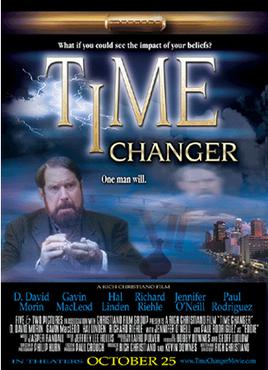
October Positivity: Time Changer (dir by Rich Christiano)


The 2002 movie, Time Changer, tells the story of Russell Carlisle (D. David Morin).  Russell is a bible professor who has written a book called The Changing Times.  The Changing Times encourages everyone to live a good, moral life but it doesn’t specifically state that they should live a good, moral life because Jesus says so.  Dr. Norris Anderson (Gavin MacLeod) argues that the book will actually not lead people to become better but will instead lead them away from Christianity by convincing them that all they have to do is be nice.  Carlisle disagrees.

Luckily, Anderson just happens to have a time machine in his basement!  When Russell comes over to discuss the book, Anderson suggests that Russell go into the future and see just how changed the world has become.  Mostly to humor Anderson, Russell agrees and steps into the machine.

And suddenly, Russell Calirlise is in the year 2002!

What does Russell discover?  He learns that even movies about good people still feature things that he finds objectionable.  He discovers that even people who go to church don’t always live a perfect life.  In 1890, Russell was shocked to learn that the divorce rate was 5% so you can only imagine how he reacts when he goes to 2002 and continually runs into people who talk about their ex-wives.  Russell also gets upset when he hears some teenage girls talking about sneaking out of the house and going on an unchaperoned date.  The horrors!

To be honest, there’s been a lot of movies that have told similar stories to Time Changer.  Someone from the past comes to the “present,” and is shocked to discover how much the world has changed.  Time Changer is unique that it’s totally on Russell’s side and essentially argues that we would all be better off if we still embraced the culture of the 1890s.  If that sounds a bit preachy, that’s because it is a bit preachy.  Interestingly enough, the film has no trouble having Russell explain how he, as someone from 1890, feels about dating, entertainment, and honesty but it leaves out how an 1890 man like Russell would have viewed women or people of color.  Russell is shocked by the casual use of bad language but, conveniently for the film’s efforts to make him a sympathetic character, he doesn’t raise an eyebrow at suddenly finding himself in a multiracial society.  It’s easy to argue for a return to 1890 morality when you ignore everything that was bad about the 1890s.

That said, the film has a few intentionally amusing moments, even if they’re exactly the type of moments that you would expect to see in a film about time travel.  (For example, Russell finds himself fascinated by a light switch.)  D. David Morin gives a likable performance Russell and the scene where Anderson hurriedly explains how time travel works as a nice little satire of the genre.  It’s far too preachy to really be effective but Time Changer is not a total waste of time.  That said, I would far rather live in 2022 than 1890.

October Positivity: The Appointment (dir by Rich Christiano)


First released in 1991 and filmed in Arkansas (which means that I might very well be distantly related to half the cast), The Appointment opens with people all across a small town reading a newspaper column that’s been written by Liz (Karen Jo Briere).  Liz’s column is all about how much she hates Christians and how she wishes that they would stop opening up new churches and demanding that everyone give them money.  Judging by the reactions of the people reading the column, this is apparently the only thing that Liz ever writes about.

At the newspaper, Liz is getting angry calls from people who she describes as being “religious nuts.”  At one point, she says that the paper has gotten fifteen calls!  Now, I know that probably doesn’t sound like that many calls to you city folks but we’re talking about small-town Arkansas here.  In Arkansas, for every one person who complains, there’s probably about twenty who are just holding their tongue out of politeness.  In other words, Liz has upset a lot of people but she doesn’t care.  She hates religion and, besides, she’s going to Hawaii in just a few weeks.

But then, a mysterious man enters Liz’s office.  We never actually see the man.  Instead, we just see things from his point-of-view and we hear his voice when he speaks.  He informs Liz that he has a message from the Lord.

“The Lord who?” Liz asks.

“The Lord Jesus Christ,” the man replies.

(What was Liz expecting to hear?  Does she regularly get messages from the House of Lords or something?)

The man tells Liz that she’s going to die on September 19th at 6:05 pm.  She laughs him off and says that she can’t die because she’s going to Hawaii and she’s never seen it before.

“You never will,” the man replies.

AGCK!

The Appointment is a seriously creepy film.  What really makes it creepy is that no one at the newspaper seems to be that upset by this mysterious man who shows up in their office and tell their star columnist that she’s going to die.  Even though it’s established that everyone can see and hear the man, it doesn’t occur to anyone to call the cops after he leaves.  No one asks Liz if she’s okay.  When the mysterious figure shows up a second time, no one seems to be alarmed.  When the hour of what she’s told will be her death approaches, no one volunteers to stay with Liz or to protect her or offers her any words of comfort whatsoever.  I guess the 90s were a more innocent time but still, it seems like people should have been at least a little bit alarmed by all of this.  At the very least, maybe someone could have offered to walk Liz to her car.

The Appointment is one of those Christian films that attempts to convert viewers by scaring them.  I’m not really a fan of that approach and there’s something undeniably distasteful about the joy the film seems to take in counting down the minutes until Liz dies and presumably heads to Hell.  That said, it’s a surprisingly well-directed film and the amateur cast actually does a pretty good job.  The film’s musical score is loud, otherworldly, and totally intrusive, which is exactly right for this film.  The scenes in which the camera creep through the newspaper office feel more appropriate for a horror film than a faith-based film.  Agree or disagree with the film’s message, it’s still effective in its own crude sort of way.

Add to that, the film was shot in Arkansas, which is one of the many states in which I grew up and still have family.  As I watched the film, it was kind of nice to hear some familiar accents.

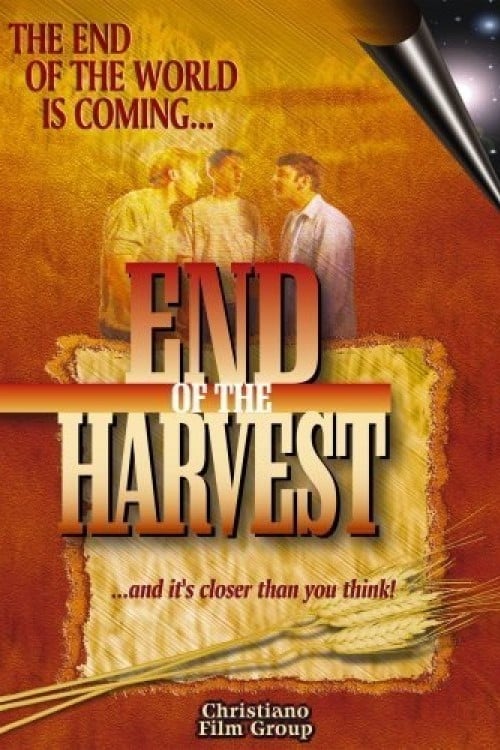
October Positivity: End of the Harvest (dir by Rich Christiano)


This 1995 film takes place on a college campus that is ruled over by the worst possible people …. THE PHILOSOPHY CLUB!

Okay, that might be an exaggeration.  It’s a big campus and undoubtedly, most of the students are just doing their own thing and don’t particularly care about any of the clubs or any of the Greek organizations or any of that stuff.  That said, it does seem like a surprisingly large amount of people are interested in the weekly Philosophy Club debates, despite the fact that the Philosophy Club itself seems to only have three members.

After seeing his religious friend get totally trampled while trying to debate the existence of God, Scott (Brad Heller) decides that it’s time to take a stand.  Scott used to be a wild frat boy and he even lost his license due to a DUI.  But now, he’s super Christian and he’s totally excited because he found a 50 year-old thesis about when the Bible says the world is going to end.  Scott challenges the Philosophy Club to a debate and soon, flyers are being put up all over campus.

The only problem is that Scott isn’t ready for the debate.  The Philosophy Club has uncovered the secrets of Scott’s dark past and, after they harass him on campus and start calling his ex-girlfriends, Scott starts to feel that he won’t be able to make his case.  He begs Matt (David A.R. White) for help but Matt says that it’s pointless to try to debate anything in front of the Philosophy Club.  The Philosophy Club doesn’t care about anything but Marx and Nietzsche.  Matt not only thinks that the debate will be a waste of time but he also thinks that it will actually drive people away from religion.

Of course, Matt has another reasons for not wanting to talk about the end of the world.  He’s been having odd dreams, in which he’s standing in a wheat field and watching an old farmer using a scythe to bring in the last harvest….

There have been several faith-base films that have been set on campus and they all have the same basic plot.  A religious person goes to college and has their faith tested by people who were raised differently and who insist that science or philosophy can serve as a substitute for religion.  It always seems to lead to a classroom debate and the religious student usually wins because all of the arguments have been slanted to their side.  Of course, it’s not just Christian films that do this.  If there’s one thing that Christians and atheists share in common, it’s an almost total ignorance about how the other side views the world and the questions of existence.  Anti-Christian films always fall back on the stereotype of the fanatical parents who refuse to allow their children to leave the house.  Christian films, on the other hand, always seem to feature an atheist who is angry at God.  End of the Harvest doesn’t go quite as far into those stereotypes as some other Christian films do but it’s still hard not to notice that the bizarrely smug members of the Philosophy Club are left speechless by some pretty basic arguments.  It’s the fantasy that both atheists and Christians tend to indulge in, the one where you come up with the pithy one-liner that no one can refute.  Christians always want to know how you can be angry at a God you don’t believe in.  Atheists always want to know, if God created everything, who created God.  In the real world, both arguments can be easily refuted but, in the movies, they’re always game changers.

End of the Harvest is a fairly standard religion-on-campus film.  It’s not going to convert anyone.  That said, the scenes of Matt standing in that wheat field have a nicely surreal feel to them.  In those scenes, it really does feel like the end is coming.

October Positivity: Second Glance (dir by Rich Christiano)


“Hey Scotty! Jesus, man!”

This 1992 film tells the story of Dan Burgess (played by David A. R. White, who, years later, would be the center of the God’s Not Dead franchise).  Dan is a high school student who fears that, because he spends all of his time going to church, he’s missing out on all the fun that he should be having.  Dan’s probably right.

Consider this:

The other kids are going to a big party.  Not Dan!

The other kids get to stay out as late as they want.  Not Dan!

The other kids don’t have to deal with two parents and a bratty sister.  Not Dan!

The other kids don’t have to keep their grades up.  Not Dan!

Dan can’t even get a girlfriend, because he’s just such a nice guy!  Of course, the girl from his youth group likes him but Dan wants to date Tamara (Denise Weatherly) and she only goes out with the type of guys who enjoy bullying Dan for being such a do-gooder.

One night, Dan prays that he wishes he had never become “a believer,” which would seem to defeat the purpose of not believing but anyway…. The next morning, Dan wakes up to discover that his bedroom is full of empty beer cans, the neighbors refuse to talk to him, and he now wears a backwards baseball cap.  As well, all of the high school bullies are now his best friends and he’s dating Tamara!  Plus, he’s been invited to Randy’s party!  Who is Randy?  Who cares?  It’s a party.

There’s also a weird guy named Muriel (Blaine Pickett) hanging out in Dan’s backyard.  Muriel explains that he is Dan’s guardian angel.  Everyone in Heaven was really upset by Dan’s prayer so they sent Muriel down to do a little bit of that It’s A Wonderful Life magic and show Dan what the world would be like if he wasn’t a believer.  Muriel also explains that only Dan can see and hear him.  That doesn’t stop Dan from arguing with Muriel and it also doesn’t stop people from seeing Dan apparently talking to himself.  But no one cares because Dan is now one of the popular kids.

In fact, Dan has everything that he ever wanted except …. well, his father seems to be missing.  And so is his little sister.  In fact, it turns out that he doesn’t even have a little sister because his parents got divorced when Dan was younger.  When Dan quite rightfully wonders how it could be his fault that his parents got a divorce, Muriel explains that it’s because non-believer Dan wasn’t praying for them when they were having trouble.  Ouch!  That’s harsh!  That’s also actually pretty messed up and a huge burden to put on the shoulders of those of us who grew up as children of divorce.  I know that when my parents got divorced, I kind of blamed myself and the message of this film is that apparently it was my fault.  Seriously, that’s a terrible message.  If you’re reading this and if your parents are divorced or are in the process of getting divorced, it’s not your fault!

Anyway, Dan learns an important lesson about faith and being impulsive in his prayers.  Soon, Dan is back to greeting his best friend by saying, “Hey, Scotty!  Jesus, man!”  Apparently, enough 90s kids were traumatized by this film that Dan’s greeting has become a minor meme.  That’s the power of film!