4 Or More Shots From 4 Or More Films is just what it says it is, 4 shots from 4 of our favorite films. As opposed to the reviews and recaps that we usually post, 4 Shots From 4 Films lets the visuals do the talking!
This October, I’m going to be doing something a little bit different with my contribution to 4 (or more) Shots From 4 (or more) Films. I’m going to be taking a little chronological tour of the history of horror cinema, moving from decade to decade.
Today, we take a look at the mid-60s!
8 Shots From 8 Horror Films: The Mid 60s
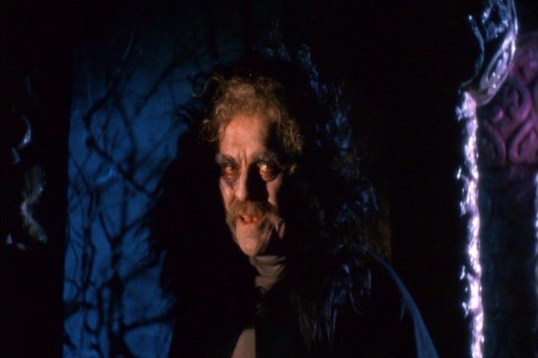
Black Sabbath (1963, dir by Mario Bava DP: Mario Bava)
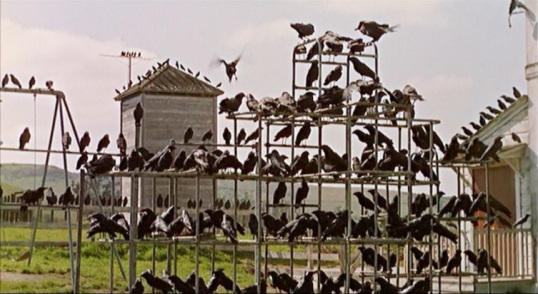
The Birds (1963, dir by Alfred Hitchcock, DP: Robert Burks)
The Raven (1963, dir by Roger Corman, DP: Floyd Crosby)
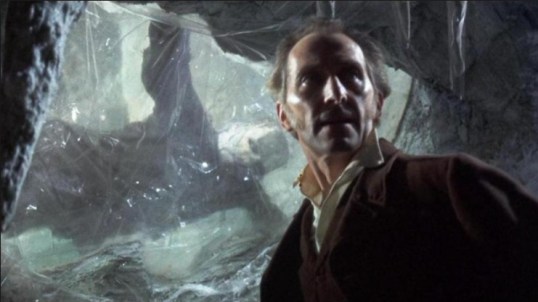
The Evil of Frankenstein (1963, dir by Freddie Francis, DP: John Wilcox)
The Masque of the Red Death (1964, dir by Roger Corman, DP: Nicolas Roeg)
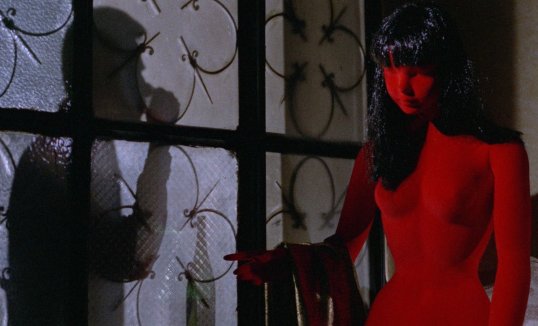
Blood and Black Lace (1964, dir by Mario Bava, DP: Mario Bava)
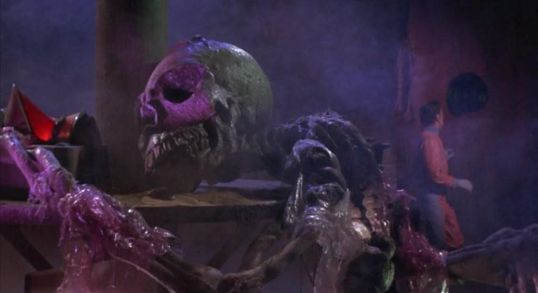
Planet of the Vampires (1965, dir by Mario Bava, DP: Antonio Rinaldi)
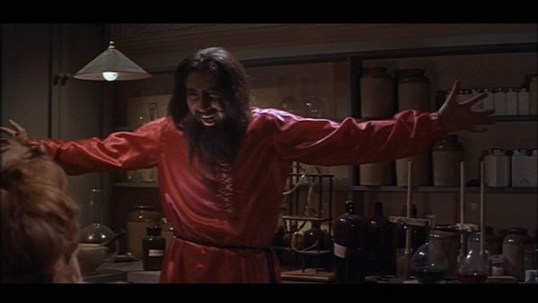
Rasputin The Mad Monk (1966, dir by Don Sharp, DP: Michael Reed)
4 Or More Shots From 4 Or More Films is just what it says it is, 4 shots from 4 of our favorite films. As opposed to the reviews and recaps that we usually post, 4 Shots From 4 Films lets the visuals do the talking!
Today, we honor the legacy of a man who was not just a great horror star but also a great actor. period Christopher Lee worked with everyone from Laurence Olivier to Steven Spielberg to Peter Jackson to Martin Scorsese. Though he turned own the chance to play Dr. No, Lee later did go play a Bond villain in The Man with The Golden Gun. He was one of those actors who was always great, even if the film wasn’t.
That said, it’s for his horror films that Lee is best known. He was the scariest Dracula and the most imposing Frankenstein’s Monster. He played mad scientists, decadent aristocrats, and even the occasional hero. Christopher Lee was an actor who could do it all and today, we honor him with….
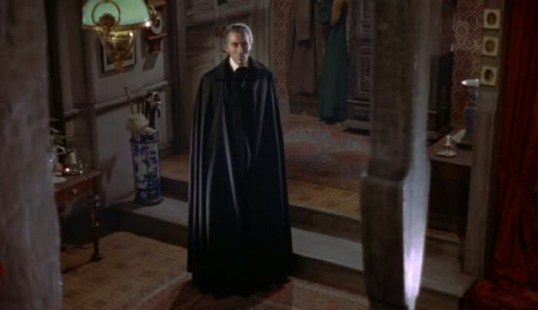
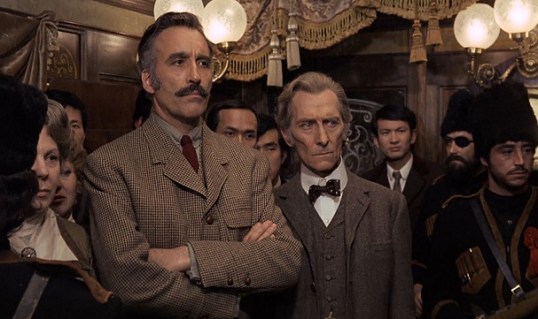
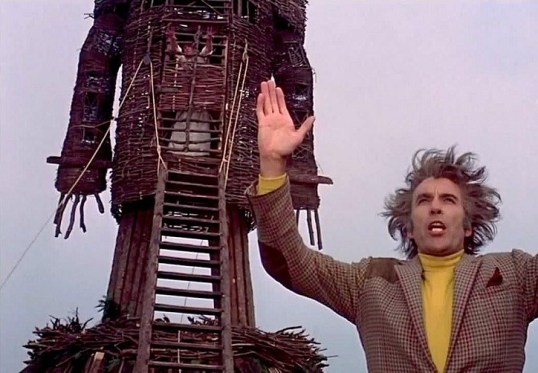
6 Shots From 6 Christopher Lee Films
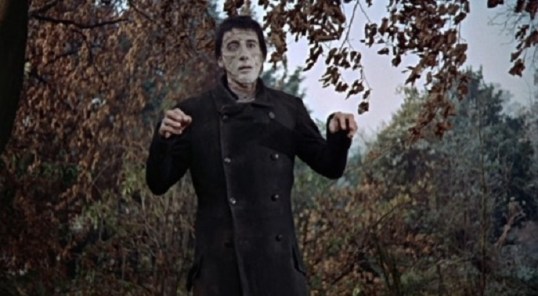
The Curse of Frankenstein (1957, dir by Terence Fisher, DP: Jack Asher)
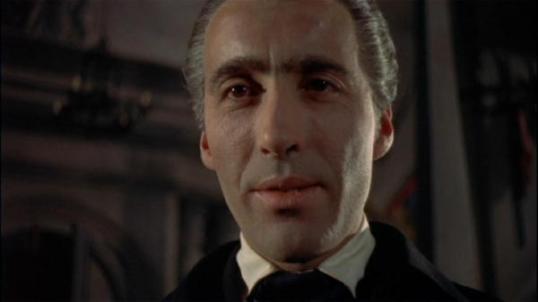
The Horror of Dracula (1958, dir by Terence Fisher, DP: Jack Asher)
Rasputin The Mad Monk (1966, dir by Don Sharp, DP: Michael Reed)
Count Dracula (1970, dir by Jess Franco, DP: Manuel Merino and Luciano Trasatti)
Horror Express (1972, dir by Eugenio Martin, DP: Alejandro Ulloa)
The Wicker Man (1973, dir by Robert Hardy. DP: Harry Waxman)
In turn of the century Russia, there lived a man named Grigori Rasputin.
He was a monk, though some considered him to be more a servant of the devil than of God. Legend has it that he was a man who rarely bathed and who made it a point to live in the wild, a part of nature. His hair was long and unkempt and he was known for his wild eyes. Depending on who is telling the story, Rasputin’s stare is described as either being seductive or frightening. Rasputin had a reputation for being a great healer, as well as a great seducer. (It is said that Rasputin offered up as his defense that it was necessary to sin so that he could be forgiven by God.)
Despite being a controversial figure (and, in the eyes of same, an instrument of the devil), the charismatic Rasputin became well-known in Russian social circles. In fact, the stories of his powers as a healer eventually reached the household the Tsar. The Tsar’s son suffered from hemophilia and was frequently ill. Rasputin was brought into the royal palace to cure him and, according to contemporary accounts, he was somehow able to do just that. It was said that only Rasputin could stop the boy’s bleeding.
It was also said that Rasputin grow to have a good deal of influence over the Tsarina. In fact, he was seen as having so much influence that certain members of the royal court started to view him as being a threat to their own power. On December 30th, 1916, Rasputin was murdered. There are many stories about how Rasputin was murdered but it’s generally agreed that the conspirators first tried to poison him, just to discover that Rasputin was apparently immune to cyanide! Eventually, Rasputin was shot twice and then dumped in the Malaya Nevka River. Stories about how difficult it had been to kill Rasputin only added to his legend.
After his death (and the subsequent communist revolution that led to the murders of the Tsar and his family), Rasputin became a legendary figure. Because of his connection to the occult, it’s perhaps not surprising that he’s also been the subject of a number of biopics. Everyone from Klaus Kinski to Lionel Barrymore to Alan Rickman has played the mad monk. (Apparently, Leonardo DiCaprio has been attached to an up coming film about Rasputin.)
And then there’s Christopher Lee. Christopher Lee played Rasputin in the 1966 Hammer Film, Rasputin, The Mad Monk. It’s probably one of Lee’s best performances, as well as one of his most lively. Lee plays Rasputin as being a cunning charlatan, one who may act like a madman but who always know exactly what he’s doing. The film makes perfect use of Lee’s imposing physical presence and, when Rasputin uses his powers of hypnotism, Lee stares with such intensity that you never doubt that he’s a man who knows how to get exactly what he wants. Lee makes you believe that, through sheer willpower, Grigori Rasputin very well could have become one of the most important men in Russia.
As for the film itself, it’s a briskly paced retelling of Rasputin’s final years, hitting all of the expected points without ever digging too far beneath the surface. Rasputin cures the sick and seduces their mothers, wives, and sisters and uses his powers of hypnotism to hold most of St. Petersburg under his control. Many of the usual Hammer performers (including Barbara Shelley, as the Tsarina’s servant and Joss Ackland as a bishop) make an appearance and the fact that no one makes the least bit of effort to sound Russian just adds to the film’s charm. It’s an entertaining look at a fascinating historical story and, most importantly, it features Christopher Lee at his chilling best.




 Through the Shattered Lens