Lisa Reviews An Oscar Nominee: Romeo and Juliet (dir by George Cukor)


http://www.youtube.com/watch?v=IoAgB_sbDOE

You know the story that’s told in this 1936 film already, don’t you?

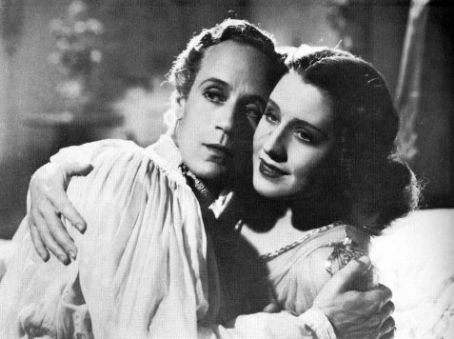
In the city of Verona, Romeo Montague (Leslie Howard) has fallen in love with Juliet Capulet (Norma Shearer).  Normally, this would be cause for celebration because, as we all know, love is a wonderful thing.  However, the House of Capulet and the House of Montague have long been rivals.  When we first meet them all, they’re in the process of having a brawl in the middle of the street.  There’s no way that Lord Capulet (C. Aubrey Smith) will ever accept the idea of Juliet marrying a Montague, especially when he’s already decided that she is to marry Paris (Ralph Forbes).  Things get even more complicated with Juliet’s cousin, Tybalt (Basil Rathbone), kills Romeo’s best friend, Mercutio (John Barrymore).  Romeo then kills Tybalt and things only grow more tragic from there.

It’s hard to keep track of the number of films that have been made out of William Shakespeare’s tale of star-crossed lovers and tragedy.  The plot is so universally known that “Romeo and Juliet” has become shorthand for any story of lovers who come from different social sects.  Personally, I’ve always felt that Romeo and Juliet was less about love and more about how the rivalry between the Montagues and the Capulets forces the young lovers into making hasty decisions.  If not for Lord Capulet throwing a fit over his daughter’s new boyfriend, she and Romeo probably would have split up after a month or two.  Seriously, I’ve lost track of how many losers I went out with in high school just because my family told me that I shouldn’t.

Producer Irving Thalberg spent five years trying to get MGM’s Louis B. Mayer to agree to greenlight a film version of Romeo and Juliet.  Mayer thought that most audiences felt that Shakespeare was above them and that they wouldn’t spend money to see an adaptation of one of his plays.  Thalberg, on the other hand, thought that the story would be a perfect opportunity to highlight the talents of his wife, Norma Shearer.  It was only after Warner Bros. produced a financially successful version of A Midsummer Night’s Dream that Mayer gave Romeo and Juliet the go ahead.

Of course, by the time the film went into production, Norma Shearer was 34 years old and a little bit too mature to be playing one of the most famous teenagers in literary history.  Perhaps seeking to make Shearer seem younger, Thalberg cast 43 year-old Leslie Howard as Romeo, 44 year-old Basil Rathbone as Tybalt, and 54 year-old John Barrymore as Mercutio,  (In Barrymore’s defense, to me, Mercutio always has come across as being Verona’s equivalent of the guy who goes to college for ten years and then keeps hanging out on the campus even after dropping out.)

In short, this is the middle-aged Romeo and Juliet and, despite all of the good actors in the cast, it’s impossible not to notice.  There were few Golden Age actors who fell in love with the authenticity of Leslie Howard and Basil Rathbone is a wonderfully arrogant and sinister Tybalt.  Norma Shearer occasionally struggles with some of the Shakespearean dialogue but, for the most part, she does a good job of making Juliet’s emotions feel credible.  As for Barrymore — well, he’s John Barrymore.  He’s flamboyant, theatrical, and a lot of fun to watch if not always totally convincing as anything other than a veteran stage actor hamming it up.  The film is gorgeous to look at and George Cukor embraces the melodrama without going overboard.  But, everyone in the movie is just too old and it does prove to be a bit distracting.  A heart-broken teenager screaming out, “I am fortune’s fool!” is emotionally powerful.  A 43 year-old man doing the same thing is just not as effective.

Despite being a box office failure (it turned out that Mayer was right about Depression-era audiences considering Shakespeare to be too “arty”), Romeo and Juliet was nominated for Best Picture of the year, the second Shakespearean adaptation to be so honored.  However, the award that year went to another big production, The Great Ziegfeld.
Lisa Reviews An Oscar Nominee: The Barretts of Wimpole Street (dir by Sidney Franklin)


The 1934 best picture nominee, The Barretts of Wimpole Street, takes place largely in one room.

That room is a bedroom located in a mansion that sits on Wimpole Street in London.  The room is occupied by Elizabeth (Norma Shearer), a sickly woman who has spent years in bed and who is barely able to walk.  She is the eldest of 11 siblings and all of them live in the house together, under the watchful eye of their tyrannical father, Edward (Charles Laughton).  Edward has forbidden any of his children from ever leaving home.  None of them are to get married.  In fact, none of them are to have even a relationship.  Even when he hears that a trip to Italy could actually improve Elizabeth’s health, he sternly forbids her from leaving.  Edward is obsessed with sin.  As he explains it, he was once a sinner himself.  In fact, he was such a sinner that he sometimes lost control of himself.  Now that he’s a father and a widower, Edward deals with his less savory impulses through constant prayer and he’s determined to never allow his children to fall into sin as well.

Despite her father’s attempts to keep her isolated from the outisde world, Elizabeth has managed to find an escape.  She’s a poet and her words have won her admirers from around world.  One of those admirers is another poet, a young man named Robert (Fredric March), who frequently writes her letters about his love of her work.  One day, in the middle of a snowfall, Robert shows up at the house on Wimpole Street and requests to see Elizabeth.  Robert tells her that her poetry has not only inspired him but it has also caused him to fall in love with her.  When Elizabeth explains that she is dying and cannot leave the bedroom, Robert says that she’s going to live forever.  After Robert leaves, Elizabeth manages to stand and, for the first time in years, walks over to the window to watch as he departs.

Sounds like a perfect love story, right?  Well, there’s a problem.  Edward has absolutely no intention of allowing Elizabeth to leave the house, regardless of how much her health improves after her initial meeting with Robert.  He is determined to keep her in that bedroom and, this being a pre-code film, it becomes obvious that there’s more to Edward’s behavior than just being an overprotective father.  Though the dialogue may be euphemistic, Edward’s incestuous desires are plain to see.  It’s there every time that he leers as his daughters while also saying that he’ll be sure to pray for their souls.  It’s there in the film’s final moments, when Edward makes a request that’s so dark and cruel that it will take even a modern audience by surprise.  Charles Laughton played a lot of villains over the course of his long career but Edward is perhaps the most monstrous.

As a film, The Barretts of Wimpole Street is undeniably stagy and it’s a bit overlong as well.  Charles Laughton so dominates the film with menace that he threatens to overshadow not just March and Shearer but also Maureen O’Sullivan, who plays one of Elizabeth’s sisters.  But no matter!  I absolutely love The Barretts of Wimpole Street.  The house is gorgeous, the plot is wonderfully melodramatic, and Shearer and March both have a wonderful chemistry.  You can debate whether or not March and Shearer are credible as poets but, ultimately, what matters more is that they are totally believable as soul mates.  From the minute they first meet, you simply buy them as a couple that is meant to be.  Robert’s earnestness is perfectly matched with Elizabeth’s growing strength and it’s impossible not to cheer at least a little when Elizabeth first manages to walk down a staircase without collapsing.

Of course, as any student of literature should be aware, Robert is Robert Browning and Elizabeth is Elizabeth Barrett.  In real life, Robert Browning did arrange a meeting with Elizabeth after having read her poetry and, as well, it’s been said that Elizabeth’s father did not approve of her relationship with Robert.  It’s also apparently true that Edward actually did disinherit any of his children who married.  As for the other details of Edward’s depiction in The Barretts of Wimpole Street, it’s unknown how close to the truth Laughton’s performance may have been.

The Barretts of Wimpole Street is a wonderful historical romance.  It was Oscar-nominated for best picture, though it lost to a far different romance, It Happened One Night.

Horror on the Lens: The Hound of the Baskervilles (dir by Sidney Lanfield)


For today’s horror on the lens, we have 1939’s The Hound of the Baskervilles!

Based, of course, on the novel by Arthur Conan Doyle, The House of the Baskervilles is well-remembered for being the first of many Sherlock Holmes films to star Basil Rathbone as the detective and Nigel Bruce as his loyal sidekick, Dr. Watson.  Interestingly enough, Holmes is absent for a good deal of the film, leaving it up to Watson to do the majority of the investigating.  That said, you can still see why Rathbone’s interpretation of the character proved to be so popular that he would go on to play Holmes in a total of 14 movies and one radio series.

Enjoy!