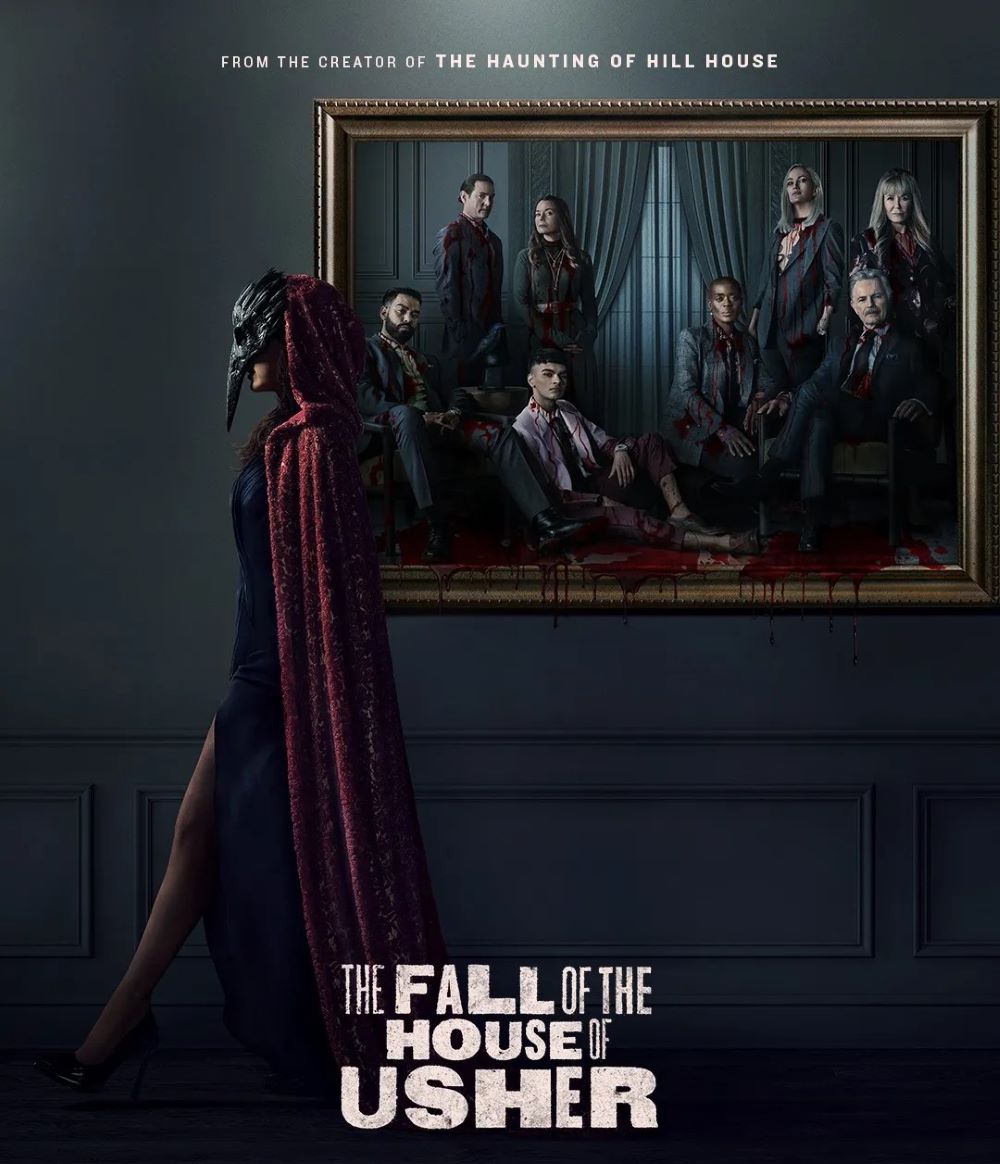
“If pain and suffering were the kisses of Jesus, then he kissed the living fuck out of my mother.” — Roderick Usher
The Fall of the House of Usher delivers Mike Flanagan’s signature blend of gothic dread and modern moral reckoning, reimagining Edgar Allan Poe’s tales as a savage family implosion tied to corporate excess. This Netflix miniseries unfolds over eight taut episodes, framing the confessions of a pharmaceutical tycoon as his bloodline meets grisly, poetic ends. It balances sharp satire with emotional undercurrents, though its heavy-handed messaging and repetitive structure occasionally blunt the impact.
Roderick Usher, now a hollowed-out patriarch, recounts his empire’s collapse to a relentless prosecutor in the crumbling family mansion, flashing back to decades of ambition, betrayal, and supernatural intervention. His twin sister Madeline, the brains behind their Fortunato Pharmaceuticals fortune, shares equal narrative weight, their pact with a enigmatic figure sealing a curse that claims each heir in turn. The setup echoes Poe’s original story but explodes it into a sprawling anthology, with every installment riffing on a different work from the author’s macabre catalog. This structure keeps the momentum high, turning personal flaws into fatal traps, yet it risks formula once the pattern of vice-reveal-demise becomes predictable.
A standout early episode channels The Masque of the Red Death, where a debauched heir’s orgiastic gala spirals into carnage, blending excess with infectious horror in a sequence that’s equal parts thrilling and grotesque. Later, Goldbug skewers influencer wellness culture through a sibling’s pyramid-scheme downfall, its tech-glitch kills inventive and on-theme. These Poe-infused vignettes shine when they lean into visceral spectacle—impalements, immolations, animalistic frenzies—elevating routine family feuds into something operatic. However, weaker entries, like those fixated on lab accidents or courtroom paranoia, feel more procedural than poetic, diluting the supernatural menace amid procedural tangents.
Flanagan’s direction thrives in the atmospheric details: opulent sets that rot from within, shadows pooling like guilt, a score that swells with mournful strings underscoring inevitable doom. Performances anchor the excess, with Carla Gugino’s shape-shifting Verna stealing scenes as a devilish facilitator—charming one moment, apocalyptic the next. Bruce Greenwood lends Roderick a defeated majesty, his monologues on greed and legacy landing with gravitas despite their length. Mark Hamill’s fixer adds gravelly comic menace, a cold pragmatist navigating the Ushers’ moral sewer. The younger cast fares variably; some heirs pop as vicious caricatures—the coke-fueled playboy, the ruthless scientist—while others blur into interchangeable privilege.
Thematically, the series wields Poe’s obsessions—entombment, madness, retribution—against Big Pharma’s sins, drawing parallels to real-world opioid scandals without subtlety. Roderick and Madeline’s rise from rags via a addictive painkiller mirrors ethical shortcuts in pursuit of immortality, their “house” both literal estate and dynastic delusion. Verna embodies karmic balance, not mindless evil, her interventions exposing how wealth insulates sin until cosmic debt collectors arrive. This critique bites, especially in rants decrying humanity’s commodification of suffering, but preachy asides can halt the dread, turning horror into TED Talk territory. Flanagan fans will recognize his grief motifs, here twisted into generational poison rather than personal catharsis.
Pacing falters in the midsection, where flashbacks to the Ushers’ origin drag against the ticking present-day trial. The frame narrative, while elegant, withholds twists too long, making early hours feel like setup over payoff. Gorehounds get inventive set pieces, from pendulum blades to heart-pounding pursuits, but scares prioritize irony over outright terror—less Hereditary shocks, more Final Destination comeuppance. For a one-season arc, it wraps tightly, circling back to Poe’s raven as a symbol of unending loss, though the finale’s revelations feel more intellectually tidy than emotionally shattering.
As adaptation, it honors Poe’s spirit over fidelity, cherry-picking motifs from tales like The Tell-Tale Heart, The Black Cat, and The Pit and the Pendulum to fuel a contemporary revenge saga. Purists might chafe at the liberties—Poe’s claustrophobic intimacy traded for ensemble sprawl—but the result captures his misanthropy, updating crumbling aristocracy to cutthroat capitalism. It’s Flanagan’s angriest work, swapping supernatural melancholy for gleeful vengeance, yet retains his humanism: even monsters get poignant final beats, hinting at redemption’s flicker amid ruin.
The Fall of the House of Usher polarizes like much of Flanagan’s output—loved for audacity, critiqued for indulgence. Its ensemble and kills draw praise, but detractors note tonal whiplash between camp and sincerity. For horror enthusiasts craving literary flair over found-footage tropes, it’s a feast; casual viewers may tire of the lectures. Compared to Flanagan’s Hill House or Midnight Mass, it’s less introspective, more punitive, trading tears for dark laughs at the mighty’s tumble.
Ultimately, the miniseries succeeds as pulpy prestige, a bloody valentine to Poe that indicts modern excess without fully escaping melodrama’s clutches. Its highs—Gugino’s tour de force, baroque deaths, thematic ambition—outweigh the bloat, making it binge-worthy for gothic fans. In Netflix’s crowded horror slate, it stands out for wit and wickedness, a flawed but ferocious reminder that some houses, and legacies, deserve to fall.

 Through the Shattered Lens