Review: Bates Motel S1E1 “First You Dream, Then You Die” (dir by Tucker Gates)


bates_motel

When I was in high school, I once wrote a short story for my creative writing class.  The story was basically about me and my friends shopping at the mall and it was full of quirky observations and funny dialogue.  I had a lot of fun writing it and, when I read it aloud, both the class and my teacher seemed to enjoy it.

However, when I got my paper back, I discovered that I had only gotten a B for my efforts.  At the top of the first page of my story, in bold red ink, my teacher had written: “As usual, you’re very observant and detailed.  However, I get the feeling that you mostly write to amuse yourself.  Why should anyone care about this story?”

At the time, I felt my teacher was being very unfair and I’m still not very happy about that comment.  Why should anyone care?  I thought.  Because I wrote it, that’s why!  However, as time has gone by, I’ve come to see (if not necessarily agree with) her point.  “Why should anyone care?” is the question that critics ask themselves every time they start a review.

“Why should anyone care?” is also the question that I asked myself every time I saw a commercial for Bates Motel on A&E.

The commercials promised that Bates Motel would be a prequel to one of the most memorable films ever made, Alfred Hitchcock’s Psycho.  And while they were undeniably effective and occasionally disturbing, I still found myself wondering why anyone should care.  We all already know what Norman Bates is going to eventually become so is there really a need for a prequel to give us the exact details of how it happened?

In other words: Why should anyone care?

That’s the question that Bates Motel attempted to answer last night with its premiere episode.  It didn’t quite succeed.  As well-made as the episode was, Bates Motel exists in the long shadow of Psycho and one reason why Psycho remains a classic is because, storywise, it told us everything that we needed to know.  As a result of Anthony Perkins’s iconic lead performance, we ended that film feeling that we knew everything that we needed to know about both Norman Bates and how he became what he became.  The question for Bates Motel — even more than “Why should we care?” — is whether or not the show has anything new to tell us.

So far, it’s still too early to tell but I do hope that Bates Motel does find a reason for us to care because, if it does, it has the potential to be an entertaining and effective little show.

Last night’s episode started with teenage Norman Bates (Freddie Highmore) finding his father’s dead body.  When he informs his mother, Norma (Vera Farmiga), she doesn’t seem to be all that concerned.  In fact, the attentive observer might have even noticed a small smile on Norma’s lips.

6 months later, Norman and his extremely overprotective mother are moving to a new town.  Norma’s bought a run-down motel and she says that this will be the perfect way for her and Norman to start a new life.  However, the motel’s former owner disagrees and, when he attempts to rape Norma, he ends up getting stabbed to death and dumped in a bathtub.

Meanwhile, Norman is struggling to adapt to his new life.  During his first day of school, he manages to befriend four high school girls who, needless to say, are not approved of  by his mother.  Norman sneaks out of the house to go to a party but, like a good son, he still helps his mom dispose of a dead body.  He also manages to find a crudely illustrated BDSM booklet underneath the carpet in one of the motel rooms.  Hmmmm….that’s probably not going to turn out well…

There were some promising signs for the future to be found last night.  The entire episode had an undeniably creepy, off-center feel to it.  When the commercials leading up to the premiere first started to air, I was somewhat put off by the sight of Norman Bates listening to an iPod.  As I put it on twitter, “If Norman Bates was in his 30s in 1960, then how did he own an iPod when he was a teenager?”  However, after seeing last night’s episode, I saw that the show’s creators were actually being very clever in how they mixed modern technology (like that iPod) with various retro details.  This is the type of show where people get text messages while watching flickering black-and-white televisions and it gave this episode a timeless and, at times, rather surreal feel.

Another big plus was that, about halfway through the episode, Nestor Carbonell showed up.  In Bates Motel, Carbonell plays Sheriff Andy Romero.  He shows up to investigate the new owners of the motel, asks Norma a few insinuating questions, and then proceeds to take the world’s longest (and loudest) piss without once noticing that he’s standing next to a dead body.  Carbonell’s pretty much playing the same role that he played in last season’s Ringer but no matter.  Nestor Carbonell elevates anything that he’s involved with.

Freddie Highmore made for a sympathetic Norman and, perhaps most importantly, you can look at him and imagine him growing up to be Anthony Perkins.  However, not surprisingly, last night’s episode was dominated by Vera Farmiga.  Playing Norma as a character who is both sympathetic and frightening, Farmiga finds the perfect pitch for her performance.  Farmiga is brave enough to occasionally go over-the-top but she’s also a skilled enough actress that she never allows Norma to be anything less than credible.

In the end, both Norman and Norma are monsters that you can believe in and, for that reason, I’ll be interested to see what Bates Motel does with them over the next few episodes.

Random Observations:

  • That final scene was tres creepy, no?
  • Tonight’s episode was directed Tucker Gates, who previously directed episodes of Lost and Alias.
  • Vera Farmiga seriously kicks so much ass!  I hope that, when I grow up, I’m just like her.
  • Ever since I first saw him on Lost, I’ve loved Nestor Carbonell.  I wasn’t that enthusiastic about The Dark Knight Rises but I smiled when he showed up and then I shed a tear when his character was blown up.
  • When Norman went to that party with his new friends, I tweeted, “OMG, Norman’s trapped in a Harmony Korine movie!”
  • Despite having mixed feelings about whether or not the show is really all that necessary, I’m still looking forward to watching and reviewing the next few episodes of Bates Motel.  I’m just hoping that the show doesn’t devolve into a “murder-a-week” format.
  • Speaking of which, who do you think will be the first character to be menaced while taking a shower?  Because you so know it’s going to happen…

Film Review: Hitchcock (dir by Sacha Gervasi)


Alfred Hitchcock is one of those iconic cultural figures who will never go out of style.  Though he’s been dead longer than I’ve been alive, he’s still one of my favorite directors.  If I see a Hitchcock film listed in the TV schedule, I can guarantee that I will find the time to watch it.  Whether its The 39 Steps, Rebecca, Strangers On A Train, Topaz, or Frenzy, if it’s Hitchcock, I’m there. And I’m not alone as far as this is concerned.  If Hitchcock hadn’t made The Birds, James Nguyen would never have made Birdemic.  If Hitchcock hadn’t made Psycho, hundreds of low-budget horror films would never have had a chance to be distributed on DVD by Anchor Bay.

While it may have been Vertigo that was recently named the best film of all time by the Sight and Sound Poll, Psycho remains Hitchcock’s best known and most popular film.  Psycho is certainly my favorite Hitchcock film, which is why I was certainly curious when I first heard about Hitchcock, a new movie that claims to tell the true story behind the making of Psycho.

Hitchcock opens with 60 year-old Alfred Hitchcock (Anthony Hopkins) trying to figure out how to follow up the success of North By Northwest.  Hitchcock settles on adapting a little-regarded pulp novel that’s based on the true life crimes of serial killer Ed Gein.  Over the objections of the censors, the studio, and all of his associates, Hitchcock makes Psycho his next film.  At the same time, his wife Alma (Helen Mirren) deals with living in the shadow of her famous husband.  While Hitchcock devotes all of his time to his film and obsessing over his leading actresses, Alma find herself tempted by a slick screenwriter named Whitfield Cook (Danny Huston).

(Has anyone good ever been named Whitfield Cook?)

As a film, Hitchcock is likable but shallow.  Anthony Hopkins and Helen Mirren have great chemistry and they’re a lot of fun to watch but you never truly believe that you’re watching the true story of the making of a movie that changed cinematic history.  Whenever Hitchcock threatens to become truly insightful about the artistic process, the story abruptly cuts away to another scene of Alma writing on the beach with Whitfield Cook.  It doesn’t help that Danny Huston plays Cook as such an obvious cad that it actually diminishes Alma as character when she doesn’t immediately see through him.

Similarly, in the role of Alfred Hitchcock, Anthony Hopkins gives a performance that is very likable and quite watchable but, in the end, still feels rather shallow.  His performance feels like a good and entertaining impersonation but it never quite feels real.  The closest that the film (and Hopkins) comes to suggesting any of Hitchcock’s inner demons is when he imagines having a conversation with Ed Gein (played by Michael Wincott).  These scenes feel terribly out-of-place when compared to the rest of the film.

The actresses playing the women in Hitchcock’s life fare a little bit better.  Jessica Biel and Scarlett Johansson are well-cast as Vera Miles and Janet Leigh, respectively.  Helen Mirren is widely expected to earn an Academy Award nomination for her performance as Alma and she does have several strong scenes in Hitchcock.  As I watched the film, I certainly could relate to Alma’s desire to be taken seriously as an individual and her frustration with being defined solely by the vows of marriage.  It’s a feeling that Mirren captures perfectly.

In the end, Mirren aside, Hitchcock is entertaining but forgettable.

Trailer: Hitchcock


It seems appropriate that, during the time of year that is devoted to horror, Fox Searchlight should release a trailer for an upcoming film that claims to tell the “true” story about the making of Psycho, one of the scariest and most influential horror movies ever made.

I have to admit that I’ve had my doubts about Hitchock ever since the project was first announced and, watching this trailer, I still have my doubts.  While Helen Mirren looks to be as strong as always and Scarlett Johansson is an inspired choice to play Janet Leigh, I still have my doubts about Anthony Hopkins playing the role of Alfred Hitchcock.

From the evidence presented in this trailer, Hopkins’s interpretation of Hitchcock appears to be …. interesting, if nothing else.

Fox Searchlight, however, seems to have a lot of faith in Hitchcock as they’ve moved up the premiere date so that the film can premiere in November, at the start of Oscar season.


Leslie Nielsen, R.I.P.


Earlier tonight, I read on twitter that veteran character actor and Prom Night co-star Leslie Nielsen had passed away.  While people seem to know him best as a former “serious” actor turned deadpan comedian, it is forgotten that Nielsen was — during the 70s — an exploitation and grindhouse mainstay.

Along with playing Jamie Lee Curtis’s father (and no-nonsense high school principal) in Prom Night, Nielsen was also the star of the kung fu classic Project: Kill and the bad guy in Day of the Animals.

The clip below comes from Day of the Animals and it shows Nielsen at his exploitation best:

Here’s a little bit of the movie history trivia that I live for: In 1959, along with famously auditioning for a role in Ben-Hur, Nielsen also came close to being cast in another iconic film.  He was among the finalists for the role of Sam Loomis (eventually played by John Gavin) in Alfred Hitchcock’s Psycho.

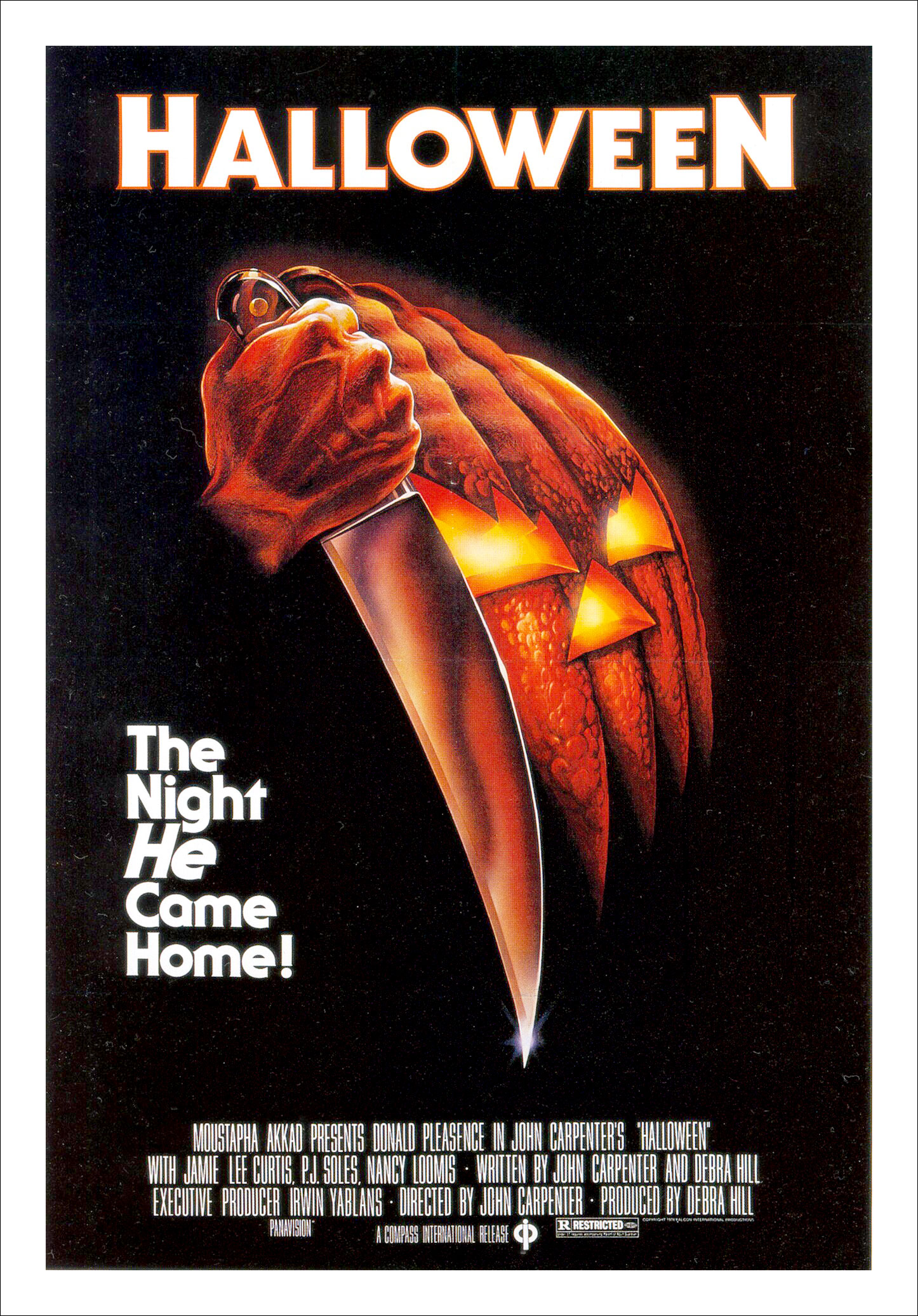
The Daily Grindhouse: Halloween (dir. by John Carpenter)


What better way to bring back a new daily grindhouse than the film which started the teen slasher genre. I speak of John Carpenter’s Halloween.

The film was truly a child of 1970’s independent filmmaking. With a budget of just $320,000 (even adjusting for inflation it’s still quite low) Carpenter made what’s considered one of horror’s defining films. Carpenter’s film was a smash hit when it was released in 1978. It played mostly in drive-in’s, grindhouse cinema houses before finally appearing in more mainstream venues. By then the film had become one of those must-see titles that many films both independent and mainstream try for but fail to do.

Some have commented that since Halloween was such a success in the box-office then it shouldn’t be considered grindhouse. I look at such thinking as quite narrow. Grindhouse was never synonymous with bad filmmaking. If one said the term meant cheap filmmaking then I would agree. Carpenter’s film has all the trappings of what makes a great grindhouse. It’s violent (though it really has less blood than what audience really remember) and uses sex as a storytelling tool (again the sex is quite chaste compared to later teen slashers).

While some film historians credit Hitchcock’s Psycho as the granddaddy of the slasher genre it wasn’t primogenitor of the teen slasher subgenre which has become an industry onto itself since Carpenter’s breakthrough hit. A hit that set many of the basic rules of teen slasher horror for decades to come. We get the nigh-unstoppable killer who seems more like a force of nature than human. The notion that teenage girls who have premarital sex will die horribly because of it while the chaste and virginal girl survives and inevitably stops the killer (until the subsequent sequel that is).

Halloween is grindhouse through and through. The fact that Carpenter’s obvious talent and skill as a director, editor, film composer and cinematographer shouldn’t DQ this film from being called grindhouse.