The melody of Hail to the Chief is based on a Scottish song about a boat captain. The Americanized version debuted in 1815 and has since been used to announce the arrival of the President.
Jimmy Carter didn’t like the song and ordered that it not be played during his presidency. I guess that’s why he was a one-termer.
Hail to the chief We have chosen for the nation Hail to the chief We salute him one and all Hail to the chief As we pledge cooperation In proud fulfillment Of a great noble call Yours is the aim To make this grand country grander This you will do That’s our strong firm belief Hail to the one We selected as commander Hail to the president Hail to the chief Hail to the chief We have chosen for the nation Hail to the chief We salute him one and all Hail to the chief As we pledge cooperation In proud fulfillment Of a great noble call
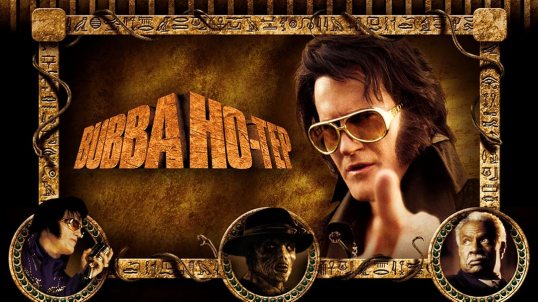
Today is both President’s Day and Don Coscarelli’s birthday! As such, it only seems appropriate that today’s scene of the day should come from Coscarelli’s 2002 film, Bubba Ho-Tep.
In this film, Elvis (Bruce Campbell) and John F. Kennedy (Ossie Davis) team up to battle the killer Mummy that is haunting their nursing home. Personally, I choose to believe that both Elvis and JFK were exactly who they said they were in this film.
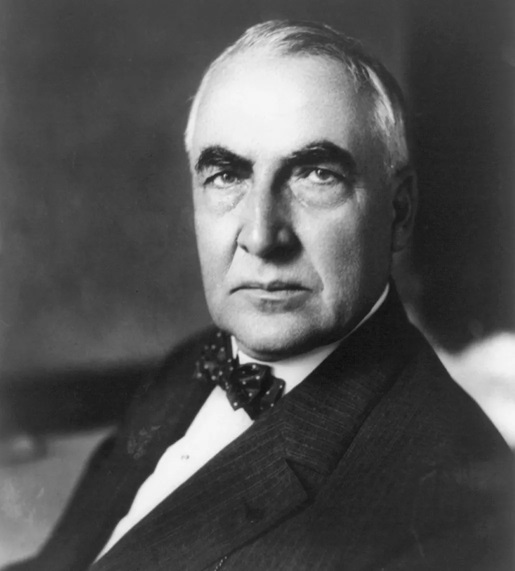
Since today is Presidents Day, I wanted to take a moment to acknowledge and honor my favorite president, Warren G. Harding of Ohio. The former newspaper editor-turned-Senator was elected in 1920, by one of the largest landslides in American history. (Interestingly enough, his opponent was another newspaper man from Ohio, James Cox.) Harding was elected on a platform that promised a “return to normalcy” after the authoritarian excesses of Woodrow Wilson. He was the first president to be elected in a national election in which all states allowed women to vote and he overwhelmingly won their vote. A politician who remembered his friends and who had little trouble entertaining his constituents in his office, Warren Harding epitomized everything that was fun about the early 1920s.
And we have actual newsreel footage of Warren Harding’s inauguration! For today’s blast of the past, here is newsreel footage of my favorite President renewing America’s greatness. This footage is over 100 years old and, in all seriousness, it shows why film is so important. The video below is not just a short movie of someone taking the oath of office in Washington, D.C. Instead, it’s a portal into the past. At a time when history itself is often altered to fit whatever the current narrative may be, it’s good that we can still see things for ourselves.
The greatest President of all time, Rutherford B. Hayes
4 Shots From 4 Films is just what it says it is, 4 shots from 4 of our favorite films. As opposed to the reviews and recaps that we usually post, 4 Shots From 4 Films is all about letting the visuals do the talking.
Happy Rutherford B. Hayes Day!
In honor of my favorite holiday, I wanted to share 4 shots from 4 films about Rutherford B. Hayes.
However, my plan ran into a little problem. Despite the fact that he’s the best President that this country ever had, there aren’t any movies about Rutherford B. Hayes. He is literally the most underappreciated leader this country has ever had. (In 2011, the President joked about Hayes not being on Mount Rushmore. For that reason, I voted for Gary Johnson in 2012. Don’t you mess with Rutherford B. Hayes)
So, here are four shots from four films that deal with other people who exist in the shadow of Rutherford B. Hayes.
During my sophomore year of college, I had a political science professor who, every day of class, would sit on his desk and ramble on and on and on about his past as a political activist. He protested Viet Nam, he hung out with revolutionaries, he loved Hugo Chavez, and I assume he probably had a Che Guevara poster hanging in his office. Whenever he wanted to criticize George W. Bush, he would compare him to Richard Nixon and then pause as if he was waiting for the class to all start hissing in unison. He always seemed to be so bitterly disappointed that we didn’t. What he, and a whole lot of other people his age, didn’t seem to understand was that Richard Nixon was his boogeyman. The rest of us could hardly care less.
That was the same problem that faced the 2008 best picture nominee Frost/Nixon.
Directed rather flatly by Ron Howard, Frost/Nixon tells the true story about how a light-weight English journalist named David Frost (played by Michael Sheen) managed to score the first televised interview with former President Richard Nixon (Frank Langella). Both Frost and Nixon see the interviews as a chance to score their own individual redemptions while Frost’s assistants (played by Oliver Platt and Sam Rockwell) see the interview as a chance to put Richard Nixon on trial for Watergate, the Viet Nam War, and every thing else under the sun. That may not sound like a very exciting movie but it does sound like a sure Oscar contender, doesn’t it?
I’ve always secretly been a big history nerd so I was really looking forward to seeing Frost/Nixon when it was first released in 2008. When I first saw it, I was vaguely disappointed but I told myself that maybe I just didn’t know enough about Richard Nixon or Watergate to really “get” the film. So, when the film later showed up on cable, I gave it another chance. And then I gave it a chance after that because I really wanted to like this film. Afterall, it was a best picture nominee. It was critically acclaimed. The word appeared to be insisting that this was a great film. And the more I watched it, the more I realized that the world was wrong. (If nothing else, my reaction to Frost/Nixon made it easier for me to reject the similarly acclaimed Avatar a year later.) Frost/Nixon is well-acted and slickly produced but it’s not a great film. In fact, Frost/Nixon is epitome of the type of best picture nominee that inspires people to be cynical about the Academy Awards.
Before I get into why Frost/Nixon didn’t work for me, I want to acknowledge that this was a very well-acted film. By that, I mean that the cast (Frank Langella, Michael Sheen, Kevin Bacon, Sam Rockwell, and Oliver Platt) all gave very watchable and entertaining performances. At the same time, none of them brought much depth to their characters. Much like the film itself, nobody seems to have much going on underneath the surface. Frank Langella may be playing a historic figure but, ultimately, his Oscar-nominated performance feels like just a typically grouchy Frank Langella performance. Michael Sheen actually gives a far more interesting performance as David Frost but, at the same time, the character might as well have just been identified as “the English guy.” In fact, a better title for this film would have been The Grouchy, the English, and the Superfluous.
For all the time that the film devotes to Rockwell and Platt blathering on about how they’re going to be giving Richard Nixon “the trial he never had,” this film is ultimately less about politics and more about show business. Ron Howard devotes almost as much time to the rather boring details of how the interviews were set up and sold into syndication as he does to the issues that the interview brings up. Unfortunately, for a movie about show business to succeed, the audience has to believe that the show is one that they would actually enjoy watching, This, ultimately, is why Frost/Nixon fails. While the filmmakers continually tell us that the Frost/Nixon interviews were an important moment in American history, they never show us. Yes, everyone has hideous hair and wide lapels but, otherwise, the film never recreates the period or the atmosphere of the film’s setting and, as a result, its hard not to feel detached from the action happening on-screen. For all the self-congratulatory claims made at the end of the film, it never convinces us that the Frost/Nixon interviews were really worth all the trouble. Much like my old poli sci professor, Frost/Nixon never gives us a reason to care.
For a far more interesting and entertaining look at the Watergate scandal, I would recommend the 1976 best picture nominee All The President’s Men. Recreating the story of how two Washington Post reporters (played by Robert Redford and Dustin Hoffman) exposed the Watergate scandal that eventually led to Nixon’s resignation, All The President’s Men is the movie that Frost/Nixon wishes it could be. Despite being made only two years after Watergate, All The President’s Men doesn’t take the audience’s interest for granted. Instead, director Pakula earns our interest by crafting his story as an exciting thriller. Pakula directs the film like an old school film noir, filling the screen with menacing shadows and always keeping the camera slightly off-center. Like Frost/Nixon, All The President’s Men is a well-acted film with a bunch of wonderful 70s character actors — performers like Ned Beatty, Jason Robards, Jack Warden, Martin Balsam, and Robert Walden, and Jane Alexander — all giving effectively low-key and realistic performances. The end result is a film that manages to be exciting and fascinating to those of us who really don’t have any reason to care about Richard Nixon or Watergate.
Both of these two films were nominated for best picture. Frost/Nixon quite rightly lost to Slumdog Millionaire. All The President’s Men, on the other hand, lost to Rocky.



 Through the Shattered Lens