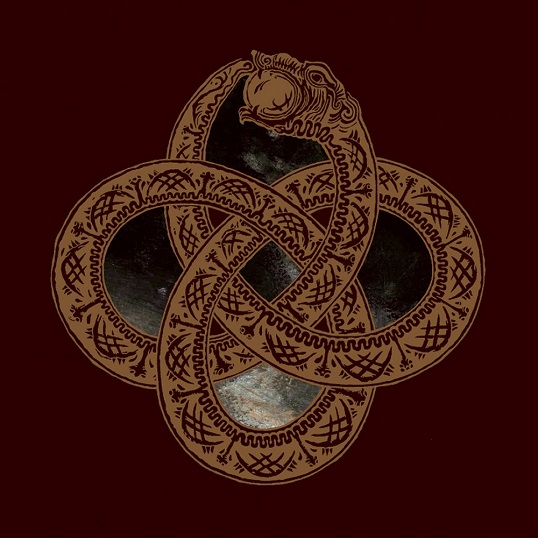
Review: Blut Aus Nord – Memoria Vetusta III – Saturnian Poetry


I am definitely not a time-honored, faithful fan of Blut Aus Nord. They managed to evade my radar for over 15 years before the 777 trilogy brought them into the broader spotlight. Sect(s) impressed me from the start, but in a twisted, bewildering way that was not necessarily enjoyable. It was a car accident you slowed down to gawk at in spite of your better judgment. It was a disturbing feast of dementia. I did not hop on The Desanctification right away, naively expecting more of the same, and it was only with Cosmosophy that I finally caught on to just how intelligent and creative Blut Aus Nord could be.

I didn’t go back in time and pick up their classics, but I did eagerly await their next album with zero assumptions about where it might go. This seemed like a band that could do anything they set their mind to, and judging by Kristian Wåhlin’s cover art, it would be something fairly distinct from 777.

Blut Aus Nord – Paien, from Memoria Vetusta III – Saturnian Poetry

What I found was an album that kept a lot of basic elements intact, but, sure enough, sounded nothing like 777‘s cyberpunk journey through a hellspawn-ridden hive mind. Saturnian Poetry feels like much more traditional black metal on the surface, though you will be hard pressed to write it off as such. It takes about five seconds to realize that the blurred tremolo will not be content to loop into any stereotypical black metal monotony. The song jerks upward in a frantic fit, and by the 40 second mark we’re already on to a new rotation. Celestial keyboard “aaahhhs” and a barely sane pattern of motion rip your eyes wide open, and the clean, ethereal vocals at 1:20 tower above as an apathetic higher being uninterested in quelling the chaos beneath it. When the blast beats and constant motion do break, it is never long enough to calm the mood. It is an avant-garde, progressive approach to black metal that I can only compare to Krallice, only where they remain raw and brutal to a fault, Blut Aus Nord mellow out the drumming and keep the eye of a graceful keyboard looming ever above you.

You are being watched as you thrash about into empty space as hard as steel. We don’t know what that eye wants, but we sometimes catch a glimpse of its perspective, as at 5:10, as the beat slows to a plod and the sweeping guitar takes in a vast vision far beyond your natural senses.

http://www.youtube.com/watch?v=Qt5WOPcCPuU

Blut Aus Nord – Metaphor of the Moon, from Memoria Vetusta III – Saturnian Poetry

Blut Aus Nord is a band you can sense beyond the limitations of your ears. That was something that struck me from the first time I ever listened to Epitomes 1 and 2 on Sect(s). Where so many experimental black metal bands aim to invoke a feeling, Blut Aus Nord paint a sensory world. The motion of the guitar is so pronounced that you feel the notes cascading around you. Metaphor of the Moon opens amidst a tornado, everything spiraling downward in a rush of energy that encircles you. Wherever their songs might be headed, I tend to feel trapped within them in body–some twisted wonderland where keyboard and clean vocal spirits gaze upon me and invisible forces and amalgamations of lead guitar swoop all around, discernible only through some super-sense that informs me of their presence without ever forming a solid image.

But if I had to pick a fault in Saturnian Poetry, it would be the overly traditional percussion. Beats carried the day in the 777 trilogy. The band’s experimentation with unconventional drum tones added the final layer needed to complete the unique quasi-physical world of their music. On Saturnian Poetry, the lack of this element serves as an occasional reminder that I am, after all, only listening to a song. “Metaphor of the Moon” is the track that seems to extend beyond my attention span the most, at least to a point. I can latch on to it at just about any moment if I choose to, but it sometimes fails to hold me long without some effort on my part.

http://www.youtube.com/watch?v=C9pVt48QkcM

Blut Aus Nord – Clarissima Mundi Lumina, from Memoria Vetusta III – Saturnian Poetry

That being said, these guys are a clear cut above the vast majority of their competition in the black metal scene. It is hard to believe that France, once known for the raw and unadorned acts of Les Légions Noires, could give us three of the most significant post-black bands of our time, but Blut Aus Nord, Peste Noire, and Alcest surely stand as a triumvirate of progression and experimentation in 21st century metal. Saturn Poetry will never top the 777 trilogy in my books, and generic drumming is to blame first and foremost. Yet I’ll not soon forget a closing track like this–the listener sacrificing himself to madness, screaming towards that eye above, catching unintelligible glimpses that only make his violence more desperate. It never ends, never finds resolution, just continues to implode in perpetual waves of self-destruction. I don’t know that the song, or the album as a whole, has any clear passage. There is no apparent journey here or grand enlightenment at the end, though perhaps I ought to find the first two Memoria Vetusta albums before I pass judgment. Either way, Saturnian Poetry is another shattered window into that twisted, imaginative world that only these French masters can conjure. Whether I see in it precisely what the band intended or not, I definitely see something words cannot easily describe.

It’s also worth mentioning the Debemur MoRTi EP released earlier this year. It offers a unique cover of “Bastardiser” by Pitchshifter that I think you will all appreciate.

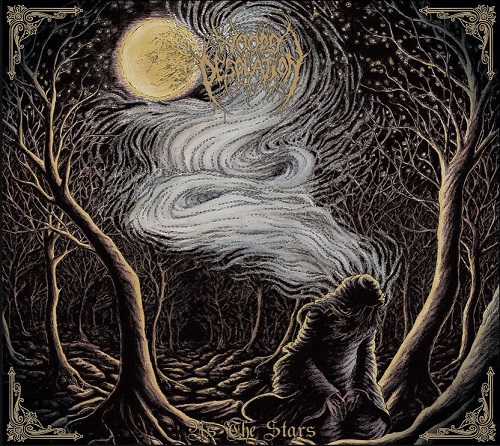
Review: Woods of Desolation – As the Stars


Has it really been two years since I’ve reviewed a new album? The fact came as a bit of surprise, but here it is late October and I’m staring at a massive horde of 2014 releases that I’ve barely cracked. I was a bit more diligent about keeping up with these when I actually took the time to write about them!

I hope to jump back into this business in force, but in case I fail, I’ll not put off the cream of the crop. My album collection is starting to get overrun by “Woods of” X artists; it seems to be the most popular black metal prefix after “Dark” these days. But one among them might be destined to distinguish itself with my #1 album of the year pick.

http://www.youtube.com/watch?v=ePHvl9vFmeo

Woods of Desolation – Unfold, from As the Stars

I spent a great deal of my late teens and early 20s basking in the polarizing glories of post-rock and black metal. The likes of Explosions in the Sky, Sigur Rós, Emperor, and Nokturnal Mortum pumped the residual poison of rock and roll out of my blood and raised me to higher expectations of musical fulfillment. I listened to them not with a care for technical precision or physical skill, but in search of an experience I did not fully understand. Both genres approached this through similar means, but fell short as social stigmata demanded modesty or brutality carry the day. As I grew into an adult, the ice was broken. Neige’s Le Secret whispered its meaning into my ears just as I was old enough to embrace it. He’d broken the Berlin wall of music, and what awaited beyond was strange and beautiful.

Post-black metal, shoegaze metal, “transcendental”, call it what you will. Ten years ago, this album–what the woefully uninformed all-purpose reviewers will write off as a Deafheaven copycat–was not possible. It emerged as many musicians with the same thoughts and greater talent than myself caught glimpse of that beautiful beyond and embraced it. You can name a dozen artists that might have influenced the Australian solo project known as Woods of Desolation, but this brave new genre demands our presence in the here and now. It calls on us to bask in glorious tremolo sweeps triumphant over entwined barricades of light and darkness. “Proud to be living in the echo–the mist of all things combined,” Krallice once wrote, and though they designed to crush it, we retain the luxury to return. When I hear a song this triumphant, that line always comes to me, and the albums that accomplish it are still few and far between. I still love Explosions in the Sky and their ilk, but they offer a different sort of grandeur. Theirs is an experience of climbing to the peak. Songs like “Unfold” allow us to explore the pinnacle at length, from start to finish.

http://www.youtube.com/watch?v=fh2n9kglppQ

Woods of Desolation – Like Falling Leaves, from As the Stars

To start at the summit and know where you stand. That might be post-black metal in a nutshell. What we can do there… that is still an on-going exploration. Where Liturgy and Primordial roar like lions into the jaws of death, “Like Falling Leaves” is something of the opposite. It accepts the end awaiting it. In this track we don’t hear any of the overarching optimism of “Unfold”. Instead, we’re accepting that something dear is gone forever, and we are held fast in that moment of realizing the fact’s finality. The bulk of the album seems in keeping with these two vibes, sometimes heightened, sometimes subdued, sometimes entwined. “Withering Fields” and “And If All the Stars Faded Away” seem peculiarly triumphant and longing simultaneously, while “Ad Infinitum” is pretty enough for a new Alcest album. Nearly every track bears a sufficiently memorable hook to sound familiar by the second or third play through, and at a mere 35 minutes, it does not waste much time dragging out build-up in between.

I don’t know that As the Stars will retain my #1 spot through the end of the year, especially if I start to pump out album reviews in force again. It is nothing remotely on par with my picks for the last three years, and it suffers from muddy production that can’t always do the song writing justice, but I stand by it as my favorite so far. This is one I’ll keep near and dear to me long after the bulk of my 2014 collection has been forgotten.

My Top 10 Metal Albums of 2013


It’s that time again. In spite of 2013 being pretty much the worst year of my life, I found it a lot easier to select a top 10 list than in 2012. Odd-numbered years almost always seem to produce a wider selection of good music, and I can confidently state that each of these at least border on excellence. Here goes:

10. Ihsahn – Das Seelenbrechen (track: Regen)

There was never a bad Emperor album. Ihsahn’s solo career hasn’t been quite as consistent. The Adversary was an outstanding start, but I barely noticed angL. After was a blast, Eremita something of a bore. Well, what do you know; the cycle continues, and Das Seelenbrechen is outstanding. Eremita seemed all about rhythmic grooves and eclectic interludes, neither of which painted a grand picture for me to take hold of. Das Seelenbrechen, without reducing any of the progressive rock peculiarities for which Ihsahn is famous, reinvests its tension in song structure and the subtler stuff of atmospheric appeal. At times it delves heavily into the world of drone metal, with Tobias Ørnes Andersen pulling off his best Atsuo impression and Ihsahn showing that his unique vocals are pretty well suited for the genre as they stand. The most impressive track on the album might be “Pulse”, if only for the fact that Ihsahn was able to stray so far from his comfort zone and still pull off an excellent song, but my personal favorite has to be “Regen”.

9. Ash Borer – Bloodlands (track: Oblivion’s Spring)

I missed out on Ash Borer’s acclaimed 2011 debut and the 2012 full-length to follow, but the Bloodlands “EP” (it’s still 35 minutes long) found itself well embedded in my subconscious this year. Like many of my selections, I never really sat down and gave it my undivided attention from start to finish. It was a busy year, and most of my albums were experienced as background music rather than a main event. I was kind of surprised to find just how many times I’d listened to this album throughout the year. It was never really on my radar, but I kept playing it time and time again. A twisted, bleak, highly atmospheric recording, Bloodlands successfully captures a traditional black metal vibe that is neither overly passionate nor distractingly aggressive. It’s a pleasant break from the otherwise welcome trend towards a less sinister, more humanizing approach to the genre.

8. Westering – Joy (track: This Will Quiet Us)

Joy is definitely the weirdest album I’ve heard this year that actually worked. Bryan Thomas’s second release as Westering is a cracked window peering into folk, industrial, and maybe even 80s pop scenes, sensible to melodic appeal yet firmly rooted in black metal tradition. To label it another “shoegaze black metal” album would hardly do it justice; the warbling walls of distortion don’t angelicize the metal, but rather demonize the more direct pop elements, creating a final product basked in darkness yet awkwardly catchy and familiar.

http://www.youtube.com/watch?v=Xa6dRnT4Bj8

7.Ensemble Pearl – Ensemble Pearl (track: Island Epiphany)

It’s sad that this album has gone almost completely unnoticed in 2013. It’s sad that people regard it as another Boris album, or as “Boris and Sunn O))) Part 2”. Because, while it shares much in common with Altar, the cast is quite different and the end product surprisingly even better than its predecessor. While Atsuo Mizuno and Stephen O’Malley reunite, Takeshi and Wata are out, as well as Greg Anderson. Michio Kurihara steps up to the plate along with a fellow I’ve never head of–Bill Herzog–to complete the lineup. The sound these four have managed to assemble is flawless. Smooth as glass and black as night, Ensemble Pearl is a compelling example of music’s capacity to paint a scene more vivid than sight can ever offer.

http://www.youtube.com/watch?v=EcimCb52O9w

6. Paysage d’Hiver – Das Tor (track: Macht des Schicksals)

Like Ash Borer, Paysage d’Hiver provided ideal background music for me throughout the year. With a similar appreciation for late 90s/early 2000s atmospheric black metal aesthetics, Das Tor presents a significantly noisier, more trance-inducing break from current metal trends. I fell in love with this album’s capacity for endless repetition as the backdrop for work, reading, and just about any other activity that requires concentration. This particular style of black metal has always really zoned me in and helped me to focus, and Paysage d’Hiver’s take on it is substantially better than most.

5. Mechina – Empyrean (track: Anathema)

Fear Factory’s 1998 opus, Obsolete, was the last industrial death metal album to really blow me away. A lot of bands go there, but few, at least in my experience, are willing to fully nerd out into uncompromised sci-fi fantasy. There is something about the death metal mentality that inclines most bands to play with their nuts out, and it rarely works in their favor. Mechina don’t fall for that. They have no qualms whatsoever about employing clean vocals, dramatic symphonics, and operatic hymns to serve their end. Empyrean paints a lush vision of a futuristic world of technology and galactic combat on the brink of apocalypse. Really stellar stuff. … ha..ha… hmm…

4. Summoning – Old Mornings Dawn (track: Old Mornings Dawn)

It took Summoning seven years to release a new album. I would not be surprised if they were hard at work on it that whole time. Not quite as perfect as Let Mortal Heroes Sing Your Fame, Old Morning Dawn is nevertheless an instant essential within the Summoning discography, never wavering an inch from the solid sound they forged a decade ago. I can’t think of too many albums I’ve anticipated for this long that didn’t let me down (Falkenbach’s Tiurida in 2011 might be the most recent exception), and for that, coming from one of my favorite bands ever, Old Mornings Dawn easily slides in towards the top of my chart.

http://www.youtube.com/watch?v=HyHrKDcRadg

3. Cara Neir – Portals to a Better, Dead World (track: Peridot)

I remember when I was first getting into black metal and a friend of mine was doing the same with screamo. They seemed like two incommensurable paths at the time. We’d trade the best of what we found, and I love a lot of screamo because of it, but that was his genre and this was mine. There just wasn’t all that much in common between Carpathian Forest and City of Caterpillar.

Times have changed, and much for the better. I’ve tossed around “screamo” and “black metal” in the same sentence before (Roads to Judah), but this is certainly the most raw realization of the two as one that I have heard so far. Portals to a Better, Dead World is another fine product of a new era of metal artists informed beyond their flagship genre. It might not achieve the fame of Deafheaven’s Sunbather, but the two go hand in hand.

2. Deafheaven- Sunbather (track: Dream House)

And that brings us to the most hyped metal album of 2013. Sunbather turned more heads than Roads to Judah, and certainly more than Liturgy’s Aesthethica or Krallice’s Diotima back in 2011. But while the mainstream world regrettably failed to recognize that year as the grand coalescence of heavy metal’s mid-2000s paradigm shift, on Sunbather we reap its fruits. This album is not the novelty many would like to make of it; it is an affirmation of things already come to pass, and a glorious one at that. Music seems to come in sequences of waves, the reluctant undertow of their predecessors slowly dissipating beneath the growing weight of those rushing to shore. Sunbather basks in a new era of aesthetics and ingenuity first dreamed by the likes of Ulver, pressed into form by Agalloch and Alcest, and finally swept into the mainstream three years ago. Love it while it lasts, and amuse yourself with the die-hards that will rip this to shreds rather than embrace it.

1. Peste Noire – Peste Noire

And then there was one. I proclaimed Peste Noire the best album of 2013 about an hour after it leaked back in June, and nothing since has come even close to shaking that resolve. I’ve been doing a “top 10 album” list now every year since 2002, and Peste Noire is the only band to ever take the #1 spot twice, but never mind that. Ballade cuntre lo Anemi francor has absolutely nothing on what you will experience here. Let’s try “top 10 metal albums ever recorded”. I have never heard anything quite this clever, filthy, intelligent, and depraved in my life. Famine’s “black ‘n’ roll” sound has never been better, and Peste Noire can rightly be regarded as the refinement of all of the finest features of his past four albums rolled out into one.

The album is heavily enhanced by Famine’s new willingness to tell us what it’s all about. Up through the release of L’Ordure à l’état Pur in 2011, it was anyone’s guess what Famine’s peculiar album antics were all about. He was completely inaccessible as an individual, and his lyrics have always been in French. The man behind the music has since emerged full-formed as an internet personality, conducting interviews, approving lyric translations, and responding to forum inquiries in surprisingly fluent English. He’s revealed himself as an extremely culturally and musically informed character with a sardonic sense of humor that seems to abate the more offensive features of his image, and he completely reformed my view on L’Ordure à l’état Pur–an album I’d initially disregarded, but have since grown to love.

I tried to give Peste Noire a fair review over the summer, but I couldn’t quite do it justice. This article does. Skip to 20 minutes in the above video if you care to hear my favorite track on the album: “Niquez Vos Villes”.

Enjoy, and Happy New Year!

Ten Years #27: Alcest


Decade of last.fm scrobbling countdown:
27. Alcest (1,127 plays)
Top track (154 plays): Souvenirs d’un autre monde, from Souvenirs d’un autre monde (2007)
Featured track: Là Où Naissent Les Couleurs Nouvelles, from Les Voyages De L’Âme (2012)

About two years ago I passed up a rare opportunity to strike up a one on one conversation with a musician I admire to no end. Alcest had just finished opening for Enslaved on their 2011 U.S. tour, and I stumbled upon Neige idling in the outdoor smoking lounge, standing exposed in the middle without a pesky fan in sight. I’m not the sort to pester someone over a stupid autograph, and I couldn’t think of a question worth asking on the spur of the moment, so I let the opportunity pass. But if I could have it back again, I would ask him what bands he’d been listening to when he recorded Le Secret (2005). Influence has been a hot topic for Alcest interviews ever since Neige denied any knowledge of shoegaze music at the release of Souvenirs d’un autre monde (2007). He responded to the comparisons by actively engaging a lot of relevant 80s and early 1990s bands, such that the perceived similarities lead to real influence down the road. I don’t think that is as apparent in his more recent works as some fans would like to believe; in Alcest, Neige produces the sort of uniqueness and quality that transcends genres. Nevertheless, my fascination with the history of music begs the question. Le Secret delivered what I wanted with a unique innocence that could only ever succeed once, and it certainly wasn’t “shoegaze” that paved the way for it.

Le Secret rather felt to me like something the black metal scene was destined to produce sooner or later. I’d been craving it since I first heard Ulver’s “Of Wolf and Passion”. If black metal had always been more about De Mysteriis than Dom Sathanas, “Le Secret” was the final incantation–the first real invocation in a world of petty summoners. Le Secret battered down the stereotyped walls, presenting a glorious first glimpse at what dwelt beyond that meditative barrier of blast beats and tremolo. On Souvenirs d’un autre monde and beyond, Neige gave us a beautiful vision of just how that world appeared to him, and he continues to improve on it with each new release. “Là Où Naissent Les Couleurs Nouvelles”, the 2012 track here featured, might be his most encompassing song to date.

Don’t get me wrong. Neige was certainly not the first black metal artist to think outside the box. The Ukrainian black metal scene especially had been doing it for years. But I feel like Neige’s artistic accomplishment and subsequent popularity really paved the way towards a widespread abandonment of black metal’s pseudo-machismo persona in exchange for the artistry necessary to accomplish a more sublime beauty and brutality alike. If we are ever going to speak of “post-black metal” or some “third wave” supplanting the early 1990s establishment, it began in 2005 and 2006 with the likes of Alcest and Agalloch. It is only an odd coincidence that the term “shoegaze” has regained popularity outside of metal and adopted new definitions. I look at Alcest not as a merging of two styles, but as a change in mindset which has empowered countless bands over the last few years to let their novel ideas be heard and widely distributed.

Le Secret will always be my favorite Alcest recording because of its timeliness and audible obliviousness to this transition which was slowly gaining ground. But perhaps I’ve beat that horse to death over the past few years. When I listen to Les Voyages De L’Âme (2012), I hear a musician in his prime, undeterred by the expectations of any particular genre, who has successfully improved with every new album. Alcest’s sixth major release, Shelter, should be coming out some time later this year, and I have really high hopes.

Review: Alcest – Les Voyages De L’Âme


You would be hard-pressed to find an album which more reviews have simultaneously labeled generic and beautiful than Les Voyages De L’Âme. It’s an odd situation. Neige has definitely found his sound. I have to imagine that he personally is more satisfied with his work now than ever. The catch is that a lot of people appreciated his music best when he was still searching for something. Les Voyages De L’Âme is beautiful, no doubt about it. It’s a journey through a mysterious, fanciful world that I have taken for 50 minutes frequently this year; it was released in early January, so it’s technically a year old at this point.

Là Où Naissent Les Couleurs Nouvelles

But such descriptions cannot characterize all of his works. Neige’s music has a bit of a narrative in it, told not so much in a single album as in the scope of his career. His first release, Tristesse Hivernale (2001), was a poorly produced sinister ride not particularly unlike the debuts of the Norwegian legends. It also happened to feature an early appearance by Famine, whose Peste Noire took a drastically different and equally admirable path in the years to follow.

Neige didn’t release an Alcest follow-up until 2005, but “Le Secret” revolutionized metal. The two-track EP was an odd consequence of Neige continuing to play black metal while aspiring towards the atmospheric polar opposite. What you got was something beautiful but perpetually fragile; a glimpse at something angelic in music’s darkest corner, which threatened to fade away at any given moment. It’s the sense that what you’re hearing reveals itself in temporary, fleeting form that really places Le Secret above the rest of Neige’s work for me.

Neige was openly bothered by the reviews Le Secret received. A lot of people just didn’t get it, or more likely did get it but felt some bone-headed sense of masculinity in jeopardy should they admit to getting it. Neige regarded the album as a failure. I think the failure was on the part of the listeners who reviewed it, and I was borderline devastated when Neige re-recorded Le Secret last year. But in any case, the fleeting nature of Le Secret’s sound reflected a real fleeting feature of Neige’s style: It wasn’t what he was ultimately aiming for. It was, rather, the last step on the way to getting there. Souvenirs d’un autre monde was the full realization. We might for stylistic purposes label it shoegaze black metal, but it was really post-black metal in the most literal sense.

Souvenirs d’un autre monde was, to me, all about the triumph. It reached for that light buried within Le Secret and made it through to the other side. Neige’s music finally entered that fanciful world of light and beauty that he had envisioned all along. If Le Secret was all about getting there and Souvenirs d’un autre monde was the overwhelming awe he felt when he reached it, Écailles de Lune might be understood as a more orchestrated exploration of what waited on the other side.

Faiseurs De Mondes

This might seem a very peculiar and abstract way to go about describing a discography, but I think it reveals the reason why Les Voyages De L’Âme feels in some sense generic or repetitive. I don’t think Neige planned out any sort of progression from Tristesse Hivernale through to Écailles de Lune. Rather, he is one of those truly great musicians capable of effectively recreating his thoughts in music, and as Neige the man/musician developed his vision over time, his music progressed to reflect it. In the two years that separate Écailles de Lune from Les Voyages De L’Âme not much appears to have changed, and what Les Voyages De L’Âme lacks has absolutely nothing to do with quality. The music is superb. It’s just that we have come over the years to expect perpetual transition, and Les Voyages De L’Âme instead continues to explore the other-worldly landscape Neige first fully entered on Souvenirs d’un autre monde. Les Voyages De L’Âme is in every way Écailles de Lune Part 2.

Given Neige’s past responses to criticism, who knows how he might react to the labels of “generic” being pasted on Les Voyages De L’Âme in otherwise positive reviews. I think the aspect of his sound that is being criticized in this regard isn’t really something he can help, and anyway the context in which the album may be called “generic” is a major stretch from the normal sense of the word. Better to say that it is a continuation of Écailles de Lune, and outstanding as such.

If there are any further doubts, I should inform you that Sophie loved it. She has impeccable taste.