Retro Television Review: The American Short Story Episode 5: Bernice Bobs Her Hair


Welcome to Retro Television Reviews, a feature where we review some of our favorite and least favorite shows of the past!  On Saturdays, I will be reviewing The American Short Story, which ran semi-regularly on PBS in 1974 to 1981.  The entire show can be purchased on Prime and found on YouTube and Tubi.
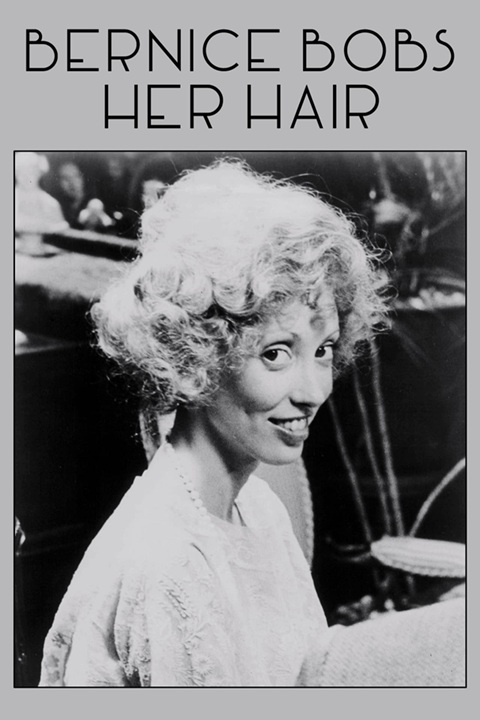
This week, we have an adaptation of the short story that brought F. Scott Fitzgerald his first great literary success.

Episode #5 “Bernice Bobs Her Hair”

(Dir by Joan Micklin Silver, originally aired in 1976)

In this adaptation of a short story by F. Scott Fitzgerald, Shelley Duvall plays Bernice.  Bernice is a socially awkward young woman from the country who, at the start of the glorious 1920s, spends the summer in the city with aunt (Polly Holliday) and her popular cousin, Marjorie (Veronica Cartwright).  Though initially annoyed with having to watch over her cousin, Marjorie eventually decides to teach Bernice how to be a “society girl.”  Marjorie teachers her how to flirt and, even more importantly, Marjorie spreads a rumor that Bernice is not only going to get her hair bobbed (which, at that time, was associated with being a flapper) but she’s going to let all the boys watch.  Bernice goes from being seen as someone who is boring to being someone who is daring and rebellious.  The rumor of her bobbing her hair gives Bernice a mystique, one that will only last as long as there’s a possibility of it happening.

Soon, all of the boys are interested in Bernice and Bernice becomes even more popular than Marjorie.  Marjorie, with her long braids and her cultivated manners, watches in jealousy and horror as the boy across the street, Warren (Bud Cort), suddenly goes from liking Marjorie to liking Bernice.  Marjorie is herself in love with Warren, though one gets the feeling that the love was more about the idea of Warren pining for her than any real desire to be with him.  Realizing that the key to Bernice’s popularity is due to her unfulfilled promise to get hair bobbed, Marjorie tricks Bernice into actually doing it.  Suddenly, Bernice is no longer as popular and her aunt is no longer comfortable with her being seen as a member of the family.  The party invitations dry up and Marjorie once again claims her place as the long-haired society queen.  Bernice prepares to return home but she has one more trick up her sleeve before she leaves.

I liked this one.  Joan Micklin Silver gets wonderful performances from her cast and shows that she, more than even Robert Altman, understood how to best utilize Shelley Duvall’s quirky screen presence.  While this adaptation is dominated by Duvall, I also really enjoyed Bud Cort’s earnest eccentricity as Warren.  (“I’m getting old.” — 19 year-old Warren.)  Finally, Veronica Cartwright gave an intelligent performance, one that kept Majorie from just becoming a one-dimensional villain.  A look at the mystique of popularity and the way that social standards are casually accepted and rarely questioned, Bernice Bobs Her Hair works as both a wonderful short story and a witty short film.

Film Review: Buffalo Bill and the Indians, or Sitting Bull’s History Lesson (dir by Robert Altman)


1976’s Buffalo Bill and the Indians, or Sitting Bull’s History Lesson takes place in the waning years of the Old West.  Civilization is coming to America and the “wild” west’s days are numbered.  And yet, even as the days of outlaws and gunslingers come to an end, America is already in the process of building up its own mythology.

Buffalo Bill (Paul Newman) owns a popular wild west show, one where his stars put on a show that claims to recreate the great moments of western history.  The show is made up of a motely collection of performers, some of whom are more talented than others.  This is a Robert Altman film and, as usual, the emphasis is more on watching how his large ensemble of actors interact as opposed to highlighting any one actor.  Indeed, it can be hard to keep everyone in the film straight and one gets the feeling that this was intentional on Altman’s part.  Buffalo Bill and the Indians may be a revisionist western and a satire of American history but it’s also a showbiz film.  The emphasis is on people continually coming and going, sticking around long enough to either prove their worth as a performer or moving on to a hopefully more receptive audience.

Geraldine Chaplin plays Annie Oakley, the sharp shooter who takes joy in firing her gun and who barely seems to notice that her husband (John Considine) is terrified of getting shot.  Joel Grey serves as the unflappable manager of the show while Harvey Keitel is miscast as Buffalo Bill’s somewhat nerdy assistant.  (Keitel, with his natural intensity, seems like he’s desperately waiting for a chance to explode, a chance that never really comes.)  Burt Lancaster plays Ned Buntline, the writer who made Buffalo Bill into a celebrity and who provides a somewhat sardonic commentary as Bill’s current activities.  Shelley Duvall shows up as the wife of President Grover Cleveland (played by Pat McCormick), who comes to the show and is amused until an Indian points a gun towards the president.

Throughout it all, Buffalo Bill enjoys his fame and pushes his vision of the Old West on those who come to see his show.  Newman plays Bill as being a blowhard, an eccentric who is obsessed with opera and whose entire persona is a fake.  He can’t shoot straight.  He can barely ride a horse.  His trademark long hair is actually a wig.  The only people who take Bill seriously as those who come to see his show.  Those who know him view him as being a buffoon but they also understand that he’s a very successful and very famous buffoon and that ultimately matters more than any sort of historical truth.

What conflict there is in the film occurs when Sitting Bull (Frank Kaquitts) and his translator (Will Sampson) arrive on the scene.  Sitting Bull has agreed to appear in the show but only under his own terms.  Buffalo Bill grows frustrated with Sitting Bull and his refusal to pretend to be a savage but he also knows that this audience wants to see the last remaining great Indian chief.

It’s a big and sprawling film and it’s really not entirely successful.  Altman was an intelligent director who was willing to take risks and no one deserves more credit for popularizing the idea of the ensemble film.  That said, he could also be a bit heavy-handed and that’s certainly the case here.  It takes a certain amount of courage to cast a star like Paul Newman as a thoroughly unlikable character and it also took a bit of courage on Newman’s part to give the performance that he did.  At the same time, neither the shallow Buffalo Bill nor the dignified Sitting Bull are really compelling enough characters to carry a film that runs for more than two hours.  The film’s message is an obvious one and it’s also one that Altman handled in a much more memorable way with Nashville.

That said, the film is a memorable misfire.  It’s at its best when it abandons the politics and just concentrates on the community of performers that popular Buffalo Bill’s show.  The film’s best moments are not the ones with Paul Newman growling but instead the ones with John Considine hoping that Geraldine Chaplin won’t accidentally shoot him.  As with many of Altman’s film, Buffalo Bill and the Indians works best when it focuses on the misfit community at the center of its story.