The Sundance Film Festival is currently underway in Utah. For the next few days, I’ll be taking a look at some of the films that have previously won awards at Sundance.
First released in 1990, Longtime Companion was one of the first mainstream feature films to deal with the early days of the AIDS epidemic.
The film follows a group of friends and lovers over the course of ten years. The film opens with a crowded and joyous 4th of July weekend at Fire Island. Willy (Campbell Scott) is a personal trainer who has just started a relationship with an entertainment lawyer who, due to his beard, is nicknamed Fuzzy (Stephen Caffrey). Willy’s best friend is the personable and popular John (Dermot Mulroney). David (Bruce Davison) and Sean (Mark Lamos) are the elder couple of the group. Sean writes for a soap opera and one of Fuzzy’s clients, Howard (Patrick Cassidy), has just landed a role on the show. He’ll be playing a gay character, even though everyone warns him that the role will lead to him getting typecast. The group’s straight friend is Lisa (Mary-Louise Parker), an antique dealer who lives next door to Howard and who is Fuzzy’s sister. The film takes it times showing us the friendships and the relationships between these characters, allowing us to get to know them all as individuals.
Even as the group celebrates the 4th, they are talking about an article in the New York Times about the rise of a “gay cancer.” Some members of the group are concerned but the majority simply shrug it off as another out-there rumor.
The movie moves quickly, from one year to another. John, the youngest of them, is the first member of the group to die, passing away alone in a hospital room while hooked up to a respirator. (The sound of the respirator is one of the most haunting parts of the film.) Sean soon becomes ill and starts to dramatically deteriorate. It falls to David to take care of Sean and to even ghostwrite his scripts for the soap opera. Howard’s acting career is sabotaged by rumors that he has AIDS while Willy and Fuzzy tentatively try to have a relationship at time when they’re not even sure how AIDS is transmitted. At one point, Willy visits a friend in the hospital and then furiously scrubs his skin in case he’s somehow been infected. When one member of the group passes, his lover is referred to as being his “longtime companion” in the obituary. Even while dealing with tragedy and feeling as if they’ve been shunned and abandoned to die by the rest of America, the characters are expected to hide the details of the lives and their grief.
It’s a poignant and low-key film, one that was originally made for PBS but then given a theatrical release after production was complete. Seen today, the film feels like a companion piece to Roger Spottiswoode’s And The Band Played On. If And The Band Played On dealt with the politics around AIDS and the early struggle to get people to even acknowledge that it existed, Longtime Companion is about the human cost of the epidemic. The film is wonderfully acted by the talented cast. Bruce Davison was nominated for an Oscar for his sensitive performance as David. If not for Joe Pesci’s performance in Goodfellas, it’s easy to imagine that Davison would have won. The scene where he encourages the comatose Sean to pass on will make you cry. Interestingly, when David gets sick himself, it happens off-screen as if the filmmakers knew there was no way the audience would have been able to emotionally handle watching David suffer any further.
Longtime Companion played at the 1990 Sundance Film Festival, where it won the Dramatic Audience Award.
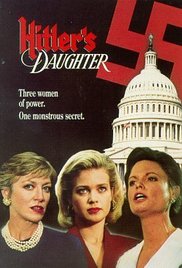 Ted Scott (Patrick Cassidy), a White House press aide, is contacted by his former professor, Dr. Bauman (Donald Davis). Bauman gives Ted a file that he claims will prove that not only did Adolf Hitler have a daughter but she was subsequently smuggled into America and is now on the verge of occupying the White House. Ted thinks that Bauman’s crazy but then Bauman is murdered and Ted is framed for the crime. With both the police and the bad guys after him and with time running out, Ted must now figure out who is Hitler’s daughter. Is it Sharon Franklin (Melody Anderson), the famous TV anchorwoman who is having an affair with a Senator? Is it Patricia Benedict (Veronica Cartwright), the wife of the Vice President? Or is it Senator Leona Crawford Gordon (Kay Lenz), who has just been put on the opposition party’s presidential ticket?
 Through the Shattered Lens