A Movie A Day #57: Here Comes The Navy (1934, directed by Lloyd Bacon)


here_comes_the_navy_posterLisa asked me to review an old best picture nominee for today’s movie a day so I picked Here Comes The Navy, because hardly anyone has ever heard of it and I usually like old service comedies.

Chesty O’Connor (James Cagney) is a construction worker who thinks that he is tougher than anyone in the Navy.  When Chesty gets into a fight with Chief Petty Officer Biff Martin (Pat O’Brien), Chesty enlists in the Navy just to get on his nerves.  Chesty brings his friend Droopy (Frank McHugh) with him.  With Biff determined to force him out of the service, Chesty bristles against the rules of the Navy.  But then Chesty meets and falls in love with Dorothy (Gloria Stuart), Biff’s sister.  Chesty loses his bad attitude, proves that his shipmates can depend on him, saves Biff’s life when an airship landing goes wrong, and even gets to marry Biff’s sister.

Here Comes The Navy is a typical 1930s service comedy, distinguished mostly by the wiseguy presence of James Cagney.  It is the type of movie where men have names like Chesty, Biff, and Droopy.  Warner Bros. made a hundred versions of this story and Here Comes The Navy was certainly one of them.

Here Comes The Navy was produced with the full cooperation of the U.S. Navy, so it’s not surprising that it feels like a recruiting film.  The sailors are all happy to do their bit to protect the American way of life and the commanding officers are all tough but fair.  The majority of the movie was filmed on the USS Arizona, which would be sunk seven years later during the Japanese attack on Pearl Harbor.  Here Comes The Navy also features some scenes shot on the USS Macon, an airship that would crash a year later.

It’s hard to guess how Here Comes The Navy came to be nominated for best picture.  It’s okay but, for the most part, it’s for James Cagney completists only.


The Holy Grail of Bad Cinema: THE PHYNX (Warner Brothers 1970)


gary loggins's avatarcracked rear viewer

phynx1

(WARNING: The movie I’m about to review is so bad, I can’t even find a proper poster for it. Beware… )

I was so excited when I  found out TCM was airing THE PHYNX at 4:00am!  I’d heard about how bad it for years now, and couldn’t wait to view it for myself today on my trusty DVR. I wasn’t disappointed, for THE PHYNX is a truly inept movie, so out of touch with its audience… and just what is its audience? We’ve got a Pre-Fab rock band, spy spoof shenanigans, wretched “comedy”, and cameos from movie stars twenty years past their prime. Just who was this movie made for, anyway?

The film defies description, but I’ll give it a whirl because, well because that’s what I do! We begin as a secret agent attempts to crash into Communist Albania in unsuccessful and unfunny ways, then segue into some psychedelic cartoons…

View original post 1,064 more words

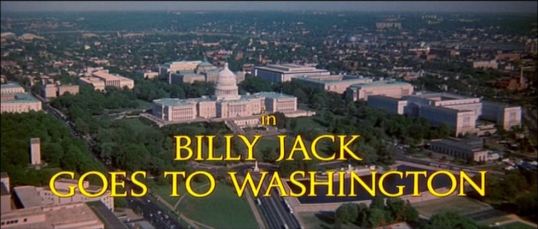
Shattered Politics #41: Billy Jack Goes To Washington (dir by Tom Laughlin)


39c7523029bb4c926a278a4a6a333ae5

The Happy Hooker wasn’t the only person to go to Washington in 1977!  Billy Jack may have started out killing bikers and then moved on to killing Bernard Posner and then finally ended up killing yet another Mr. Posner but, in 1977, Billy Jack was appointed to the U.S. Senate.

Now, it may seem strange to think of someone like Billy Jack being appointed to the U.S. Senate.  Over the course of the previous three films in the franchise, Billy had been shot in the back, shot in the leg, arrested for murder, convicted of manslaughter, and then shot by the National Guard.  In Billy Jack and The Trial of Billy Jack, Billy goes as far as to state that he does not feel the laws of the United States apply to him.

And then, when you consider that the three previous films all featured old, rich, white guys plotting to kill Billy, you would be justified in wondering how he would ever find himself appointed to serve in the senate.

But it happened!

And we’ve got a movie to prove it.

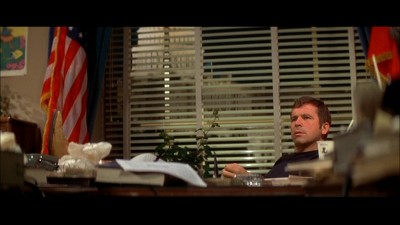
Directed by and starring Tom Laughlin, Billy Jack Goes To Washington is actually a remake of Mr. Smith Goes To Washington.  (To the film’s credit, it’s honest enough to actually give credit to Mr. Smith‘s screenwriters in the opening credits.)  What’s remarkable is just how faithful a remake Billy Jack Goes To Washington actually is.  All the scenes made famous by Jimmy Stewart — the scene where the newest member of the Senate attempts to introduce his first bill, the scene where he’s shocked to discover that Sen. Paine (played here by E.G. Marshall) takes orders from Boss Bailey (Sam Wanamaker), the scene where cynical Saunders (Lucie Arnaz) tells the senator that he should leave Washington, and, of course, that famous filibuster — are all faithfully recreated here.  The only difference, of course, is that it’s no longer idealistic Jimmy Stewart proving himself to be incredibly naive about politics.  Instead, it’s a former Green Beret, half-Indian, judo master named Billy Jack.

Tom Laughlin was a good actor, which is something that’s often overlooked by reviewers writing about the Billy Jack films.  As flawed as The Trial of Billy Jack may have been, Tom Laughlin was a compelling enough presence that the film itself remains a compulsively watchable 3-hour mess.  Laughlin had a very authoritative presence.  You looked at him and you knew that he knew what he was doing.  He was someone who you automatically wanted on your side, a natural born leader who knew how to get things done.  However, in Billy Jack Goes To Washington, Laughlin attempts to play Billy Jack as the type of naive neophyte who would be shocked to discover that politicians are corrupt.  But surely, after spending three films being harassed by every authority figure in America, Billy would have already realized that.  There’s nothing about Laughlin’s screen presence that suggests he could ever be that innocent.

And that’s the main problem with Billy Jack Goes To Washington.  For the film to have any chance of working, you have to forget everything that you’ve learned about Billy Jack over the previous three films.  However, if you haven’t seen any of the other Billy Jack films, then you probably wouldn’t be watching Billy Jack Goes To Washington in the first place.

Of course, since this is a Billy Jack film, there are a few scenes that were nowhere to be found in Mr. Smith Goes To Washington.  For instance, Saunders’s husband is murdered when he threatens to reveal the truth about Bailey’s operation.  Later, Billy, Jean (Delores Taylor), and Carol (Teresa Laughlin) are confronted by a gang of Bailey’s assassins and, for the only time in the entire movie, Billy goes through that whole routine where he takes off his boots while slowly speaking and then kicks everyone’s ass.  (Jean and Carol get to join in the ass-kicking as well and good for them!)

And, of course, there’s the scene where Billy, Jean, and the kids from the Freedom School (who are apparently now known as Billy’s Raiders) have a meeting with two liberal social activists.  It’s an interesting scene because it was clearly unscripted and it has a naturalistic feel to it that’s lacking from the rest of the film.  However, that does not mean that it’s a particularly good scene.  If I learned anything from Billy Jack Goes To Washington, it’s that self-righteous activists in 1977 were just as boring as self-righteous activists in 2015.

And yet, as I’ve said about all of the other Billy Jack films, I can’t bring myself to be too hard on Billy Jack Goes To Washington.  Again, it all comes down to sincerity.  It’s clear that Laughlin and Taylor felt they were making a difference with their films and that sincerity comes through in a way that makes Billy Jack Goes To Washington a likable, if rather inept, film.

Billy Jack Goes To Washington ran for a week in one theater in 1977 and was reportedly such a box office disaster that it couldn’t get a wider release.  (In a commentary track that he recorded for the film’s DVD release, Laughlin suggests the film was the victim of shadowy government forces.)*  While Laughlin and Taylor would later try to make The Return of Billy Jack, that film was left uncompleted at the time of Laughlin’s death.  So, the last time that filmgoers would see Billy Jack, he would still be U.S. Sen. Billy Jack.

And really, that’s the perfect ending for the saga of Billy Jack.  Starting out as a loner who protected a small California town from a biker gang to eventually becoming the protector of the Freedom School to finally embracing both non-violence and his love for Jean, Billy Jack earned himself a happy ending.

Having now watched and reviewed all four of the Billy Jack films, all I can do is say thank you to Delores Taylor and the spirit of Tom Laughlin.  It was great ride.
1251421109_1

—-

* To be honest, the commentaries that Laughlin and Taylor recorded for the Billy Jack films are actually very informative and interesting.  Laughlin actually had a far better sense of humor than you might guess from some of the movies he directed.

Shattered Politics #14: The Last Hurrah (dir by John Ford)


Last_Hurrah

Down here in Dallas, we have a county commissioner named John Wiley Price.  Even if you don’t live in Texas, you might have heard about him.  A few years ago, Price stormed out of a commissioners meeting while shouting, “All of you are white!  Go the Hell!”  It was a popular YouTube video for a while and attracted all of the usual type of comments that you see online.  It even made the national news.

Nobody down here in Dallas was surprised by Price’s outburst.  To us, that was just John Wiley being John Wiley.  For that matter, nobody was particularly surprised when it was reported that he was being investigated by the FBI.  Everyone always took it for granted that John Wiley Price was taking bribes and receiving kickbacks.  That’s just the way that things are done down here in Dallas, by politicians both white and black.  (Of course, most of the white politicians who do it don’t get publicly investigated by the FBI.)

Now, if you ask the majority of people in Dallas county what they think about John Wiley Price and they’ll probably say something negative.  I’ll admit that I would probably be among them.  But the thing is — John Wiley Price’s constituents love him.  John Wiley Price was first elected to the commissioner’s court before I was even born and, as long as he’s on the ballot, he will be reelected.  Even if Price is convicted on corruption charges, he will still be reelected.

I can still remember the night that it was announced that John Wiley Price was on the verge of being arrested by the FBI.  All across his district, emergency meetings were held in churches and ministers stood behind the pulpit and, while the TV cameras rolled, they called upon everyone to pray for John Wiley Price.  In Price’s district, he’s known as “our man downtown,” the idea being that John Wiley Price is standing up to the rich and white Dallas establishment and, if he makes some money for himself in the process, so be it.  As long as he’s doing right for the people who elected him, who cares how he does it?

And, as much as we may want to judge the John Wiley Prices of the world, the fact that of the matter is that he’s a part of a long American political tradition.  That political tradition is also the driving force behind today’s final entry in Shattered Politics.

First released in 1958 and directed by John Ford, The Last Hurrah tells the story of Frank Skeffington (Spencer Tracy), the mayor of an unnamed city in New England that’s obviously meant to be Boston.  Skeffington is the flamboyant head of a large and powerful (but, as the film makes clear, aging) Irish-American political machine.  He’s preparing to run for his fifth term for mayor, a campaign that he says will be his last.

Whether Frank Skeffington is a good mayor or not depends on who you ask.  The poor and the disenfranchised love him.  Skeffington, after all, is the son of Irish immigrants.  He was born poor.  His mother worked as a maid and was even fired by a member of the wealthy and influential Force family.  They know that Skeffington has had to cut corners and that he’s gone out of his way to reward his cronies but they also know that Skeffington is on their side.  Though the phrase is never used in the film, Skeffington is “their man downtown.”

Meanwhile, the wealthy and the upper class see Frank Skeffington as being a crook, a man who has run a corrupt administration and who uses class warfare to keep the city divided against itself and to make himself and his cronies rich.  Newspaper editor Amos Force (John Carradine) has thrown his considerable influence between Skeffington’s opponent, a wealthy but dull man named Kevin McCluskey.

Reporter Adam Caulfield (Jeffrey Hunter) is in an interesting position.  On the one hand, he is Skeffington’s nephew.  On the other hand, as a journalist, he works for Amos Force.  Skeffington invites Adam to follow and record his final campaign for posterity.

It’s interesting to compare The Last Hurrah to films like The Boss or All The King’s Men.  Whereas those two films came down squarely on the sides of the reformers, The Last Hurrah is firmly on the side of Frank Skeffington.  It presents Skeffington as being a sentimental figure, the type of old-fashioned, populist politician who won office by going out and meeting the people face-to-face and personally giving them a reason to vote for him.  As Skeffington himself points out, he’s the type of politician that will soon be made obsolete by television and modern campaigning.

And it’s impossible not to enjoy The Last Hurrah‘s refusal to pass judgment on its lead character.  It helps, of course, that Spencer Tracy plays Skeffington with a twinkle in his eye while all of his opponents are played by villainous and aristocratic character actors like John Carradine and Basil Rathbone.  Yes, the film says, Skeffington may have been corrupt but at least he wasn’t boring!

Finally, I enjoyed the film because all of the “good” guys were Irish Catholic and all of the bad guys most definitely were not.

So, with that last hurrah, we conclude Shattered Politics for today.  We’ll be back tomorrow, when we’ll start to get into the 1960s.

Sláinte!

Lisa Marie Looks At The Front Page (dir. by Lewis Milestone)


As part of my efforts to watch every film ever nominated for best picture, I recently watched 1931’s The Front Page (which lost to Cimarron, the first western to ever win best picture). 

The Front Page, which is based on a broadway play by Ben Hecht and Charles MacArthur, is the story of Chicago newspaper editor Walter Burns (Adolphe Menjou) and his favorite reporter, Hildy Johnson (Pat O’Brien).  Hildy is planning on retiring from the newspaper business so he can get married and take a job in advertising.  Walter is determined to keep his star reporter.  Walter’s attempts to keep Hildy from quitting are played out against a larger background of civil corruption, cynical reporters, and an escaped death row inmate who ends up hiding out at the newspaper. 

It’s odd to watch a film like The Front Page today.  It’s not just the fact that the movie is technically primitive but that the film is such a product of its time and a lot has changed since 1931.  This is one of those old films where African-Americans are continually referred to as being “colored” and the modern-day audience cringes in discomfort and tries to figure out the correct way to react.  As a reviewer, I guess I’m supposed to explain how you should react but I really can’t say.  Personally, I look at a film like this as a reflection of its time and the casual, unthinking racism that was a part of the culture back then.  Then again, I’m not the one being called “a pickaninny.”  This is also another one of those old films where women are presented as distractions and the only work that’s worth doing is man’s work.  Oddly enough, the sexism didn’t surprise me as much as the racism.  Then again, sexism is still socially acceptable while our modern, patriarchal society now insists that people, at the very least, pretend not to be racist.

Still, as dated as many of the film’s attitudes may be, the movie’s cynicism and it’s portrayal of journalists as essentially being a bunch of biased, blood-sucking leeches does give the film a slightly more contemporary feel than most films from the 30s.  As Hildy and Walter, Pat O’Brien and Adolphe Menjou are both well cast and the rest of the film’s characters are played by a strong collection of character actors.  A surprisingly large amount of the cynical one-liners still work and, once you get used to the film’s pre-CGI style of filmmaking, it occasionally show some genuine visual flair.

Personally, I think that The Front Page makes a lot more sense once you acknowledge the unstated fact that Walter and Hildy are former lovers.  Hollywood realized the same thing because The Front Page was later remade as His Girl Friday with Rosalind Russell taking over the Hildy Johnson role.

Anyway, for the curious, here’s The Front Page