4 Shots From 4 Films: Special Elia Kazan Edition


4 Or More Shots From 4 Or More Films is just what it says it is, 4 shots from 4 of our favorite films. As opposed to the reviews and recaps that we usually post, 4 Shots From 4 Films lets the visuals do the talking!

116 years ago, on this date, Elia Kazan was born Istanbul.  Kazan would go on to become a groundbreaking director, both for the stage and in movies.  He would play a key role in turning both Marlon Brando and James Dean into stars and he made films, like Gentleman’s Agreement and A Face In The Crowd, that challenged the political pieties of the day.  Of course, he also named names in front of HUAC, a decision that continues to be controversial to this day.  Two of Kazan’s films — Gentleman’s Agreement and On The Waterfront — won the Oscar for Best Picture.  A Streetcar Named Desire was widely expected to win before it was upset by An American In Paris.  A Face In The Crowd is often cited as being one of the most prophetic films ever made.  When Kazan was given an honorary Oscar in 1999, many in the auditorium refused to applaud but his influence as a filmmaker cannot be denied.

It’s time for….

4 Shots From 4 Elia Kazan Films

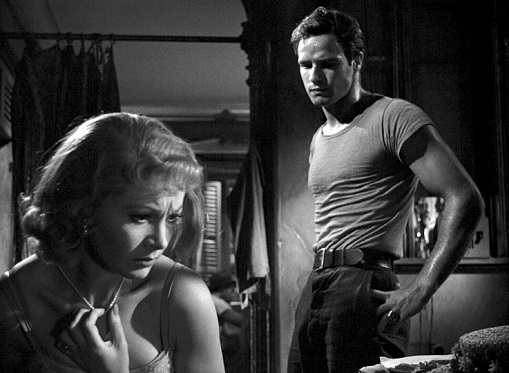
A Streetcar Named Desire (1951, dir by Elia Kazan, DP: Harry Stradling)

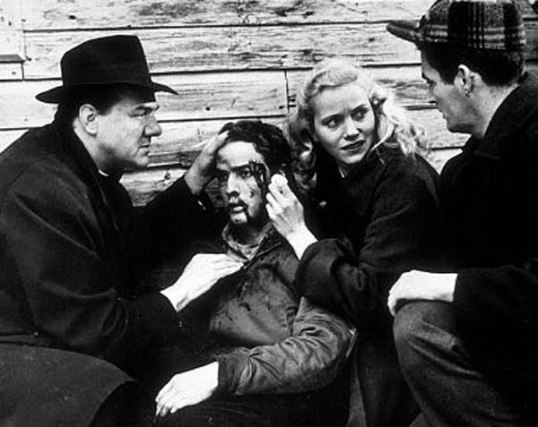
On The Waterfront (1954, dir by Elia Kazan, DP: Boris Kaufman)

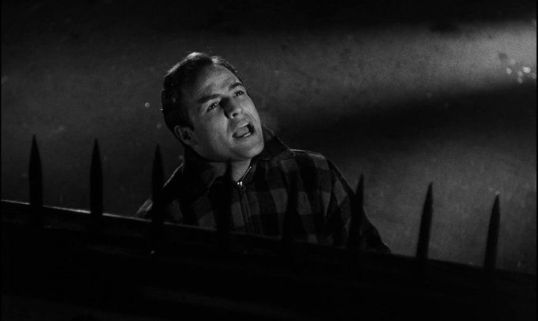
East of Eden (1955, dir by Elia Kazan, DP: Ted D. McCord)

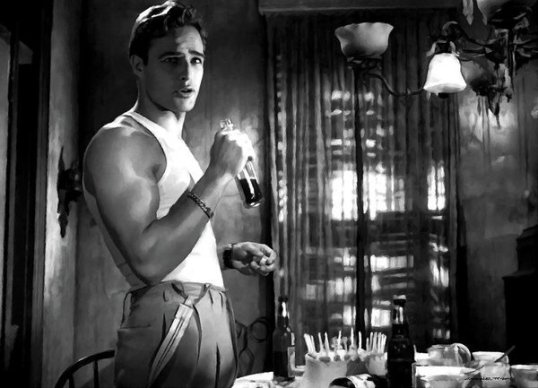
A Face In The Crowd (1957, dir by Elia Kazan, DP: Gayne Rescher and Harry Stradling)

4 Shots From 4 Films: Special Marlon Brando Edition


4 Or More Shots From 4 Or More Films is just what it says it is, 4 shots from 4 of our favorite films. As opposed to the reviews and recaps that we usually post, 4 Shots From 4 Films lets the visuals do the talking!

101 years ago, on this date, Marlon Brando was born in Omaha, Nebraska.  One of the greatest of American actors and one of the main reasons why so many young actors became enamored with the Method, Marlon Brando played many roles in our culture.  When he was young, he was a Broadway bad boy.  When he went out to Hollywood, he became a legitimate movie star.  In the 60s, he was a cautionary tale as his career suffered a series of notorious flops.  In the 70s, he made a comeback and, in during the final years of his career, he was as known for his eccentricities as for his talent.  It’s a shame that those eccentricities overshadowed Brando as an actor.  When he wanted to be, he was one of the best to ever appear on stage or in the movies.

In honor of the wonderful, tragic, and talented Marlon Brando, it’s time for….

4 Shots From 4 Marlon Brando Films

A Streetcar Named Desire (1951, dir by Elia Kazan, DP: Harry Stradling)

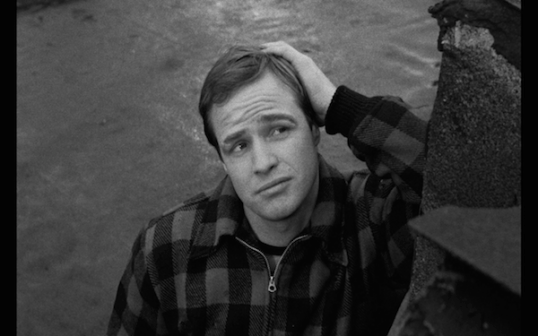
On The Waterfront (1954, dir by Elia Kazan, DP: Boris Kaufman)

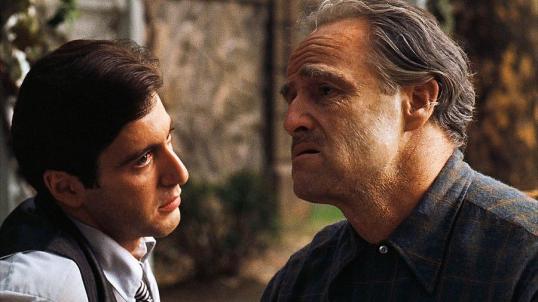
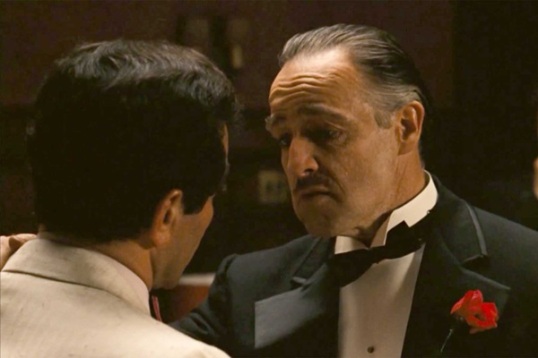
The Godfather (1972, dir by Francis Ford Coppola, DP: Gordon Willis)

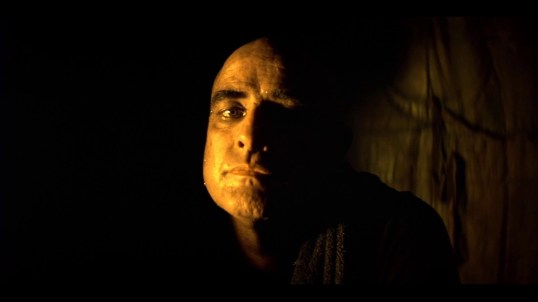
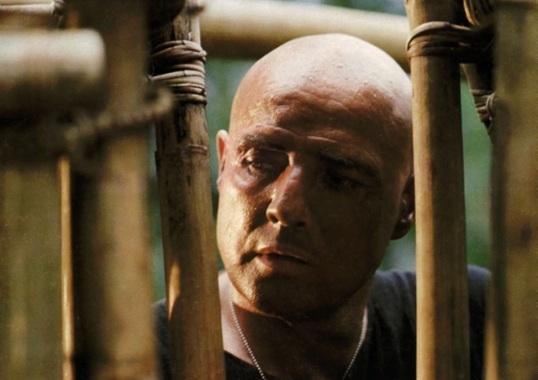
Apocalypse Now (1979, dir by Francis Ford Coppola, DP: Vittorio Storaro)

Celebrate Labor Day With These 14 Films!


I have no idea what this day is supposed to celebrate but I hope everyone has a good one.

There doesn’t seem to be any agreed upon way to celebrate Labor Day.  A few people have the day off and they’re the reason why I decided to hold off on going up to Lake Texoma until this upcoming, holiday-free weekend.  Personally, I think the best way to celebrate any holiday is with a film festival so here are my suggestions for your Labor Day viewing:

  1. Red Menace (1949) — In this wonderfully atmospheric film noir, a former GI named Bill Jones (Robert Rockwell) finds himself seduced by the Communist Party.  After he witnesses the head of the party murder a man who questions the wisdom of Marx, Jones and his lover go on the run.
  2. Big Jim McClain (1951) — John Wayne takes on the commies!  And you better believe that no one is more determined to keep America and its workers safe from communist influence than the Duke!  This film features some lovely Hawaiian scenery and enough over-the-top propaganda to make any American proud.
  3. I Was A Communist For The FBI (1951) — Based (I imagine very loosely) on a true story, I Was A Communist For The FBI is about an agent who spent nine years undercover as a communist.  As a result, he lost his friends and almost his family but he also serves his country.  Featuring a scene where a strike turns violent, there’s nothing subtle about this film but, as with Big Jim McClain, that’s a large part of what makes the movie so watchable.
  4. On The Waterfront (1954) — Marlon Brando won his first Oscar for this film about union corruption.
  5. Dr. No (1962) — In his very first film outing, James Bond shows what a good job a true professional can do.
  6. The Godfather (1972) — “It’s strictly business.”
  7. Blue Collar (1978) — In this gritty film from Paul Schrader, three auto-workers (played by Yaphet Kotto, Harvey Keitel, and Richard Pryor) discover that their union is even more corrupt than management.  Consider this film to be an antidote to Norma Rae.
  8. F.I.S.T. (1978) — After the success of Rocky, Sylvester Stallone played a thinly-disguised version of Jimmy Hoffa in this epic historical film.  The film is poorly paced and doesn’t quite work but it’s interesting to see Stallone, post-Rocky, playing a character who isn’t necessarily all-that heroic.
  9. Convoy (1979) — The film celebrate the independent trucker, the hard-working driver who doesn’t want to be tied down by either the unions or the law.  Convoy is infamous for being an out-of-control production and yes, it is a bit self-indulgent.  But who cares?  When that convoy forms, you have to heartless not to cheer a little.
  10. Alien (1979) — One of the best films about how much it sucks to have to work for a living, Alien follows a group of blue-collar workers whose lives are deliberately put in danger by a big, faceless corporation.
  11. Last Exit to Brooklyn (1989) — A labor strike leaves a Brooklyn neighborhood reeling.  This film is not for the faint-hearted.
  12. Hoffa (1991) — Jack Nicholson stars as Jimmy Hoffa in this uneven but watchable film.  This movie is unabashedly pro-Hoffa and therefore, it provides an interesting contrast to films like F.I.S.T. and Blue Collar.
  13. Office Space (1999) — And don’t forget to sing along to the copier scene!
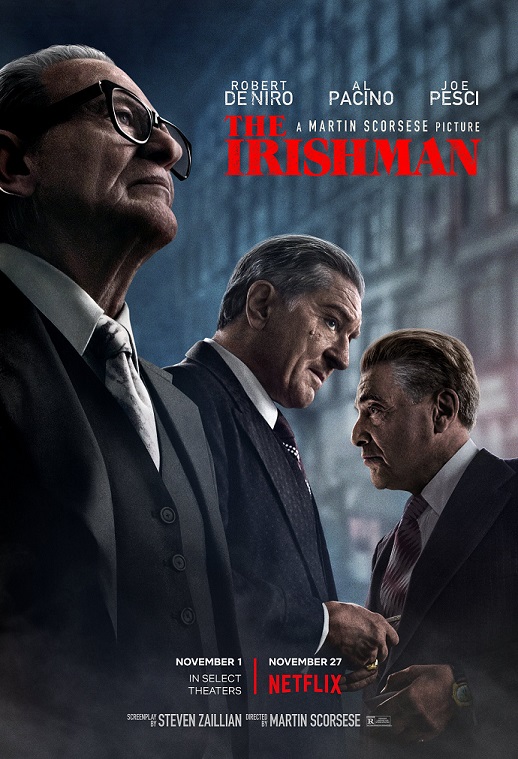
  14. The Irishman (2019) — Despite all the criticism that it received when it was first released, The Irishman is one of Martin Scorsese’s finest films.  It takes a while to get used to the de-aging but Al Pacino’s performance as Jimmy Hoffa was brilliant.  This film is one of the best looks at how the American labor movement lost its way.

4 Shots From 4 Films: Special Marlon Brando Edition


4 Or More Shots From 4 Or More Films is just what it says it is, 4 shots from 4 of our favorite films. As opposed to the reviews and recaps that we usually post, 4 Shots From 4 Films lets the visuals do the talking!

One hundred years ago and on this date, Marlon Brando was born in Omaha, Nebraska.  One of the greatest of American actors and one of the main reasons why so many young actors became enamored with the Method, Marlon Brando played many roles in our culture.  When he was young, he was a Broadway bad boy.  When he went out to Hollywood, he became a legitimate movie star.  In the 60s, he was a cautionary tale as his career suffered a series of notorious flops.  In the 70s, he made a comeback and, in during the final years of his career, he was as known for his eccentricities as for his talent.  It’s a shame that those eccentricities overshadowed Brando as an actor.  When he wanted to be, he was one of the best to ever appear on stage or in the movies.

In honor of the wonderful, tragic, and talented Marlon Brando, it’s time for….

4 Shots From 4 Marlon Brando Films

A Streetcar Named Desire (1951, dir by Elia Kazan, DP: Harry Stradling)

On The Waterfront (1954, dir by Elia Kazan, DP: Boris Kaufman)

The Godfather (1972, dir by Francis Ford Coppola, DP: Gordon Willis)

Apocalypse Now (1979, dir by Francis Ford Coppola, DP: Vittorio Storaro)

4 Shots From 4 Best Picture Winners: The 1950s


4 Shots From 4 Films is just what it says it is, 4 shots from 4 of our favorite films. As opposed to the reviews and recaps that we usually post, 4 Shots From 4 Films lets the visuals do the talking!

Today, I’m using this feature to take a look at the history of the Academy Award for Best Picture.  Decade by decade, I’m going to highlight my picks for best of the winning films.  To start with, here are 4 shots from 4 Films that won Best Picture during the 1950s!  Here are….

4 Shots From 4 Best Picture Winners: The 1950s

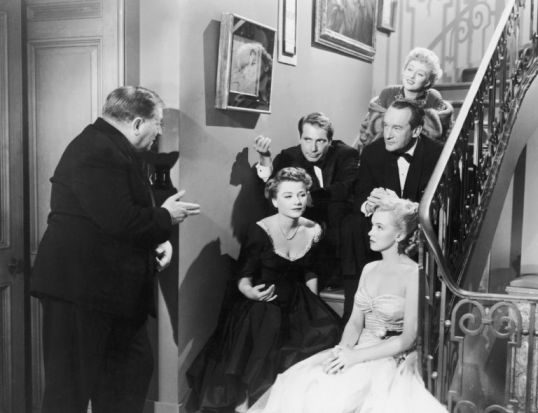
All About Eve (1950, dir by Joseph L. Mankiewicz, DP: Milton R. Krassner)

The Greatest Show On Earth (1952, dir by Cecil B. Demille, DP: George Barnes)

On The Waterfront (1954, dir by Elia Kazan, DP: Boris Kaufman)

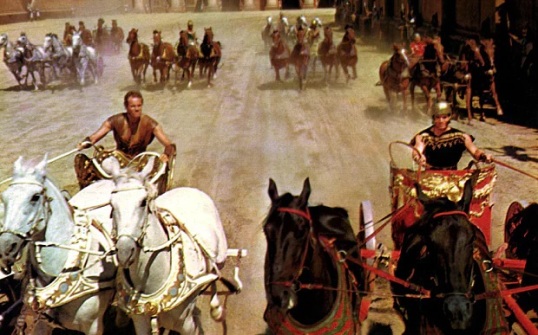
Ben-Hur (1959, dir by William Wyler, DP: Robert Surtees)

4 Shots From 4 Films: Special Elia Kazan Edition


4 Or More Shots From 4 Or More Films is just what it says it is, 4 shots from 4 of our favorite films. As opposed to the reviews and recaps that we usually post, 4 Shots From 4 Films lets the visuals do the talking!

114 years ago, on this date, Elia Kazan was born Istanbul.  Kazan would go on to become a groundbreaking director, both for the stage and in movies.  He would play a key role in turning both Marlon Brando and James Dean into stars and he made films, like Gentleman’s Agreement and A Face In The Crowd, that challenged the political pieties of the day.  Of course, he also named names in front of HUAC, a decision that continues to be controversial to this day.  Two of Kazan’s films — Gentleman’s Agreement and On The Waterfront — won the Oscar for Best Picture.  A Streetcar Named Desire was widely expected to win before it was upset by An American In Paris.  A Face In The Crowd is often cited as being one of the most prophetic films ever made.  When Kazan was given an honorary Oscar in 1999, many in the auditorium refused to applaud but his influence as a filmmaker cannot be denied.

It’s time for….

4 Shots From 4 Elia Kazan Films

A Streetcar Named Desire (1951, dir by Elia Kazan, DP: Harry Stradling)

On The Waterfront (1954, dir by Elia Kazan, DP: Boris Kaufman)

East of Eden (1955, dir by Elia Kazan, DP: Ted D. McCord)

A Face In The Crowd (1957, dir by Elia Kazan, DP: Gayne Rescher and Harry Stradling)

Music Video of the Day: Brando by Scott Walker + Sunn O))) (2014, dir by Gisele Vienne)


Today would have been Marlon Brando’s 94th birthday so it seems appropriate that today’s music video should be for a song that was, at least partially, inspired by Marlon Brando’s career!

In 2014 interview, Scott Walker explained the idea behind this song, saying that he found that there were several movies that features scenes of Marlon Brando being physically assaulted.  Along with detailing some of the assaults that Brando suffered on screen, the song serves as a tribute to sadomasochism in general.

In the third verse, there are several references to Brando’s films.  First there’s mention of Brando getting beat up by John Saxon in The Appaloosa.  “I took it from dad” is probably a reference to One-Eyed Jacks, the only film that Brando ever directed.  Fat Johnny Friendly was the racketeer played by Lee J. Cobb in On The Waterfront while the three vigilantes are a reference to Brando’s role in The Chase.  “I took it for The Wild One” is obviously a reference to the film of the same name.  As “Lizbeth,” that’s presumably a reference to Elizabeth Taylor, who beat Brando with a riding crop in Reflections in a Golden Eye.

Enjoy!

Lisa Marie Reviews An Oscar Winner For Labor Day: On The Waterfront (dir by Elia Kazan)


On-the-Waterfront

I like On The Waterfront.

Nowadays, that can be a dangerous thing to admit.  On The Waterfront won the Oscar for Best Picture of 1954 and Marlon Brando’s lead performance as boxer-turned-dockworker Terry Malloy is still regularly cited as one of the best of all time.  The scene where he tells his brother (played by Rod Steiger) that he “could have been a contender” is so iconic that other films still continue to either parody or pay homage to it.  On The Waterfront is one of those films that regularly shows up on TCM and on lists of the greatest films ever made.

And yet, despite all that, it’s become fashionable to criticize On The Waterfront or to cite it as an unworthy Oscar winner.  Certain film bloggers wear their disdain for On The Waterfront like a badge of honor.  Ask them and they’ll spend hours telling you exactly why they dislike On The Waterfront and, not surprisingly, it all gets tedious pretty quickly.

Like all tedious things, the answer ultimately comes down to politics.  In the early 50s, as the House UnAmerican Affairs Committee conducted its search for communists in Hollywood, hundreds of actors, writers, and directors were called before the committee.  They were asked if they were currently or ever had been a member of the Communist Party.  It was demanded that they name names.  Refusing to take part was career suicide and yet, many witnesses did just that.  They refused to testify, apologize, or name names.

And then there was the case of Elia Kazan.  When he was called in front of HUAC, he not only testified about his communist past but he named names as well.  Many of his past associates felt that Kazan had betrayed them in order to protect his own career.  On The Waterfront was Kazan’s answer to his critics.

In On The Waterfront, Terry Malloy’s dilemma is whether or not to voluntarily testify before a commission that is investigating union corruption on the waterfront.  Encouraging him to testify is the crusading priest, Father Barry (Karl Malden), and Edie (Eva Marie Saint), the saintly girl who Terry loves.  Discouraging Terry from testifying is literally every one else on the waterfront, including Terry’s brother, Charlie (Rod Steiger).  Charlie is the right-hand man of gangster Johnny Friendly (a crudely intimidating Lee J. Cobb), who is the same man who earlier ordered Terry to throw a big fight.

At first, Terry is content to follow the waterfront of code of playing “D and D” (deaf and dumb) when it comes to union corruption.  However, when Johnny uses Terry to lure Edie’s brother into an ambush, Terry is forced to reconsider his previous apathy.  As Terry gets closer and closer to deciding to testify, Johnny order Charlie to kill his brother…

The issue that many contemporary critics have with On The Waterfront is that they view it as being essentially a “pro-snitch” film.  It’s easy to see that Elia Kazan viewed himself as being the damaged but noble Terry Malloy while Johnny Friendly was meant to be a stand-in for Hollywood communism.  They see the film as being both anti-union and Kazan’s attempt to defend naming names.

And maybe they’re right.

But, ultimately, that doesn’t make the film any less effective.  Judging On The Waterfront solely by its backstory ignores just how well-made, well-acted, well-photographed, well-directed, and well-written this film truly is.  Elia Kazan may (or may not) have been a lousy human being but, watching this film, you can’t deny his skill as a director.  There’s a thrilling grittiness to the film’s style that allows it to feel authentic even when it’s being totally heavy-handed.

And the performances hold up amazingly well.  Marlon Brando’s performance as Terry Malloy gets so much attention that it’s easy to forget that the entire cast is just as great.  Rod Steiger makes Charlie’s regret and guilt poignantly real.  Karl Malden, who gets stuck with the film’s more pedantic dialogue, is the perfect crusader.  Eva Marie Saint is beautiful and saintly.  And then you’ve got Lee J. Cobb, playing one of the great screen villains.

The motives behind On The Waterfront may not be the best.  But, occasionally, a great film does emerge from less than pure motives.  (Just as often, truly good intentions lead to truly bad cinema.)  Regardless of what one thinks of Elia Kazan, On The Waterfront is a great work of cinema and it’s on that basis that it should be judged.

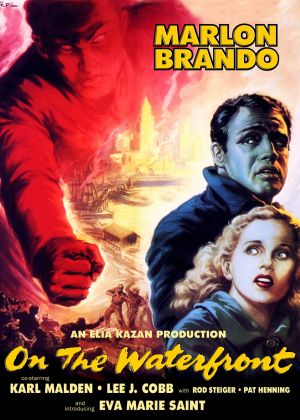
On_the_Waterfront_poster