I figured it was appropriate to follow up Fight The Power by Public Enemy with this music video. I think the music video does an excellent job. I was going to try and interpret the whole video, but I have trouble with lyrics and what I see as the ending, seems to be in direct contradiction with what the director says he intended in the behind-the-scenes video at the end of this post. So, I’ll leave it mostly to you.
I cannot let the post go without mentioning my thoughts on the ending though. The video would appear to have the people following the cords that should lead back to the band. The director even says in the behind-the-scenes video that they do arrive where the band is broadcasting from. But that’s not what you see in the video. It almost gets there with the people running down what should be the tunnels leading to the room, and you can even see a shot in the behind-the-scenes video with them in the room, but it isn’t in the video. I have a feeling that behind-the-scenes video was shot, and then some editing was done to the finished product. The end of the video has Q-Tip alone while a siren plays, then cuts to the protest. I can imagine Q-Tip personally telling Larese that having them show up in the same room as him would defeat the point of the song. It would show the people not rising up for themselves. It would show people rallying to a new king, so to speak. In other words, to borrow from Ozzy Osbourne, since the song does sample Black Sabbath:
“You gotta believe in someone
Asking me who is right
Asking me who to follow
Don’t ask me
I don’t know
I don’t know
I don’t know
I don’t know”
–I Don’t Know by Ozzy Osbourne
I can see them cutting Q-Tip actually seeing them arrive, and instead abruptly cut to the protest. That’s how I read it.
They sample the Black Sabbath song Behind The Wall Of Sleep, which is appropriate since they also did War Pigs and The Mob Rules.
I’ve included War Pigs (live & studio) and The Mob Rules by Black Sabbath below since they are relevant to this song. I’m guessing that the siren at the end is from, or at least a reference to the one from War Pigs, which began the song, rather than ended it.
James Larese directed the video and Cisco Newman produced it. Thanks to BWW Music World we have this quote from Larese:
“I was hugely influenced by Tribe growing up and never imagined I’d be here directing their video. They are just as relevant today as they were 20 years ago. ‘We the People’ touched me on a visceral level. One of the reasons I co-founded Triggr & Bloom, perhaps the main reason, was to position my art to a higher purpose. Working with them was an incredible affirmation for me.”
–James Larese
I can find that Newman has worked on 15-20 music videos in the past few years. He was even nominated for a Grammy for “Weird Al” Yankovic’s music video for Perform This Way.
Here is when A Tribe Called Quest performed We The People…. on SNL:
Finally, here is the behind-the-scenes video that was put out on the video:
I had to do this video eventually. It’s one of those that’s so infamous that I’m going to point you to the Wikipedia article. I have no intention of discussing the messy history of Public Enemy. I will also point you to the video the Rap Critic did on the song.
I’m posting this while it’s still relevant to mention that this was the theme song for Spike Lee’s Do The Right Thing (1989), which was the movie Barack and Michelle went to see on their first date.
As for the people who worked on the video, I honestly had no idea that Spike Lee directed music videos. According to mvdbase, he has done about 40 of them going back to White Lines by Grandmaster Flash & The Furious Five in 1983. Oh, and yes, Lee did direct Hip Hop Hooray by Naughty By Nature. I guess that’s where that urban legend came from that Obama was in that music video.
The video was shot by Ernest Dickerson. He seems to have only shot 4 music videos, but there is one that is noteworthy considering he did this one. He shot Born In The U.S.A. by Bruce Springsteen. Dickerson went on to do a lot of work as both a cinematographer and a director, including episodes of The Walking Dead and the movie Juice (1992).
Hank Blumenthal was the script supervisor for this music video. I’m not sure if I’ve ever come across that credit before on a music video. He appears to have worked on about 10 music videos and has worked as a producer.
If you haven’t seen Do The Right Thing, then do so. If you haven’t heard this song or seen the video, then also do so.
This is another one where I will let the people involved do the talking. In this case, it’s editor Glenn Lazzaro whose work we have already seen several times on here. You can click his name in the tags section to see the music videos I have done so far that he worked on. Credit goes to 99Tigers for putting up a post up containing the following:
Posted by Glenn Lazzaro for his series “Adventures in Television”
National Video Center, New York City, 1985.
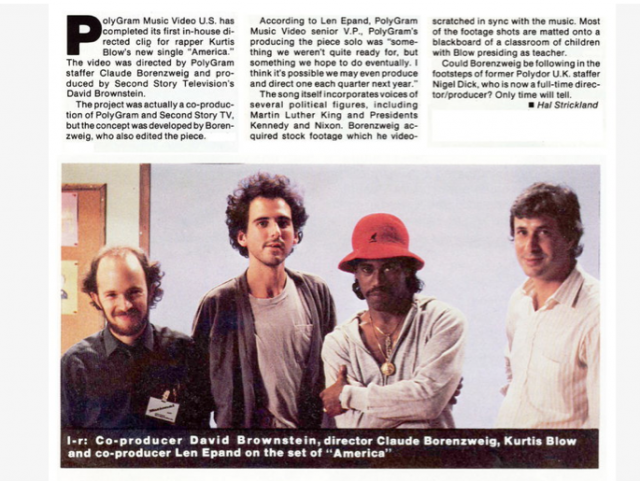
In the early ’80s when hip hop & rap were first noticed by the mainstream, most of the music videos were dance tracks and for the most part, devoid of political messages. Then Kurtis Blow released the single “America” and all that changed. It was a political rant about everything that was happening during the Reaganomics-Cold War-Anti-Russian era in America. Claude Borenzweig, then working at Polygram Records, was editing & directing internal projects when he got the chance to direct the “America” music video. Claude came up with the idea of a classroom filled with kids where Kurtis would teach them the “real” history of America. David Brownstein and Len Epand produced the shoot for Claude on the main stage at National Video. They shot on videotape using the giant, old-school studio cameras that were usually used to shoot “Sexually Speaking with Doctor Ruth.”
Claude did a rough cut using the classroom footage he directed, and a second cut using stock footage that we would combine in the edit. As usual, we went into the edit room over the weekend so we’d have all the time and equipment we needed. We needed time because we had no edit list, no After Effects, no digital storage, no tracking marks. Just an old Ampex ADO and lots of “crossed fingers” that we’d match the motion between the camera moves and the composited footage. Sometimes it matched. Most times it didn’t.
Needless to say, the special effects seem crude compared to what is possible today. But at the time they were considered state-of-art. We also used the then very popular technique of running the footage thru a black & white monitor to distort it.
Claude hadn’t shot any footage for the Pledge Of Allegiance section of the song, so I was enlisted to lie under the title camera and lip-sync the part. Yes, that’s my ’80s mustache you see inserted into the blackboard starting at 18 seconds in.
Shortly after we finished the video, I worked with Frank Zappa on a week’s worth of programming called “Porn Wars” for the music show “Night Flight.” Zappa would appear at the PMRC Senate hearings in Washington during the day, then come to National Video in New York to tape his segments for “Night Flight.” One night I showed him “America.” He was really excited that the rap world was finally getting political and asked for a VHS copy. I was very proud.
Here is also an article written on it for Optic Music Magazine.
According to mvdbase, Claude Borenzweig only went on to do a handful of music videos. According to IMDb, he is, or was working as a Psychotherapist.
Producer Len Epand appears to have worked on around 20 videos.
I can’t find any information on David Brownstein.
John Kraus shot the video. I can’t find any other credits for him.
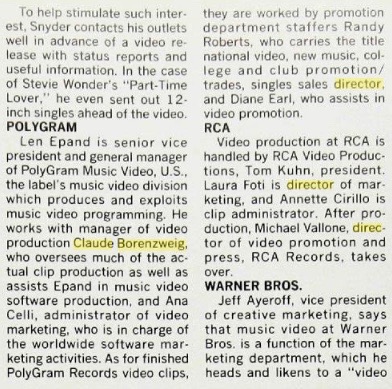
Here’s an excerpt from Billboard magazine from November 23rd, 1985 concerning Claude Borenzweig:
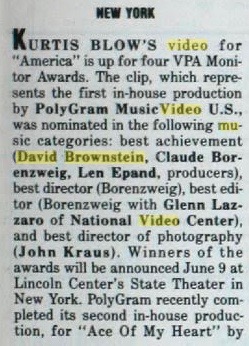
Here’s an excerpt from Billboard magazine from May 24th, 1986 about how the video was nominated for several awards:
Full credit goes to Songfacts for these quotes. I would paraphrase, but I don’t think that would be right. Here’s the background on both the song and the music video from poet Tracie Morris, who helped write the song, and director/photographer Drew Carolan.
“At the time we were talking about tenements and other buildings being torn down for buildings that would be inhabited by ‘Yuppies.’ I remember a great deal of alarm in the BRC (Black Rock Coalition) when The Gap first opened up a store on St. Marks’ Place. We saw the downtown/boho lifestyle changing before our eyes. The song focused on the displacement of residencies of course, but I think we were considering how entire neighborhoods were beginning to shift.
The idea of landlords and slumlords getting tenants out to reap financial rewards isn’t new, especially in New York. We certainly felt at the time that much of the motivation behind the riots was to gentrify the East Village.
Now of course we hear about gentrification at a more extreme level taking place all over NYC, not just in Manhattan but all over Brooklyn and all the boroughs. In some ways, ‘Open Letter’ was a precursor to the wholesale expunging of the regular people that have made New York City great since the beginning.”
–Tracie Morris
“The live footage was shot at Toad’s Place in New Haven before a live audience. The band was getting ready to go out with the Rolling Stones on the Steel Wheels tour. We invited 500 people in early for some playback coverage and then the rest of the crowd for an actual show.
The cutaway material was shot in New York, DC and LA. In ’89 the housing situation was bad in most urban cities. People were being forced out of places they had lived in for generations. Living Colour knew that. They hailed from Brooklyn, The Bronx and Staten Island. They saw it everywhere they played. I was from the Lower East side. I saw the writing on the wall. Gentrification was sweeping up the cities and taking the working class with it. We see the band walking through decimated neighborhoods where they used to play. A street called Hope. A little girl on a swing disappears. Empty. Gone. Peaceful protests and shouts melt into the droning sound of the mass transit system.
I just watched it and it rings true today as well. Sad but true.”
I said I would try to get every genre of music I could into Black History Month.
Here we have the hardcore punk band Bad Brains. They’ve been around for a long time now. They started out in 1976 as a jazz fusion band before migrating to Hardcore Punk. They released their self-titled debut album in 1982. There are some good songs on that album, but the one of special note is Banned in D.C., which was based on an unofficial ban put on them in clubs in 1979 in Washington, D.C. I’m kind of surprised since the all-black proto-punk band Death only didn’t have their record released in the early-to-mid-70s because they refused to change their name. That was it. It would get released decades later, but I’ll leave it to you to watch the movie A Band Called Death (2012).
Then again, the mostly white hardcore punk band Dead Kennedys took endless flack all the way up to Tipper Gore, among many others, so it’s believable. What isn’t believable, but is true, is that Dead Kennedys would perform under their actual name at my high school in the early-80s. I thought it was a myth until numerous people who had been there told me stories about that night. That’s a story I will have to look into more detail at some point.
If the director of this music video sounds familiar, then that’s because he also directed Hunger Strike by Temple Of The Dog and a couple of videos for Alice In Chains. One has to wonder what the conversation was between the band and Rachman:
Bad Brains: We’ll take one part Smells Like Teen Spirit, two parts Jeremy, and feel free to sprinkle in a little Faith No More and Living Colour.
Rachman: You got it!
I’m not complaining. You can see the same sort of thing with their video for the song God Of Love. The group was inspired by musicians like Black Sabbath and Bob Marley. They even got their name from the Ramones song Bad Brain. So why not draw on the music videos of bands they no doubt help to inspire. Makes sense to me.
It’s nice and simple. I like the use of the white dimension as I refer to it as when I see it in music videos. I wouldn’t be surprised if director Paula Greif was familiar with ABBA music videos because this does remind me of their white dimension videos in terms of the arrangement of people and the direction their heads are facing. My favorite part is how it bookends itself with the flower. At the beginning it is being handed by a child to an adult, and at the end of the video, the child hands it back to the adult.
According to Wikipedia, this song was voted in 2009 as the “85th Greatest One-Hit Wonder of the 80s” by VH1. It’s also worth noting that the album this song is from called Conscious Party was produced by Chris Frantz and Tina Weymouth of Talking Heads/Tom Tom Club.
Greif appears to have directed around 20 videos and produced a couple of them. Something particularly interesting about her credits is that she did enough with Duran Duran that she even has a page devoted to her on a Duran Duran fan Wiki.
Laura Israel and Glenn Lazzaro edited this video. She appears to have worked on about 15 music videos. All but one of them was either directed or co-directed by Greif. Israel went on to work as an editor on things such as Africa Unite: A Celebration of Bob Marley’s 60th Birthday (2008). She has also directed two documentaries called Windfall (2010) and Don’t Blink – Robert Frank (2015).
When you read about the color barrier at MTV, then you’ll always hear about how Billie Jean by Michael Jackson was the music video to break it. That is usually accepted fact, but some people argue that this music video was actually the one to do it. Others dispute that by saying it didn’t really break the barrier so much as it was a case of MTV thinking that it wouldn’t matter if they were black seeing as they were children. Personally I lean towards that theory since even Billie Jean didn’t really break the barrier. It just set events in motion that would open a crack in the barrier which other black artists would seep through at greater and greater rates till MTV got rid of it altogether.
According to Wikipedia, Musical Youth were the first black artists to appear in a studio segment on MTV. They were hardly the first black artists to be played on MTV though. The “barrier” was more of a general bias that was applied to the day to day decisions about what to play on the station. Certainly legacy artists who they couldn’t ignore and already had a large fan base were snuck in from time to time. However, there is a big difference between that, and getting brought in for an interview on the station. You can read an article here where Designer Magazine interviewed members Dennis Seaton and Michael Grant.
The video was directed by Don Letts, and was shot partially on the southern banks of the River Thames in London, by Lambeth Bridge. It should come as no surprise that Don Letts also directed a bunch of music videos for The Clash, did at least one for Bob Marley & The Wailers, and numerous ones for Musical Youth.
Enjoy!
Update:
This is pretty cool, and a first for me. Musical Youth themselves chimed in on our Facebook page to give me some additional information. They were told that they were the first to get on a regular playlist on MTV. Based on what I have read in the book I Want My MTV, MTV would throw in a black artist here and there, but getting into regular rotation is another matter altogether.
According to my calendar, it is Nirvana Day in Buddhism. On this day, you are supposed to celebrate when the Buddha achieved complete Nirvana–Paranirvana–by dying after having achieved Nirvana in life. It’s also a day to think about your coming death and the death of your loved ones. To quote the BBC site that talks about it:
“The day is used as an opportunity to reflect on the fact of one’s own future death, and on friends or relations who have recently passed away. The idea that all things are transient is central to Buddhist teaching. Loss and impermanence are things to be accepted rather than causes of grief.”
I honestly came across that after having already written this post. That’s kind of sad in this context, but let’s talk about this video anyways.
It’s Nirvana, so you can expect the music video to be interesting. The best thing about going to YouTube for music videos by groups like Nirvana are the comments from people either saying that this is real music or complaining about kids who wear the band’s paraphernalia, but obviously know nothing about the band. Here’s one on this very song:
“It annoys me how today people wear nirvana shirts and they don’t even know they’re a band, now when I wear my nirvana shirts I always feel as if I’m just following a fashion statement. High five to all the real nirvana fans :)”
God, don’t I know it. I feel the same way when I see people wearing Dead Kennedys’ shirts, and I just know they have no idea who The Creamsicles are, but are simply wearing them as fashion statements. It makes me so annoyed for no reason whatsoever. I also go on to YouTube comment sections to complain about it instead of using a forum read by people younger than I am so they have a place where they can learn about these things if they wish to–much like…wait I can’t spoil that yet. If you think that, then that tells you more about yourself and those people who you believe are judging you, then the people you are judging. I’m giving this person a hard time, but it isn’t so bad. I’ve read far worse. Regardless, let’s go ahead and have some fun by judging people here based on whether they are supposedly “real Nirvana fans” or not.
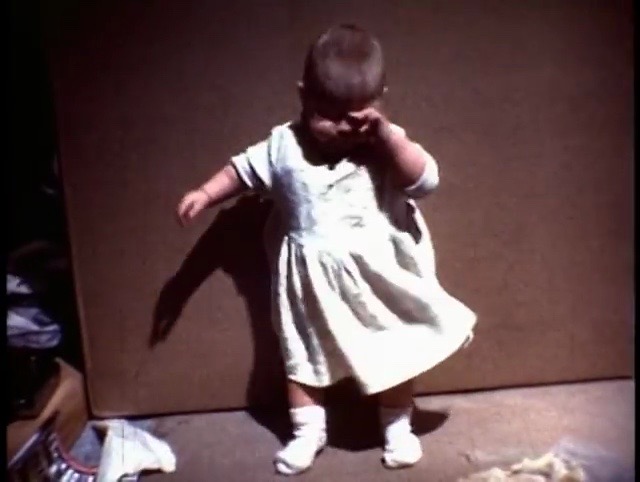
Don’t know why a baby is at the beginning of this video? You just aren’t a true Nirvana fan. A true Nirvana fan would know that Sliver is about Kurt growing up, and specifically being tossed around from family member to family member.
Don’t know why you would put a picture of Gorbachev above a Mudhoney poster? You could read it as a reference to Mudhoney being a big influence on Nirvana, and they were a group set to bring grunge to the masses along with Melvins and Mother Love Bone before money and tragedy changed their destinies. It would turn out Nirvana would be the one to bring grunge to the masses. Nirvana would get credited with single-handedly destroying the 1980s. Gorbachev and Bush would also get credited with ending the 1980s with the collapse of the Soviet Union. If you didn’t know that, then you are a horrible Nirvana fan.
Don’t know why they show that? Okay, even if you are a fan of Nirvana, then it could be that you just don’t own a physical copy of Nevermind with that picture on the back of it.
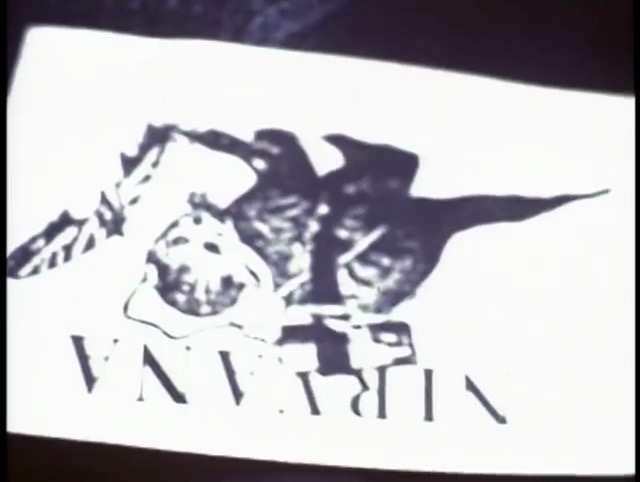
The reason it is upside down and looks like a copy of a copy of a copy can be read many ways. I look at it and remember that Kurt didn’t take criticism well, and I’m sure someone said that they were a flash-in-the-pan, so their follow-up album would just be a carbon copy of Nevermind. That couldn’t have been further from the truth. Insecticide was more of a return to the harder stuff they did on their first album called Bleach.
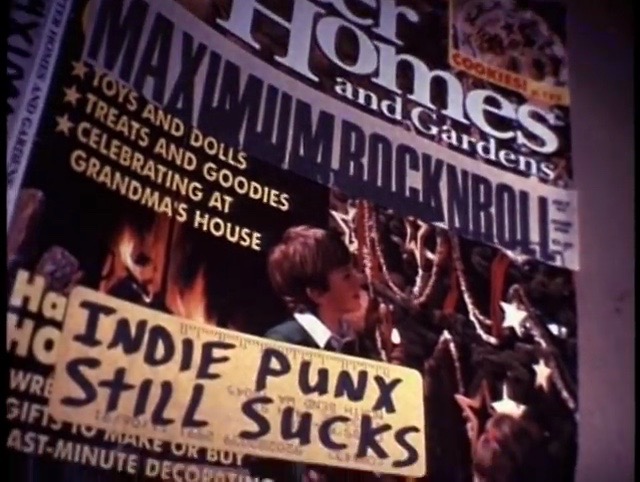
Why does this flash onscreen for less than a second? Listen to the lyrics. They actually mean something in a song by Nirvana, which a true fan knows. Kids these days just accept things like “You don’t gotta go to work” as real lyrics. A sentient highway sign told me to make that joke.
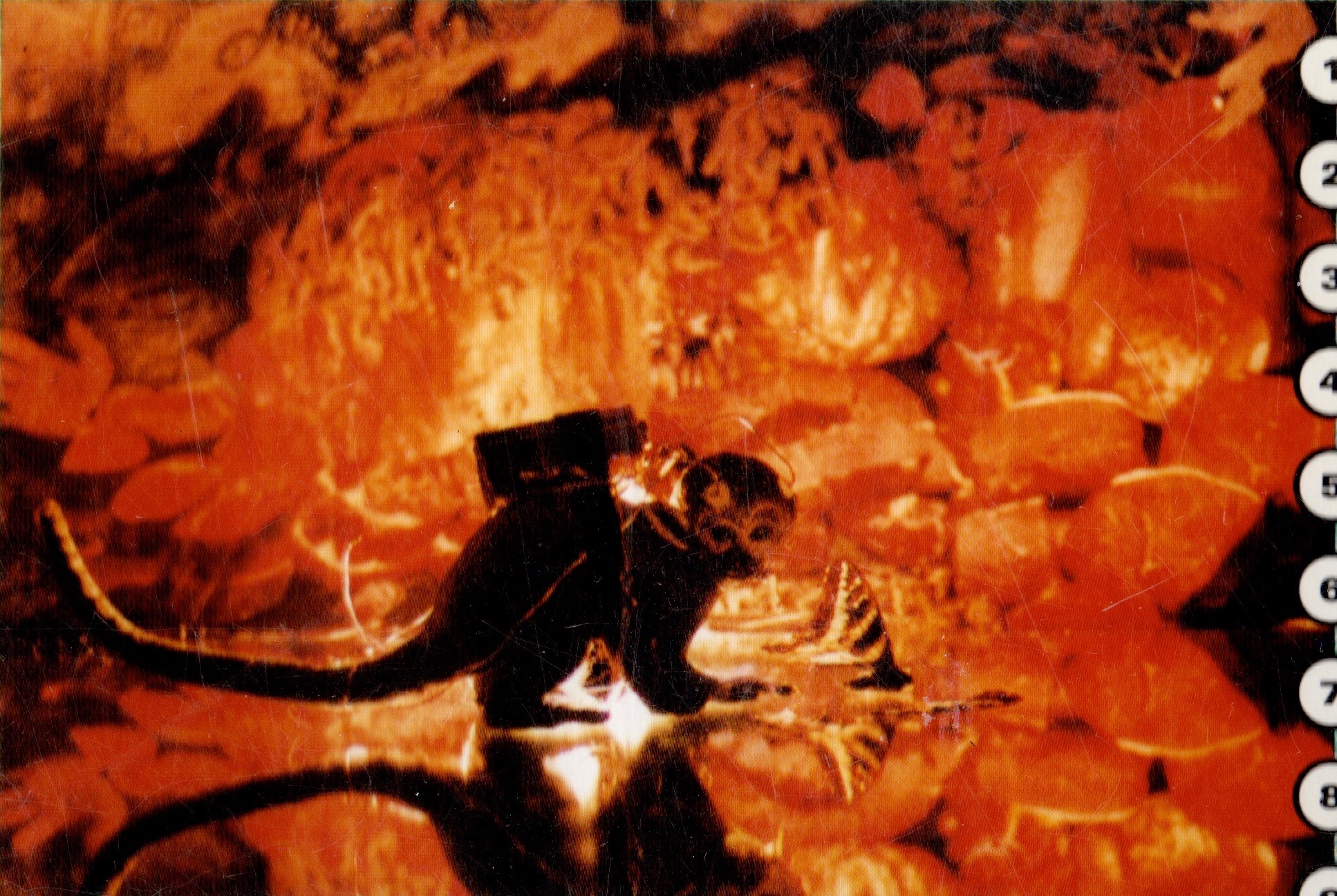
Don’t know why there is a baby in the womb that is detached from any body? Among other reasons, such as the theme of detachment from a real family, there is a theory going around that Kurt was transgender. That could bring on an obsession with supposedly being born wrong and the body in general, which can drive you to suicidal depression and make you ashamed of having a diminutive figure by wearing numerous layers to hide it, like Kurt did. Maybe the crossdressing as well. It’s just a theory that is out there. However, if you didn’t know that it is out there, then a Nirvana fan is something you are not.
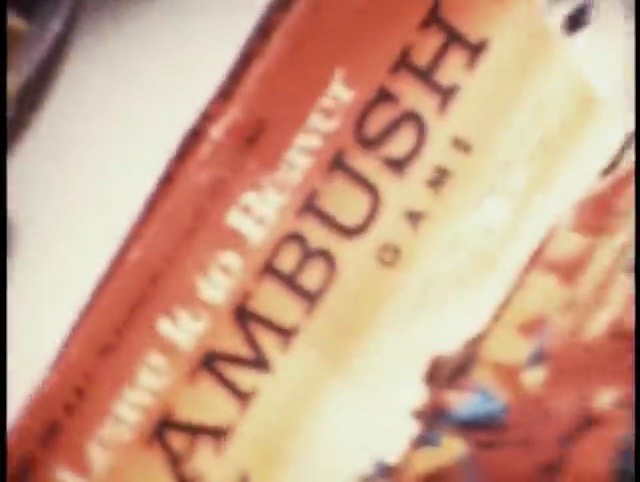
I’m running out of ways to shame people for no reason. It’s Leave it to Beaver that represented an ideal family that Cobain never had. It is also a board game since that is the kind of thing a grandmother around that time might pull out to play with their kid. It also happens to be a Cowboys and Indians game that goes right along with the Flintstones and Colonel Sanders figurines.
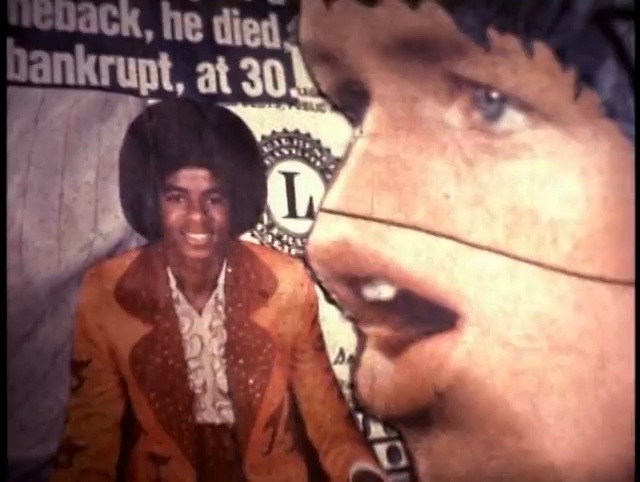
I’ll leave this one to you as to whether you think that’s supposed to be Marlon Jackson, of The Jackson 5, who had a twin that died shortly after he was born. It wouldn’t surprise me if that is supposed to be Ian Curtis on the right either seeing as the same year this music video came out, the band made the video for Heart-Shaped Box with former Joy Division photographer Anton Corbijn. After all, the little girl with the pointy hat was from the music video Corbijn made years after Curtis’ death for the Joy Division song Atmosphere.
I could go on and on with all the things in this such as the package of The Visible Man, the baby stuck under trash, and the model of what appears to be a father. However, if you can’t see these things for yourself, or didn’t know them right off the top of your head, then you are a terrible “fan” of Nirvana. I’m sure Kurt would agree, which must be why when they performed on MTV Unplugged they played Jesus Doesn’t Want Me For A Sunbeam by The Vaselines, The Man Who Sold The World by David Bowie, Plateau; Oh, Me!; Lake Of Fire by Meat Puppets, and Where Did You Sleep Last Night? by Lead Belly. I remember Cobain even mentioning which band played each song. He even told a story how the Lead Belly estate tried to sell him one of his guitars for $500,000. But yeah, lets judge the kids for wearing Nirvana T-Shirts, and feel ashamed for remembering them by wearing them ourselves. It just makes sense, right?
Speaking of Lead Belly. Nirvana did cover at least one other Lead Belly song called Ain’t It A Shame.
Lead Belly was a famous blues/country/folk artist from the early-1900s. This was back when there weren’t really blues artists and country artists. Blues and country were all part of any of their repertoires. It wasn’t till the record companies came along that a division was formed. They only wanted to record blues from the typical “blues” artist and country from the typical “country” artist. In Lead Belly’s case, you can hear him sing Goodnight Irene one minute and then flip it over to When I Was A Cowboy the next. He did it all. He even did a short film of himself performing some songs.
I wouldn’t have known about Lead Belly were it not for Nirvana. I would play MTV Unplugged In New York over and over again as a kid. By that point, Kurt had already been dead for several years. I also didn’t pay attention to the lyrics till I was older. It didn’t matter. I was hooked anyways. I have Kurt and the rest of the band to thank for making me aware of a greater world of music that reached back to before even my own grandmother was born.
I prefer to educate rather than judge–if I can. I do it to from time to time. If you made it this far and don’t already know, then I’ll tell you. The Creamsicles were a pseudonym Dead Kennedys used sometimes. In particular, they used it when they played a high school near me in the late-1970s. The sentient highway sign is from L.A. Story (1991), which told Steve Martin to sing Do Wah Diddy Diddy by Manfred Mann. It’s a 1960s song known for repetitive lyrics. I guess I could have used Louie Louie by The Kingsmen, but the video already takes place somewhere a garage rock band might practice.
One final thing before I add that worn out ending I usually put at the end of these posts. We started this post off with a someone complaining about people wearing a Nirvana T-Shirt not knowing that they are a band.
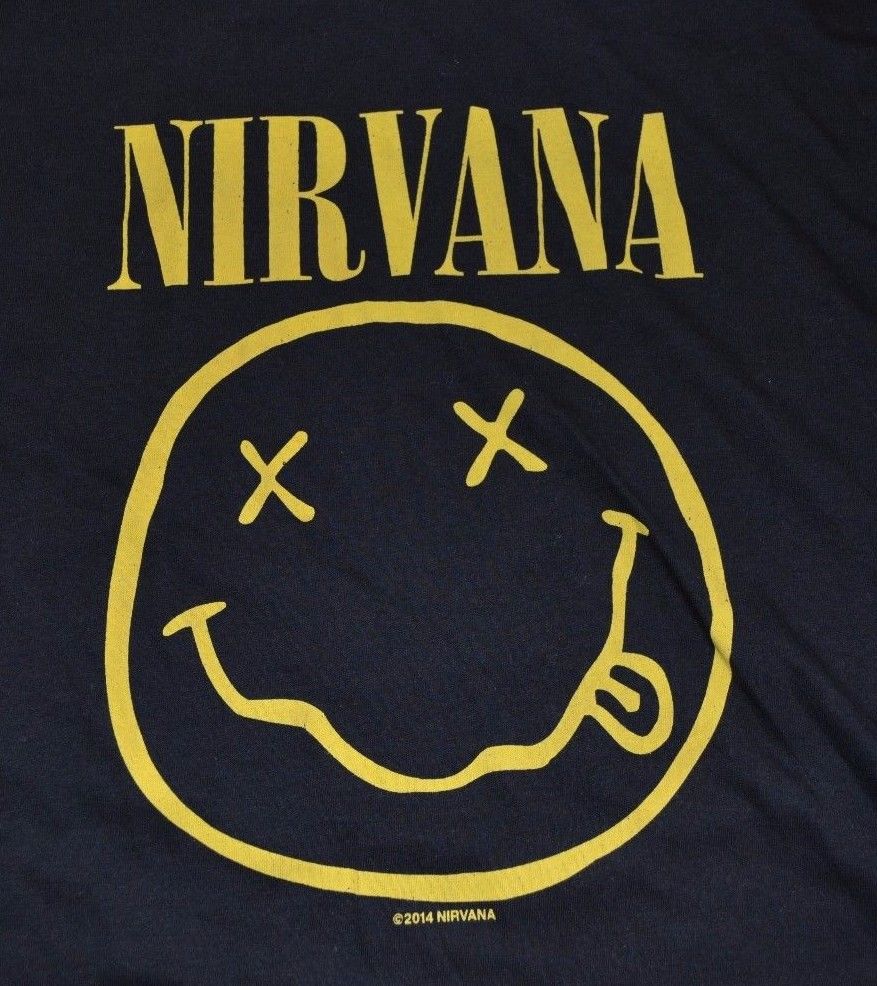
How much you want to bet that same person doesn’t notice that when they wear their Nirvana T-Shirt around that they are actually wearing a shirt that took the mid-1960s Smiley Face button, and added X’s where the eyes are–as in Generation X? So in reality, they would also be going around wearing a T-Shirt that they don’t know the meaning behind. Then again, maybe this person does. I just thought it was worth mentioning. Especially since there are all sorts of other theories going around that don’t really mention that Nirvana was one of the flagship bands of Generation X, that generation was famously called that since they were the first generation in a longtime to not be defined by a war, and as you can see in this video as well as the cover of Bleach, they liked reversing colors. I’ll finish by borrowing from the song Bastards of Young by The Replacements:
“Clean your baby womb, trash that baby boom
Elvis in the ground, no waitin’ on beer tonight
Income tax deduction, what a hell of a function
It beats pickin’ cotton and waitin’ to be forgotten
We are the sons of no one, bastards of young
We are the sons of no one, bastards of young
Not the daughters and the sons
Unwillingness to claim us, ya got no war to name us
The ones who love us best are the ones we’ll lay to rest
And visit their graves on holidays at best
The ones who love us least are the ones we’ll die to please
If it’s any consolation, I don’t begin to understand them”
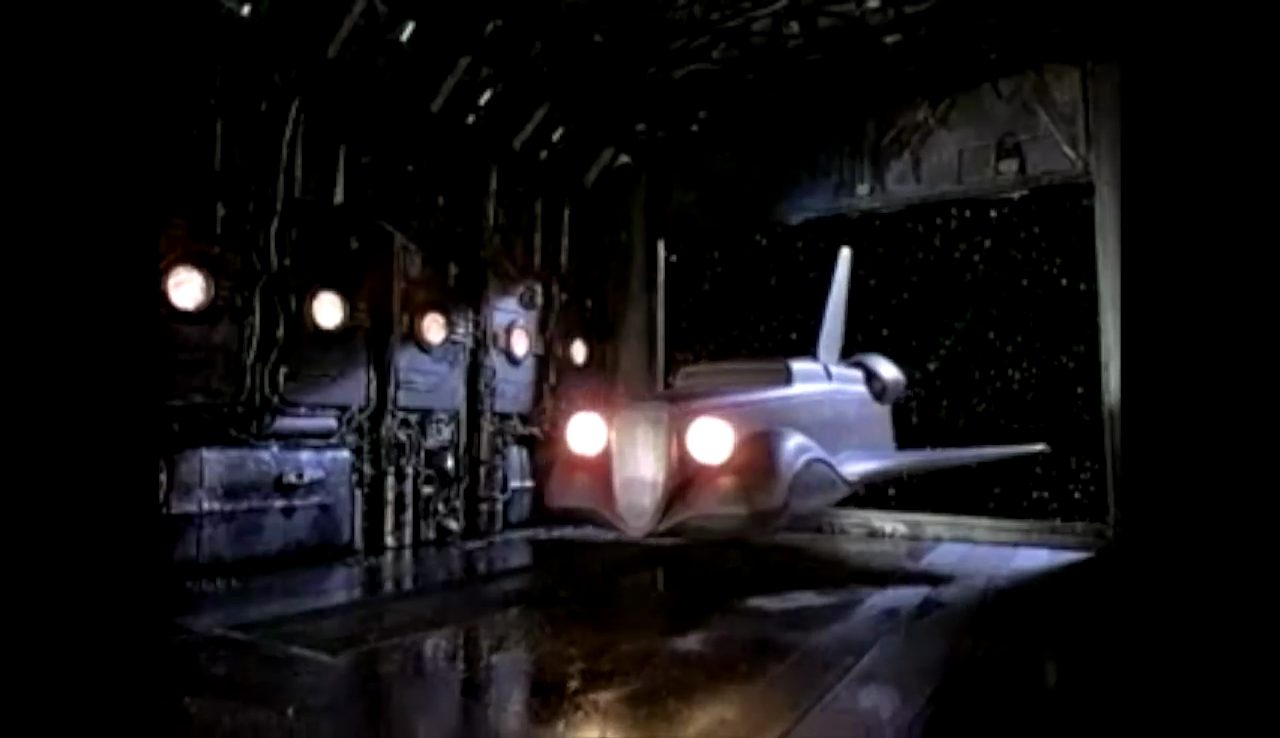
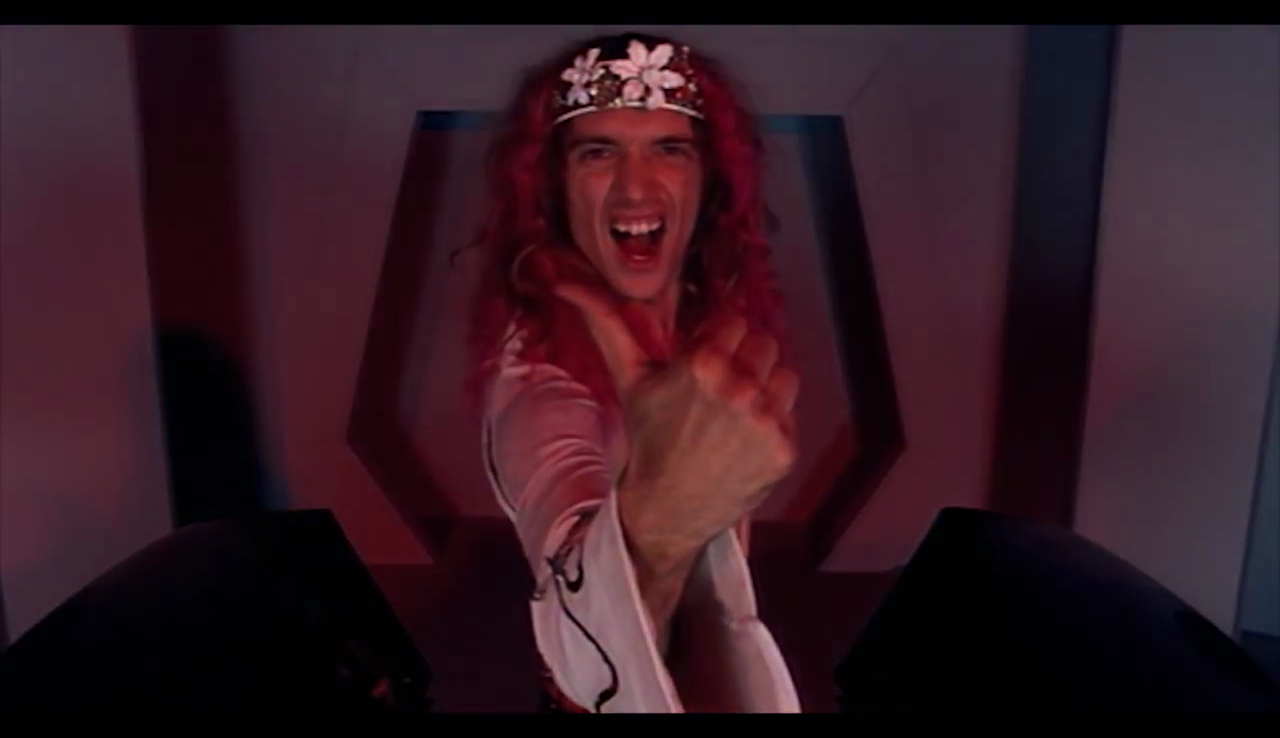
The video starts off with The Darkness onboard their version of the ZZ Top spaceship car.
Rough Boy by ZZ Top
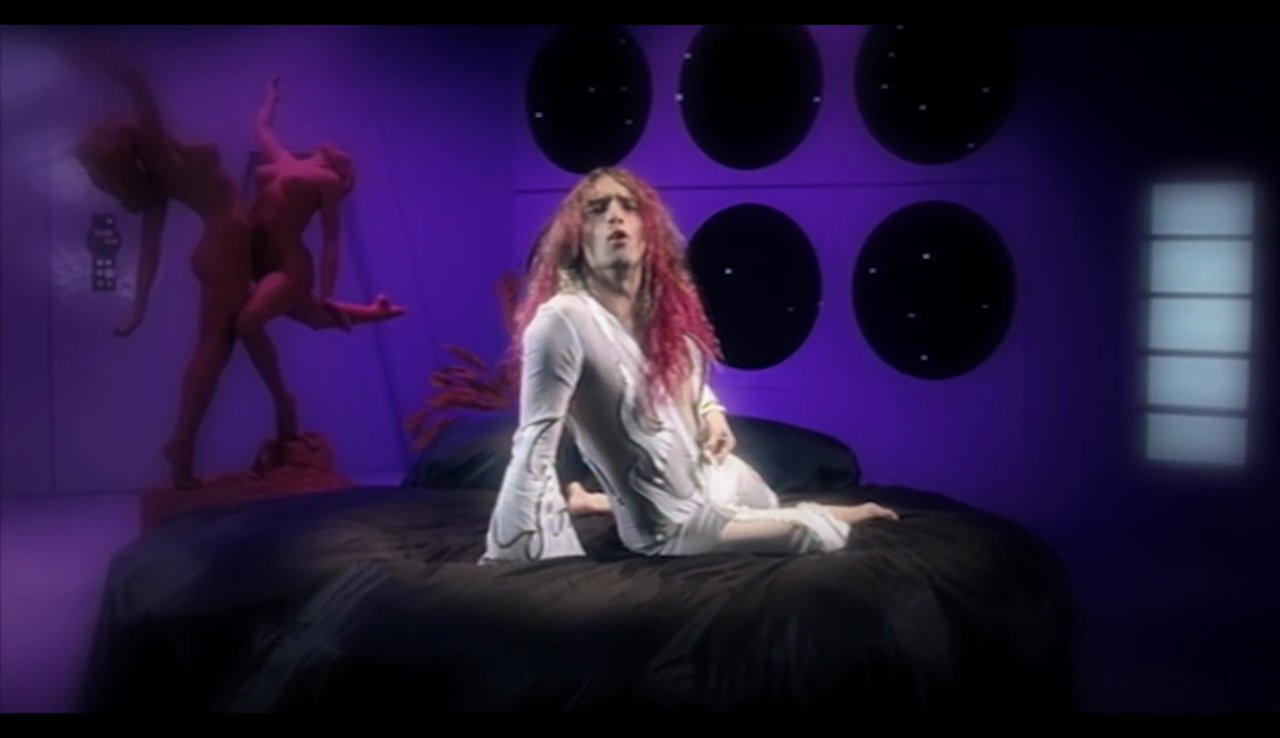
Then Justin Hawkins emerges from a heart-shaped bath before something that reminds me of Grimace dries him off. That’s followed by Hawkins reminding us that he is a fan of Queen.
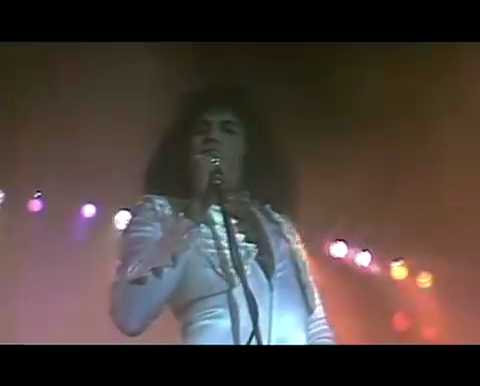
Bohemian Rhapsody by Queen
You can also see in the background that he either made a sculpture based on this…
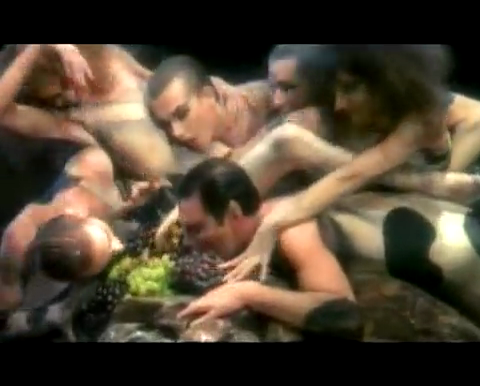
I Want To Break Free by Queen
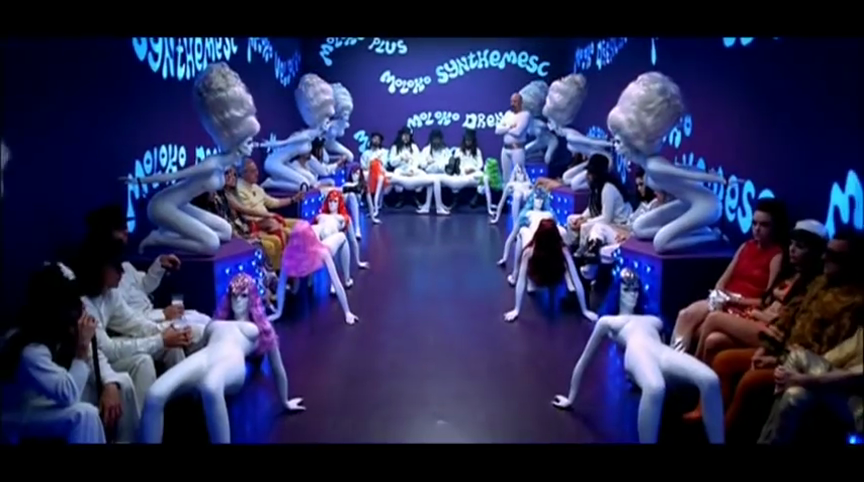
or borrowed some of the furniture from the Korova Milk Bar used last by Rob Zombie in 2002.
Never Gonna Stop by Rob Zombie
This was a few years before Zombie would get Alex DeLarge and Michael Myers to sit down and discuss masks.
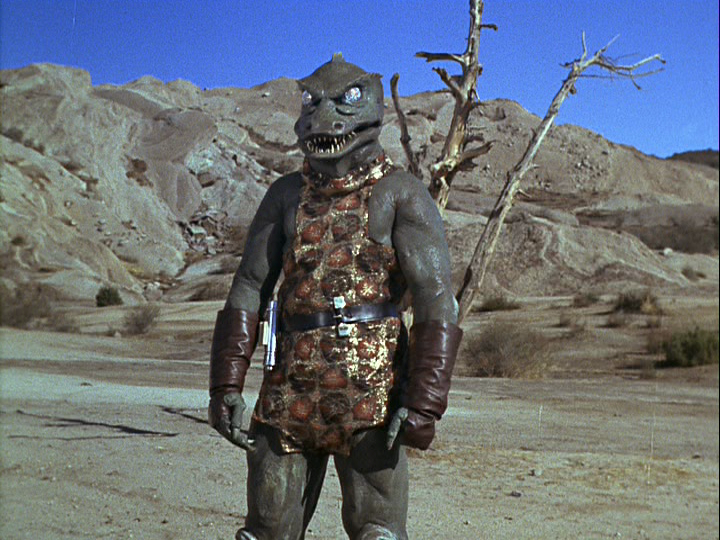
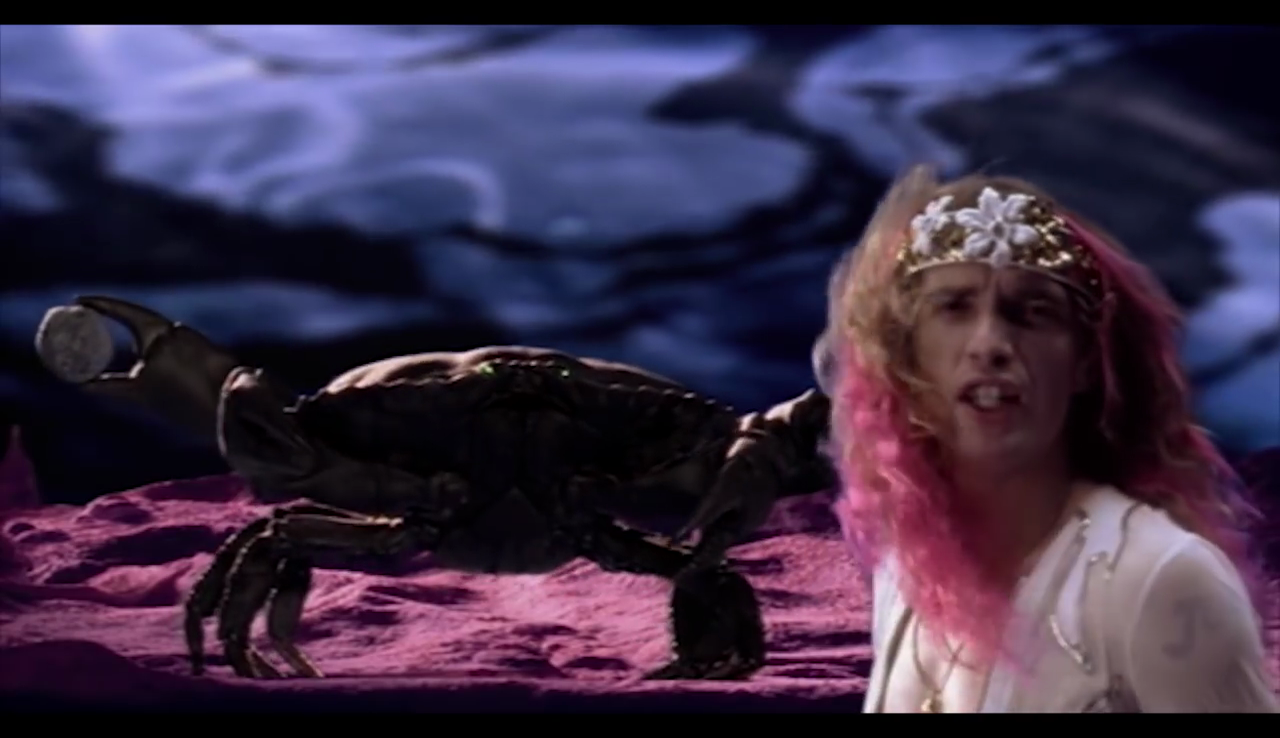
Then it’s time to introduce the rest of the band, and play some guitar before Hawkins gets beamed down to a planet to fight a giant crab. I guess the Gorn were too good for this music video.
Star Trek: TOS — Arena
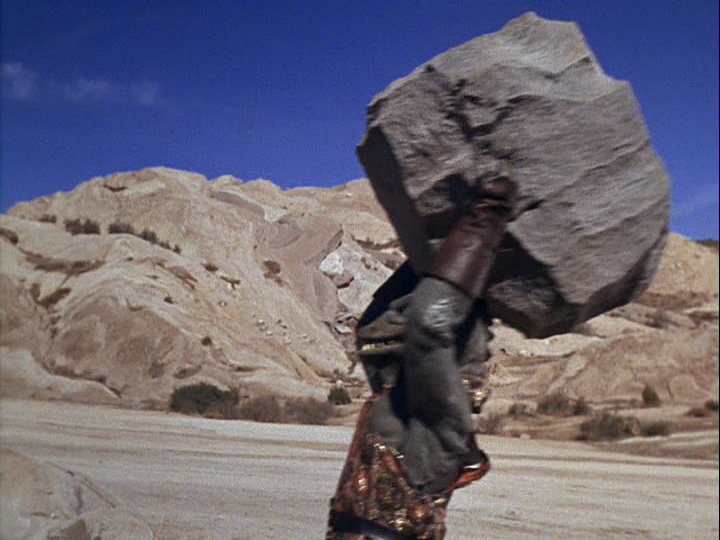
However, we do get a cameo appearance from the rock.
Star Trek: TOS — Arena
Of course Hawkins dodges the rock like Captain Kirk did, and with the power of a Bohemian Rhapsody reference…
he throws it right back. They’re working with a limited runtime. Hawkins doesn’t have the time to make a gun.
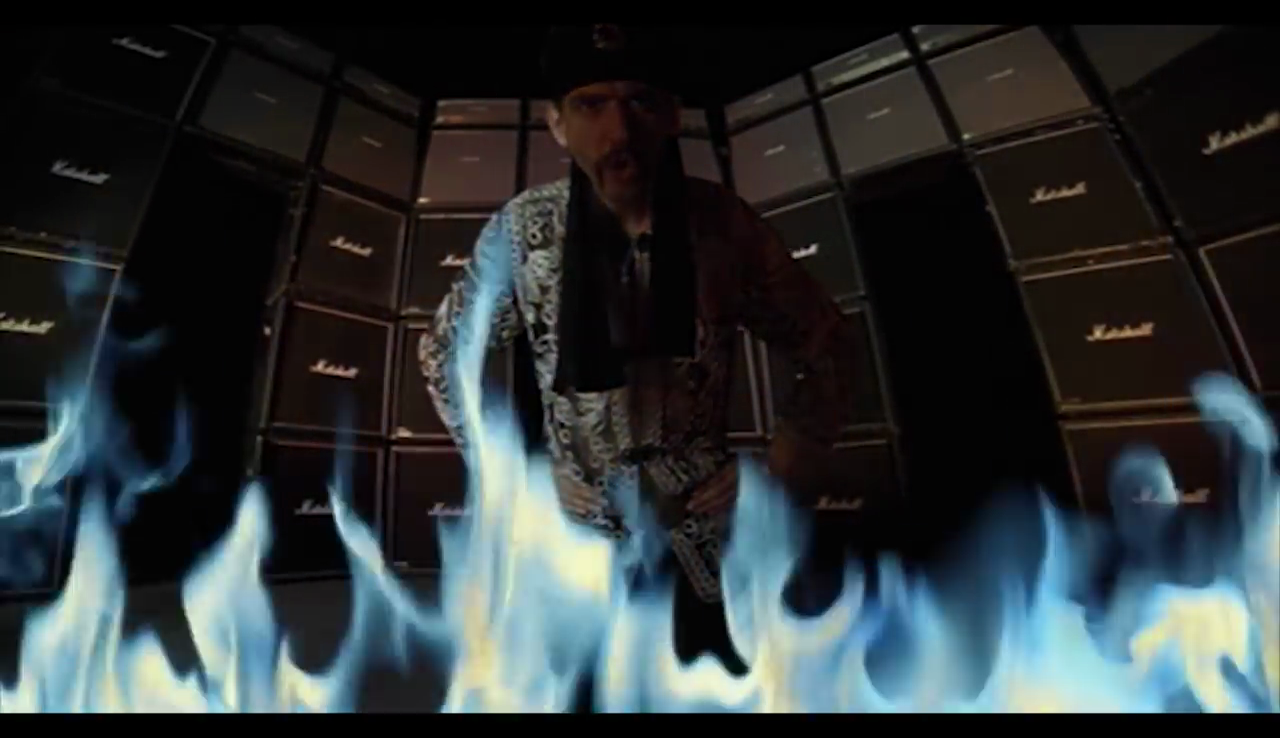
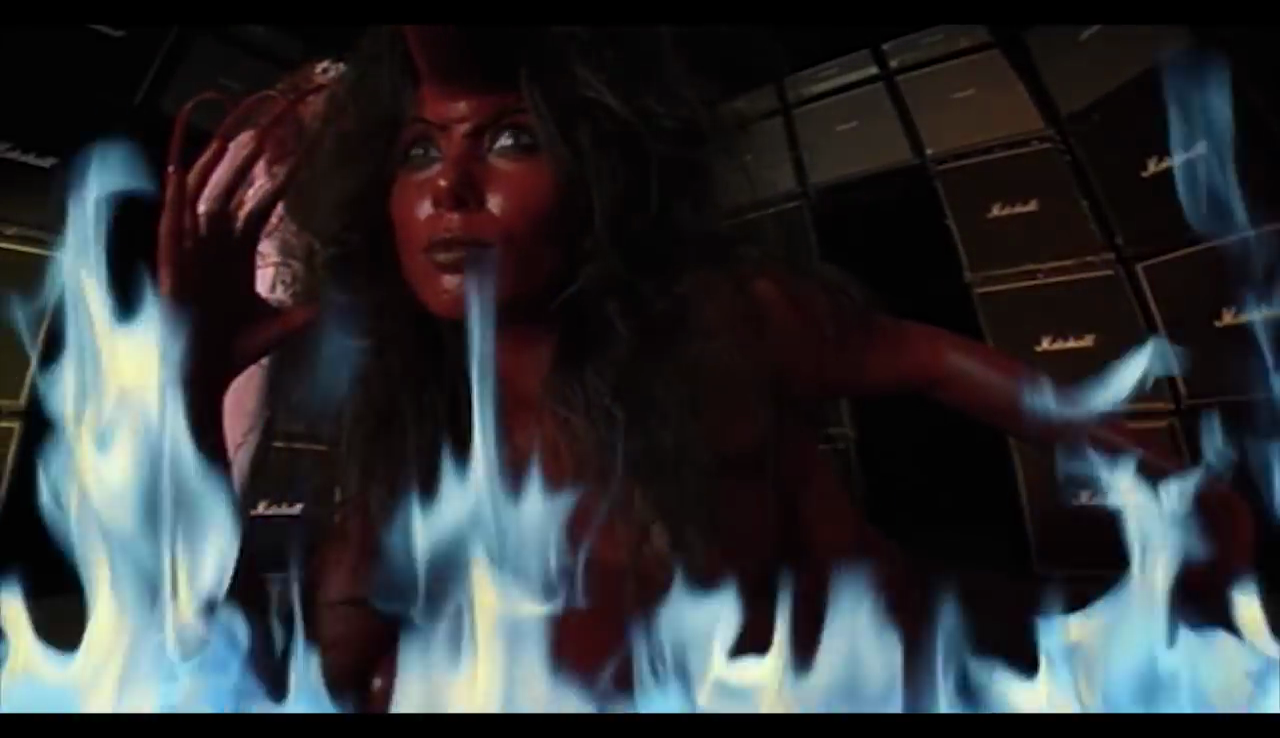
Then Hawkins runs through decontamination before turning to point down the corridor to show off their gigantic Marshall Stack.
I’m sure they were added later, but I’m still going to call this for The Animals and say that hot flames of fire were roaring at their feet. I have no idea if this one was a reference to Spill The Wine by The Animals, but it is the first thing I thought of when I saw the scene. Plus, out of the middle of the flames does comes this red-colored Orion girl.
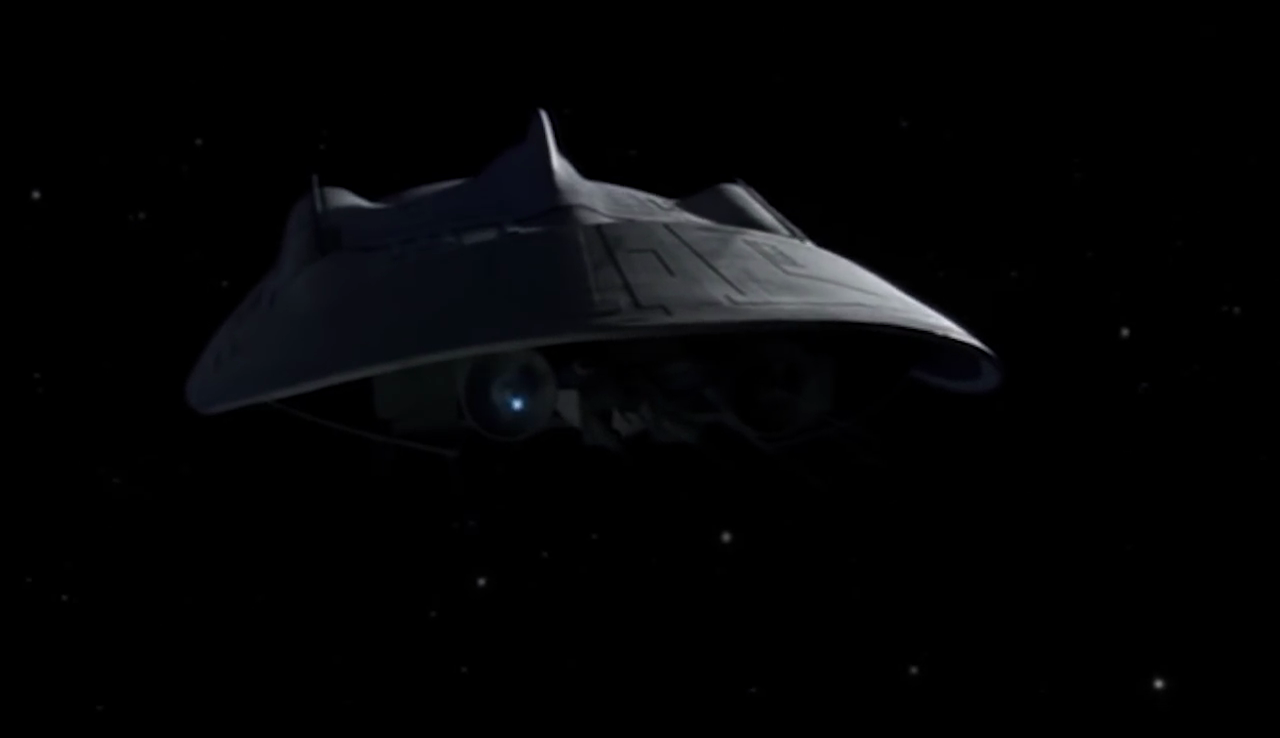
Meanwhile, back on the bridge, the band prepares for their final reference.
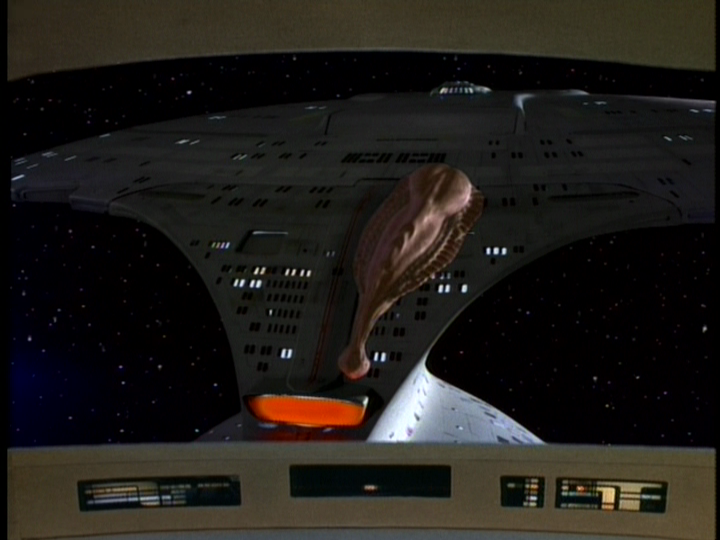
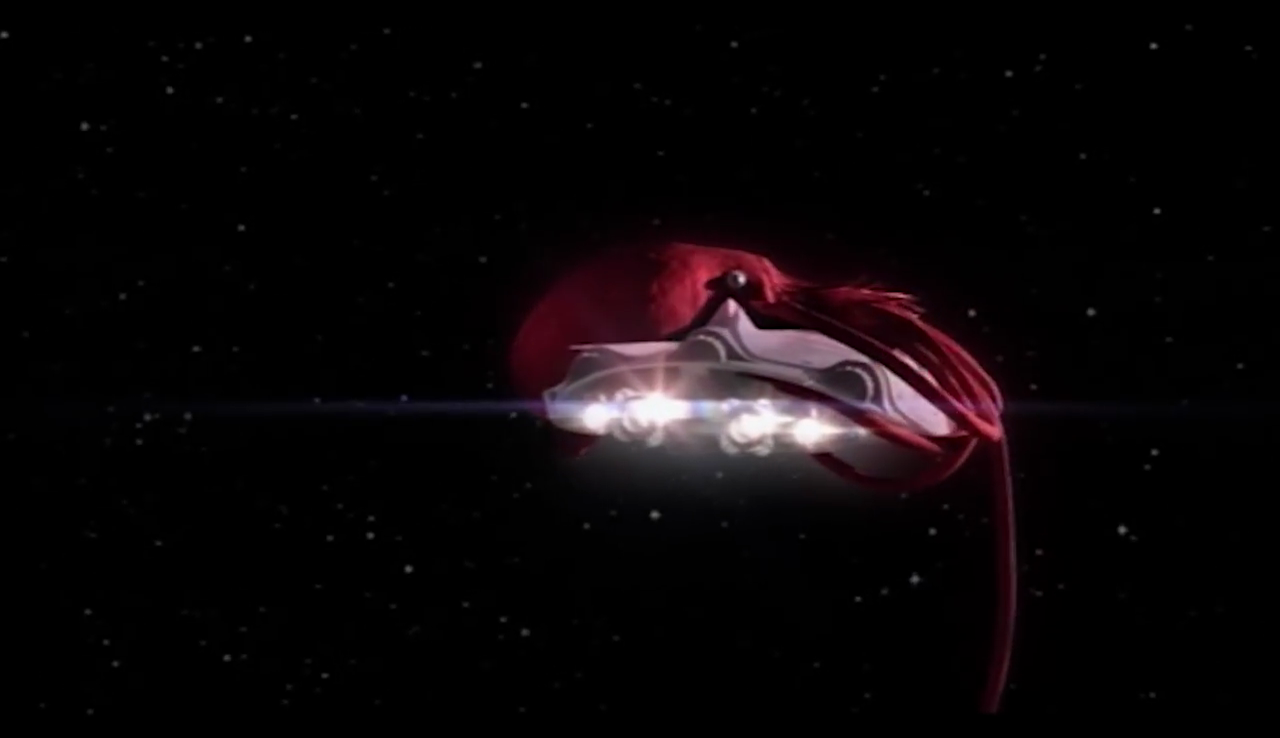
A space creature latches itself onto the ship like in that episode of Star Trek: The Next Generation.
Star Trek: The Next Generation — Galaxy’s Child
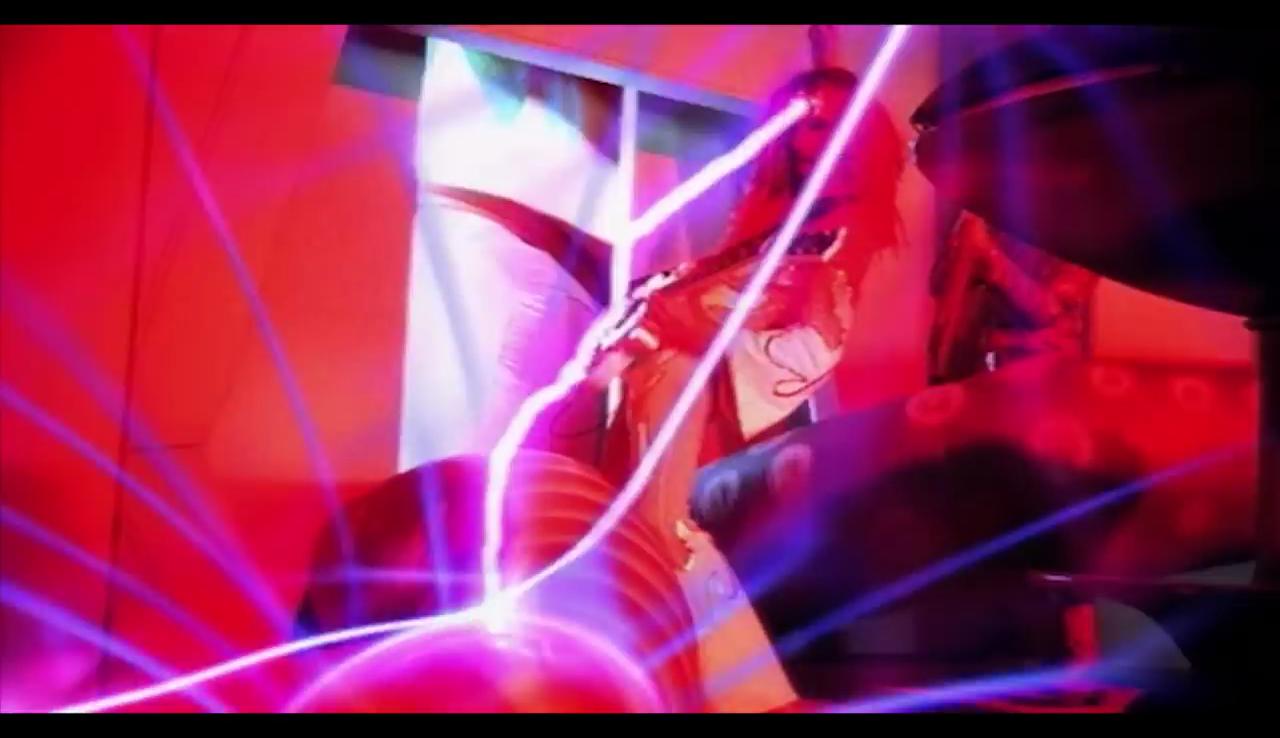
Unlike Star Trek: The Next Generation, they turn on their instrument phasers and blast the thing to dust.
Then we get a thumbs up from Hawkins…
before their ship crash lands on a planet in the video for their song Friday Night, which picked up right after this one.
When I was a kid, Neneh Cherry was that artist they always broke out when talking about one-hit wonders. That one-hit being Buffalo Stance. What I didn’t know is that she not only had other songs, but worked with two well-known music video directors. This time around it was David Fincher.
According to the book, I Want My MTV, he was well-known in music video circles for getting female artists to do rather interesting things in his videos. Of course one of the best examples is Madonna crawling on all-fours to lick milk from a dish like a cat in Express Yourself. You can also see that touch in Paula Abdul’s S&M dance for Cold Hearted. This video shares the onscreen text thing with Cold Hearted. One of the most interesting videos of David Fincher’s is the one for She’s A Mystery To Me by Roy Orbison. He did it mainly with the remnants people leave behind, or clues if you will about the mystery of the title. You get the gritty stuff in videos like Janie’s Got A Gun by Aerosmith. This one sits halfway between Express Yourself and Billy Idol’s cover of The Doors’ L.A. Woman.
Take special notice at a minute and twenty-two seconds when the guy looks towards the stage and the dummy turns its head on its own. I wonder what that represents…said no one who has seen any of David Fincher’s music videos, or watched this one to about the two minute and fifty-five second mark.
There is a whole chapter in the book I Want My MTV devoted solely to David Fincher. I’ll probably do a whole retrospective of his videos at some point. If you haven’t watched them, then you’ve only seen some of Fincher’s work. He made over fifty music videos–one as recent as 2013.
Oh, and this being a music post, I did catch a tiny bit of the Grammys. I am not a big fan of award shows in general, and certainly not one that thought it was a good idea a couple of years ago to stop dead in order to tell people they were going to go to Congress to manipulate copyright law which had people in the audience nodding in agreement. Still, I did catch some of the Beyoncé number where she was Lady Liberty with African neck rings sitting on a chair on a table that went from the Ben-Hur slave ship to The Last Supper with people’s faces bisected to go with the lyrics that also included a little Busby Berkeley. That was nice.




 Through the Shattered Lens