Though I may not agree with the film’s conclusions, Bob Clark’s 1979 film Murder By Decree is still the best of the Jack the Ripper films.
This scene, featuring the final battle between Sherlock Holmes (Christopher Plummer) and the Ripper, is not only full of fog-shrouded atmosphere but it also features one of the most savage portrayals of Jack the Ripper.
4 Shots From 4 Films is just what it says it is, 4 shots from 4 of our favorite films. As opposed to the reviews and recaps that we usually post, 4 Shots From 4 Films lets the visuals do the talking!
Today, we pay tribute to a filmmaker who got his start in Canada. Though born in America, Clark spent most his career up north. Though he’s today best remembered for directing the holiday classic, A Christmas Story, Clark started his career as a horror director. In fact, long before telling the story of Ralphie and his BB gun, Clark directed one of the first Christmas slasher films.
Today, we honor the legacy of Bob Clark with….
4 Shots From 4 Bob Clark Films
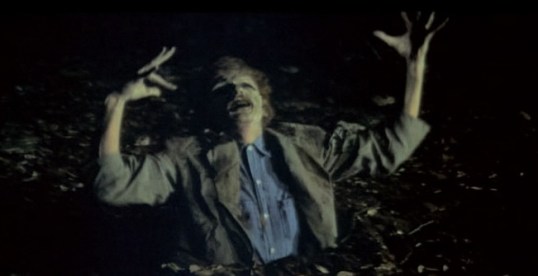
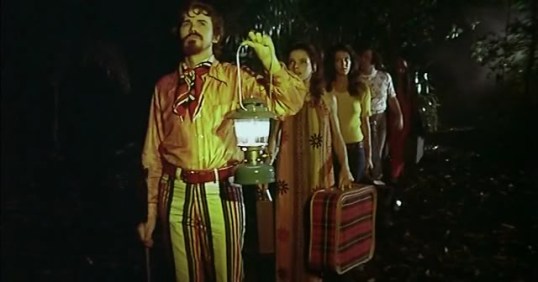
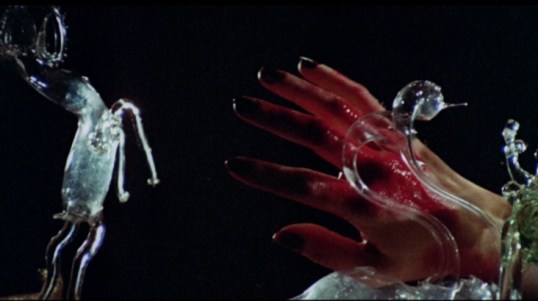
Children Shouldn’t Play With Dead Things (1972, dir by Bob Clark, DP: Jack McGowan)
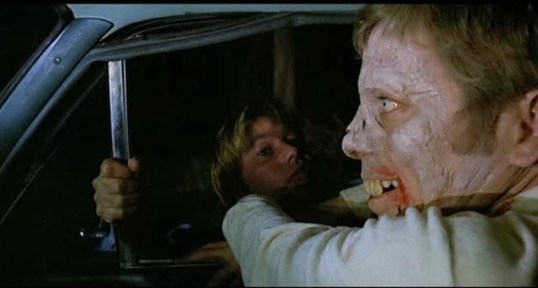
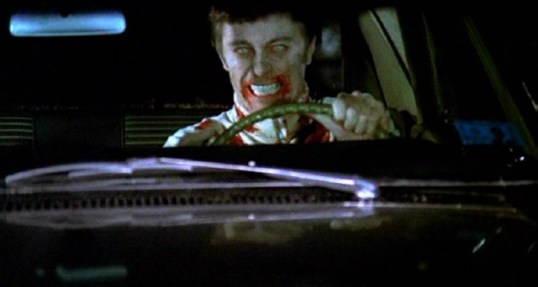
Deathdream (1974, dir by Bob Clark, DP: Jack McGowan)
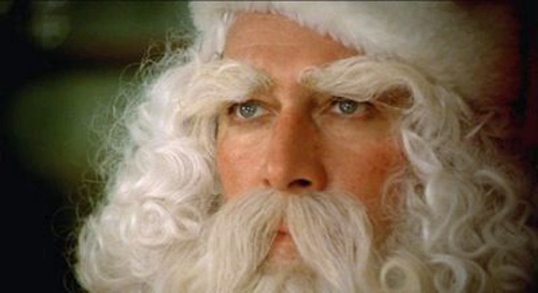
Black Christmas (1974, dir by Bob Clark, DP: Reginald H. Morris)
Murder By Decree (1979, dir by Bob Clark, DP: Reginald H. Morris)
4 Shots From 4 Films is just what it says it is, 4 shots from 4 of our favorite films. As opposed to the reviews and recaps that we usually post, 4 Shots From 4 Films lets the visuals do the talking!
Yesterday, we paid tribute to the great Canadian director, David Cronenberg. Today, we pay tribute to another filmmaker who got his start in Canada. Though born in America, Clark spent most his career up north. Though he’s today best remembered for directing the holiday classic, A Christmas Story, Clark started his career as a horror director. In fact, long before telling the story of Ralphie and his BB gun, Clark directed one of the first Christmas slasher films.
Today, we honor the legacy of Bob Clark with….
4 Shots From 4 Bob Clark Films
Children Shouldn’t Play With Dead Things (1972, dir by Bob Clark, DP: Jack McGowan)
Deathdream (1974, dir by Bob Clark, DP: Jack McGowan)
Black Christmas (1974, dir by Bob Clark, DP: Reginald H. Morris)
Murder By Decree (1979, dir by Bob Clark, DP: Reginald H. Morris)
Christopher Plummer died today. The Canadian actor was 91 years old and he left behind a truly impressive filmography. Below are ten films that I would recommend if you want to have a Christopher Plummer film fesival this weekend. I’ll be the first to admit that it’s a bit of an idiosyncratic list, a mixture of obscure and cult films with a few films that are well-known but which perhaps aren’t usually thought of as being Christopher Plummer films. This was intentional on my part. Everyone already knows that Christopher Plummer was in The Sound of Music and Knives Out. I wanted to recommend a few films that you might not see listed elsewhere.
So, with all that in mind, here are 10 Christopher Plummer films to watch this weekend:
Starcrash (1979) — One of my favorite films of all time, this Star Wars rip-off features Christopher Plummer in the small but pivotal role of the Emperor of the Galaxy. Plummer brings a lot dignity and humanity to the role. If the galaxy does ever have an emperor, I hope he will be as wise as Christopher Plummer was in Starcrash.
Up (2009) — Christopher Plummer lends his amazing voice to this PIXAR film about an old man who floats away on an adventure and who runs into far more sinister adventurer named Charles Muntz. Plummer is wonderfully menacing at Muntz, using his voice to create one of PIXAR’s most memorable villains.
Murder By Decree (1979) — In this Canadian film, Plummer plays Sherlock Holmes while James Mason plays Dr. Watson. Together, they investigate the crimes of Jack the Ripper and uncover a royal conspiracy. Plummer is perhaps one of the most credible Sherlock Holmes to ever appear on screen, breathing real life into a character that otherwise could have felt like a literary invention. Thanks to Plummer’s performance, the final scenes are poignant and rather sad and perhaps as emotional as any scene to be found in any screen adaptations of Holmes’s adventures.
12 Monkeys (1995) — Plummer is nicely cast of Brad Pitt’s father in this Terry Gilliam-directed time travel epic.
The Fall of the Roman Empire (1964) — In this historical epic, Plummer played yet another emperor, the mad Commodus. Though The Fall of the Roman Empire has its flaws, it’s still an enjoyable work of spectacle and Plummer’s villainous turn is definitely one of the film’s highlights. Whereas other Roman epics often portrayed the “bad” emperors as being decadent and somewhat buffoonish, Plummer plays up Commodus’s anger and his desire for revenge. He’s the emotionally vulnerable tyrant.
Dreamscape (1984) — The enjoyable sci-fi/horror hybrid features Plummer as a sinister government agent who is conspiring to kill the President through his dreams. Though the role might not have much depth, this is a well-made movie and Plummer makes for an effective villain.
The Silent Partner (1979) — Christopher Plummer is terrifying in this Canadian film, playing a bank robber who dresses up like Santa Claus and who has no hesitation about using violence to get what he wants. This is one of Plummer’s best villainous turns.
Barrymore (2011) — The great Christopher Plummer plays the great John Barrymore in this Canadian film. This may not be Plummer’s best-known performances but it’s one of his best.
Alexander (2004) — As silly as this Oliver Stone epic sometimes is, Christopher Plummer is the ideal Aristotle.
Vampire in Venice (1988) — Christopher Plummer vs. Klaus Kinski in Venice! Kinski is Dracula. Plummer is basically Van Helsing. It’s a once-in-a-lifetime meeting of two unique acting talents.
Finally, a few other Christopher Plummer films that I’d also recommend checking out: Inside Daisy Clover, The Pyx, The Man Who Would Be King, Wolf, Dolores Claiborne, The New World, The Last Station, Beginners, All The Money In The World, and The Imaginarium of Doctor Parnassus.
4 Shots From 4 Films is just what it says it is, 4 shots from 4 of our favorite films. As opposed to the reviews and recaps that we usually post, 4 Shots From 4 Films lets the visuals do the talking.
Today, we celebrate the horrors of the London Fog!
4 Shots From 4 Films is just what it says it is, 4 shots from 4 of our favorite films. As opposed to the reviews and recaps that we usually post, 4 Shots From 4 Films is all about letting the visuals do the talking.
This October, I am going to be using our 4 Shots From 4 Films feature to pay tribute to some of my favorite horror directors, in alphabetical order! That’s right, we’re going from Argento to Zombie in one month!
Bob Clark may be best remembered for directing the holiday classic, A Christmas Story, but he started out his career as a horror filmmaker. Before he spread Christmas cheer with A Christmas Story, he spread Christmas fear with Black Christmas.
4 Shots From 4 Films
Children Shouldn’t Play With Dead Things (1972, dir by Bob Clark)
A week ago, I had a very odd dream, one that was more disturbing than frightening. I saw myself walking down a fog-covered street in London. Simply by the way I was dressed and the distant sounds of horses crossing cobblestone streets, I knew that this was towards the end of the 19th century. I walked down the street, aware that there were people near me who I could hear but couldn’t see because of the thick fog. Finally, I reached a shabby-looking boarding house. As I watched myself starting to open the front door, I realized that, in my dream, I was Mary Kelley, the final victim of Jack the Ripper. And, by stepping into that boarding house, I was heading towards my own death. That’s when I woke up.
Over on my twitter profile, I describe myself as being a “sweet little thing with morbid thoughts.” I guess my fascination with the mystery of Jack the Ripper is an example of those morbid thoughts. Out of all of the Ripper’s victims, Mary Kelley has always been the one that I’ve felt “closest” to. She was murdered on November 9th, 1888. I was born on November 9th, 1985. Like me, she was a fallen Irish Catholic. Like me, she had red hair. While the other Ripper victims were all in their 40s, Kelley was only 25 years old and, for the longest time, I believed I was destined to die between my 25th and 26th birthdays. (I’m 25 years old so hopefully, that was just my imagination working overtime.) I think what truly made Kelly’s murder stand out in my mind is that she was killed in her own room, probably attacked while she was either asleep or passed out. Being attacked while asleep has always been one of my phobias, one of the reasons why I’m often happier with insomnia than sleep.
Still, until my dream, I had given much thought to Jack the Ripper or any of his victims for quite some time. After the dream, I ordered a copy of The Jack The Ripper Encyclopedia from Amazon and then I rewatched my personal favorite of all the Jack the Ripper films, Bob Clark’s Murder By Decree.
Released in 1979, Murder by Decree mixes the facts of the Ripper case and the fictional characters of Sherlock Holmes and Dr. Watson with the same Royal Conspiracy theory that lies at the heart of the better known film From Hell. Unlike From Hell, Murder By Decree is an almost bloodless film. Instead of emphasizing the savagery of the Ripper murders, Clark chose to focus on creating an oppresively grim and paranoid atmosphere. Whether it’s the ominous image of the Ripper’s carriage slowly moving through the London fog or Holmes’ visit to a nightmarish insane asylum, Clark’s London is a grim and forbidding dreamscape that almost seems to have sprung from some lost example of German expressionism.
Into this dark and oppressive atmosphere, Murder By Decree drops the familiar and comforting characters of Holmes and Watson (played, respectively, by Christopher Plummer and James Mason). I have to admit that I’ve never actually been able to bring myself to read any of the Holmes stories (though I’ve tried) but the characters are both so iconic that I feel as if I had. Both Holmes and Jack the Ripper are characters that everyone feels they knew about even if they’re not sure when they first heard of them. Though this might sound rather gimmicky to have these two characters meet, a good deal of the film’s strength comes from the contrast between the nostalgic innocence of Holmes and Watson and the harsh reality of Jack the Ripper’s London. By the end of the film, when Holmes’ voice cracks as he describes the conspiracy behind the Ripper movies, he’s gone from being an icon to being a stand-in for everyone who has ever been disillusioned by what they previously believed in.
Plummer makes for a surprisingly physical Holmes but he does a good job with the role, bringing a surprising vulnerability to the detective. James Mason, meanwhile, makes for a perfect sidekick and he and Plummer both have the type of chemistry that Robert Downey, Jr. and Jude Law could only dream about. The rest of the cast is made up of familiar English and Canadian character actors and they all give memorable performances. Donald Sutherland is excellent as a haunted psychic but my favorite supporting performance probably comes from David Hemmings who plays a shadowy police inspector. This is because every time I see Hemmings on-screen, I’m reminded of Dario Argento’s Deep Red.
If I do have any issues with this film, it’s that it promotes the long discredited Royal/Masonic Conspiracy as a solution. (This theory will be familiar to anyone who has seen or read From Hell.) However, of all the various solutions that have been offered up in an attempt to explain and understand Jack the Ripper, the whole political conspiracy angle is undoubtedly the most cinematic and Clark makes good use of it here. This is a film in which a growing sense of paranoia and unease seems to pervasively fill every scene just as surely as the London fog. The viewer, in the end, is thankful to actually have the familiar characters of Holmes and Watson to identify with because otherwise, the worldview of Murder By Decree is almost unbearably dark.
By the way, the role of Mary Kelley in this film is played by a fellow redhead, the Canadian actress Susan Clark who tended to show up in a lot of low-budget, Canadian movies in the 70s. Though she doesn’t have many scenes, she is sympathetic presence and Plummer’s reaction to his inability to save her from Jack the Ripper is a scene that has haunted me since the first time I watched this movie and every time since.








 Through the Shattered Lens