As some of our regular readers undoubtedly know, I am involved in a few weekly watch parties. On Twitter, I host #FridayNightFlix every Friday and I co-host #ScarySocial on Saturday. On Mastodon, I am one of the five hosts of #MondayActionMovie! Every week, we get together. We watch a movie. We tweet our way through it.
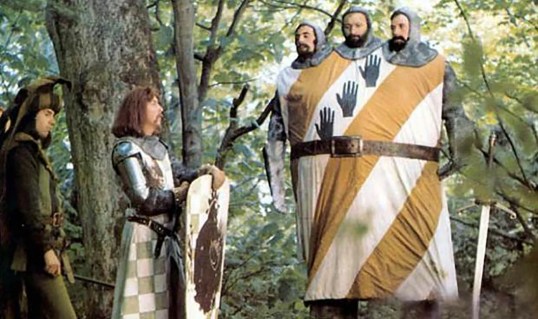
Tonight, at 10 pm et, I will be hosting #FridayNightFlix and celebrating the event’s 5th birthday with an encore presentation! The movie? Monty Python and the Holy Grail!
If you want to join us this Friday, just hop onto twitter, find Legend on Prime, start the movie at 10 pm et, and use the #FridayNightFlix hashtag! I’ll be there happily tweeting. It’s a friendly group and welcoming of newcomers so don’t be shy.
4 Or More Shots From 4 Or More Films is just what it says it is, 4 shots from 4 of our favorite films. As opposed to the reviews and recaps that we usually post, 4 Shots From 4 Films lets the visuals do the talking!
4 Shots From 4 Fantasy Films
Monty Python and the Holy Grail (1975, Dir. by Terry Gilliam and Terry Jones)
Legend (1985, Dir. by Ridley Scott)
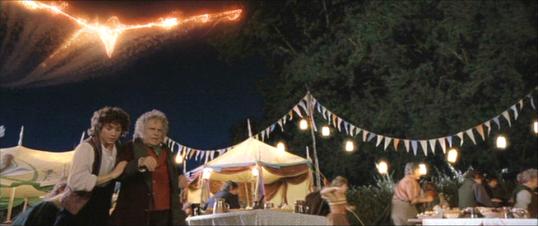
The Lord of the Rings: The Fellowship of the Ring (2001, Dir by Peter Jackson)
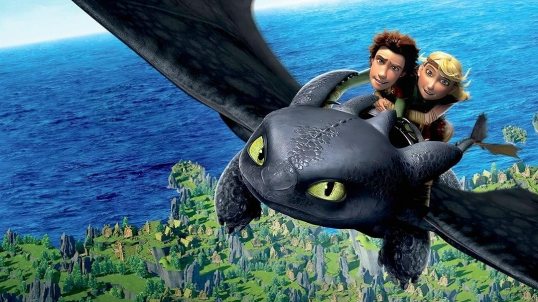
How To Train Your Dragon (2010, Dir. by Chris Sanders and Dean DeBlois)
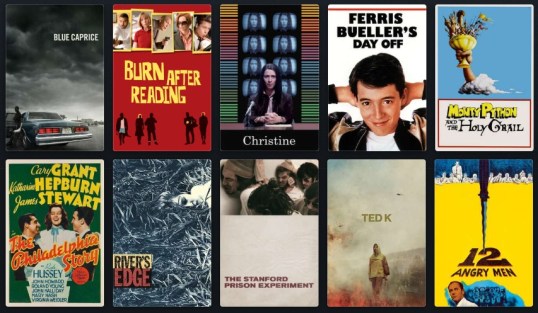
Ted K (2021) is a film about Ted Kaczynski, the overeducated loser who moved into a Montana cabin and who sent people bombs because of …. reasons, I guess? I know that Ted had a big manifesto and that there are people who claim to have found some sort of genius in his ramblings but truth be told, Ted was a second-rate philosopher who has been embraced by third-rate people. This film features Sharlto Copley at Ted and it takes an honest and unbiased look at him, his beliefs, and his crimes. If you’re wondering how we got to where we are, this is one of the films to watch. The film is on Tubi.
River’s Edge (1987) features Keanu Reeves, Crispin Glover, and Ione Skye as teenagers who learn that one of their friends (Daniel Roebuck) has murdered his girlfriend and who …. do nothing. Eventually, one of them does go to the police and finds himself being targeted by his former friends. Meanwhile, Roebuck hides out with a one-legged biker (Dennis Hopper). This is a disturbing and well-acted true crime film. We’ve all seen a lot of examples of bystander syndrome over the past few years. This week, I’ve wondered why so many people, on that North Carolina bus, just walked away after Iryna was stabbed. This is film examines an early example of that tendency. It’s on Tubi.
Blue Caprice (2013)was a film made about the DC snipers. It didn’t really get the attention that it deserved when it was initially released, largely due to the fact that 1) it starred Isaiah Washington and 2) it was such a disturbing movie that I imagine a lot of people had a hard time recommending it. But if you want to see a film about how a madman can find ways to justify his amoral behavior, this film provides a lot of insight. It’s on Tubi.
The Stanford Prison Experiment (2015) tells the true story of an infamous social experiment from the early 70s. It examines just how quickly people will lose themselves in a situation. While the students playing the prisoners feel as if they are literally fighting for their lives, the students playing the guards enjoy their power trip and never seem to consider that things are going too far. This film features a great performance from Michael Angarano, as the most enthusiastic of the guards. It’s on Tubi.
Finally, Christine (2016) tells the story of Christine Chubbuck, the Florida news anchor whose on-air suicide partially inspired the film, Network. Christine is not a happy film but it does feature a great performance from Rebecca Hall. It’s on Tubi.
Ferris Bueller’s Day Off (1986) remains the ultimate teen fantasy. Actually, it’s also probably the ultimate adult fantasy. Everyone deserves a day off. Ferris Bueller skips school and manages to fit a month’s worth of events into just 9 hours. We should all be so lucky. I love this film. Alan Ruck deserved all the Oscars in the world. The film is currently streaming on Netflix.
Burn After Reading (2008)never seems to get the respect that it deserves. The Coen Brothers followed up the award-winning No Country For Old Men with an absurdist CIA comedy in which no one learned anything and nothing was accomplished. It’s hilarious, as both a film and a concept. John Malkovich, Brad Pitt, Frances McDormand, J.K. Simmons, David Rasche, and George Clooney are all wonderfully used. Burn After Reading is currently on Prime.
Odds and Ends
12 Angry Men (1957)is a true rarity, a classic that everyone agrees is a classic. Not only are all 12 of the angry men perfectly cast (Henry Fonda, Jack Warden, Ed Begley, Martin Balsam, Lee J. Cobb, E.G. Marhsall, Robert Webber, and all the rest …. I could go on for paragraphs about how brilliantly cast this film is) but it’s also still a thought-provoking look at the justice system. Personally, I think the kid was guilty. And I think that the men all deciding that the woman was too vain to admit that she wore glasses is a perfect example of why women should serve on juries. Henry Fonda talked them into letting a murderer loose! It’s still a great film though. It’s streaming on Tubi.
The Philadelphia Story (1940)features James Stewart, Cary Grant, and Katharine Hepburn. It also features a lot of great lines, a lot of funny moments, and — most importantly — Jimmy Stewart singing Somewhere Over The Rainbow! What more could you ask for? It’s streaming on Tubi.
4 Or More Shots From 4 Or More Films is just what it says it is, 4 shots from 4 of our favorite films. As opposed to the reviews and recaps that we usually post, 4 Shots From 4 Films lets the visuals do the talking!
Today, we pay tribute to the year 1975. It’s time for….
4 Shots From 4 1975 Films
One Flew Over The Cuckoo’s Nest (1975, dir by Milos Forman, DP: Haskell Wexler and Bill Butler)
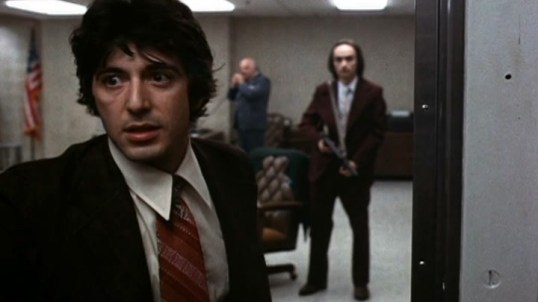
Dog Day Afternoon (1975, dir by Sidney Lumet, DP: Victor J. Kemper)
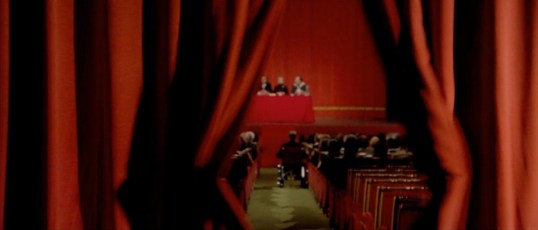
Deep Red (1975, dir by Dario Argento, DP: Luigi Kuveiller)
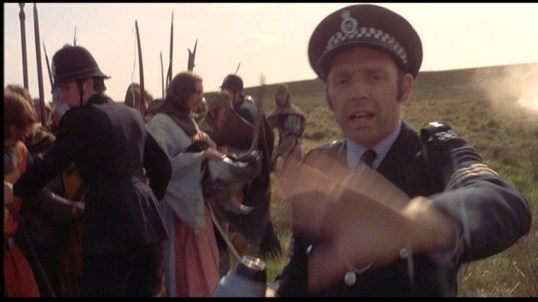
Monty Python and the Holy Grail (1975, dir. Terry Gilliam & Terry Jones, DP: Terry Bedford)
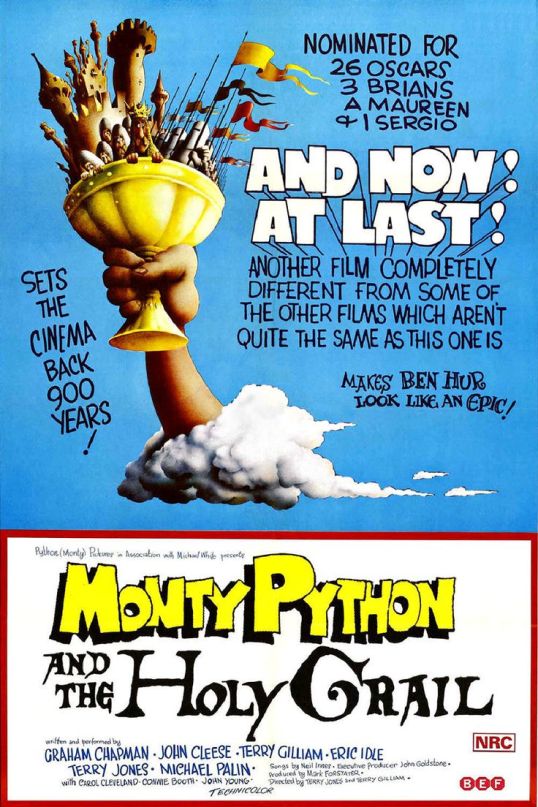
Monty Python and the Holy Grail (1975, dir. Terry Gilliam & Terry Jones)
As some of our regular readers undoubtedly know, I am involved in a few weekly live tweets on Twitter and Mastodon. I host #FridayNightFlix every Friday, I co-host #ScarySocial on Saturday, and I am one of the five hosts of #MondayActionMovie! Every week, we get together. We watch a movie. We tweet our way through it.
Tonight, at 10 pm et, #FridayNightFlix presents 1975’s Monty Python and the Holy Grail!
If you want to join us this Friday, just hop onto twitter, start the movie at 10 pm et, and use the #FridayNightFlix hashtag! It’s a friendly group and welcoming of newcomers so don’t be shy.
Monty Python and the Holy Grail is available on Prime! See you there!
Though the Academy of Motion Picture Arts and Sciences claim that the Oscars honor the best of the year, we all know that there are always worthy films and performances that end up getting overlooked. Sometimes, it’s because the competition too fierce. Sometimes, it’s because the film itself was too controversial. Often, it’s just a case of a film’s quality not being fully recognized until years after its initial released. This series of reviews takes a look at the films and performances that should have been nominated but were,for whatever reason, overlooked. These are the Unnominated.
Really, Academy?
No nominations for one of the most influential and widely-quoted films ever to be released?
Well, actually, I get it. Monty Python and the Holy Grail was first released in 1975 and 1975 was an unusually good year for cinema. Back in the 70s, of course, the Academy only nominated five films for Best Picture and, as a result, a lot of good films were not nominated that year. There just wasn’t room for them. Check out the five films that were nominated and ask yourself which one you would drop to make room for a different nominee.
Would you drop:
Barry Lyndon, which was directed by Stanley Kubrick was considered to be the most realistic recreation of the 18th Century to ever be captured on film,
Dog Day Afternoon, in which director Sidney Lumet brilliantly mixed comedy and drama and which featured wonderful performances from Al Pacino, John Cazale, Chris Sarandon, and Charles Durning,
Jaws, the Steven Spielberg-directed hit that changed the face of Hollywood,
Nashville, Robert Altman’s sprawling and ambitious portrait of a country tying to find itself after a decade of trauma,
or
One Flew Over The Cuckoo’s Nest, in which Milos Forman paid tribute to individual freedom and Jack Nicholson gave perhaps the best performance of his legendary career?
I mean, those are five great films. Even the weakest of the nominees (which, in this case, I think would be the eventual winner, One Flew Over The Cuckoo’s Nest) is still stronger than the average Best Picture nominee.
So, I can understand why there wasn’t room for an episodic and rather anarchistic British comedy, one that largely existed to parody the type of epic and period filmmaking that the Academy tended to honor. If there had been ten nominees in 1975 and Monty Python and the Holy Grail had been snubbed to make room for something like The Other Side of the Mountain, my feelings might be different but there weren’t.
That said, even if there wasn’t room in the Best Picture slate, what to make of the lack of nominations for a script that is so full of quotable lines and memorable incidents that even people who haven’t seen Monty Python and the Holy Grail are familiar with them? No nominations for the costumes, the production design, or the cinematography, all of which are surprisingly good for a low-budget film that was directed by not one but two untested neophyte directors? No nominations for the thrilling music or the Camelot song? How about a special award for the killer rabbit?
How about at least a best actor nomination for Graham Chapman, who played King Arthur not as a comedic buffoon but instead as being well-intentioned but also increasingly frustrated by the fact that his subjects cared not about his quest or his royal title? Though 1975 may have been a strong year for movies, it appears that the Academy still struggled to find five best actor nominees and they resorted to giving a nomination for James Whitmore’s performance as Harry Truman in a filmed version of his one-man stage show, Give ‘Em Hell Harry. Nothing against James Whitmore or Harry Truman but I think we all know that spot belonged to Graham Chapman and his performance as King Arthur.
Monty Python and the Holy Grail is often described as being a satire of the Arthurian legends. I think, even more than being a film about King Arthur, it’s a film about a group of people trying to make an epic despite not having the resources or the patience to do so. Python humor has always featured characters who were both foolishly confident and stubbornly aggressive and both of those traits are on wide display in Monty Python and the Holy Grail. The production can’t afford horses so Arthur and his knights hit two coconuts together to duplicate the sound of the hooves on the ground and when they’re confronted about it, they attempt to change the subject. Can’t afford to shoot in a real castle? Simply declare Camelot to be a silly place and walk away. Can’t afford to get permits to film on a certain location? Film illegally and run the risk of getting arrested just when you’re about to start the film’s climatic battle scene. Can’t afford to hire God for a cameo? Use a cut-out. Can’t afford a real knight? Just hire some people who get carried away and then hope one of them doesn’t kill the local academic who has shown up to explain the film’s historical context.
“I just get carried away,” John Cleese’s Lancelot says more than once and he has a point. But the entire movie is about people getting carried away. The Black Knight is so carried away in his belief in himself that he continues to fight despite having neither arms nor legs. The villagers are so carried away in their desire to burn a witch that they cheer when it’s discovered that she weighs the same amount as a duck. (“It’s a fair cop,” the witch, played by Connie Booth, admits.) Eric Idle’s Sir Robin is so carried away in his ability to answer questions that he doesn’t consider that he might be asked about the capitol of Assyria. The Knights of the Round Table as so carried away in their dancing and their singing that no one wants to go to the castle. Even the film’s animator gets carried away, suffering a heart attack and saving Arthur and his surviving knights from a fate worse than death.
Monty Python and the Holy Grail is a very funny film, of course. We all know that. (I once read a story about a woman who, having learned she only had a few weeks to live, decided to watch this film everyday until she passed. I don’t blame her.) But what I truly love about this film is that, in scene-after-scene, you can literally see the Pythons realizing that they were actually capable of making a real movie. Michael Palin, especially, seems to be having so much fun playing the eternally pure Sir Galahad that it’s impossible not to get caught up in his happiness. There’s a joie de vivre that runs through Monty Python and the Holy Grail, even at its darkest and most cynical. The Pythons are having fun and it’s impossible not to have fun with him.
And, while the Oscars may have snubbed Monty Python and the Holy Grail, the Tonys did not. When the film was later turned into Spamalot, it received 14 Tony nominations and won three.


 Through the Shattered Lens