4 Shots of 4 Celebrities is just what it says it is, 4 shots of 4 of my favorite celebritiesconnected to the state I’m vacationing in. Where am I?!!
This week I’ll be getting some much needed R & R as I spend time away from work and exclusively with family and friends. My last post for the next nine days just happens to be coming from the state with strong connections to each of these unique performers. Y’all have a wonderful week and I’ll be back soon!
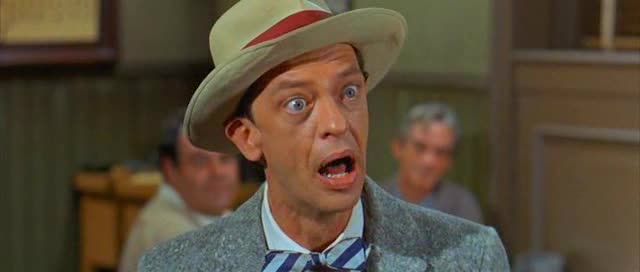
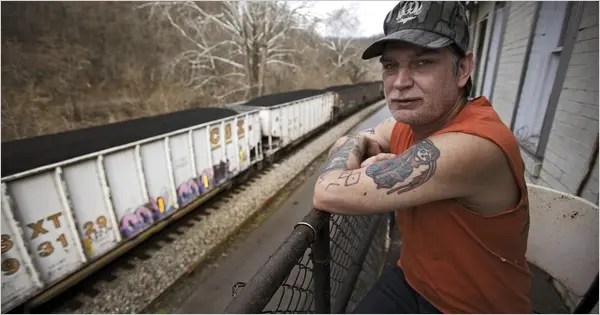
Brad Dourif in Mississippi BurningDon Knotts in The Ghost and Mr. ChickenTraci Lords in Not of This EarthJesco White in The Wild and Wonderful Whites of ____ ________!
1988’s Mississippi Burning opens on a lonely Mississippi backroad in 1964. A car is pulled over by the police. Inside the car are three young men, one black and two white. Judging from their nervous expressions and the sound of the people who stopped them and the fact that they’re in Mississippi during the 60s, we can guess what is about to happen to the people in the car.
With the three men, who were civil rights activists who were involved in voter registration efforts, officially considered to be missing, the FBI sends down two agents to find out what happened. The two agents are Alan Ward (Willem DaFoe) and Rupert Anderson (Gene Hackman). Ward is a Northerner who does things by the book and who resents having to deal with lax Southern law enforcement. He is serious-minded and, just in case we need a reminder of how serious he is, he wears bar-rimmed glasses that make him look like the world’s most fearsome IRS agent. Anderson is from Mississippi. He’s a talkative good ol’ boy who was a sheriff before he joined the FBI. “You know what has four eyes but can’t see?” Anderson asks, “Mississippi.” It’s a tense partnership, as Ward sometimes disapproves of Anderson’s methods and Anderson thinks that Ward doesn’t understand how things work in Mississippi.
From the first minute we meet local law enforcement, we know that they’re the killers. Just the fact that one of them are played by Brad Dourif is evidence enough. However, no one in town is willing to say a word against the police or their cronies. The white citizens are either too intimidated or they agree with what happened to the three civil rights workers. (The three men are often referred to as being “outside agitators.”) The black townspeople live in fear of the Klan and have no reason to trust the word of white FBI agents like Ward and Anderson.
Ward and Anderson investigate the case, hoping that they can find some bit of evidence that will prove the guilt of Sheriff Stuckey (Gailard Sartain), Deputy Pell (Brad Dourif), KKK leader Clayton Townley (Stephen Tobolowsky), and maybe even the town’s mayor (R. Lee Ermey). One advantage that the FBI has is that the murderers are incredibly stupid. Another is that Deputy Pell’s abused wife (Frances McDormand, giving the film’s best performance) might be persuaded to testify against her husband.
Mississippi Burning is an example of both powerful filmmaking and problematic history. Like Ridley Scott, director Alan Parker got his start making commercials and he brought the same sensibility to his movies. He knew what audiences wanted to see and he made sure to give it to them. Mississippi Burning looks fantastic and is full of memorable performances. (Both McDormand and Hackman received Oscar nominations). The action moves quickly and the villains are so hateful that watching them end up getting humiliated really does bring about a sort of emotional release.
At the same time, this is a film about the Civil Rights era that presents the FBI as being the heroes. And while it’s true that the FBI did investigate the real-life murders that inspired this film, Mississippi Burning leaves out the fact that the FBI was just a rigorous in harassing and wire tapping Martin Luther King as they were in keeping an eye on the leaders of the Klan. It’s a film about racism in which the heroes are as white as the villains. Gene Hackman gives a good performance as Rupert Anderson but the film never really delves all that deeply into Anderson’s feelings about racism in the South. We’re told that he was a sheriff in Mississippi but we never learn much about what type of sheriff Anderson was. He’s opposed to the Klan but, historically, the same can be said of many segregationists in the 60s, many of whom felt the Klan’s activities brought unwanted federal attention to what was happening in their home states. By not delving into Anderson’s own history as a member of Mississippi law enforcement or the FBI’s own more problematic history when it comes to the civil rights movement, the film provides viewers with the escape of viewing the bad guys as being aberrations as opposed to being the norm in 1964. In the end, Mississippi Burning is an effective thriller with strong heroes and hateful villains. Just don’t watch it for historical accuracy.
Mississippi Burning was nominated for Best Picture but it lost to Rain Man.
I was in a medically-approved Vicodin haze yesterday so I missed the fact that it was Gene Hackman’s birthday! Well, let’s make up for it today with a scene of Hackman being a righteous badass in 1988’s Mississippi Burning.
If you need any proof that Gene Hackman is one of our best actors, just consider that it’s been nearly 20 years since he retired from acting and he’s rarely seen out in public (reportedly due to just naturally being a very private man) yet he remains a popular performer who earns new fans every day. In this scene, Hackman plays an FBI agent who lets a bunch of racists know that just because he might share their accent, that doesn’t mean that he shares their beliefs. No one could go from friendly to intimidating with as much style as Gene Hackman.
(And yes, that is a young Michael Rooker getting put in his place, along with Brad Dourif.)


 Through the Shattered Lens