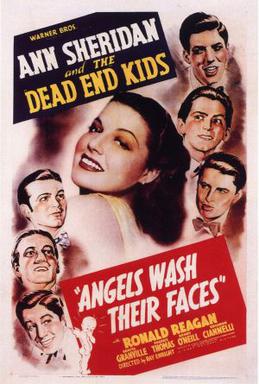
Gangster William Kroner (Bernard Nedell) and his henchman Martino (Eduardo Ciannelli) frame teenager Gabe Ryan (Frankie Thomas) for setting several buildings on fire. Because Gabe has just gotten out of reform school and is a member of a local neighborhood gang, they know that no one will believe him or his sister, Joy (Ann Sheridan).
What Kroner and Martino did not count on were the Dead End Kids (Billy Halop, Bobby Jordan, Leo Gorcey, Gabriel Dell, Huntz Hall, and Benard Punsley). They’re not going to sit by while the adults send their friend to jail. Plus, one of their friends was killed in one of the fires. The kids are out for revenge and sympathetic district attorney Pat Remsen (Ronald Reagan) is on their side.
As a publicity stunt, the city is holding an election for “Kid Mayor.” The Kid Mayor gets to run the city for a week. What could go wrong? Billy Halop decides to run for Kid Mayor so that he can order the arrest of Kroner and then beat a confession out of him.
Angels Wash Their Faces was one of the last of the studio-made Dead End Kid films. After this one, they would be sent down to Poverty Row and their films would be more obviously comedic. Angels Wash Their Faces starts out as a juvenile delinquent drama, with Gabe struggling to rebuild his life and keep on the right track. Then it becomes a goofy comedy, with Billy Halop running for mayor and unleashing vigilante justice on the bad guys. I’m not sure that any city would actually give the “kid mayor” the power to lock people up. Whoever came up with the idea of a kid mayor should be run out of politics.
On the positive side, Ann Sheridan is beautiful. Future president Reagan is his usual friendly self. On the negative side, the movie, overall, lacks the edge that made the first few Dead End Kids films memorable and the Dead End Kids themselves seem to be pretty much interchangeable. Huntz Hall would have made a better mayor.
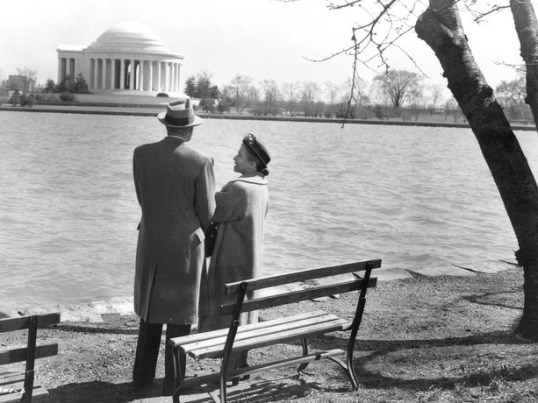
Well, actually, it’s not Loyalty Day for everyone. In fact, a lot of the world’s citizens are celebrating Communist May Day today. However, here in the United States, it’s Loyalty Day. Even if you are an American, it’s possible that you’ve never heard of Loyalty Day. It was first celebrated in 1921 and it was intended to provide a non-Communist alternative to International Workers Day. It wasn’t until 1955 that Loyalty Day was officially recognized by Congress.
Loyalty Day is defined as follows in 36 U.S.C. § 115:
(a) Designation.— May 1 is Loyalty Day.
(b) Purpose.— Loyalty Day is a special day for the reaffirmation of loyalty to the United States and for the recognition of the heritage of American freedom.
(c) Proclamation.— The President is requested to issue a proclamation—
(1) calling on United States Government officials to display the flag of the United States on all Government buildings on Loyalty Day; and
(2) inviting the people of the United States to observe Loyalty Day with appropriate ceremonies in schools and other suitable places.
Though released before it officially became a holiday, the 1952 film, My Son John, is perfect for Loyalty Day.
The John of the title is John Jefferson (Robert Walker, in his final role), an employee of the State Department. While his younger brothers (played by Richard Jaeckel and James Young) are two high school football stars who are looking forward to serving their country in Korea, John is an intellectual who considers concepts like patriotism to be simplistic and naive. While his father (Dean Jagger) sings patriotic songs at the American Legion hall, John rolls his eyes at such middle class activities. (“If you don’t like your Uncle Sammy,” move to another country, John’s father sings.) The only person to whom John is especially close is his nervous mother, Lucille (Helen Hayes).
However, John is keeping a secret from even Lucille. He’s a double agent, working for the communists! With FBI agent Stedman (Van Heflin) hot on his trail, will John ever be able to see the light about the communists? And, how will the communists respond to John having doubts about the cause?
My Son John was a dream project for Hollywood director Leo McCarey. (It’s not a coincidence that the devoutly Catholic McCarey made a film about a devoutly Catholic family who discovers that one of their own has become a communist.) McCarey carefully supervised every detail of the film and he was even able to talk stage legend Helen Hayes into starring in the film, her first in 14 years. My Son John is full of scenes of shadowy communists, smug intellectuals, and all-American FBI agents marveling at the strength of Lucille Jefferson’s faith. Everything that is today often cited as a negative aspect to living in the suburbs is presented as being a positive in My Son John. The film’s communists come into a world of happy families, big houses, and well-manicured lawns and they set out to make everyone else as miserable as they are. There’s nothing subtle about either McCarey’s approach or Helen Hayes’s performance but, as is often the case with propaganda, the film is crudely effective.
My Son John was Robert Walker’s final film. In fact, he died before completing work on the film, leading the ending being rewritten. (No longer would John personally deliver a commencement address. Instead, his words come out of a tape player that has been rolled out on stage. A holy light shines down on the player while The Battle Hymn of the Republic plays in the background. It’s bizarre but it’s also probably the most memorable part of the movie.) Scenes from Strangers On A Train were rather awkwardly spliced into final moments of My Son John, never mind the fact that Robert Walker’s gleefully evil performance as Bruno Antony had little in common with his self-tortured performance as John Jefferson.
Surprisingly, considering that My Son John was released at the height of the anti-Communist era, the film was not a success at the box office. (Audiences seemed to better appreciate low-budget and pulpier anti-communist films, like I Was A Communist For The FBI.) Still, thanks to the Internet, My Son John is still available to be viewed on this Loyalty Day.
So, remember — if you don’t like your Uncle Sammy …. well, actually, the cool thing about this country is that you don’t have to like your Uncle Sammy. You have the right to decide for yourself how you feel about old Uncle Sammy. That’s an idea that is worth being loyal to.
Before writing about the 1938 film Boys Town, I want to share a story that might be false but it’s still a nice little story. Call this an Oscar Urban Legend:
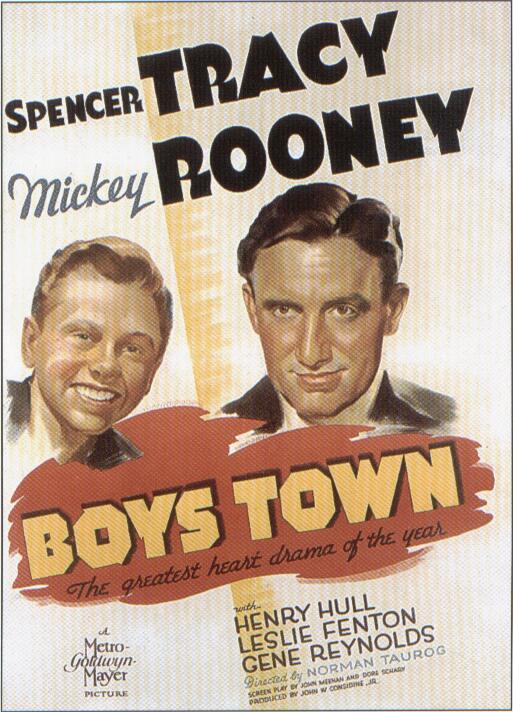
Boys Town is about a real-life community in Nebraska, a home for orphaned and homeless boys that was started by Father Edward Flanagan. In the film, which was made while Father Flanagan was still very much alive, he was played by Spencer Tracy. Boys Town was a huge box office success that led to the real Boys Town receiving a lot of favorable publicity. When Tracy won his Oscar for Boys Town, his entire acceptance speech was devoted to Father Flanagan.
However, a problem arose when an overeager PR person at MGM announced that Spencer Tracy would be donating his Oscar to Boys Town. Tracy didn’t want to give away his Oscar. He felt that he had earned it through his acting and that he should be able to keep it. Tracy, the legend continues, was eventually persuaded to donate his Oscar on the condition that he would get a replacement.
However, when the replacement arrived, the engraving on the award read, “Best Actor — Dick Tracy.”
That’s a fun little story, one that is at least partially true. (Tracy’s Oscar — or at least one of them — does currently reside at the Boys Town national headquarters.) It’s also a story that, in many ways, is more interesting than the film itself.
Don’t get me wrong. Boys Town is not a bad movie. For me, it was kind of nice to see a movie where a priest was portrayed positively as opposed to being accused of being a pederast. In a way, Boys Town serves as a nice counterbalance to Spotlight. But, with all that said, there’s not a surprising moment to be found in Boys Town. It’s pretty much a standard 1930s juvenile delinquency melodrama.
The movie opens when Father Flanagan giving last rites to a man who is about to be executed. (Boys Town takes a firm stand against the death penalty, which is one of the more consistent and laudable stands of the modern Church.) The man says the he never had a chance. From the time he was a young boy, he was thrown into the reform school system. Instead of being reformed, he just learned how to be a better criminal. Father Flanagan is so moved by the doomed man’s words that he starts Boys Town, under the assumption that “there’s no such thing as a bad boy.”
Father Flanagan’s techniques are put to the test when Whitey Marsh (Mickey Rooney ) arrives. Whitey is angry. He’s rebellious. He tries to run away every chance that he gets and, during one such escape attempt, he even gets caught up in a bank robbery. Can Father Flanagan reach Whitey and prove that there’s no such thing as a bad boy?
Well, you already know the answer to that. As I said, there’s really nothing surprising to be found in the plot of Boys Town. It’s just not a very interesting movie, though there is a great shot of a despondent Whitey walking past a several lines of former juvenile delinquents, all kneeling in prayer. As Father Flanagan, Spencer Tracy is the ideal priest but his role is almost a supporting one. Believe it or not, the film is dominated by Mickey Rooney, who gives a raw and edgy performance as the angry Whitey Marsh.
(That said, it’s hard to take Whitey seriously as a future gangster when he’s always wearing a bowtie. Then again, that may have been the height of gangster style in 1938.)
Boys Town was nominated for best picture but lost to You Can’t Take It With You.
So, today, I got off work so that I could vote in Texas’s Super Tuesday primary. After I cast my vote (and don’t ask me who I voted for because it’s a secret ballot for a reason!), I came home and I turned on the TV and I discovered that, as a result of spending February recording countless films off of Lifetime and TCM, I only had 9 hours of space left on my DVR. As a result, the DVR was threatening to erase my recordings of Bend It Like Beckham, Jesus Christ Superstar, American Anthem, an episode of The Bachelor from 2011, and the entire series of Saved By The Bell: The College Years.
“Acgk!” I exclaimed in terror.
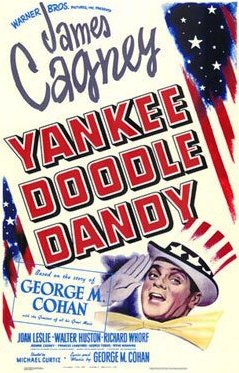
So, I immediately sat down and started the process of cleaning out the DVR. I started things out by watching Yankee Doodle Dandy, a film from 1942.
Yankee Doodle Dandy is a biopic of a songwriter, signer, and dancer named George M. Cohan. I have to admit, that when the film started, I had absolutely no idea who George M. Cohan was. Imagine my surprise as I watched the film and I discovered that Cohan had written all of the old-fashioned patriotic songs that are played by the Richardson Symphony Orchestra whenever I go to see the 4th of July fireworks show at Breckenridge Park. He wrote You’re A Grand Old Flag, The Yankee Doodle Boy, and Over There. Though I may not have heard of him, Cohan was an American institution during the first half of the 20th Century. Even if I hadn’t read that on Wikipedia, I would have been able to guess from watching Yankee Doodle Dandy, which, at times, seems to be making a case for sainthood.
And that’s not meant to be a complaint! 74 years after it was originally released, Yankee Doodle Dandy is still a terrifically entertaining film. It opens with George (played by James Cagney) accepting a Congressional Gold Medal from President Franklin D. Roosevelt. (We only see Roosevelt from behind and needless to say, the President did not play himself. Instead, Captain Jack Young sat in a chair while FDR’s voice was provided by impressionist Art Gilmore.) Cohan proceeds to tell Roosevelt his life story, starting with his birth on the 4th of July. Cohan tells how he was born into a showbiz family and a major theme of the film is how Cohan took care of his family even after becoming famous.
The other major theme is patriotism. As portrayed in this biopic, Cohan is perhaps the most patriotic man who ever lived. That may sound corny but Cagney pulls it off. When we see him sitting at the piano and coming up with the lyrics for another song extolling the greatness of America, we never doubt his sincerity. In fact, he’s so sincere that he makes us believe as well. Watching Yankee Doodle Dandy, I found myself regretting that I have to live in such an overwhelmingly cynical time. If George M. Cohan was alive today, he’d punch out anyone who called this country “Murica.”
Yankee Doodle Dandy is an amazingly positive film. There are a few scenes where Cohan has to deal with a few Broadway types who are jealous of his talent and his confidence but, otherwise, it’s pretty much one triumph after another for Cohan. Normally, of course, there’s nothing more annoying than listening to someone talk about how great his life is but fortunately, Cohan is played by James Cagney and Cagney gives one of the best performance of all time in the role.
Cagney, of course, is best remembered for playing gangsters but he got his start as a dancer. In Yankee Doodle Dandy, Cagney is so energetic and so happy and such a complete and totally showman that you can’t help but get caught up in his story. When he says that, as a result of his success, things have never been better, you don’t resent him for it. Instead, you’re happy for him because he’s amazingly talented and deserve the best!
Seriously, watch him below:
James Cagney won the Oscar for Best Actor for his performance here. Yankee Doodle Dandy was also nominated for best picture but lost to Mrs. Miniver.
I’m really glad that I watched Yankee Doodle Dandy today. In this time of overwhelming negativity, it was just what I needed!
 Gangster William Kroner (Bernard Nedell) and his henchman Martino (Eduardo Ciannelli) frame teenager Gabe Ryan (Frankie Thomas) for setting several buildings on fire. Because Gabe has just gotten out of reform school and is a member of a local neighborhood gang, they know that no one will believe him or his sister, Joy (Ann Sheridan).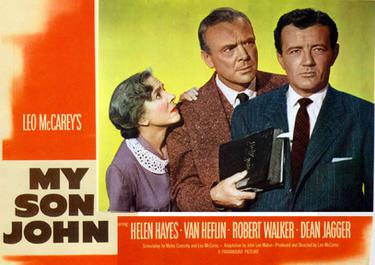
 Through the Shattered Lens