Retro Television Reviews: Fantasy Island 4.11 “The Artist and the Lady/Elizabeth’s Baby”


Welcome to Retro Television Reviews, a feature where we review some of our favorite and least favorite shows of the past!  On Tuesdays, I will be reviewing the original Fantasy Island, which ran on ABC from 1977 to 1986.  Almost the entire show is currently streaming is on Youtube, Daily Motion, and a few other sites.

Sorry for the late review!  I’m currently on Vicodin (nothing to worry about) and it set me far behind today.

Episode 4.11 “The Artist And The Lady/Elizabeth’s Baby”

(Dir by Michael Vejar, originally aired on January 17th, 1981)

This week, we have two new fantasies.  One is surprisingly sweet.  The other is about as dumb as can be.

Poor Tattoo!  Because Mr. Roarke is busy with the good fantasy this week, it largely falls on Tattoo to play host for the bad fantasy.  Kermit Dobbs (Don Most) is a nerdy art teacher who wants to be a real artist.  Before leaving to oversee the good fantasy, Roarke gives Dobbs a potion that, when Dobbs drinks it, gives him the talent of Patrick O’Herlihy (Peter Brown), a mad Irish artist who, for some reason, lives in the wilds of Fantasy Island.  What Dobbs doesn’t know that is that the potion not only gives him Patrick’s talent but it also apparently gives him the knowledge of every woman that Patrick has slept with on the island.  When Kermit paints a picture of a Deborah Dare (Michelle Pfeiffer — wait, what!?) and knows just where to place her birthmark, it leads to the men on the Island chasing Kermit into the wilderness.

It’s in the wilds that Kermit meets Patrick and they spend some time drinking and talking about art.  Eventually, Kermit gives up his claim to Patrick’s talent and he leaves the island with Deborah.  Meanwhile, all the men on the Island now want to kill Patrick so I’m not really sure that this qualifies as a good ending.

That was all really stupid, with every actor in the fantasy going overboard with their characters.  Don Most apparently went a week without shaving before appearing on this episode, in an attempt to come across as someone with an artistic soul.  It didn’t work.

The far better fantasy featured Eve Plumb as Elizabeth Blake, a woman who is pregnant and who know that she will probably die in childbirth.  Her fantasy is to have a chance to see what her daughter’s future life will be like.  Though reluctant, Mr. Roarke travels with her to three separate years in the future.  (Interestingly enough, even though they eventually end up traveling 20 years into the future, the world still looks like the 70s.)  At first, Elizabeth is happy to see that her daughter will have an apparently happy childhood but things get progressively darker until finally, Lisa Blake (Alison Arngrim) has run away from home and is working as a prostitute.  Mr. Roarke allows Elizabeth to talk to Lisa (hey!) on the condition that Elizabeth not reveal her identity.  Elizabeth is able to convince Lisa to go back home.

It’s a sweet but rather sad story.  Even as Elizabeth leaves Fantasy Island with the knowledge that she was able to help her daughter, she still leaves with the knowledge that she’s going to die in childbirth.  In the lead role, Eve Plumb is as good as Don Most was bad.

That one good fantasy is so good that it saves the episode.  That bad fantasy is so bad that it keeps this episode from being the classic that it should have been.  Such is life on Fantasy Island.
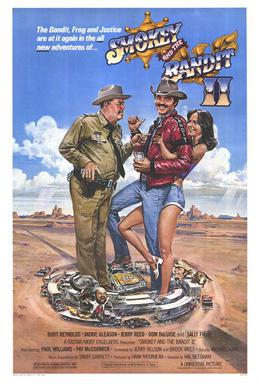
 

The Further Adventures of Smokey and the Bandit


The first Smokey and the Bandit is a classic.  What about the sequels?

Smokey and the Bandit II (1980, directed by Hal Needham)

The gang’s all back in this sequel to Smokey and the Bandit!  Burt Reynolds is the Bandit!  Jackie Gleason is Sheriff Buford T. Justice and his two brothers, Reginald and Gaylord!  Jerry Reed is Snowman!  Sally Field is Carrie!  Pat McCormick and Paul Williams are Big and Little Enos!  Mike Henry is Junior!  Dom DeLuise is an Italian doctor!  Terry Bradshaw and Mean Joe Greene play themselves!  There’s an elephant!

You get the idea.  Smokey and the Bandit II promises more of the same.  In some ways, it delivers.  There are some entertaining stunts.  The finale features what was, at the time, the biggest car chase ever filmed.  But Smokey and the Bandit II fails at the most important part.  It fails to recreate the fun of the first film.  Everyone is just going through the motions.  Burt Reynolds later said that he only made the film as a favor to Hal Needham while Sally Field said that she agreed to appear in the film as a favor to Burt Reynolds.  Jackie Gleason did the movie because he needed the money but, because he was also in poor health, he requested that his scenes be filmed first and that they be filmed quickly.  That the three stars didn’t have much enthusiasm for the project is obvious while watching the movie.

This time, Big Enos wants the Bandit to transport an elephant to the Republican National Convention in Dallas.  The Bandit, however, has been an alcoholic wreck ever since Carrie left him to, for some reason, get back with Junior.  Snowman manages to sober up the Bandit and, after they help Carrie run out on her wedding for a second time, it’s time to transport an elephant.

In hot pursuit, Sheriff Justice gets help from his brothers, all of whom are also played by Gleason.  Reginald Justice is a Canadian Mountie who speaks with a posh accent that is in no way Canadian.  Gaylord Justice is a flamboyant state patrolman.  Whenever the brothers talk to each other, doubles are used.  There are a few split screen shots that are so ineptly handled that it ends up looking like a page from a comic book with each Gleason standing in a separate panel.  The end credits list Gaylord as having been played by “Ms. Jackie Gleason,” just in case you’re wondering the level of this film’s humor.

Dom DeLuise gets some laughs as an Italian doctor who is recruited to take care of the elephant but otherwise, this is a depressing movie.  Burt Reynolds and Sally Field were on the verge of breaking up when this film was made and neither one of them acts their scenes with much enthusiasm.  Watching the movie, it’s impossible not to compare their strong chemistry in the first movie to their total lack of it in the second movie.  There’s a subplot about the Bandit trying to prove that, even though he’s getting older, he’s still a legend and, for those who know anything about Burt Reynolds’s career, it hits too close to home.  Combining that with the sight of an obviously unwell Jackie Gleason and you’ve got a surprisingly depressing comedy.

There is one cool thing about Smokey and the Bandit II.  After the critics thoroughly roasted the film, Hal Needham took out a one-page ad in Variety.  The ad was a picture of Needham sitting in a wheel barrow full of money.  That’s one way to answer your critics!

Smokey and the Bandit 3 (1983, directed by Dick Lowry)

Smokey and the Bandit 3 is even more depressing than the second film.  Not surprisingly, Sally Field is nowhere to be found.  She had broken up with Burt after the second film and was busy pursuing a career as the type of actress who didn’t appear in car chase films.  Burt does appear in the film but he only makes a cameo appearance, showing up for a few minutes at the end with a resigned look on his face as if he realized that he was never going to escape being typecast as an aging good ol’ boy.  Also not returning was Hal Needham.  Needham was busy directing Stroker Ace so he was replaced by Dick Lowry.  What type of director was Dick Lowry?  Other than Smokey and the Bandit 3, Lowry’s best known credit is for Project Alf.

Jackie Gleason, Jerry Reed, Pat McCormick, Mike Henry, and Paul Williams all return but none of them look happy to be there.  The plot is that Sheriff Buford T. Justice has retired to Florida but he just can’t turn down a challenge from Big Enos and Little Enos to drive a stuffed shark from Miami to Dallas.  Smokey is the Bandit!  (That was originally the title of this film.)  When it looks like Buford is doing too good of a job of transporting the shark, the Enoses hire Snowman to chase Buford and slow him down.  It doesn’t make any sense and Jerry Reed and Jackie Gleason don’t share any scenes together despite co-starring in the film.  Supposedly, Gleason was originally cast as two characters — Buford and the man hired to slow Buford down — but when preview audiences were confused by the film, the studio demanded reshoots.  Jerry Reed was brought back and all of the scenes featuring Gleason as the new Bandit were reshot with Reed.  Reed even grew a mustache, wore a red shirt, and broke the fourth wall just like Burt did in the first film.

Not surprisingly, Smokey and the Bandit 3 is a disjointed mess that doesn’t even have any spectacular car crashes to justify its existence.  Jerry Reed is as amiable as he was in the first two films but Jackie Gleason’s Buford Justice was never meant to be a lead character.  In small doses, he was funny but Buford was too one-dimensional of a character to build an entire film around.

Smokey and the Bandit 3 was a failure with critics and at the box office so the Bandit’s adventures came to a temporary end.  Years later, Hal Needham produced four made-for-TV prequels the starred Brian Bloom as a young Bandit.  I haven’t seen them.  If I ever do, I’ll review them.

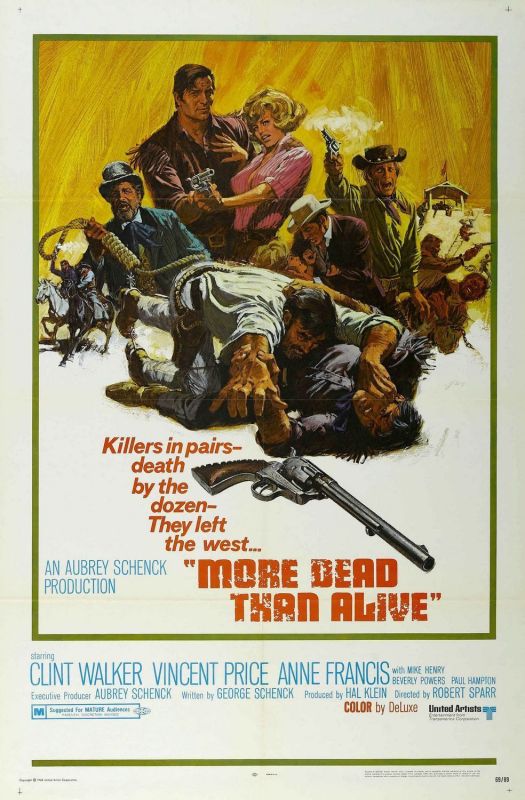
Off-Brand Spaghetti: MORE DEAD THAN ALIVE (United Artists 1969)


gary loggins's avatarcracked rear viewer

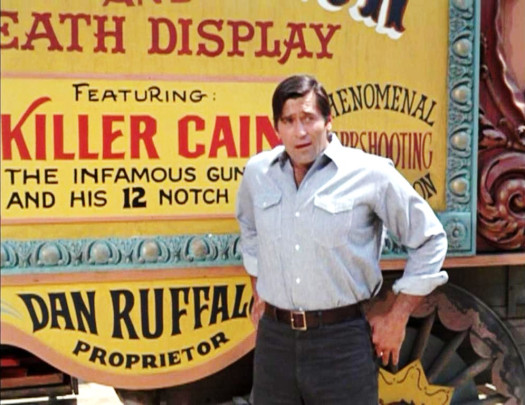
It’s hanging day at a remote Arizona prison outpost, and four men are scheduled to swing from the gallows. After they’re executed, the four pine boxes pop open, and outlaw Luke Santee and his gang commence firing, their six-guns blazing, as they try to free Luke’s baby brother. The escape attempt is an epic fail as ‘Killer’ Cain, a prisoner for 18 years now up for parole, stops the brother from leaving his cell and getting slaughtered, with Luke vowing revenge…

That opening scene, a violent, gory bloodbath, makes one think MORE DEAD THAN ALIVE is going to be a Sergio Leone-inspired American Spaghetti Western. It even stars a former TV Western hero named Clint – big Clint (CHEYENNE) Walker ! But the episodic nature of George Schenck’s script kills that idea, as the film doesn’t quite know what it wants to be. Spaghetti or Traditional Western? Character study, comedy…

View original post 323 more words

The TSL’s Grindhouse: No Way Back (dir by Fred Williamson)


Jesse Crowder’s back!

You may remember Jesse Crowder as the super cool and unflappable private detective from Death Journey.  Jesse was a Los Angeles cop but now he works independently.  There’s literally nothing that Jesse can’t do.  Ride a horse?  Ride a motorcycle?  Slow motion kung fu?  Jesse can do it all and he usually do it without bothering to button up his shirt.  Jesse is such a badass that he can kill more people in the time it takes for him to light a cigar than most people will kill in their entire lifetime.

The 1976 film No Way Back is the second Jesse Crowder film.  Once again, Fred Williamson both directs and stars as Jesse.  Williamson is in almost every scene of the film and when he’s not killing bad guys or having sex or just posing with his shirt off, he’s listening to people talk about what a badass he is.  In short, No Way Back is a vanity project but it’s a vanity project with a sense of humor.  Watching the film, you get the feeling that Williamson knows that No Way Back is kind of silly but, at the same time, he’s having fun and he wants everyone watching to have fun too.

No Way Back‘s plot involves a missing man and a lot of money.  Henry Pickens (Charles Woolf) worked at a bank but, one day, he grabbed a briefcase full of money, jumped in a car driven by his girlfriend (Tracy Reed), and disappeared.  Everyone was shocked but you know who was really shocked?  His wife!  Mildred Pickens (Virginia Gregg) and Henry’s brother both want to know to where Henry has vanished.  They hire Jesse, perhaps finding solace in his catch phrase: “You pay the bill, I’ll deliver it.  Legal, illegal, moral or otherwise.”

Not surprisingly, it doesn’t take long for Jesse to figure out that Perkins is in San Francisco.  Jesse lights his cigar and heads for the Bay City.  However, Jesse isn’t the only one looking for Henry Pickens.  There’s also a gangster named Bernie (Stack Pierce) who is determined to get the money for himself.  Much as in Death Journey, it doesn’t matter where Jesse goes or how he gets there.  As soon as he arrives, he people are trying to kill him.  Unfortunately, for them, no one can kill Jesse Crowder.

It all leads to a savage gun battle in the desert.  Fred Williamson jumps up on a horse, unbuttons his shirt, and rides across the screen.  People are betrayed.  People get shot.  Fortunately, no one can touch Jesse Crowder…

Anyway, No Way Back doesn’t really make any sense.  If you happen to watch this film (and I saw it on YouTube), just try to keep track of why Henry stole all of that money in the first place.  However, the plot isn’t really that important.  This film is all about Fred Williamson beating up gangsters and walking around without a shirt on.  It’s a dumb action movie but it never pretends to be anything different and the film’s total lack of pretension is enjoyable.  That’s always a good thing.

http://www.youtube.com/watch?v=RAlWgEPC3RU

A Movie A Day #10: The Longest Yard (1974, directed by Robert Aldrich)


longest-yard-burt-reynolds

Once, Paul “Wrecking” Crewe (Burt Reynolds) was a superstar NFL quarterback.  That was until he was caught up in a point-shaving scandal and kicked out of the league.  When a drunk Crewe steals his girlfriend’s car, gets into a high-speed police chase, and throws a punch at a cop, he ends up sentenced to 18 months at Citrus State Prison.

The warden of the prison, Rudolph Hazen (Eddie Albert), is a football fanatic who, at first, is excited to have Crewe as an inmate.  The prison guards have a semi-pro football game and Hazen wants Crewe to coach the team and help them win a national championship.  Though initially reluctant and just wanting to do his time, Crewe relents after witnessing and experiencing the cruelty of the prison system.  Crewe forms The Mean Machine, a team made up of prisoners, and agrees to play an exhibition game against the guards.

At first, the members of the Mean Machine are just looking for an excuse to hit the guards without being punished but soon, they realize that they have a chance to win both the game and their dignity.  But Hazen is not above blackmailing Crewe to throw the game.

When it comes to understanding the Tao of Burt, The Longest Yard is the place to start.  Starting with a car chase and ending with near martyrdom, The Longest Yard is the ultimate Burt Reynolds film.  Paul Crewe ranks alongside Deliverance’s Lewis Medlock and Boogie Night‘s Jack Horner as Reynolds’s best performance.  Before injuries ended his athletic career, Reynolds was a college football star and, on the prison’s playing field, he holds his own with the large group of former professional football players who were cast to play the guards and the prisoners.  The Longest Yard’s climatic football game takes up over an hour of screen time and reportedly, the action was largely improvised during shooting.  Unlike most movie football games, the one in The Longest Yard looks and feels like a real game.

The Longest Yard was directed by Robert Aldrich, who specialized in making movies about anti-authoritarians fighting the system.  The scenes of Crewe recruiting and training The Mean Machine are very reminiscent of Aldrich’s best-known movie, The Dirty Dozen.  With its combination of dark humor, graphic violence, rebellious spirit, and Southern-friend melodrama, The Longest Yard is a movie that could only have worked in the 1970s.  The Adam Sandler remake may have made a lot of money at the box office but it still comes nowhere close to matching the original.

For tomorrow’s movie a day, it’s the best film of 2016, which also happens to be about a football player in prison.

thelongestyard