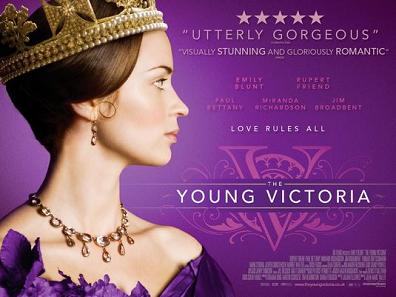
So, earlier, I was having a conversation with my BFF Evelyn and I discovered that we both have a massive girl crush on Emily Blunt.
And really, can you blame us?
First off, Emily Blunt is incredibly talented. She’s one of those actresses who can play just about anyone and anything. I have never heard or seen an interview with her where she seemed to be anything less than intelligent and witty. She speaks her mind and projects an attitude of not really caring what other people think about her. Add to that, she’s absolutely gorgeous and she has a body and a face to die for. If I were to ever get a nose job (and that’s always been a temptation for me), I would definitely tell the surgeon to give me Emily Blunt’s nose.
Evelyn and I also love the fact that Emily Blunt always plays characters who kick ass, often times literally. Whether it was in Looper or Edge of Tomorrow or the upcoming Sicario, one thing remains consistent. You simply do not mess with Emily Blunt because she’s a fighter.
Finally, Emily Blunt gets to spend every night with Jon Krasinski!
Seriously, how can you not love Emily Blunt?
Emily Blunt first received attention as the result of supporting turns in The Devil Wears Prada and Charlie Wilson’s War. Her first starring role — or, at the very least, her first starring role to receive wide distribution here in the states — was in the 2009 film, The Young Victoria.
The Young Victoria attempts to do for Britain’s famous Queen Victoria what Elizabeth did for Queen Elizabeth I. It attempts to humanize an iconic figure and show that, underneath the popular image of Victorian refinement and emotional repression, Victoria was actually a passionate and headstrong woman. And the film largely succeeds at doing that because Victoria is played by Emily Blunt.
Unfortunately, The Young Victoria is never quite as interesting as Elizabeth. Whereas both films feature young queens struggling to prove themselves worthy of leading Britain, Elizabeth benefited from being conceived as a renaissance version of The Godfather. Elizabeth was full of shadowy conspiracies, ominous whispers, and secrets. When, at the end of the film, Elizabeth had solidified her hold on the British crown, you felt that she had truly accomplished something and that perhaps her victory was worth living the rest of her life as the Virgin Queen.
Whereas in The Young Victoria, the conspiracies basically amount to smug civil servants assuring themselves that Victoria won’t do something and then being shocked when Victoria does exactly what they weren’t expecting her to do. And, while it’s undeniably fun to watch Victoria refuse to sign away her power and announce that she can decide for herself what her royal role should be, that’s largely because it’s always fun to watch Emily Blunt stand up for herself.
The majority of the film is taken up with Victoria being courted by Prince Albert (Rupert Friend). Again, there’s no real conflict in Victoria and Albert’s relationship. We know that Victoria is eventually going to marry Albert. And, even when the two have an argument towards the end of the film, you know that they are going to reconcile. What you may not be prepared for is a scene where Albert is gravely wounded while protecting Victoria from an assassin’s bullet. That’s because it never happened. A man did attempt to assassinate Victoria but he failed and Albert was not wounded at all. But then again, why let history get in the way of a good story?
On the poster at the top of the post, The Young Victoria is described as being “gorgeous.” And really that’s the main reason to see the film. The film looks really, really good. The costumes and the sets are wonderfully ornate. The cinematography is vibrant and lush. And Emily Blunt’s performance can rightly be called gorgeous. By the end of The Young Victoria, you really don’t feel like you’ve learned anything new about Queen Victoria. But you do appreciate Emily Blunt.

 Through the Shattered Lens