4 Shots From 4 Films is just what it says it is, 4 shots from 4 of our favorite films. As opposed to the reviews and recaps that we usually post, 4 Shots From 4 Films is all about letting the visuals do the talking.
4 Shots From 4 Holiday Films
Holiday Inn (1942, dir by Mark Sandrich)
It’s A Wonderful Life (1946, dir by Frank Capra)
Miracle on 34th Street (1947, dir by George Seaton)
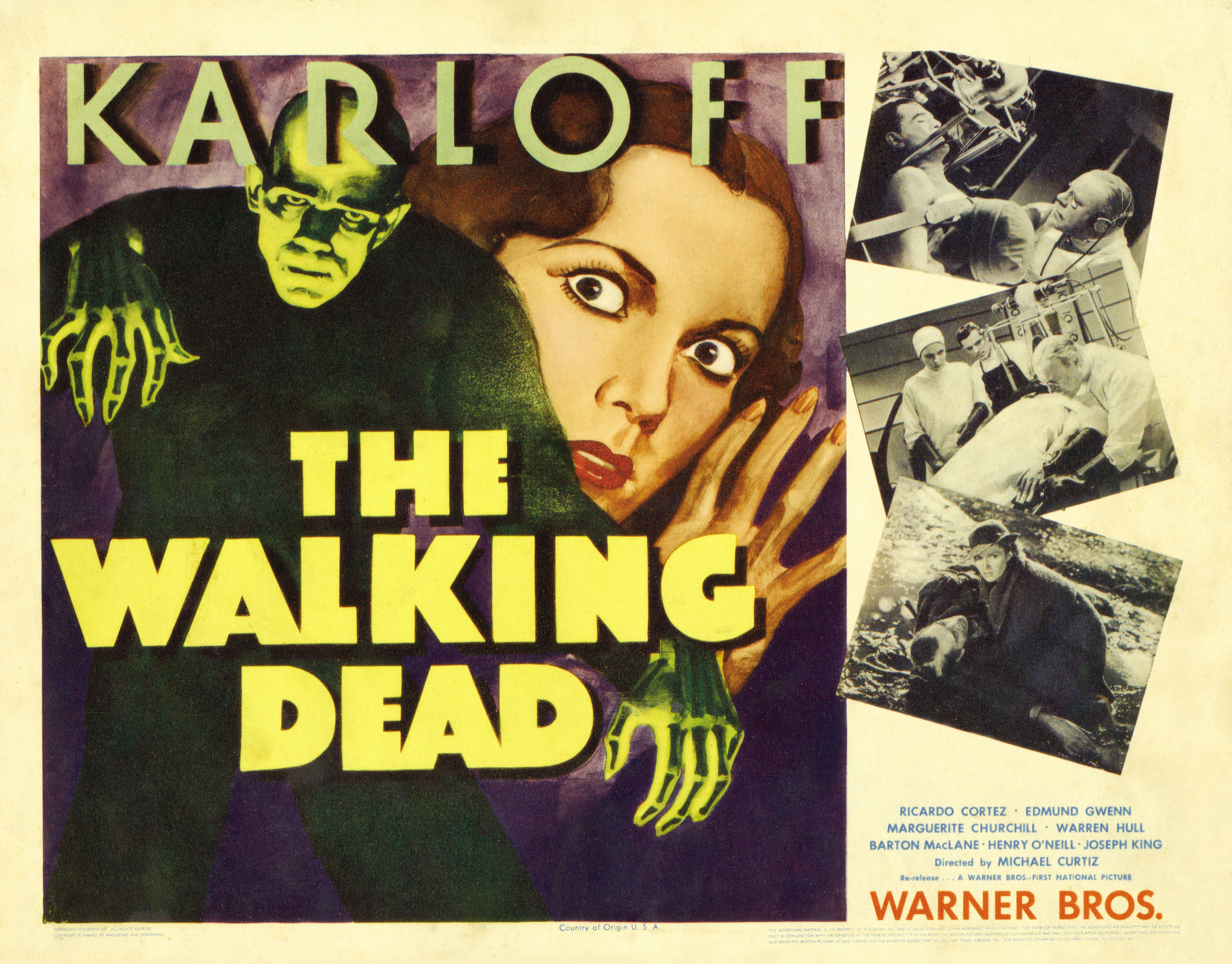
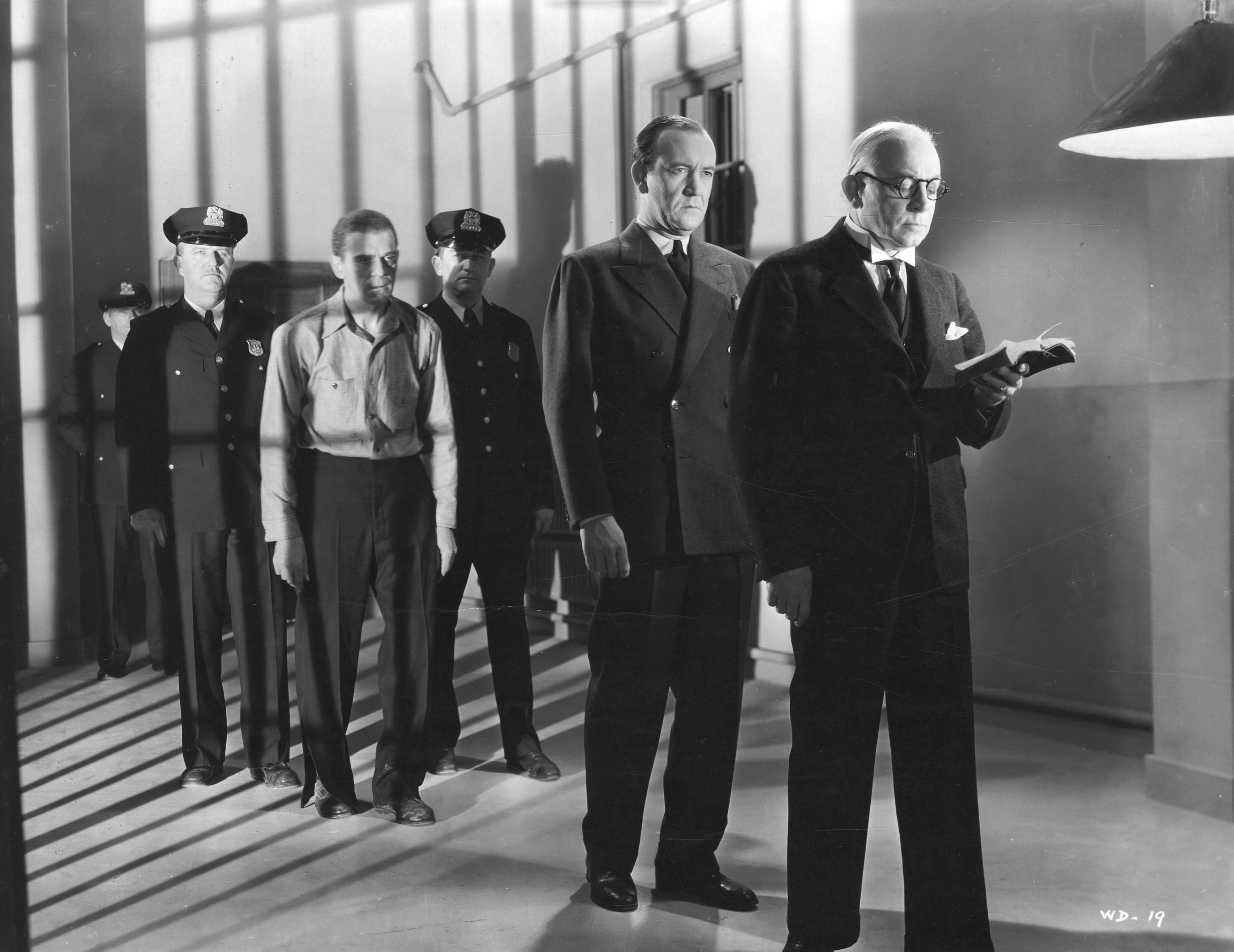
1936’s THE WALKING DEAD has absolutely nothing to do with the wildly popular AMC TV series. This WALKING DEAD stars Boris Karloff , making the first of a five-picture deal he signed with Warners, an interesting hybrid of the gangster and horror genres about an unjustly executed man who’s revived by science exacting vengeance on those who set him up. The result was a fast paced (clocked at 66 minutes) entry in the first horror cycle, and one of the last horror films made until their 1939 revival (more about that later).
Boris stars as John Ellman, newly released from a stretch in prison. A gangland cartel, looking to get rid of a law-and-order judge, set Ellman up as a patsy, hiring him to stake out the judge’s home, murdering the guy, and dumping the body in Ellman’s car. He goes on trial, defended by crooked lawyer Nolan, and sentenced to death…
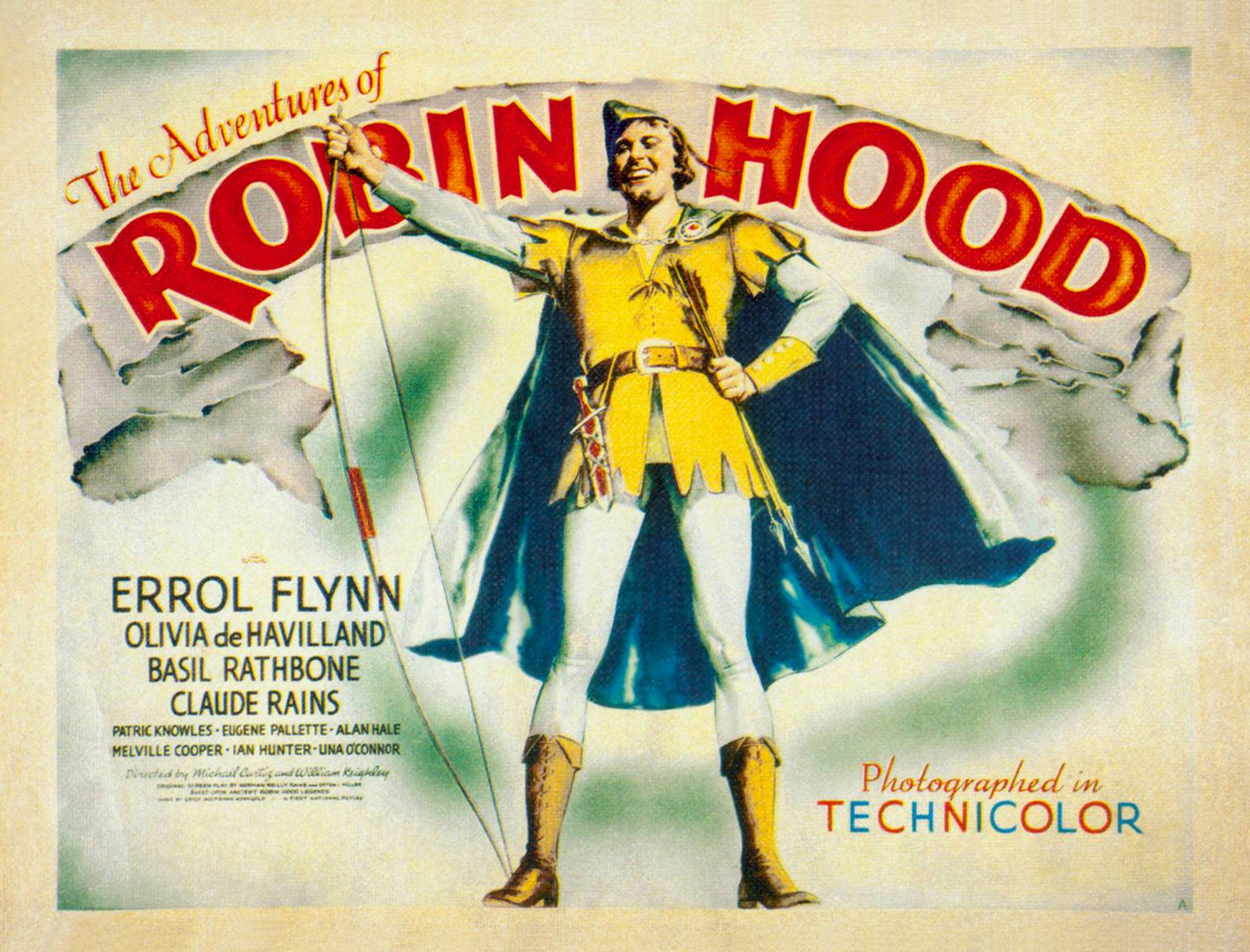
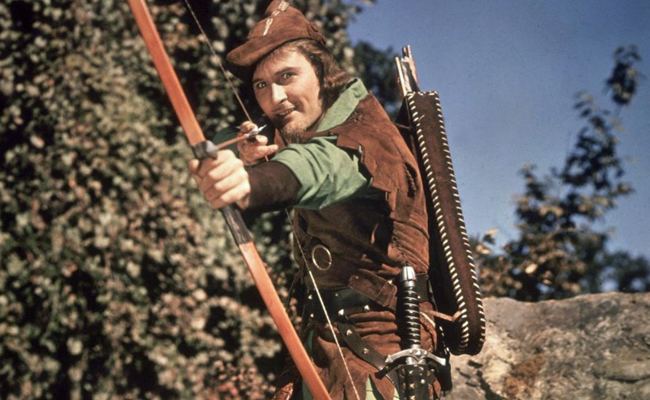
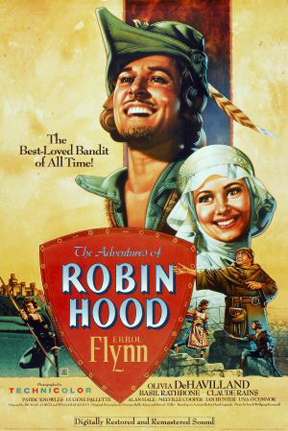
Readers of this blog know CASABLANCA is my all-time favorite movie, but THE ADVENTURES OF ROBIN HOOD is definitely in the Top Ten, maybe even Top Five (I’d have to think about it… sounds like a future post!). The story’s been told on-screen dozens of times, from the silent 1922 Douglas Fairbanks swashbuckler to Disney’s 1973 animated version to the recent Russell Crowe/Ridley Scott offering. But it’s this 1938 classic that remains definitive, thanks to a marvelous cast, breathtaking Technicolor, and the greatest cinematic swordfight in history.
You all know the legend of Robin Hood by now, so no need for a recap. Instead, I’ll go right into what makes this film so great, starting with Errol Flynn as the brave Sir Robin of Locksley. Flynn was at the peak of his career here, after starring in such action-packed hits as CAPTAIN BLOOD , THE CHARGE OF THE LIGHT…
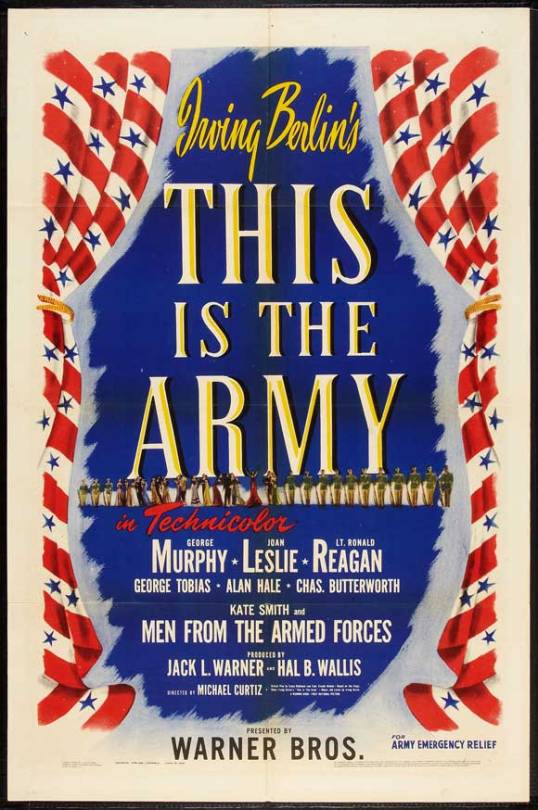
The 34th film in Mill Creek’s Fabulous Forties box set is the 1943 musical, This is The Army.
This Is The Army is based on a Broadway musical that was specifically conceived and written by Irving Berlin as a way to boost wartime morale. The show, which was a collection of patriotic songs and comedic skits, was performed by members of the U.S. Army. The film version starts with dancer Jerry Jones (George Murphy) being drafted at the start of World War I and putting together an all-army revue called Yip Yip Yaphank. (Interestingly enough, this was also the name of a real-life show that Irving Berlin put together during World War I.) The show is a big hit and, when the soldiers in the cast receive their orders to head to France, they literally march off the stage and out the theater. It’s actually a pretty rousing scene but it’s almost immediately followed by a very sad one, in which we learn that only three members of the cast survived the war. Jerry Jones is shot in the leg and when he returns home, the former dancer now walks with a cane.
Twenty-five years later, another world war has broken out. Jerry’s son, Johnny (Ronald Reagan), has joined the army. Johnny is ordered to put together another revue, in the style of Yip Yip Yaphank. At first, Johnny is reluctant but orders are orders. Soon, Johnny and the cast of This Is The Army are touring the U.S. and even performing in front of President Roosevelt (played by Jack Young, though, from a historical perspective, wouldn’t it be neat if President Roosevelt had appeared as himself in a film with Ronald Reagan?). Along the way, Eileen (Joan Leslie) tries to convince Johnny to marry her even though Johnny wants to wait until the war is over.
It’s really not much of a plot but then again, the film is about showcasing the musical performances. The soldiers sing. The soldiers dance. The soldiers tell jokes and imitate people who were famous in 1943. There are several scenes that attempt to wring laughs from soldiers dressed up like women. What’s interesting is that, at a time when the army was still segregated, the performances in This Is The Army feature both white and black soldiers. Irving Berlin apparently demanded that black soldiers be allowed to appear in both the stage show and the film and, as a result, the unit that performed This Is The Army was, for a time, the only integrated unit in the U.S. Army.
Of course, that makes it even odder that there’s an extended sequence in which white soldiers perform while wearing blackface and standing on a set that’s been designed to resemble a pre-Civil War plantation. It’s a scene that pops out of nowhere and then it keeps going and going and going and I could only stare at the screen in shocked horror as it played out. It’s an odd contradiction that the same Irving Berlin who demanded that black soldiers be honored on stage and screen was also apparently the same Irving Berlin was put a minstrel show sketch into the middle of This Is The Army.
Interestingly enough, George Murphy later retired from acting and was elected to the U.S. Senate in 1964. Murphy’s success inspired his co-star, Ronald Reagan, to run for governor. If Murphy had never been a senator, Reagan would probably never have been a president. Both Reagan and Murphy give likable performances in This Is The Army and it’s easy to see how that likability, while it may not have often translated into great acting, did eventually lead to political success.
This Is The Army is a time capsule film, one that is mostly interesting as a view into the psyche of 1940s America. The humor is often corny and the storyline is predictable but there’s also a very sad subtext to the film. Since both the film and the stage show were performed by actual enlisted men, you watch with the knowledge that some of the men singing and joking on stage won’t return from the war. Often times, during the performances, we see random people in the audience crying as they realize the same thing. Even in an otherwise light-hearted film, the sobering realities of life during wartime are right beneath the surface.
(For those following at home, Lisa is attempting to clean out her DVR by watching and reviewing 38 films by this Friday. Will she make it? Keep following the site to find out!)
Flamboyant. Athletic. Joyous. Determined. Handsome. Outspoken. Bigger than life. Revolutionary. Anarchist. Sexy. Libertarian. Is there any doubt why Errol Flynn remains the definitive Robin Hood?
And. for that matter, is there any doubt why the 1938 film The Adventures of Robin Hood remains not only the definitive Robin Hood film but also one of the most influential action films in history?
The Adventures of Robin Hood tells the story that we’re all familiar with. The King of England, Richard The Lionhearted (Ian Hunter), is captured while returning from the Crusades. His brother, King John (Claude Rains, in full autocratic villain mode), usurps the throne while Richard is gone and immediately raises taxes. He claims that he’s only doing this to raise the money to set Richard free. Of course, the real reason is that John is a greedy tyrant.
The only nobleman with the courage to openly oppose John is Sir Robin of Locksely (Errol Flynn). Sir Robin protects his fellow citizens from John’s main henchman, Sir Guy of Gisbourne (Basil Rathbone, also in full autocratic villain mode). In fact, Robin is so brave that, on multiple occasions, he even enters Sir Guy’s castle so that he can specifically tell King John and Sir Guy that he has no use for their laws. This, of course, always leads to Robin having to make a dramatic escape while arrows flies and swords are unsheathed all around.
And through it all, Robin Hood keeps smiling and laughing. He’s a wonderfully cheerful revolutionary. He may be fighting a war against a ruthless and unstoppable enemy and he may be the most wanted man in England but Robin is determined to have fun. One need only compare Robin to his humorless foes to see the difference between freedom and bureaucracy.
(We could use Errol Flynn’s Robin Hood today, though I suspect our government would just blow him up with a drone and then issue a statement about how, by stealing money from the rich and giving it to the poor, Robin was keeping the government from being able to rebuild bridges and repair roads.)
When Robin isn’t exposing the foolishness of organized government, he’s hanging out in Sherwood Forest. He’s recruiting valuable allies like Friar Tuck (Eugene Pallette) and Little John (Alan Hale, Sr.) He’s playing constant pranks and promoting revolution and, to his credit, he’s a lot more fun to listen to than that guy from V For Vendetta. He’s also romancing Maid Marian (Olivia de Havilland) and good for him. Two beautiful people deserve to be together.
Even better, he’s doing it in glorious Technicolor! There’s a lot of great things about The Adventures of Robin Hood. The action scenes are exciting. The music is thrilling. The film is perfectly cast. Errol Flynn may not have been a great actor but he was a great Robin Hood. But what I really love about the film is just the look of it. We tend to take color for granted so it’s interesting to watch a film like The Adventures of Robin Hood, one that was made at a time when color film was something of a novelty. For those of us who spend a lot of time talking about how much we love old school black-and-white, The Adventures of Robin Hood is a film that says, “Hey, color can be great too!”
(True, nobody in The Adventures of Robin Hood shouts, “I declare him to be …. AN OUTLAAAAAAAAAAAAWWWWWWWW!” Actually, now that I think about it, Ridley Scott’s Robin Hood would have worked much better if Oscar Isaac and Russell Crowe had switched roles.)
The Adventures of Robin Hood was nominated for best picture and it probably should have won. However, the Oscar went to Frank Capra’s You Can’t Take It With You.
Last night, after I finished watching My Sweet Audrina, I decided to watch one more film off of the DVR. Seeing as how I had already watched a coming-of-age drama, a classic war film, and a Lifetime melodrama, I decided that my final film of the night would be 1938’s Four Daughters. According to the plot description, it was the story of four musically talented sisters and their father. It sounded nice and undemanding.
I recorded Four Daughters off of TCM, where it was shown as a part of the 31 Days of Oscar. When it originally aired, I was warned about it by some of my fellow Oscar fanatics. They all told me that it was an okay movie but it was nothing special. “Don’t let the best picture nomination fool you!” they all said. And, it’s true that the Four Daughters is one of the more forgotten best picture nominees. Go check out the list of external reviews on the imdb and you’ll see that only a handful of reviews have been posted for Four Daughters.
But you know what? I liked Four Daughters. Yes, when compared to some of the other films that have been nominated for best picture, Four Daughters may seem rather slight. Just compare it to some of the other films that were nominated for best picture of 1938: Grand Illusion, The Adventures of Robin Hood, Jezebel, and the winner, You Can’t Take It With You. Interestingly enough, Michael Curtiz directed both The Adventures of Robin Hood and Four Daughters. Curtiz was nominated for directing Four Daughters, though Robin Hood is certainly the better regarded film.
And yet, with all that in mind, Four Daughters is still a perfectly charming and rather sweet movie. Adam Lemp (Claude Rains) is a musician who loves classic music. He has four daughters, all of whom are musically talented. The oldest, Emma, is played by Gale Page while the other three daughters are played the Lane Sisters, who were apparently a very popular singing act in the 30s. Lola Lane plays Thea Lemp, Rosemary Lane plays Kay Lemp, and the youngest daughter, Ann, is played by Priscilla Lane.
While the film was obviously designed to capitalize on the popularity of the Lane Sisters, it’s not all just music and performing. The Lemps also own a boarding house, which is frequently visited by potential suitors. While Kay Lemp struggles with whether or not to accept a music scholarship and leave home, Emma is pursued by Ernest (Dick Foran) and Thea is courted by Ben (Frank McHugh), a wealthy older man.
And then there’s Ann, the youngest daughter and the one to whom I most related. Despite saying that she never wants to marry, Ann finds herself being pursued by two men. One of them is a composer named Felix Deitz (Jeffrey Lynn). The other is Felix’s best friend, Mickey (John Garfield).
John Garfield was one of the first Method actors to make the transition from stage to screen. (It’s generally argued that, in the beginning, Paul Muni begat John Garfield who begat Montgomery Clift who begat Marlon Brando who begat Robert De Niro who begat Leonardo DiCaprio.) Four Daughters was one of his first major roles and it also provided him with his first Oscar nomination. It’s interesting to contrast Garfield’s brooding and internalized performance with the somewhat more bland actors who play the other suitors. He grounds Four Daughters, giving the film a necessary jolt of reality.
However, I have to admit that my main reason for liking Four Daughters is a personal one. I am the youngest of four sisters and there was so much about Four Daughters that I related to. (I saw a lot of myself in Ann Lemp.) From the opening scenes of the sisters fighting and laughing at the same time to the countless scenes of the sisters supporting each other, Four Daughters gets it right. The film may have been made in 1938 but sisterhood is eternal.
In the end, I glad that I took the time to record and watch Four Daughters. It’s a sweet movie, one that will be enjoyed by sisters everywhere.
So, today, I got off work so that I could vote in Texas’s Super Tuesday primary. After I cast my vote (and don’t ask me who I voted for because it’s a secret ballot for a reason!), I came home and I turned on the TV and I discovered that, as a result of spending February recording countless films off of Lifetime and TCM, I only had 9 hours of space left on my DVR. As a result, the DVR was threatening to erase my recordings of Bend It Like Beckham, Jesus Christ Superstar, American Anthem, an episode of The Bachelor from 2011, and the entire series of Saved By The Bell: The College Years.
“Acgk!” I exclaimed in terror.
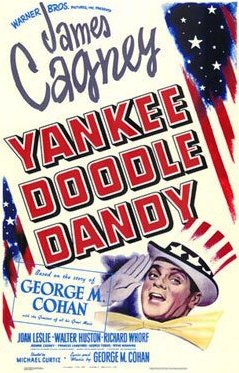
So, I immediately sat down and started the process of cleaning out the DVR. I started things out by watching Yankee Doodle Dandy, a film from 1942.
Yankee Doodle Dandy is a biopic of a songwriter, signer, and dancer named George M. Cohan. I have to admit, that when the film started, I had absolutely no idea who George M. Cohan was. Imagine my surprise as I watched the film and I discovered that Cohan had written all of the old-fashioned patriotic songs that are played by the Richardson Symphony Orchestra whenever I go to see the 4th of July fireworks show at Breckenridge Park. He wrote You’re A Grand Old Flag, The Yankee Doodle Boy, and Over There. Though I may not have heard of him, Cohan was an American institution during the first half of the 20th Century. Even if I hadn’t read that on Wikipedia, I would have been able to guess from watching Yankee Doodle Dandy, which, at times, seems to be making a case for sainthood.
And that’s not meant to be a complaint! 74 years after it was originally released, Yankee Doodle Dandy is still a terrifically entertaining film. It opens with George (played by James Cagney) accepting a Congressional Gold Medal from President Franklin D. Roosevelt. (We only see Roosevelt from behind and needless to say, the President did not play himself. Instead, Captain Jack Young sat in a chair while FDR’s voice was provided by impressionist Art Gilmore.) Cohan proceeds to tell Roosevelt his life story, starting with his birth on the 4th of July. Cohan tells how he was born into a showbiz family and a major theme of the film is how Cohan took care of his family even after becoming famous.
The other major theme is patriotism. As portrayed in this biopic, Cohan is perhaps the most patriotic man who ever lived. That may sound corny but Cagney pulls it off. When we see him sitting at the piano and coming up with the lyrics for another song extolling the greatness of America, we never doubt his sincerity. In fact, he’s so sincere that he makes us believe as well. Watching Yankee Doodle Dandy, I found myself regretting that I have to live in such an overwhelmingly cynical time. If George M. Cohan was alive today, he’d punch out anyone who called this country “Murica.”
Yankee Doodle Dandy is an amazingly positive film. There are a few scenes where Cohan has to deal with a few Broadway types who are jealous of his talent and his confidence but, otherwise, it’s pretty much one triumph after another for Cohan. Normally, of course, there’s nothing more annoying than listening to someone talk about how great his life is but fortunately, Cohan is played by James Cagney and Cagney gives one of the best performance of all time in the role.
Cagney, of course, is best remembered for playing gangsters but he got his start as a dancer. In Yankee Doodle Dandy, Cagney is so energetic and so happy and such a complete and totally showman that you can’t help but get caught up in his story. When he says that, as a result of his success, things have never been better, you don’t resent him for it. Instead, you’re happy for him because he’s amazingly talented and deserve the best!
Seriously, watch him below:
James Cagney won the Oscar for Best Actor for his performance here. Yankee Doodle Dandy was also nominated for best picture but lost to Mrs. Miniver.
I’m really glad that I watched Yankee Doodle Dandy today. In this time of overwhelming negativity, it was just what I needed!
(This review contains spoilers but seriously, you should know all of this already.)
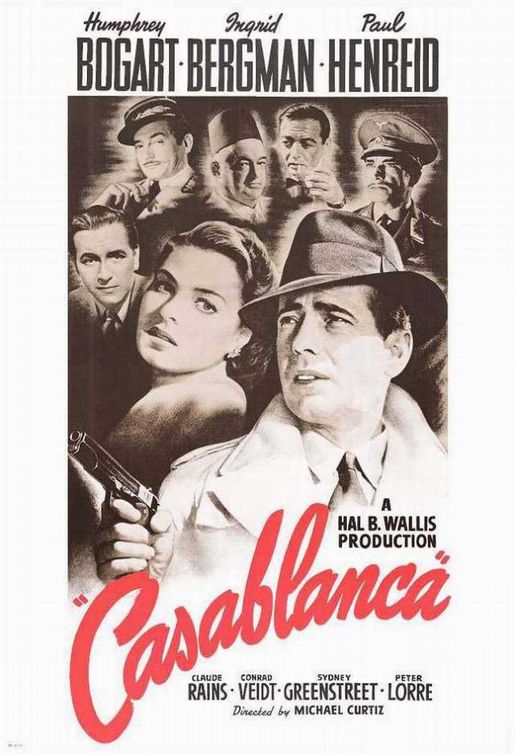
Is there anything left to be said about Casablanca?
Probably not.
As a film reviewer, I’m not supposed to admit that. I’m supposed to come up with some sort of new, out-of-nowhere, batshit crazy way to look at Casablanca. I’m supposed to argue that Rick was actually meant to be a survivor of abuse or that Victor Laszlo was some sort of precursor to President Obama or something. Or, if that doesn’t work, I’m supposed to intentionally troll everyone by writing something like, “10 reasons why Casablanca is overrated” or “I hate Casablanca and I don’t care who knows it!”
But I’m not going to do that.
The fact of the matter is that Casablancais as good a film as everyone says it is. It is a film that everyone should see. It is a film that quite rightfully was named best picture of 1943. It deserves to be celebrated. It deserves to be seen. In fact, stop reading this review right now and go watch it. Don’t let me waste another second of your time.
The thing with Casablanca is that it’s such an iconic film that everyone knows what happens, regardless of whether they’ve actually watched the entire film or not. They know that the film takes place in Casablanca during World War II. They know that Casablanca is full of refugees, spies, and people who are hiding from their past. They know that Casablanca is policed by the charmingly corrupt Capt. Louis Renault (Claude Rains). They know that Major Strasser (Conrad Veidt) is the Nazi in charge. (I nearly said that Strasser was the “evil Nazi in charge” but when you identify someone as a Nazi, is it really necessary to add that they’re evil?) They know that Rick (Humphrey Bogart) is the American expatriate who owns Rick’s Cafe Americain and that everyone comes to Rick’s. They know that Rick’s slogan is that he doesn’t stick his neck out for anyone but they also know that his cynicism hides the fact that he’s still in love with Ilsa (Ingrid Bergman). They know that when Ilsa shows up at Rick’s and needs him to help her husband, Victor Laszlo (Paul Henreid), escape from Occupied Europe, Rick is forced to decide whether or not to get involved in the resistance.
And, whether you’ve seen the film or not, you know that it all ends on a foggy airstrip. Ilsa wants to stay in Casablanca with Rick but Rick tells her that she has to get on the plane with Laszlo because, if she doesn’t, she’ll regret it. Ilsa goes with Laszlo, leaving Rick behind.
And it may have been the right thing to do but how many viewers would have done the same if they had been in Ilsa’s high heels? Throughout the entire movie, we hear about how wonderful Laszlo is but, whenever he actually shows up on screen, it’s always a little bit surprising to discover just how boring a character Victor Laszlo really is. Unlike the troubled and deceptively cynical Rick, there’s not much going on underneath the surface with Laszlo. Just as Rick overshadows Laszlo, Bogart’s performance overshadows Paul Henreid’s. Bogart and Bergman have all the chemistry and the charisma. Henreid, on the other hand, comes across as stiff and a little dull. But, as the film suggests, World War II was not a time for self-doubt and self-interest. World War II was a time when the world needed straight-forward, determined men like Victor Laszlo.
And, if the world needed Laszlo and Laszlo needed Ilsa, then that meant Ilsa had to get on that plane.
That said, I’ve always liked to think that Ilsa ended up leaving Laszlo in 1945 and immediately made her way back to Morocco. Rick and Ilsa belonged together.
But until Ilsa comes back, Rick has his friendship with Renault. “Louis,” he says, “I think this is the beginning of a beautiful friendship.” Did Bogart realize, when he delivered that line, that literally thousands of people would be repeating it decades later? Bogart’s performance is probably one of the most imitated performances of all time. Anyone who sees Casablanca thinks that they can talk about gin joints and hills of beans in Bogart’s trademark style. Of course, they can’t and it’s a testament to the power of Bogart’s performance that it remains effective even after being endlessly imitated.
On Valentine’s Day of 2014, I saw Casablanca at the Alamo Drafthouse in Austin. It was an amazing and romantic experience. See Casablanca on the big screen. It’ll make you love life and bring life to your love.
Needless to say, Casablanca is an intimidating film to review. So, I’ll just say this: Casablanca is even better than you think it is. If you haven’t seen it, go watch it. If you have seen it, go watch it again.
Just resist the temptation to say, “Play it again, Sam,” in your best Bogart-like voice.
Because, seriously, Rick never actually says that line.
A quick note: By titling this post “Lisa Marie Goes Down On Mildred Pierce” I have now not only proven that there’s no dare I will not accept but I’ve also won a small but useful sum of cash. Never let them tell you that blogging doesn’t pay off.
Like a lot of people, I was looking forward to HBO’s remake of Mildred Pierce, featuring Kate Winslet in the role made famous by Joan Crawford. And I hate to say it but, as hard as I’ve tried, I simply can not get into this remake. Maybe it’s because the remake’s director, Todd Haynes, has apparently decided to use five hours to tell the exact same story that the original film told in less than two. All I know is that the HBO version has, so far, been slow, ponderous, and ultimately a rather dull affair.
As I attempted to stay awake through the remake, I found myself wondering how the original 1945 film compared to the remake. Fortunately, I just happened to have the original on DVD. As well, by watching the original Mildred Pierce, I could continue my current mission to see every single film ever nominated for best picture. (Joan Crawford won the Oscar for Best Actress for her performance as Mildred but the film itself lost Best Picture to Billy Wilder’s The Lost Weekend.)
Mildred Pierce opens with the murder of sleazy playboy Monty Beragon (Zachary Scott). Monty’s wife, Mildred (Joan Crawford), responds to the murder by attempting to frame her ex-business partner, the equally sleazy Wally Fay (Jack Carson). However, the police arrest Mildred’s 1st husband, the well-meaning but really, really dull Bert (Bruce Bennett). This leads to Mildred going to the police in an attempt to clear Bert’s name. As the police interrogate Mildred, she tells them (and the film uses flashbacks to show us) how she went from being a dissatisfied housewife to a succesful businesswoman to finally becoming Monty’s wife. Through it all, Mildred is motivated by the need to take care of and spoil her manipulative daughter Veda (Ann Blyth).
Seen now, Mildred Pierce is an artifact of different time but, as a secret history nerd, I happen to love studying artifacts. Like many of the films of the late 40s, Mildred Pierce‘s melodramatic plot serves as a reflection of a culture that, in the wake of World War II, was no longer as smugly complacent about how the world worked. As I watched Mildred Pierce, the thing I immediately noticed was just how much the film seemed to be suspended between pre-War and post-War culture. It’s the type of film that goes out of it’s way to acknowledge Mildred’s role as a “new woman” but, at the same time, still finds time to include numerous “comedic” scenes of various men leering at Mildred’s ankles.
(Actually, I guess they were supposed to be staring at her legs but, since this was the 40s, this could only be represented by an occasional flash of ankle. Personally, my ankles are okay but I like my legs better.)
Mildred Pierce is often cited as being a forerunner to feminist cinema and I have to admit I have some issues with that. Yes, the film does acknowledge that a woman can be tough and that a woman can be a succesful businesswoman. However, the film’s message ultimately seems to be that mothers who work will ultimately raise daughters who will become burlesque dancers and potential killers. Mildred Pierce doesn’t so much celebrate female independence as much as it fears it. If only Mildred had remained married to boring and predictable Bert than Veda would never have ended up as a murder suspect.
The question of ideology aside, the original Mildred Pierce remains an entertaining example of old school melodrama. Director Michael Curtiz was one of those “craftsmen” who, in the 30s and 40s, seemed to direct hundreds of films without ever really establishing any sort of unique style of their own. Instead, they simply used whichever style that would be most efficient towards dramatizing the script. For Mildred Pierce, Curtiz imitated the style of a B-movie film noir. It’s a good approach for this story even if Curtiz doesn’t seem to understand the shadows of noir quite as well as his contemporaries Billy Wilder or Robert Siodmak.
Of course, Mildred Pierce is best known as the film that won Joan Crawford an Oscar. I haven’t seen many of Crawford’s films (though I have seen Faye Dunaway playing her in Mommie Dearest) and I’ve got an unapologetic girlcrush on Kate Winslet but I honestly have to say that I prefer Crawford’s version of Mildred to Winslet’s. Because, as much as I idolize Kate Winslet, she doesn’t seem to so much be playing Mildred Pierce as much as she’s observing her. Crawford, meanwhile, sank her perfectly manicured nails into the role and pretty much refused to let go until she got her Oscar. Crawford plays Mildred as a woman so obsessed with survival that she seems to be perfectly willing to destroy the rest of the world if that’s what it takes. To be honest, it’s really not a great acting job but it certainly is fun to watch. Technically, Winslet gives the better performance but Crawford is a lot more entertaining.
(That said, I still love Kate and I actually would probably fall at her feet and say, “Thank you,” if I ever met her in real life because she’s really one of my heroes. Physically, I developed early and I had to deal, at way too early an age, with a combination of a physical maturity and emotional immaturity. By the time I was 13, I was so totally overwhelmed by the insecurity and uncertainty but then I read an interview with Kate Winslet in which she said, “I like having tits and an ass.” And that, to be honest, was the first time I had ever come across anyone saying that it was okay to like your body. So, anyway, the point of all that is that I love Kate Winslet.)
Crawford pretty much dominates the entire film but a few of the other performers do manage to make an impression. As Mildred’s ex-husband, Bruce Bennett is pretty boring but the other men in Mildred’s life are well-played by Jack Carson and Zachary Scott. Scott especially was well-cast as the type of guy that we always says we’re done with just to end up hooking up with them whenever we’re at our weakest. As Veda, Anne Blyth gives such a driven and intense performance that you actually believe that she could be the daughter of Mildred Pierce.
In the end, Mildred Pierce isn’t really a great film but it is a lot of fun and that’s a definite improvement on the current remake.




 Through the Shattered Lens