A young woman (Suzanne Pleshette) desperately needs a blood transfusion. Fortunately, the police have managed to track down one of the only people to share her blood type, an accountant named Harold Stern (Norman Lloyd). Harold seems like a nice, rather mild-mannered guy and he has a long history of donating blood. However, when the police approach him, Harold refuses to donate.
“What type of crumb are you!?” the police demand.
Harold explains that, whenever he gives someone blood, he develops a psychic connection with that person. He can see their future. And that’s simply a burden that he can no longer shoulder….
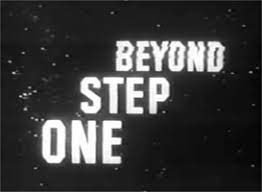
This episode of One Step Beyond originally aired on September 15th, 1959. Norman Lloyd, who plays Harold, got his start as a member of Orson Welles’s Mercury Theater and he also played the villain in Alfred Hitchcock’s Saboteur. (Speaking of Hitchcock, Suzanne Pleshette played the doomed school teacher in The Birds.) When Lloyd appeared in this episode of One Step Beyond, he was 44 years old. He would go on to live for another 62 years, making his final film appearance at the age of 101!
Welcome to Retro Television Reviews, a feature where we review some of our favorite and least favorite shows of the past! On Sundays, I will be reviewing the made-for-television movies that used to be a primetime mainstay. Today’s film is 1972’s Getting Away From It All! It can be viewed on YouTube.
For Fred Clark (Larry Hagman) and Mark Selby (Gary Collins), life is New York City just isn’t that much fun anymore. The weather is terrible. The traffic cannot be navigated. The only people ruder than the cabbies are the doormen. Fred and Mark have come up with the perfect plan. They’ve decided to move to a small country town and purchase a house on a small island. In fact, they’re going to buy the entire island! It’s surprisingly cheap. Fred and Mark don’t ever really stop to wonder why the island is available for so little money. Seriously, if you’re buying an island, you should probably ask yourself those questions.
Mark’s wife, Alice (E.J. Peaker), is enthusiastic about the idea. Less excited is Fred’s wife, Helen (Barbara Feldon). Helen enjoys living in the city and having a nice job in an office building. She gets along with her boss (played by Jim Backus, one of many veteran actors to show up in a small role in this film). Perhaps hoping that Fred will change his mind once he’s confronted with the reality of actually living in the country, Helen finally gives in.
It does turn out that the island is not quite the paradise that Fred and Mark were expecting. The only way to get out to the island is in a leaky rowboat. The house is falling apart and, as Helen is disgusted to learn, it also doesn’t have indoor plumbing. There’s no electricity either but fortunately, the local handyman is working on it. His name is Herbie and he’s played by a very young and thin Randy Quaid. If you’ve ever wanted to hear Randy Quaid speak with an exaggerated New England accent, this is the film for you. There’s nothing convincing about Quaid’s accent but it still seems only fair, considering all of the Yankee actors who have butchered the Southern accent over the years.
Just when it looks like Fred and Mark have managed to make the Island livable, they get a disturbing letter. As the new owners of the Island, they owe 20 years worth of back taxes. As Fred puts it, the tax bill is more than either of them can afford. If they can’t raise the money, the town will take back the Island. Fred and Mark consider trying to get jobs but it turns out that neither one of them knows much about being fisherman. They then decide to charm the town into nullifying the tax bill. That turns out to be more difficult than either man imagines.
Getting Away From It All is a comedy that deals with a universal theme, the desire to escape from the harshness of everyday life and find a perfect place to which to escape. That said, the film’s main reason for existing is a parade of comedic cameos. Jim Backus, Vivian Vance, Joe E. Ross, Burgess Meredith, Paul Hartman, and J. Pat O’Malley all appear in small roles, appearing just long enough for 1972 viewers to say, “Hey, I recognize that person!” The end result is a rather shallow film that has a few chuckle-worthy moments. (Again, Randy Quaid pretending to be from Maine has to be worth something.)
In the end, for all of the film’s celebration of getting away from it all, it’s hard not to feel that Gary, Mark, Alice, and Helen will all end up back in Manhattan sooner than later. Some people are just city folks.
Welcome to Late Night Retro Television Reviews, a feature where we review some of our favorite and least favorite shows of the past! On Mondays, I will be reviewing CHiPs, which ran on NBC from 1977 to 1983. The entire show is currently streaming on Freevee!
This week, the key words on the highway of California are “team work!”
Episode 1.16 “Vintage ’54”
(Dir by Barry Crane, originally aired on January 26th, 1978)
It’s a three-day weekend and that means the California Highway Patrol even more mayhem to deal with than usual!
For instance, two car thieves are driving up and down the highway, searching for classic cars. One stolen car belongs to 85 year-old Margaret Downey (Marjorie Bennett), who proceeds to go down to the station and personally demand that Sgt. Getraer find her car. The thieves are eventually caught, thanks to the entire Highway Patrol working as a team and keeping an eye out for stolen cars. The emphasis here was on teamwork, which Ponch and Baker just doing their part as opposed to be singled out.
It’s also teamwork that reunites a baby with the family that accidentally left her behind at a rest stop. Ponch and Baker are the ones who take the baby to the station and they’re the ones who nickname the baby “Princess” and buy her toys but, in the end, it’s the entire Highway Patrol working together that eventually brings the baby back to her grateful parents.
Baker and Ponch do get a moment in the spotlight when a skydiver ends up getting tangled up and hanging from a highway overpass. Baker is the one who grabs hold of her legs to keep her from falling while Ponch is the one who recruits a crane to help rescue her. But again, Baker and Ponch are not working alone. Instead, there are other motorists who help out, some by holding onto Baker and another by allowing Ponch to use his crane.
My point is that this episode was all about people working together to make the world a better and a safer place. That’s not a bad message and the show delivers it with a good deal of sincerity. With the exception of the scenery-chewing Marjorie Bennett, everyone is on their best behavior with this episode, with even Erik Estrada toning down his usual overacting. And, of course, there’s two exciting motorcycle chases, both of which are very well-filmed. There was nothing particularly amazing about this episode. It was pretty much a typical hour of CHiPs but it was still very well-done.
Next week, Ponch and Baker have an important lesson to teach about hitchhiking!
Welcome to Late Night Retro Television Reviews, a feature where we review some of our favorite and least favorite shows of the past! On Mondays, I will be reviewing CHiPs, which ran on NBC from 1977 to 1983. The entire show is currently streaming on Freevee!
This week, Ponch continues to screw up even the simplest of tasks!
Episode 1.6 “Baby Food”
(Dir by Paul Krasny, originally aired on October 27th, 1977)
This week’s episode of CHiPs is yet another story about how Frank “Ponch” Poncharello is terrible at his job.
While riding down the highway, Ponch and Baker find themselves stuck behind a truck that is transporting several boxes of baby food. Suddenly, the truck’s backdoor slides open and the boxes start to fall onto the highway. Baker is able to easily dodge the boxes, pull up to the side of the truck, and motion for the driver to pull over. Ponch, on the other hand, is nearly killed because he comes close to hitting every box that falls out in front of him. I mean, the boxes are not that big. I’ve never even driven a motorcycle and I could probably do a better job of avoiding them than Ponch did.
Once the driver of the truck has stopped and the boxes are being reloaded, Ponch and Baker head on their way. They are heading to headquarters, where they are supposed to be waiting for a call from the courthouse to let them know if they need to come down and testify in a case. Still, Baker finds the time to pull over and ask two hippies if they need any help changing a flat tire on their school bus. Baker is perfect and Ponch …. well, Ponch is not.
At headquarters, Ponch hits on the dispatchers, commandeers a meeting room so he can watch his favorite soap opera, and is basically so obnoxious that Getraer kicks both Ponch and Baker out. After taking some time to rescue a man and his dog from a car that’s caught on fire, Ponch and Baker head over to the trailer park that Ponch calls home. Ponch wants to change his uniform (which got covered in soot as a result of the fire) and Baker wants to see Ponch’s beautiful new neighbor. Despite being under orders to remain easily contactable, Ponch accidentally knocks his phone off the hook.
That’s not good because Gatraer actually needs to talk to Ponch. It turns out that the baby food that fell off the truck is infected with botulism and two of the boxes are missing! Gatraer has to leave his office and ride his bike all the way to Ponch’s trailer park to let Ponch — who is now wearing a “Keep on Trucking” t-shirt — know about the contaminated baby food. Gatraer asks Ponch and Baker if they saw anyone scavenging at the scene. It takes Baker a while to remember the school bus but at least he did remember! Ponch apparently only has a five-minute attention span.
The hippies are eventually tracked down and their baby is rushed to the hospital, where he recovers. While Gatraer congratulates Ponch and Baker on finding the contaminated food, he does tell them that they need to stop getting personal calls at the office. It turns out that Melinda, the trailer park girl that Ponch likes, has been calling HQ and asking to speak to Baker. Obviously, Melinda knows who has career potential and who is one mistake away from getting evicted from his mobile home.
This episode was enjoyable because it’s always fun to watch people get mad at Ponch. Larry Wilcox reveals some unexpected comedic abilities in this episode. (Just look at his face when he realizes Ponch is using a conference room to watch his favorite soap opera.) I also liked how clean and friendly the trailer park was. CHiPs originally aired quite a bit before my time but I wouldn’t be surprised to learn that the show led to be people moving to California. I mean, even the trailer parks are nice to look at!
The count (John Carradine) has been traveling across the frontier, feasting on settlers and stagecoach riders. When he comes to a town in the middle of nowhere, he poses as the uncle of saloon owner Betty Bentley (Melinda Plowman). Using the name Mr. Underhill, Dracula hopes to make Betty into his latest bride. Everything about Mr. Underhill indicates that he is a vampire but Betty refuses to believe it. Even when she’s told that Mr. Underhill doesn’t cast a reflection, Betty dismisses it as just being “the old vampire test.” Two German servants recognize her uncle as being a vampire and Betty again refuses to believe them. Betty’s fiancé, Billy the Kid (Chuck Courtney), realizes that there is something wrong with Mr. Underhill but can he save his future wife?
The idea of vampires in the old west is one that has inspired a surprising number of movies, most of which are considerably better than Billy The Kid Versus Dracula. In this movie, Chuck Courtney plays one of the old west’s most notorious outlaws but he’s portrayed as being one of the most upstanding members of his community. John Carradine plays the world’s most notorious vampire but just comes across as being a grouchy old man. Chuck Courtney is a convincing westerner but not a very interesting actor. John Carradine sleepwalks through the role and later said Billy The Kid Versus Dracula was the only one of his many films that he actively disliked. The movie was shot in 8 days and it looks like it.
This was also the final film of director William Beaudine, who had directed his first film 51 years earlier. The film was released on a double feature with Beaudine’s Jesse James Meets Frankenstein’s Daughter. Everyone ended up in the old west eventually.
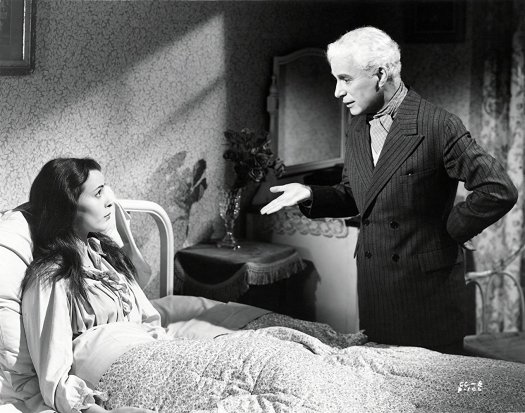
Charlie Chaplin was unquestionably one of the true geniuses of cinema. His iconic character ‘The Little Tramp’ has been entertaining audiences for over 100 years, enchanting both children and adults alike with his winning blend of humor and pathos. But by 1952, the 63-year-old Chaplin had been buffeted about by charges of immoral behavior and the taint of Communism during the HUAC years, and filmgoers were turning against him. It is at this juncture in his life and career he choose to make LIMELIGHT, a personal, reflective piece on the fickleness of fame, mortality, despair, and most prominently, hope. It could be considered Chaplin’s valedictory message to the medium he helped establish, even though there would be two more films yet to come.
“The story of a ballerina and a clown…” It’s 1914 London, and the once-great Music Hall clown Calvero arrives home from a drunken bender. Fumbling with the…


 Through the Shattered Lens