Catching Up With The Films of 2019: Late Night (dir by Nisha Ganatra)


Molly Patel (Mindy Kaling) has just gotten a new job.  A struggling comedienne who, up until now, has been forced to test out her best material on her coworkers at a chemical plant, Molly is hired to join the writing staff of late night talk show host, Katherine Newbury (Emma Thompson).  Even though Molly knows that she was largely hired so that the show could claim to have a diverse writing staff (all of the other writers are white males), she is still thrilled to be working for Katherine.  Why wouldn’t she be?  Katherine is a notoriously difficult boss who can’t even be bothered to learn the names of most of the people working for her but Katherine is also a legend, one of the first women to ever host her own late night talk show.

Of course, all legends have to come to an end and Katherine’s career as a late night talk show host appears to be in its final days.  Katherine’s rating have been in a steep decline for several years and her nonthreatening monologues and habit of booking guests like Doris Kearns Goodwin are not doing much to reverse the trend.  Safely hidden away in her mansion and continually worried about the health of her Parkinson’s-stricken husband, Walter (John Lithgrow), Katherine has grown out of touch.  Making matters even worse, the president of the network (played by Mindy Kaling’s Office co-star, Amy Ryan) hates Katherine and is eager to replace her with an obnoxious, Dane Cook-style comedian named Daniel Tennant (Ike Barinholtz).

Molly’s new job is a struggle at first.  The other writers dismiss Molly as merely being a “diversity hire” while Katherine often seems to be put off by Molly’s cheerful earnestness.  Over time, Molly proves herself and soon, she’s inspiring Katherine to refuse to leave her show without a fight.  Gone are bland monologues and boring presidential historians, replaced by politically charged humor and YouTube stars.

Late Night, as you may remember, was a huge hit at Sundance back in January.  Amazon Studios paid 13 million for the distribution rights.  The film was released in June to generally positive reviews and …. well, it made very little money.  Despite an extensive advertising campaign and a deluge of think pieces that literally begged audiences to see the film, Late Night flopped at the box office and it is estimated that, taking into account the film’s ad campaign, Amazon lost about 40 million dollars on the film.

Why wasn’t Late Night a bigger success at the box office?  At the time, the popular answer was misogyny.  While one should never discount that, I think that the film’s failure had more to do with the fact that the ad campaign made Late Night look more like the latest Netflix series than an actual cinematic experience.  Like a lot of movies about TV, Late Night was a film that seemed like it could wait for television.  I mean, I am the film’s target audience and even I waited to watch the film on Prime.

As for the film itself, it’s flawed but likable.  Along with co-starring in the film, Mindy Kaling wrote the script and the dialogue is consistently witty, even if the plot occasionally struggles to keep up.  At its best, this is a fun movie to listen to.  Visually, the film’s a bit flat and there’s a big third act development that feels a bit forced but, for the most part, the film works.  Not surprisingly, Emma Thompson is perfectly cast as Katherine and she delivers her razor sharp lines with the right mix of scorn and pathos.  Mindy Kaling effortlessly holds her own opposite Thompson and even John Lithgow, who can usually be counted upon to chew every piece of scenery available to him, is effective in his small but important role.  In the end, it’s kind of a sweet film and there’s something touchingly naive about the film’s steadfast belief that a late night talk show can actually be worth all the trouble.

Late Night is available on Prime so check it out.


Cleaning Out The DVR: Sea Change (dir by Chris Grismer)


(Hi there!  So, as you may know because I’ve been talking about it on this site all year, I have got way too much stuff on my DVR.  Seriously, I currently have 162 things recorded!  I’ve decided that, on February 15th, I am going to erase everything on the DVR, regardless of whether I’ve watched it or not.  So, that means that I’ve now have only have a month to clean out the DVR!  Will I make it?  Keep checking this site to find out!  I recorded Sea Change off of Lifetime on September 17th, 2017!  Incidentally, Sea Change was the final 2017 Lifetime movie that I had sitting on my DVR.  I have now watched and reviewed all of the Lifetime films that I recorded in 2017!)

Based on the novel by Aimee Friedman, Sea Change tells the story of Miranda and T.J.

Miranda (Emily Rudd) is a fiercely intelligent and independent teenager who, having lost her father, is spending the summer on an island with the mother (Maria Drizzia) that she barely knows.  It’s a beautiful island, one that is very popular with rich vacationers, the majority of whom have spoiled children.  It’s a struggle for Miranda to fit in.  She has deeper interests than just popularity and money.  Add to that, she doesn’t swim.  With everyone on the island obsessed with getting in the water, Mirana is stuck on the land.

T.J. (Keenan Tracy) lives on the island year-round.  His family is not rich.  T.J. works for a living and he’s not going to let anyone push him around just because they happen to have more money than he does.  When Miranda first sees T.J. she notices his scars.  When she sees him a second time, the scars have disappeared.  When Miranda falls into the water, T.J. saves her from drowning.  T.J. claims that he just dived after her but Miranda gets the feeling that there’s something more to it, almost as if he was already in the water when she fell in.  When he grabbed her underwater and led her back to the surface, there was something different about his eyes…

Could it have anything to do with the legendary Seawalkers?  The Seawalkers are said to be half-human and half-fish.  Everyone knows the story has to be a myth but, after T.J. rescues her, Miranda isn’t quite sure.  Could the Seawalkers be real and could they be connected to the secrets that Miranda believes her mother to be hiding from her?

You’ve probably already guesses the answers to all of those questions but that’s okay.  Sea Change won’t win many points for originality.  If you’ve seen any other film adaptation of a YA novel, you’ll be able to guess almost everything that happens in Sea Change before it happens.  But, again, that doesn’t matter.  Sea Change is a well-made and likable film, one that is full of gorgeous imagery.  (The film really makes excellent use of that island setting.)  Keenan Tracy and Emily Rudd are both talented actors and they have a nice chemistry.  Underneath all of the talk of Seawalkers, there’s a very real and sincere sweetness to their relationship.  You find yourself hoping that things work out for them and really, in order to work, that’s pretty much the only thing that a film like this has to accomplish.

Sea Change ends with the possibility of a sequel.  Personally, if they did make a sequel, I’d watch it.


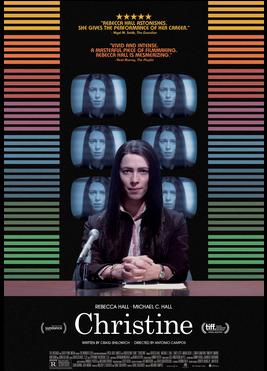
The Things You Find on Netflix: Christine (dir by Antonio Campos)


I really regret that I didn’t get a chance to see Christine when it played here last year.  I wanted to but the movie was only in theaters for a week and then it vanished.

I guess I shouldn’t be too surprised that Christine didn’t become a blockbuster.  I imagine that most potential viewers were turned off by the fact that 1) it wasn’t a remake of the movie about the killer car and 2) it was based on the true story of a reporter who, in 1974, committed suicide on live television.  I imagine that, to many people, the film sounded like it would be indescribably sad.  It certainly sounded that way to me.  That’s why, when the movie opened at the Dallas Angelika, I said, “I’ll see it next week.”  Of course, by the time “next week” rolled around, the movie was gone.

And that’s a shame.  I just watched Christine on Netflix and I discovered that it was one of the best films of 2016.  Yes, it is a sad film but it’s also a frequently fascinating one.  The movie may tell the story of a tragedy but it’s anchored and enlivened by a brilliant performance from Rebecca Hall.  People who love movies, of course, already know that Rebecca Hall is a brilliant actress but, unfortunately, she rarely gets the roles in the films that she deserves.  As of this writing, her most financially successful film was probably The Town and, in that film, she was pretty much wasted in a nothing role.  She is perfectly cast in Christine, perhaps as perfectly cast as any performer could ever hope to be.

Rebecca Hall plays Christine Chubbuck, a reporter who was based in Sarasota, Florida.  In 1974, she started a newscast by announcing, “”In keeping with Channel 40’s policy of bringing you the latest in ‘blood and guts’, and in living color, you are going to see another first—attempted suicide.”  She then drew a gun from a shopping bag that was sitting behind the anchor desk.  As thousands watched, she shot herself in the back of the head.

Along with the gun, the shopping bag had contained the homemade puppets that Christine used whenever she volunteered at the local children’s hospital.  On the anchor desk, among her papers, was a news report that she had written the previous night, announcing that “Local news personality Christine Chubbuck” had shot herself on live television and had been taken to the hospital in critical condition.  Christine, who was reportedly frustrated both personally and professionally, was briefly the number one story in the nation.

One of the more interesting things about the suicide of Christine Chubbuck is that it happened in 1974, long before YouTube, Facebook Live, or Twitter.  Chubbuck’s suicide was only aired once and the footage has subsequently vanished.  If Christine Chubbuck, or anyone else, committed suicide on television today, it would immediately be all over the internet.  We would end up seeing, at the very least, clips of it on an almost daily basis.  Sadly, we would see it so much that we would probably become desensitized to it.  Since Christine Chubbuck’s death was recorded but remains unseen, both she and her suicide have achieved an almost mythical quality.  One can look at the details of Christine Chubbuck’s death and see almost anything that they want.

Christine follows the last few months of Chubbuck’s life.  As played by Rebecca Hall, Christine is confident enough that she can imagine interviewing Richard Nixon but insecure enough to obsess over whether she was nodding too much while the imaginary President gave his imaginary answer.  She lives with her mother (J. Smith-Cameron), a self-described hippie who keeps making references to a breakdown that Christine had in Boston.  When she complains about the pressure that she’s under to sensationalize the news, her boss dismisses her with “You’re a feminist!”  (He says it like an accusation.)  When she gives in and purchases a police scanner so that she can find the stories that the boss is demanding, she ends up spending most of her night listening to two cops brag about “how far” they got with their girlfriends the night before. When she goes to the doctor to complain about chronic stomach pain, she’s told that she has to have an ovary removed and she’ll probably never be able to conceive.  When she thinks that she finally has a date with the man who she’s been crushing on, she is instead dragged to an empty-headed encounter group.  Her group partner has a slick answer for every problem that Christine has until Christine says that she’s thirty and she’s still a virgin.

“Oh,” her partner replies, flummoxed.

In the film, Christine struggles with both depression and, in my opinion, bipolar disorder as well.  Unfortunately, for her mental well-being, she’s a woman in 1974.  The only thing that the world has to offer her are vapid self-affirmation (“I’m okay, you’re okay!  I’m okay, you’re okay!” one co-worker chants at a particularly dramatic moment) and sexist bosses who dismiss what is clearly a manic episode as either “being moody” or “being difficult.”  Speaking as someone who is very sensitive as to how mental health issues are portrayed onscreen, all I can say is that Christine gets it right.

I’m probably making this film sound like the most depressing movie ever made and it’s definitely not a happy film.  I had tears in my eyes by the end of it.  At the same time, it’s also a compulsively watchable character study.  Rebecca Hall gives such a good and brave performance as Christine that you can’t look away, even when you feel like you should.  Rebecca Hall is also ably supported by Michael C. Hall, Tracy Letts, Morgan Spector, Timothy Simons, and Maria Dizzia, who all play her sometimes sympathetic, sometimes annoyed co-workers.

Now, I do think that I should warn anyone from thinking that Christine is a 100% accurate look at Christine Chubbuck’s life and death.  The film left me so moved that I actually did some research and I came across this article from the Washington Post — Christine Chubbuck: 29, Good-Looking, Educated, A Television Personality. Dead. Live and in Color.  After reading the profile, it was easy to see that the film did take some dramatic license.  However, it was also easy to see that Christine gets the essence of the story right.

If, like me, you missed Christine in the theaters, you can now see it on Netflix.  And you should!

Film Review: True Story (dir by Rupert Goold)


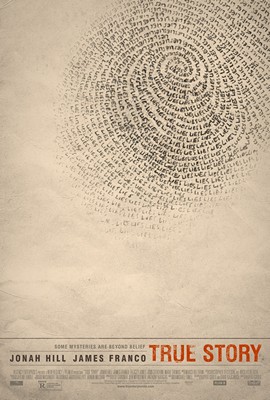
True_Story_poster

In 2002, a man named Christian Longo was arrested in Mexico.  Longo, who was on the FBI’s 10 Most Wanted List, was charged with murdering his wife and his three children.  When he was arrested, he was using the name of Michael Finkel, a real-life travel writer for the New York Times.  When asked why he had been using Finkel’s name, Longo explained that he admired Finkel as a writer.

At the same time that Christian Longo was getting arrested, Michael Finkel was in the process of watching his career fall apart, the result of his having fabricated part of a story.  Fired from the New York Times, Finkel found himself unemployable.  When he discovered that Longo had been using his name, Finkel arranged to meet with him.  Not only was he curious as to why Longo wanted to be him but he also saw Longo as potentially being the story that could relaunch his career.

During their initial meeting, Longo told Finkel that he was a long-time admirer.  Longo agreed to tell Finkel his side of the story in exchange for writing lessons and Finkel’s promise to keep the details of their conversations a secret until after the trial.  Finkel agreed and soon, the two men became unlikely friends.

At first, Finkel believed that Longo was innocent.  But then, on the first day of the trial, Longo was asked how he pled to four charges of murder.   Longo entered two pleas of not guilty and two pleas of guilty and Finkel found himself forced to reexamine everything that he had previously believed about his new friend…

Amazingly enough, that’s a true story.  It’s also the subject matter of a recently released film called True Story.

In True Story, Michael Finkel is played by Jonah Hill and Christian Longo is played by James Franco.  Both Franco and Hill (who, despite having 3 Oscar nominations between them, remain oddly underrated actors) give the type of excellent performances that can elevate an entire film.  Interestingly enough, they’re both playing dramatic versions of their own typically comedic personas.  Hill plays up his trademark nerdy aggressiveness while Franco brings his own deliberately ambiguous persona to Christian Longo.  Just as James Franco enjoys leaving people guessing about who he really is, Longo seems to get a perverse pleasure out of keeping Finkel guessing about whether or not he really killed his family.  When Longo takes the stand in his own defense and gives his version of what happened on the night of the murders, he does it with a perverse gleam in his eye.  Longo may be facing the death penalty but mostly, he’s just enjoying being in the spotlight.

Hill and Franco are famous for being off-screen friends and they bring a lot of their own real-life chemistry to their shared scenes.  As played by Hill and Franco, Finkel and Longo develop a relationship that is nearly co-dependent.  Longo wishes that he could be a writer like Finkel.  Finkel wishes that he could be as personable and outwardly confident as Longo.  When Longo writes Finkel an 80-page letter that’s full of crude drawings, Finkel responds by taping each page to the wall of his office until he’s literally encircled by Longo’s words, much as how someone like me may have once been tempted to tape pictures of James Franco to the wall of her college dorm room.

With Franco and Hill both giving great performances, it’s a bit disappointing that the rest of the film isn’t always as strong.  Director Rupert Goold makes his feature film debut here and, at times, it feels as if he’s struggling to keep up with his actors.  There’s a lot of slow motion scenes of people walking down hallways and getting out of cars.  As well, too much of Finkel and Longo’s relationship is portrayed via montage.  We see countless rapidly-edited montages of Longo and Finkel speaking but, instead of actually hearing what the two of them are talking about, we instead listen to Marco Beltrami’s score.  Goold gets a lot of perfectly lit visuals but True Story is a film that could have used a rougher edge.

Even more unfortunate is that the film totally wastes Felicity Jones.  Playing Finkel’s wife, she doesn’t get to do much beyond looking pensive and concerned.  It’s a role that anyone could have played and it’s frustrating to watch because Felicity Jones is capable of doing so much more than just playing a worried wife.  Towards the end of the film, there’s a great scene where Longo and Jill talk on the phone and, at that moment, Felicity Jones finally gets to show some strength and personality.  James Franco, as well, seems to be relishing the chance to play up Longo’s manipulative side.  (It’s interesting to listen to the perversely flirtatious tone that he takes with her as opposed to the passive aggressive flattery that he uses on Finkel.)  The scene works wonders but then, the film makes the mistake of having Jill face Longo face-to-face and it falls flat precisely because Jill isn’t deep enough a character for us to feel any real satisfaction in watching her tell him off.

In the end, True Story is worth watching.  James Franco and Jonah Hill both give great performances.  If you’re a true crime fan like I am, you’ll find a lot of True Story to be intriguing.  Ultimately, if True Story is frustrating, it’s because it’s a good film that should have been great.