4 Shots From 4 Films is just what it says it is, 4 shots from 4 of our favorite films. As opposed to the reviews and recaps that we usually post, 4 Shots From 4 Films is all about letting the visuals do the talking.
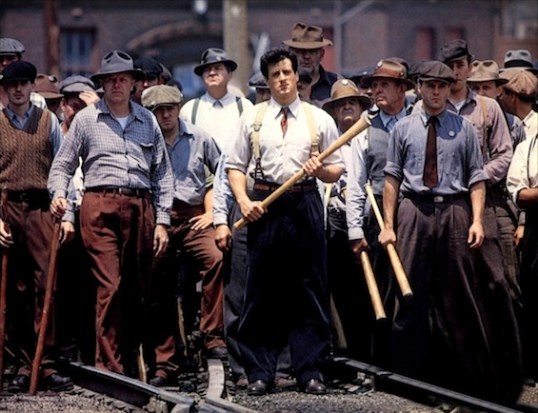
Since it’s Labor Day, this edition of 4 Shorts From 4 Films has a theme! All four of these shots come from films about labor!
4 Shots From 4 Films
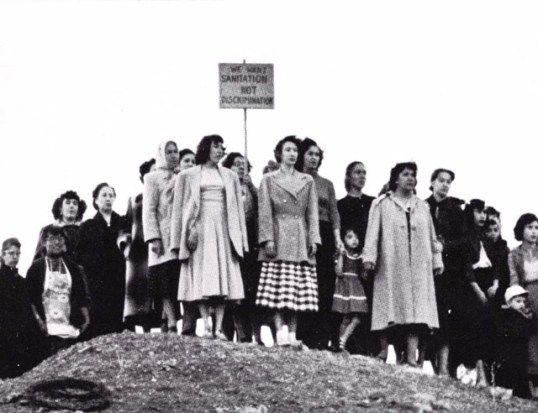
Salt of the Earth (1954, directed by Herbert J. Biberman)
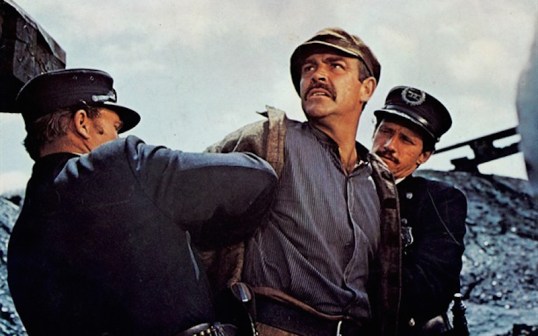
The Molly Maguires (1970, directed by Martin Ritt)
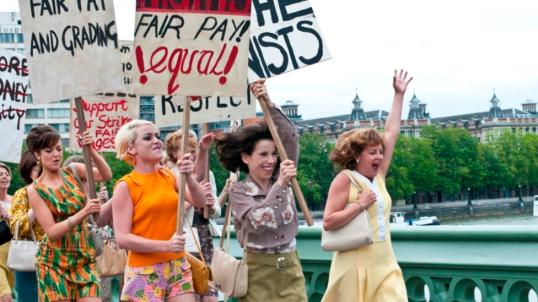
Made in Dagenham, an immensely likable and even inspiring film from England, is based on a true story. It dramatizes the 1968 strike of sewing machinists at the Ford assembly plant in Dagenham, England. The all-female workforce walked off the job in protest to the fact that they were not being paid an equal rate with their male co-workers. Going from being treated as a sexist punchline to eventually shutting down production at the Dagenham plant, these women brought the issue of equal pay for equal work to the world’s attention and, ultimately, played a large part in the passage of legislation designed to guarantee equal pay regardless of sex. And, while it might sound like the material for standard, overly sentimental move-of-the-week, Made in Dagenham is both a warm-hearted tribute and an immensely entertaining film.
Usually, I’m wary of films that claims to “pay tribute to strong women,” largely because they always 1) seem to be rather condescending towards the women they’re claiming to pay tribute and 2) always seem to be intent on providing a very narrow definition of what it means to be “strong.” Far too often, either stridency or an idealized noble savagery is presented in the place of “strength.” What makes Made in Dagenham a true tribute to strong women is that it portrays women as individuals and as human beings (as opposed to idealized figures of either reverence or loathing). What a novel idea! All of the strikers — from Sally Hawkins as the strike’s leader to Geraldine James as the oldest striker to Jaime Winestone as the youngest — are treated with a definite (and refreshing) respect yet at the same time they’re never so idealized as to become plastic saints. They’re not presented as being models of perfection. Instead, they’re just working mothers and wives who are simply standing up for their rights and you would have to be heartless not to end up rooting for them.
On my list of my 25 favorite films of 2010, Made in Dagenham was number #22 and that’s largely because of Sally Hawkins’ performance as the strike leader. Hawkins is hardly a household name but if you’ve seen her in films like Happy-Go-Lucky, An Education, and Never Let Me Go, then you know that Hawkins is one of those rare performers who is capable of both being ordinary and a star at the same time. She brings an authentic feel to her working class characters even when she’s acting for a condescending and elitist director like Mike Leigh. To understand just how important Hawkins is to the success of this movie, just try to imagine the exact same film but starring either Sandra Bullock or Julia Roberts. One can imagine that either Bullock or Roberts would be given a lot more inspiring speeches (complete with triumphant music in the background) and a few scenes where they would get to say something sassy (and ultimately pointless) to all the one-dimensional male chauvinists standing in their way. They also probably would have contracts to keep from having to act underneath the hideous (but historically authentic) beehive hairdoes that Hawkins and the other women in the film have. Hawkins, however, gives her performance without any of the usual Hollywood safety nets and she is completely and totally winning playing a strong-willed but inherently nice woman who struggles to be a wife, a mother, a worker, and an activist all at the same time. As I watched her performance, I couldn’t help but be reminded of my mom who raised four daughters on her own and who was the strongest woman I know. I ultimately felt as if Hawkins performance was a tribute to not only my mom but every other woman throughout history whose strength is, far too often, ignored by those who do the recording.
Made in Dagenham is not a perfect film. For all the authentic moments in the film, there’s a few that are a bit too obvious and, when they show up, they fit in so awkwardly with everything else on-screen that they temporarily throw the whole film out of whack. This is the type of film where, as Sally Hawkins gives the most important speech of her life at a labor conference, she looks up just in time to see that her husband (Daniel Mays) has shown up in just the nick of time and is now standing in the back of the room, watching her with an apologetic smile on his face. It’s a sweet scene and, for all I know, it actually did happen that way but it still temporarily makes the movie feel like a self-consciously inspirational Lifetime movie.
And then there’s the issue of Miranda Richardson, who essentially has an extended cameo role as Barbara Castle. Though Castle is known not at all in the States (most of the people in the theater with me seemed to think Richardson was supposed to be playing Margaret Thatcher and I might have thought the same if I hadn’t looked the movie up on Wikipedia before seeing it), she was quite prominent in the UK. A left-wing member of Parliament and a pioneer for women in politics, Castle was Secretary of State for Employment at the time of the strike and, as shown in the film, she eventually intervened in the strike and helped to bring about legislation designed to guarantee women equal pay with their male co-workers. As such, Castle is as much of a part of this story as the actual strikers and you can’t fault the movie for including several briefs scenes featuring her watching the situation from afar. What you can fault director Nigel Cole for is allowing Richardson to overact to such an extent that her scenes come across as so heavy-handed that they epitomize every negative cliché of a feminist film. Richardson plays her role with an attitude that seems to shout, “The real star is here,” and I found myself resenting her because she seemed to be determined to ruin a truly inspiring film.
But the thing is, despite these flaws, Made in Dagenham is an inspiring film. It’s inspiring because of Hawkins and it’s inspiring because of an ensemble of actresses (including Hawkins’ Education co-star Rosamund Pike who does a great job in a role that could have felt artificial if performed by a lesser actress) who come together perfectly. I saw Made in Dagenham on January 1st and it was the perfect film to start 2011 off with.
Since it’s awards season and all, here’s my personal picks for the 26 top films of 2010.
(This post has been updated since it was originally posted in order to include two films — Somewhere and Easy A — that I saw after making out the list below.)
The Academy has released a list of the 41 songs that they have determined are “eligible” for an Oscar nomination next year. Considering how this year has gone, I shouldn’t be surprised that the songs that I really liked (like “Kick Ass” from Kick Ass and “End Credits” from Harry Brown) have not been deemed eligible.
Anyway, via Awards Daily, here’s the complete list of the eligible songs:
“Alice” from “Alice in Wonderland”
“Forever One Love” from “Black Tulip”
“Freedom Song” from “Black Tulip”
“Bound to You” from “Burlesque”
“Welcome to Burlesque” from “Burlesque”
“You Haven’t Seen the Last of Me” from “Burlesque”
“There’s a Place for Us” from “The Chronicles of Narnia: The Voyage of the Dawn Treader”
“Coming Home” from “Country Strong”
“Me and Tennessee” from “Country Strong”
“Despicable Me” from “Despicable Me”
“Prettiest Girls” from “Despicable Me”
“Dear Laughing Doubters” from “Dinner for Schmucks”
“Better Days” from “Eat Pray Love”
“If You Run” from “Going the Distance”
“Darkness before the Dawn” from “Holy Rollers”
“Sticks & Stones” from “How to Train Your Dragon”
“Le Gris” from “Idiots and Angels”
“Chanson Illusionist” from “The Illusionist”
“Never Say Never” from “The Karate Kid”
“To the Sky” from “Legend of the Guardians: The Owls of Ga’Hoole”
“What If” from “Letters to Juliet”
“Life during Wartime” from “Life during Wartime”
“Made in Dagenham” from “Made in Dagenham”
“Little One” from “Mother and Child”
“Be the One” from “The Next Three Days”
“If I Rise” from “127 Hours”
“When You See Forever” from “The Perfect Game”
“I Remain” from “Prince of Persia: The Sands of Time”
“Dream Big” from “Pure Country 2: The Gift”
“How I Love You” from “Ramona and Beezus”
“Darling I Do” from “Shrek Forever After”
“Noka Oi” from “Six Days in Paradise”
“This Is a Low” from “Tamara Drewe”
“I See the Light” from “Tangled”
“Rise” from “3 Billion and Counting”
“We Belong Together” from “Toy Story 3″
“Eclipse: All Yours” from “The Twilight Saga: Eclipse”
“Nothing” from “Tyler Perry’s Why Did I Get Married Too”
“A Better Life” from “Unbeaten”
“Shine” from “Waiting for ‘Superman’”
“The Reasons Why” from “Wretches & Jabberers”
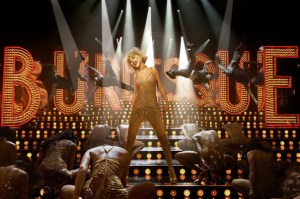
I saw Burlesque with my friend Evelyn earlier tonight (hi, Evelyn!) and even though the movie was pretty silly, we ended up singing our own version of “Bound to You” for three hours afterward.
I also thought that “Better Days” from Eat Pray Love and “Dear Laughing Doubters” from Dinner For Schmucks were both perfect examples of good songs written for rather disappointing movies.
Still, I’m sad to see that “Pimps Don’t Cry” won’t be getting a chance to bring The Other Guys some Oscar glory.

 Through the Shattered Lens