Late Night Retro Television Review: CHiPs 3.23 “Nightengale”


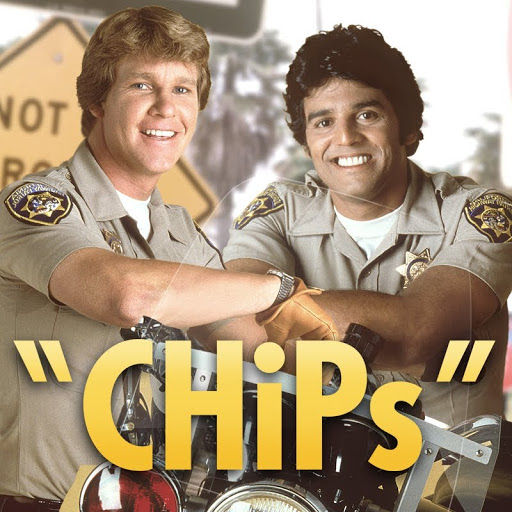
Welcome to Late Night Retro Television Reviews, a feature where we review some of our favorite and least favorite shows of the past!  On Mondays, I will be reviewing CHiPs, which ran on NBC from 1977 to 1983.  The entire show is currently streaming on Prime!

This week, someone is performing emergency surgery on the street!

Episode 3.23 “Nightengale”

(Dir by Don Weis, originally aired on March 23rd, 1980)

Something strange is happening in Los Angeles.  Every time there’s a serious accident, a middle-aged woman (Louise Latham) appears and provides medical help to the injured.  At the start of the episode, she even performs an emergency tracheotomy on the side of the freeway.  Whenever the highway patrol officer on the scene asks her for her name, she avoids the question.  And, whenever an ambulance shows up, she always manages to slip away.  As Jon and Ponch discover, the woman is named Lucy Kenton and, even though she’s a medical expert, she’s not a doctor.  With the help of the always-understanding Sgt. Getraer, Jon and Ponch help her to get her medical license so that she can legally perform surgery on the street.  Good for them!

This was a bit of an odd episode.  It seemed strange that the woman somehow always seemed to be around whenever there was an accident.  A car would crash and suddenly, Lucy would come running up, almost as if she had been patiently waiting.  The show acted as if it was just a coincidence but what are the chances that the same woman would be present at the sites of multiple accidents over the course of just a few days?  And what are the chances that Ponch would just happen to be the responding officer at two of those accidents?

To be honest, that’s one of the things that always struck me as being strange about CHiPs.  Somehow, the same people keep running into Ponch and Jon over and over again.  I mean, Los Angeles is a big city and it’s home to a lot of people.  But if you run into Ponch and Jon once, it seems you’re destined to keep seeing them for at least a week.  Once they get that first speeding ticket or stern warning, people literally can’t step outside of their house without Ponch and Jon just happening to be somewhere nearby.  That’s the sort of thing that would make me paranoid.

The B-plot of this episode featured a teenage couple whose van kept breaking down whenever they tried to run away from home.  There wasn’t much to this story but it did feature “special guest star” Dana Plato as the younger sister of the female half of the couple.  Plato delivered all her lines as if she was auditioning for a school play.  Oddly enough, Dana Plato appeared at the start of this season as herself.  She was one of the many celebrities to show up for the roller disco episode.

There really wasn’t much to this episode.  It wasn’t terrible but it did feel somewhat insubstantial.  We’re coming up on the end of the season and, from the last few episodes, I get the feeling the show’s writers just wanted to wrap things up and start their vacations.  I don’t blame them!

Next week, the third season concludes!

Late Night Retro Television Review: Highway to Heaven 2.14 “Close Encounters of the Heavenly Kind”


Welcome to Late Night Retro Television Reviews, a feature where we review some of our favorite and least favorite shows of the past!  On Thursdays, I will be reviewing Highway to Heaven, which aired on NBC from 1984 to 1989.  The entire show is currently streaming on Freevee and several other services!

There’s really not much to say about this episode.

Episode 2.14 “Close Encounters of the Heavenly Kind”

(Dir by Victor French, originally aired on January 15th, 1986)

Adam (Jerry Supiran) is a kid who lives with his grandfather, Harvey (Harold J. Stone).  Unless Harvey can find a real job, Adam is going to be put in foster care.  Harvey is a self-taught electrician but, since he never graduated high school, no one is willing to take a chance on him.

One night, a meteorite crashes into the Earth.  When Adam rides his bike out to the impact area, he sees Jonathan and Mark stepping out of the crater.  Though Jonathan and Mark just happened to be driving by and decided to investigate the meteorite on their own, Adam assumes that they’re aliens.  Jonathan lets him assume that as he and Mark go on to help Harvey find a job and also help Adam to find the courage to stand up to his bullies.

Especially when compared to last week’s episode, this was all pretty bland.  Jerry Spurian was one of those child actors who overemoted with every line while Harold J. Stone comes across as just being cranky and disagreeable.  This felt like a throw-away episode and there’s really not much else to be said about it.

(How’s that for a short review?  Sorry, there’s not much to say about this one.)

Film Review: L.A. 2017 (dir by Steven Spielberg)


L.A. 2017 is the Steven Spielberg film about which you’ve probably never heard.

To a certain extent, that’s understandable.  Spielberg was only 24 when, in 1971, he directed L.A. 2017.  It was a film that he directed for television.  In fact, it was only his third directorial assignment.  As opposed to the huge budgets that we tend to associate with a typical Spielberg production, L.A. 2017 was made for about $300,000.  The entire film was shot in about 12 days.  In fact, with a running time of only a scant 69 minutes, L.A. 2017 hardly qualifies as a feature-length film.  L.A. 2017 has never been released on DVD or Blu-ray, making it a true oddity in Spielberg’s filmography.  Despite the fact that Spielberg has credited L.A. 2017 with opening a lot of doors for him, it’s an almost totally forgotten film.

Of course, some of that is because L.A. 2017 really isn’t a film at all.  Instead, it was an episode of a television show called The Name of the Game.  The show was about Glenn Howard (Gene Barry), a magazine publisher, and the reporters who worked for him.  L.A. 2017 was unique in that it was the show’s only excursion into science fiction.  In fact, from everything that I’ve read about the show, it appears that L.A. 2017 was nothing like any of the other episodes of The Name of the Game.  This episode was also unique because Spielberg directed it as if he was making a feature, as opposed to just another installment in a weekly series.  If not for the opening credits (which announce, among other things, that we’re watching a Robert Stack Production), one could easily imagine watching L.A. 2017 in a movie theater, perhaps as a double feature with Beneath The Planet Of The Apes.

L.A. 2017 opens with Glenn driving down a mountain road in California.  He’s heading to a pollution summit and, as he drives along, he awkwardly dictates an editorial into a tape recorder.  Glenn worries that society may have already ruined the environment to such an extent that the Earth cannot be saved.  As if to prove his point, Glenn starts to cough as he’s overcome by all of the smog in the air.  His car swerves into a ditch and Glenn is knocked unconscious.

Welcome to the future

When he wakes up, he finds himself being rescued by men wearing wearing protective suits and masks.  The sky is a sickly orange and an ominous wind howls in the background.  Glenn’s rescuers take him to an underground city where he discovers that, somehow, he has traveled through time.  The year is now 2017, which in this film looks a lot like the 70s except that everyone’s now underground and the landline phones are extra bulky.  (Needless to say, watching 1971’s version of 2017 in 2019 is an interesting experience.)  It turns out that the pollution got so bad that the surface of the planet became uninhabitable.  The U.S. is now run by a corporation that is headquartered in Detroit.  (Presumably, the Corporation is a former car company.)  The U.S. is also at war with England, for some reason.  No mention is made about what’s happened to Canada but, if Detroit’s still around, I assume at least some of Canada managed to survive as well.

The …. uh, Future.

Everyone in the future drinks a lot of milk and, when they’re not listening to cheerful announcements, they’re listening to the soothing music that the Corporation provides for them.  Everyone in the future is also very friendly.  We know this because everyone keeps assuring Glenn that he’s surrounded by friends.  In fact, everyone in the future refers to one another by their first name because “it’s friendlier.”  It’s also the law.  It turns out that there’s a lot of laws in the future.  In fact, the underground cities are pretty fascist in the way that they handle things.  There are constant announcements encouraging people to pursue a career in law enforcement and anyone who disagrees with the Corporation ends up in a straight jacket.  Glenn feels that maybe he’s been brought to the future so he can start a new magazine and challenge the status quo.  The Corporation disagrees….

This is what happens when you don’t go underground in the future.

Okay, so there’s nothing subtle about L.A. 2017.  From the villainous corporation to the heavy-handed environmental message, there’s nothing here that you haven’t seen in dozens of other sci-fi films.  But the lack of subtlety doesn’t matter, largely because Spielberg directs with so much energy and with such an eye to detail that it’s impossible not to get sucked into the story.  As opposed to the somewhat complacent Spielberg who has recently given us rather bland and safe blockbusters like Lincoln, The BFG, and The Post, the Spielberg who directed L.A. 2017 was young and obviously eager to show off what he could do with even a low budget and that enthusiasm is present in every frame, from the wide-angle shots of Glenn driving his car to the scenes of Glenn looking up at the shadowy executives and scientists who are staring down at him when he’s first brought to the underground city.  As opposed to the sterile vision of so many other future-set films, Spielberg’s future feels as if it’s actually been lived in.  When Glenn finds himself in a new world, it comes across as being a real world as opposed to just a narrative contrivance.

Of course, because L.A. 2017 was just one episode in a weekly series, Glenn couldn’t remain in the future and L.A. 2017 returns Glenn to the present in the most contrived and predictable way possible.  Still, L.A. 2017 remains an entertaining example of what a young and talented director can do when he’s determined to be recognized.  Watching the film, it’s easy to draw a straight line from Spielberg doing L.A. 2017 to doing Duel and then subsequently being hired for Jaws.

Incidentally, Joan Crawford is somewhere in this film.  Crawford worked with Spielberg when he directed her in the pilot for Night Gallery and she was one of his first major supporters in Hollywood.  Apparently, in L.A. 2017, she plays one of the people staring down at Glenn when he’s first brought into the underground city.  I haven’t found her yet but she’s apparently there somewhere.

Unfortunately, L.A. 2017 has never been released on DVD or Blu-ray but it is currently available on YouTube.

A Movie A Day #8: White Lightning (1973, directed by Joseph Sargent)


white-lightning-02

A year after co-starring in Deliverance, Burt Reynolds and Ned Beatty reunited for another movie about life in the backwoods, White Lightning.

White Lightning starts with two hippies, bound and gagged and floating in a canoe.  While a banjo plays in the background, two rednecks use a shotgun to blow the canoe into pieces.  They watch as the hippies drown in the swamp.  It turns out that one of those hippies was the brother of legendary moonshiner and expert driver, Gator McCluskey (Reynolds).  Gator is doing time but when he hears that his brother has been murdered, he immediately realizes that he was probably killed on the orders of corrupt Sheriff J. C. Connors (Ned Beatty).  The Feds arrange for Gator to be released from prison, on the condition that he work undercover and bring them enough evidence that they can take Connors down.

Back home, Gator works with a fellow informant, Dude Watson (Matt Clark), teams up with local moonshiner, Roy Boone (Bo Hopkins), and has an affair with Roy’s girl, Lou (Jennifer Billingsley).   Connors and his main henchman, Big Bear (R.G. Armstrong) both suspect that Gator and Dude are working for the government.  Since this is a Burt Reynolds movie, it all ends with a car chase.

A classic of its kind and a huge box office success, White Lightning set the template for almost every other film that Burt Reynolds made in the 1970s and 80s.  There is not much to the movie beyond Burt’s good old boy charm and Ned Beatty’s blustering villainy but if you’re in the mood for car chases and Southern scenery, White Lightning might be the movie for you.   Joseph Sargent also directed the New York crime classic, The Taking of Pelham One Two Three, and he gives White Lightning an edginess that would be lacking from many of Burt Reynolds’s later movies.

For tomorrow’s movie a day, it’s the sequel to White Lightning (and Burt Reynolds’s directorial debut), Gator.

white-lightning-05