Back to School #78: Boyhood (dir by Richard Linklater)


boyhood0612

I hate to admit it but it actually took me a day or two to really warm up to Boyhood.  

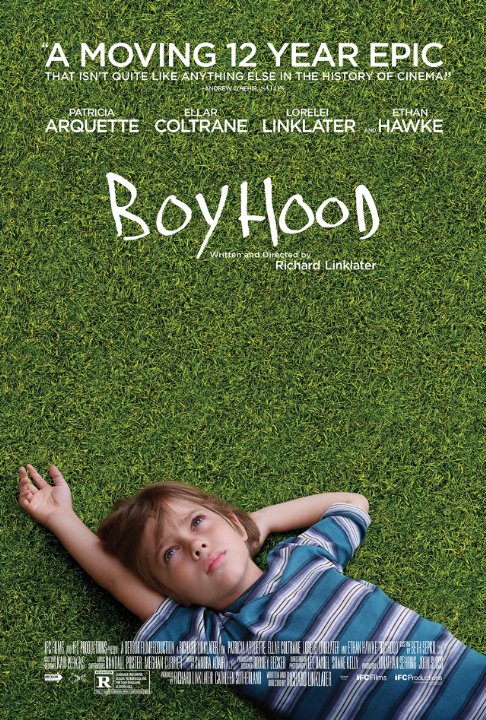
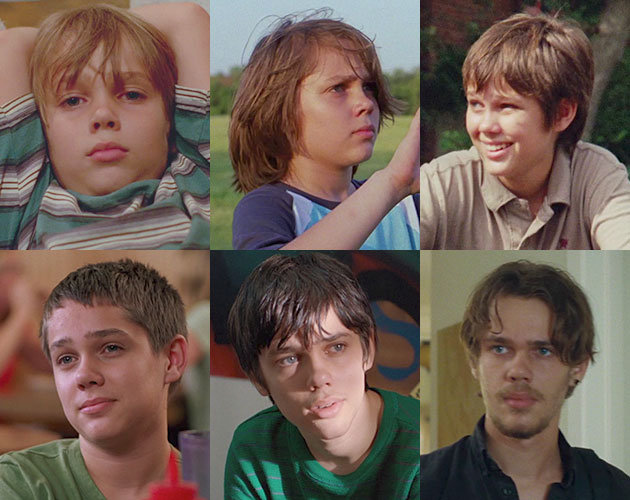
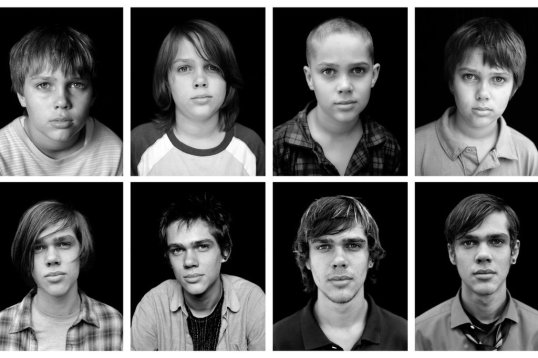
When I first saw it, I knew that I was watching a great film and it was a movie that I had a good deal of respect for.  By now, we’ve all heard the story of how the film was made and how director Richard Linklater first started the film in 2002 when star Ellar Coltrane was only 6 years old.  Over the next 12 years, Linklater would spend a few weeks out of each year filming.  The script was written on a year-by-year basis, allowing the story to develop organically and often taking into account whatever was happening in Coltrane’s life at the time.  The end result is that Coltrane grows up on screen in much the same way that Mason, the character he’s playing, does.  As I watched Boyhood, I knew that Linklater had somehow managed to turn what could have been a mess into an undeniably effective movie.

But yet, in the hours immediately following the showing, I had a nagging feeling.  I realized that, as much I respected the film and as much as I wanted to love the film, there was a part of me that was slightly disappointed.  In some ways, it made sense.  Richard Linklater is a director whom I absolutely revere and, as a result, I am always going to watch his movies with extremely high (and occasionally unrealistic) expectations.  As for the film itself, Boyhood is the most acclaimed film of the year so far.  For the longest time, it had a perfect 100% rating over at Rotten Tomatoes.

And, when you’re continually told that a film is the greatest movie ever made, it’s going to be a challenge to then judge the film on its actual merits.

And so, I was content to think of Boyhood as being one of those undeniably important films that I respected more than I enjoyed.

But then something happened.

Boyhood stuck with me.  Boyhood is a film that has stuck with me more than almost any other film this year.  (Interestingly enough, perhaps the only 2014 film that I’ve seen so far that has stuck with me more was Guardians of Galaxy, which in many ways is the exact opposite of Boyhood.)  There are scenes in Boyhood that are still as fresh in my mind as they were when I first saw them.  Interestingly enough, they’re not big, dramatic scenes.  (Indeed, Boyhood is memorable for just how determined it is to avoid the big, dramatic scenes that usually appear in coming-of-age films.)  Instead, what stuck with me were the little details.

I remembered how, when Mason was 6 and his family was moving down to Houston, his best friend rode by on a bicycle and waved goodbye, never to be seen again in the film but definitely destined to be remembered by both Mason and the audience.

I remembered how, from the minute that Mason’s mom (Patricia Arquette), met and married the seemingly friendly Bill (Marco Perella), I knew that the marriage wasn’t going to work.  I remembered the scenes of Mason and his sister (Lorelei Linklater) trying not upset Bill and failing every time.  Years later, when Arquette marries yet again, I knew that it wasn’t going to work out any better.  By that point, Mason knew it too but what can you do when you’re only 16?

I remembered how Mason, after having been moved to San Marcos, had an awkward conversation with a girl from his school.  The girl obviously liked Mason and Mason obviously liked the girl but neither one had a clue how to say it.

I remembered feeling stunned when, over the course of just one scene break, Mason went from being an innocent-looking 14 year-old to a skinny and angrily sullen 15 year-old.  It’s hard for me not to feel that, in that regard, Boyhood serves as a warning of what’s probably in store for me once I actually have kids.

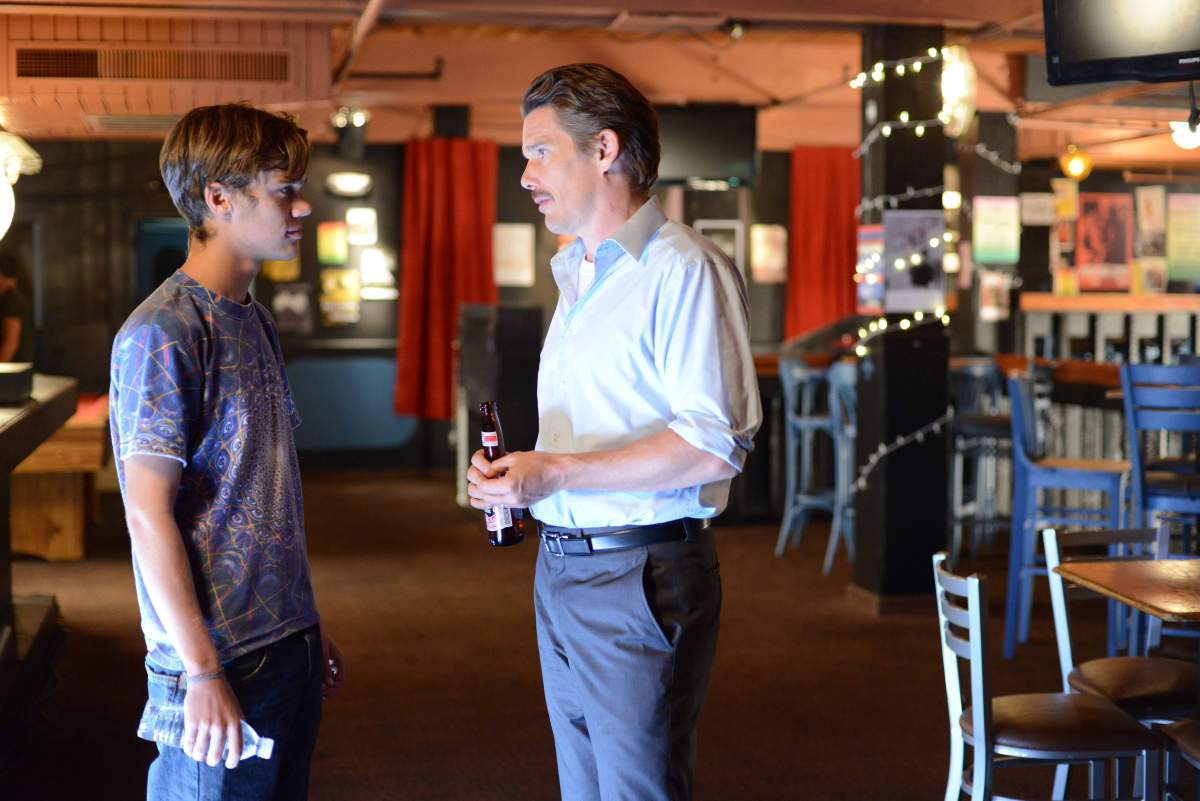
I also remember being surprised when Mason’s Dad (Ethan Hawke) went from being the guy who ranted about George W. Bush in 2004 to a 2011 newlywed who asks his children to come to church with him.  But then again, in retrospect, was it that much of a shock or, like Mason, did I unfairly expect his Dad to remain a rebel for the rest of his life?

(One of the most interesting things about the film is that, since it was literally filmed while the story was occurring, Boyhood serves as a time capsule of life and culture throughout the beginning on this century.  While the scenes set in 2004 and 2008 are dominated by Mason’s father enthusiastically talking about politics, he never mentions anything about the presidential election in 2012.  And it actually makes sense because was anyone enthusiastic about 2012?)

That’s the thing that sets Boyhood apart from other coming-of-age films.  Many of the events that would be major scenes in other teen films — like losing one’s virginity or learning to drive — happen off-screen in Boyhood.  Instead, Boyhood is just about watching life unfold.  Many questions are not answered.  Characters come and go, playing their part in Mason’s life and then disappearing as Mason moves on.

Some of them, like Mason’s stepbrother and step sister who are both left behind when his mother leaves Bill, we wonder about, just as surely as Mason wonders about them too.  But life is rarely neat enough to provide all the answers and Boyhood, if nothing else, is about life.

And that, ultimately, it why Boyhood sticks with you.  Looking back on the film, you can see how Mason the 6 year-old who had to be forced to leave behind his best friend eventually grew up to be Mason the 18 year-old who is almost insensitive in his eagerness to leave behind his mother and drive himself to college.  But, and this is the key, you have to be willing to look back on the film to truly understand at.  Trying to figure out how the pieces of puzzle fit together while watching the film will only leave you frustrated, as life often does while you’re living it.  It’s only after the film that you can truly understand what it all means.  It’s only when you look back that you realize just how much Richard Linklater has accomplished with Boyhood.

As such, Boyhood is not an easy film.

But it is a great one.
22boyhood_ss-slide-7UMX-jumbo

Wasted Youth : Richard Linklater’s “Boyhood”


MV5BMTYzNDc2MDc0N15BMl5BanBnXkFtZTgwOTcwMDQ5MTE@._V1_SX640_SY720_

It’s safe to say that there’s no film other film in 2014 that I was more predisposed toward liking before ever having seen in that Richard Linklater’s Boyhood. Anyone who follows my “byline” at any of the various sites I write for (please! Get something better to do with your time!) even occasionally will know that I’m a tremendous fan of the director’s other works — from his superb animated efforts such as A Scanner Darkly  and Waking Life to his honest and heartfelt live-action films such as BernieSchool Of RockFast Food NationDazed And Confused, and his breakthrough hit, Slacker (which I just recently reviewed through decidedly rose-tinted nostalgic lenses),  the guy just has the magic touch, in my opinion. Heck, even his Bad News Bears remake was kinda fun, if you ask me.  And, of course, the three films in his hopefully-still-ongoing “Before” series aren’t just great movies, but flat-out events in my life when they come out. I love ’em to pieces and make no apologies for it. Jesse and Celine may not be real people, but they’re still my fucking friends, goddamnit.

And yet for one reason or another it seems Linklater always flies below the radar. Maybe it’s because his naturalistic, unforced style doesn’t command attention. He’s not one to overpower you with sentimentality or melodrama, and the almost nonchalant nature of his work trusts the audience to be smart enough to make up its own collective mind about the stories he’s bringing to the screen. I like that. I think we need more filmmakers who aren’t out to either manipulate our emotions or “wow” us with their technique. Linklater goes about his business with respect for his stories, his characters, and his viewership — and while that may not win him a ton of awards, it certainly earns him my respect.

All that’s changing now, though. After over two decades operating, for the most part, on the margins (not that he doesn’t have a devoted fan base, it’s just not a terribly large one, comparatively speaking), the finished result of his grand 12-year-epic centered on young actor Ellar Coltrane as he ages from 7 to 19, Boyhood (originally titled 12 Years but re-named at the last minute to avoid confusion with recent Academy Award best picture winner 12 Years A Slave) is finally here, and Linklater’s richly-deserved moment in the spotlight has finally arrived. He’s made it to the to the top of the mountain. He’s the talk of the town. The man of the hour. The toast of Hollywood.

And ya know what? He deserves to be. I’m just not so sure he deserves it for this particular film.

b42cc340-cc96-11e3-8c33-07445b2e2595_boyhood-main

Don’t get me wrong — Boyhood is pretty good stuff in many respects. What Linklater’s pulled off here is certainly remarkable — getting essentially the same cast together year in and year out (the principle players being Coltrane as growing boy Mason, Patricia Arquette and Ethan Hawke as his divorced-from-the-film’s-outset parents, and the writer/director’s own daughter, Lorelei, as older sister Samantha) to make a series of short films that would eventually be assembled into one “grand work” is ambitious and bold and frankly just plain tough to work out logistically. So my hat’s off to to him for even realizing a project of this scope and magnitude.

I just wish the finished product were anywhere near as powerful, affecting, and awe-inspiring as we’re being told it is by the paid dictators of consensus opinion out there. The exploration of aging and the different stages we go through on, to sound unbearably pompous for a moment, life’s journey aren’t even particularly new themes for Linklater to explore — as a matter of fact, it’s what the “Before” series is all about, and they tackle the subject much better than this flick does. So maybe the folks who make their living telling us all what to think are just making up for lost time by showering accolades all over Boyhood after largely ignoring last year’s Before Midnight. Or maybe they honestly just like this one better because their taste isn’t all that great, I dunno.

In any case, I’ve still got a few good things to say about this before I lay out my gripes, so let me say that Linklater is to be commended for the smooth, easy flow with which he transitions from one scene to the next, and for letting events in the story take their time and “breathe” a bit without resorting to strict formulas of, say, 15 minutes per year or somesuch. Each and every actor is also to be congratulated for their work here, as the performances are quite simply astonishing. Yeah, Coltrane is obviously the star of the show, and watching him grow up in front of our eyes is every bit the amazing experience everyone makes it out to be, but all the other major players turn in terrific work, as well, as do many of the minor ones (Marco Perella deserves special mention here for his role as Mason’s troubled — and troubling — stepfather-for-a-time). So kudos to everybody involved for some truly great work.

Here’s the rub, though (you knew it was coming) — the material they’ve got to work with just ain’t all that hot. Linklater has taken his non-manipulative approach (you know, the one I was just praising him for) to  near-pathological extremes here and the end result is a film that feels almost clinically removed from its own subjects. Add in the disappointing fact that many of his characters are one-note ciphers — Mason’s mother gets an education and improves her economic and social standing over the years but still can’t help but marry one alcoholic loser after another, while his father  laregely remains a go-nowhere “slacker” for ages (Hawke spends the first half of the film essentially playing Jesse Wallace) before undergoing an instant transformation and getting a new wife, new baby, new mustache, and, apparently, his shit together all at the same time — and what we wind up with is a movie that never transcends its origins as a cinematic experiment,  as well as one that’s populated not by leaving, breathing people so much as specimens floating around in a celluloid petri dish.

Boyhood Image

I’m not foolish enough to think that unfairly-high expectations going in didn’t have something to do with why I left the theater feeling so flat after this one — shit, a 99% score on Rotten Tomatoes is flat-out unheard of — but even if this had been made by somebody I’d never heard of and landed on our screens out of nowhere, I’d still be less than awestruck by the finished product. I fully appreciate everything Linklater was trying to do here, sure, but what he’s ended up doing is completing what amounts to a 12-year-long sociological study that’s so concerned with preserving the integrity of its ground rules (don’t force anything, adhere to faux-documentary stylings at all costs, let things play out as absolutely naturally as you can possibly manage given you’re still working from a script, etc.) that it forgets it has an audience to win over. I admire Linklater for protecting his characters from directorial heavy-handedness, to be sure, but it’s a shame he wasn’t able to find a way to share their story that would have let us in while still keeping the melodrama and schmaltz out.

richard-linklaters-boyhood-movie-film-still-ellar-coltrane

So yeah, Boyhood definitely came up short for this armchair critic, despite the fact that I was rooting for it as hard as anyone. Walling off your characters to prevent Lifetime-movie-of-the-week-style syrup from oozing into their protective membrane is  one thing, but walling them off from from genuine viewer involvement results in a film that feels oddly disconnected, even divorced, from events that could be so much more effectively communicated if given even an ounce of immediacy. We want to care about Mason and his family beyond the level that Linklater allows us to , but he never lets us, or himself, get that close, and its  for that reason that Boyhood will always remain much more interesting for what it does than for what it actually is. Maybe he’ll give us another installment in 2026 that corrects the mistakes he made here?  Chuckle at the idea all you want, but no one saw a sequel to Before Sunrise coming, either.