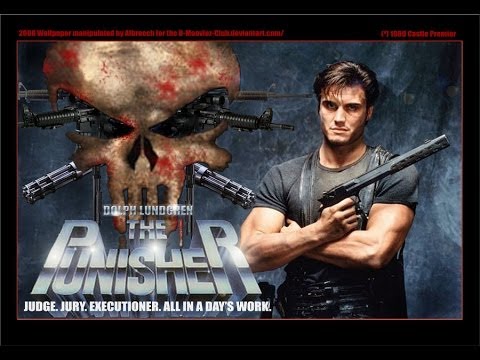
Retro Television Review: The Love Boat 7.7 and 7.8 “When Worlds Collide/The Captain and the Geisha/The Lotter Winners/The Emperor’s Fortune”


Welcome to Retro Television Reviews, a feature where we review some of our favorite and least favorite shows of the past!  On Wednesdays, I will be reviewing the original Love Boat, which aired on ABC from 1977 to 1986!  The series can be streamed on Paramount Plus!
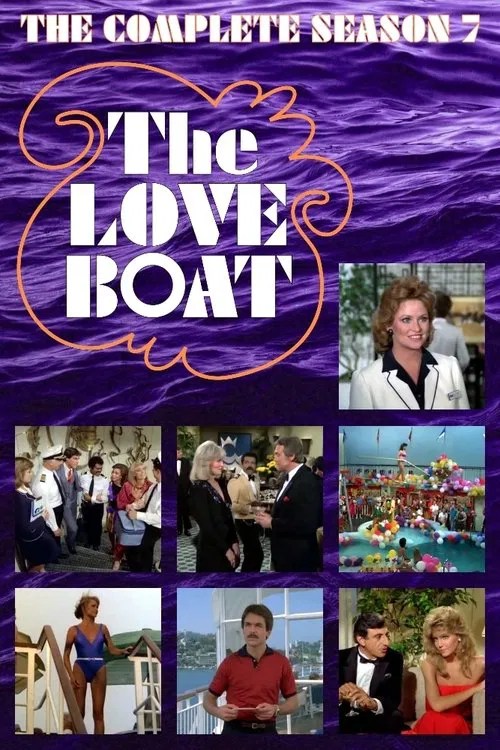
This week, it’s a very special cruise of The Love Boat!

Episodes 7.7 and 7.8 “When Worlds Collide/The Captain and the Geisha/The Lotter Winners/The Emperor’s Fortune”

(Dir by Jerome Courtland, originally aired on November 5th, 1983)

The Love Boat is sailing to Japan!

Lila (Heather Thomas) is a photographer whose father is in a wheelchair due to the injuries that he received during World War II.  She meets and falls for Bud O’Hara (Tony Danza).  It seems like love at first sight but how will she react when they arrive in Japan and she discovers that Bud’s father (James Shigeta) is Japanese!?  At first, Lila cannot get over her prejudice but then Bud’s father reveals that his own parents were killed at Hiroshima and that he has also struggled with forgiveness.  “I am proud to be Japanese,” Tony Danza declares.

Martha Chambers (Mariette Hartley) is a professor in Asian studies who has a crush on the Captain.  When she finds out that the Captain is fascinated by the culture of Japan, Martha pretends to be a geisha.

Barney (Ted Knight) and his wife (Rita Moreno) have just won five million dollars in the lottery and they spend almost the entire cruise showing off how much money they have.  The crew isn’t comfortable dealing with the nouveau riche.  Myself, I’m just happy that this storyline didn’t feature Ted Knight or Rita Moreno pretending to be Japanese.

Celia (Jean Hoffman) and her daughter, Joanie (Nancy Morgan), own one piece of an embroidered silk artwork.  Ben Cummins (John Ritter) owns another piece.  They’ve all been invited to Japan by a businessman named Yamamoto.  Yamamoto claims to have the third piece and says that, when all the pieces are together, they will form a treasure map.  Ben falls for Joanie.  Celia falls for Harvey (Harvey Korman), a businessman who happens to be on the cruise.  When the other two silk pieces are stolen, it doesn’t take long for Ben to figure out that Harvey is the one who took them.  Harvey explains that he is Yamamoto and that he’s a career criminal.  However, because he’s fallen in love with Celia, he returns all three of the silk pieces to her.

This two-hour episode was a travelogue.  The Love Boat did one or two of these type of episodes every season.  The show would leave the sound stages of Los Angeles and instead be filmed on an actual boat during an actual cruise.  With these two hour episodes, the storylines were usually just an excuse for the Love Boat crew and their guest stars to see the sights.  That’s certainly the case here.  Captain Stubing gets a full tour of Japan.  (Captain Stubing also has a lengthy fantasy sequence where he imagines himself as a shogun.  It’s definitely not the show’s finest moment.)

It’s a good thing that the scenery is lovely in this episode because the stories themselves are nothing special and, in some cases, they’re actually difficult to watch.  The Love Boat attempted to make a plea for tolerance and forgiveness and that’s definitely a good thing.  But then the show cast Tony Danza as a half-Japanese man named Bud O’Hara and that was more than a bit cringey.  There’s nothing about Tony Danza that is the least bit Japanese.  For that matter, there’s nothing particularly Irish about him either.

This was not the best cruise of the Love Boat.


The TSL Grindhouse: Death Drug (dir by Oscar WIlliamas)


In 1978’s Death Drug, Philip Michael Thomas plays Jesse Thomas.

Jesse is a plumber with a dream.  He wants to be a songwriter, a musician, and most of all, a star.  His girlfriend and eventual wife, Carolyn (Vernee Watson-Johnson), stands by him as he sends his music off to record companies and waits for word.  When he’s finally given a recording contract, no one is happier for him than Carolyn.  Certainly, Jesse’s own father doesn’t seem to care much about his son’s success.  “I have no son,” he says, even after Jesse wins a Grammy.

(To be fair, they’ll give just about anyone a Grammy.)

Unfortunately, with success comes temptation.  While celebrating at a local club, Jesse is approached by a drug dealer (Frankie Crocker) who gives Jesse a cigarette that is laced with Whack.  Whack, as those of us who have seen Disco Godfather can tell you, is PCP.  Remember Disco Godfather‘s cry of “We’ve got to attack the whack?”  Well, Jesse allows himself to become a victim of whack attack.  It starts out simply enough, with a moving painting.  Then, before you know it, Jesse’s hairbrush is turning into a hungry alligator and Jesse starts to become convinced that everyone is plotting against him.  Even a trip to the grocery store goes wrong as Jesse spots spiders in the produce and zombies in the aisles!  Jesse freaks out.  He runs outside.  He…. well, no spoilers for me.  But let’s remember the words of Rudy Ray Moore in Disco GodfatherPut your weight on it!  Yes, indeed.  Put your weight on it, Jesse.

This is one of those anti-drug films that was probably best enjoyed by people who viewed it while high.  It’s a rather short film, which means that Jesse goes from being a hard-working plumber-turned-musician to a ranting and raving maniac in record time.  Philip Michael Thomas throws himself into the role, especially the ranting and raving part.  I’ve been binging Miami Vice so seeing the usually collected and cool Thomas screaming in terror at things that aren’t there was an interesting experience.  Because the film was so short, there’s some filler that’s awkwardly tacked on, presumably to bring the movie up to feature length.  We get a news report about a man who went crazy from PCP-usage and had to be taken down by the cops.  We get a report about Jesse Thomas’s musical career that features a much-older looking Philip Michael Thomas performing a song that’s more from the 80s than the 70s.  (That was inserted into the film when it was re-released in 1985, at the height of Thomas’s Miami Vice success.)  There’s a lengthy news report at the end that, hilariously, has a moment where the reporter apologizes for “technical difficulties” that were probably included just to get the movie past the 70-minute mark.

As I mentioned, this film was re-released in 1985.  Philip Michael Thomas filmed a special introduction for the film, in which he played pool in his Hollywood mansion and told the viewer that, out of all the roles he had played (“cops, kings….”), none of them meant as much to him as his performance as Jesse Thomas.  Philip Michael Thomas is the epitome of 80s cool in that introduction and in a short scene that appears after the end credits.  Don’t worry, folks, the film is telling us.  Jesse Thomas may have fallen victim to the whack but Philip is still over here putting some weight on it.

In the end, it’s all fairly silly but it does make a nice companion piece to Don Johnson’s Heartbeat.  If you’re a success, you really owe it to yourself to have a vanity project.  It’s what the people want.

“THE GUILTY WILL BE PUNISHED!”: The Punisher (1989, directed by Mark Goldblatt)


The-Punisher“What the fuck do you call 125 murders in 5 years?”
“Work in progress.”

With that line, Dolph Lundgren claimed the role of Frank Castle as his own.

Who is Frank Castle?  A former cop, he was mistakenly believed to be dead after mobsters killed his wife and children.  He has spent five years waging a one man war on the Mafia.  When not killing the criminal element, he spends his time naked in the sewers and having conversations with God.

“Come on God,” he says, “answer me. For years I’m asking why, why are the innocent dead and the guilty alive? Where is justice? Where is punishment? Or have you already answered, have you already said to the world here is justice, here is punishment, here, in me.”

Everyone knows him as the Punisher.  Only his former partner, Detective Berkowtiz (Lou Gossett, Jr.) suspects that the Punisher is actually Frank Castle.

Frank has been so effective in his one-man war on crime that the Mafia is now permanently weakened.  Plotting to take over city’s underworld, the Yakuza arrives in New York City.  Their leader, Lady Tanaka (Kim Miyori), kidnaps the son of Gianni Franco (Jereon Krabbe) and threatens to kill him unless Franco turns his operation over to her.  The Punisher and Franco team up to rescue Franco’s son and to destroy the Yakuza.  Even as the two works together, the Punisher makes sure that Franco knows that he will be punished for being a criminal.

“There’s a limit to revenge, you know,” Franco says.

“I guess I haven’t reached mine yet,” The Punisher answers.

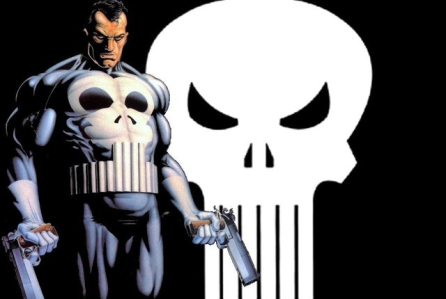
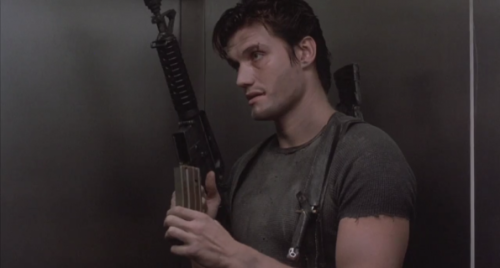
With the current popularity of the Marvel Cinematic Universe, it is easy to forget that, in the 80s and 90s, almost all Marvel movies were straight-to-video affairs like this one, made with budgets so low that they could not even afford a Stan Lee cameo.  The Punisher was one of the few halfway entertaining ones.  It may not be a great movie but when compared to the 1990 version of Captain America or the Roger Corman-produced Fantastic Four, The Punisher looks like a masterpiece.  When this movie was first released, The Punisher was one of the most popular of Marvel’s characters, starring in three separate titles.  While the movie embraces the Punisher’s violent methods and reactionary worldview, it also make some unnecessary chances to the character, not only tweaking his origin story by making Frank a former cop (instead of a grieving father whose family fell victim to random mob violence) but also doing away with The Punisher’s iconic skull shirt.

Marvel's Punisher

Marvel’s Punisher

Dolph Lundgren's Punisher

Dolph Lundgren’s Punisher

Can a punisher without a skull still be The Punisher?

Surprisingly, he can.  Dolph Lundgren is not only physically right for the role but he is also believable as a psychologically damaged vigilante.  This Punisher could teach Deadpool a thing or two.  After the Punisher kills one gangster in front of the man’s terrified son, he tells him, “Stay a good boy and grow up to be a good man.  Because if you don’t, I’ll be waiting.”  When the boy aims his father’s gun at him, the Punisher places his forehead against the barrel and says, “Do it.”  When you consider that The Punisher was originally introduced, in the pages of The Amazing Spider-Man, as someone who would shoot jaywalkers because they had broken the law, you can see that Lundgren’s performance really gets to the twisted soul of the character.

Even without the skull, Lundgren’s Punisher is still far superior to the versions played by Tomas Jane and Ray Stevenson.  When Jon Bernthal plays the role in the second season of Daredevil (and officially brings the character into the MCU), he will hopefully have learned some lessons from watching Dolph Lundgren.

Punisher