Late Night Retro Television Review: CHiPs 4.12 “Home Fires Burning”


Welcome to Late Night Retro Television Reviews, a feature where we review some of our favorite and least favorite shows of the past!  On Mondays, I will be reviewing CHiPs, which ran on NBC from 1977 to 1983.  The entire show is currently streaming on Prime!
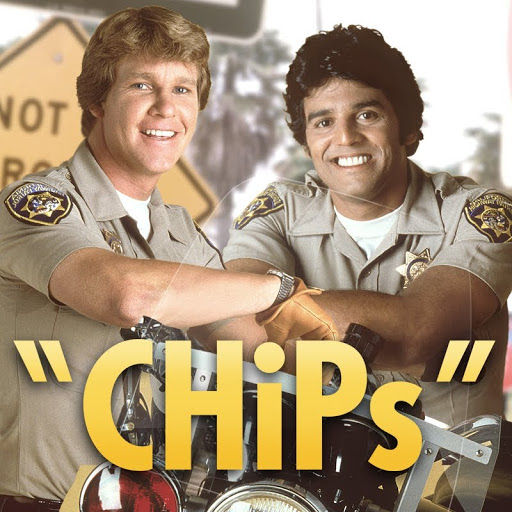
It’s arson and basketball on CHiPs!

Episode 4.12 “Home Fires Burning”

(Dir by Charles Bail, originally aired on February 1st, 1981)

Two arsonists (David Hayward and Michael Cavanugh) are setting RVs on fire as a part of an insurance scam.  One man (Jack Kruschen) who hires the arsonists is horrified when their carelessness leads to a security guard getting seriously injured.  If the guard dies, the man is looking at serious jail time!  (Luckily, the guard doesn’t die and apparently, everyone just forgets about sending his boss to jail.)

Luckily, Baker is there to help track the arsonists down.  Ponch, on the other hand, is busy putting together a Highway Patrol basketball team.  It’s hard not to notice how much time the Highway Patrol spends on stuff like basketball, dirt bike competitions, and drag car racing.  Somehow, Ponch has gone from being the department’s screw-up to now being the guy who is automatically given all of the responsibility.  It’s the Ponch Show and everyone knows it.

This episode was directed by veteran stuntman Charles Bail and it does have some spectacular stunts.  (A car jumping through an exploding RV was my favorite.)  And let’s be honest.  I could sit here and spend hours talking about CHiPs became the Ponch Show during the fourth season and how the rest of the cast was underutilized.  And I would be totally correct.  But the stunts and the car crashes are the main appeal of this show and this episode featured several examples of each.

As such, this was a good episode.
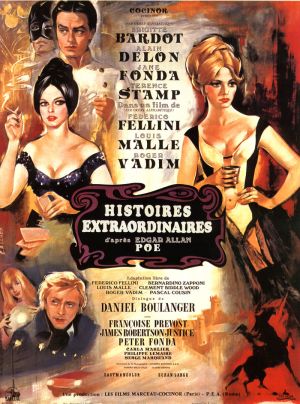
Short Horror Film Review: Spirits of the Dead — William Wilson (dir by Louis Malle)


Directed by Louis Malle, William Wilson is the second part of the 1968 anthology film, Spirits of the Dead.  All three of the stories were adapted from the work of Edgar Allan Poe.

William Wilson is one of Poe’s best known and most highly regarded stories.  It’s also one that has been adapted into several films, perhaps most famously as the silent German film Student of Prague.  So, how did Louis Malle do when it came time to direct his own version?

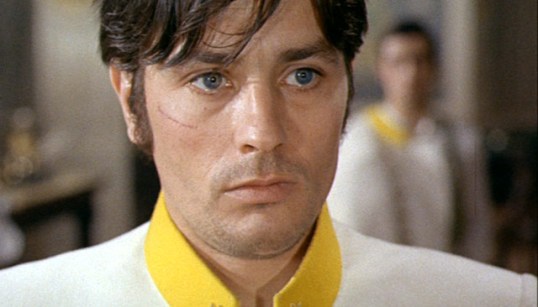
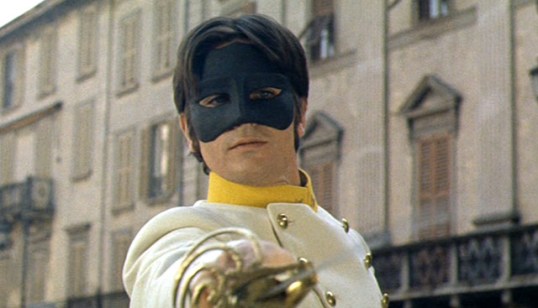
Malle’s William Wilson opens with the title character (played by Alain Delon) running through the cobblestone streets of a gray city.  As we shall soon learn, the time is the early 19th century.  William Wilson is an officer in the Austrian army, assigned to an occupied Italian village.  Wilson, with blood on his head, rushes into a church, ducks into a confessional, and tells the priest that he has just murdered someone.

Wilson goes on to tell the story of not just his life but also the life of his Doppelganger, who is also named William Wilson and who is just as virtuous as the first Wilson is corrupt.  All of his life, the first William Wilson has just wanted to be evil in peace and every time, the Doppelganger has shown up and ruined things.  The Doppelganger first showed up when Wilson was a young boy and he’s proceeded to always pop up wherever Wilson may happen to go.  When the first Wilson was enrolled in medical school and wanted to dissect a village girl, his Doppelganger had to show up and stop things.  When the first Wilson beat the famous courtesan, Giuseppina (Brigitte Bardot), at cards and won the right to whip her, the Doppelganger had to show up and let everyone know that Wilson had cheated.  Is the Doppelganger real or is he just a figment of Wilson’s imagination?  Is Wilson just evil or is he crazy as well?  Wilson isn’t sure but he does know that a well-placed dagger is one way to determine the truth…

Reportedly, Malle agreed to direct William Wilson because he was trying to raise the money to direct a far more personal film, Murmer of the Heart.  As such, Malle didn’t have a personal stake in William Wilson and made several compromises to keep the film’s producer happy.  As a result, William Wilson often doesn’t make much sense.  For instance, how does Wilson go from being merely decadent to suddenly trying to dissect a living human being?  Though the idea of Wilson cheating at cards is taken straight from Poe’s original story, Brigitte Bardot’s lengthy cameo still feels out of place.

That said, Malle was a good enough director that, even if he was detached from the end result, his segment of Spirits of the Dead is always watchable.  The film’s best moments are the ones that simply study Alain Delon’s fascinating face.  Delon feels miscast as the virtuous Doppelganger (who, let’s just be honest, is kind of a prig) but he is dangerously compelling at William Wilson.  The coldness of his eyes tells us everything that we need to know about who William Wilson is.

William Wilson is technically better than the 1st part of Spirits of the Dead, Roger Vadim’s Metzengerstein, but it’s never as much fun.