Lady and Gent (1932, directed by Stephen Roberts)


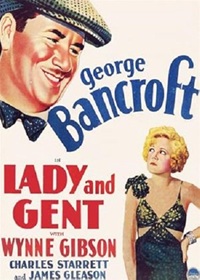
When veteran prize fighter Stag Bailey (George Bancroft) gets cocky and doesn’t bother to properly train for the big fight, he is knocked out by a young up-and-comer named Buzz Kinney (John Wayne).  Stag’s manager, Pin (James Gleason), had all of his money riding on Stag winning.  Now broke and with the mob after him, Pin tries to steal the cash from the boxing arena and ends up getting shot by a security guard.  Stag and his girlfriend, Puff (Wynne Gibson), take in Pin’s young son, Ted, and they devote themselves to raising him.  Years later, Ted (Charles Starrett) wants to become a prizefighter but Stag and Puff, who know what years of getting punched in the head can do to someone, try to convince him to go to college instead.

This boxing film is of interest to western fans because of some of the faces in the cast.  This was an early John Wayne role and he’s only seen in the ring and then in one brief scene where he confronts Stag and Puff in a bar.  Wayne still plays an important role, though, because Buzz’s transformation from being a fresh-faced boxer to being a bitter, punch-drunk bully serves as a warning for what waits for Ted if his adoptive parents can’t keep him out of the fight game.  Charles Starrett, of course, would go on to find greater fame as the Durango Kid.

Otherwise, Lady and Gent is a standard pre-code melodrama.  It’s a little more realistic than some of the other boxing films that came out in the 30s.  Boxing is portrayed as a dirty business that leaves its participants with struggles that all of the prize money in the world can’t make up for.  Puff sacrifices her carefree life to raise Ted but it’s worth it in the end.  You can tell this was a pre-code film because Stag and Puff are a couple but they only decide to get married so they can adopt Ted.

George Bancroft was a star in the late 20s and early 30s but eventually, he transitioned to character parts.  He retired from acting 1942 and became a full-time rancher.  One of his final films was 1939’s Stagecoach, starring his Lady and Gent co-star, John Wayne.
 

Love On The Shattered Lens: Dangerous Curves (dir by Lothar Mendes)


The 1929 film, Dangerous Curves, takes place at the circus.

Larry Lee (Richard Arlen) is a tightrope walker and, when we first meet him, he’s a bit of a cad.  He knows he’s the best and he knows that the crowds are specifically showing up to watch him risk his life on a nightly basis.  Every woman at the circus is crushing on him but Larry hardly notices because he’s used to being desired.  He’s in love with his tightrope-walking partner, Zara (Kay Francis).  Everyone can tell that Zara is manipulative and not even loyal to her relationship with Larry.  She wastes his money and Larry sometimes spends so much time thinking about her that it breaks his concentration on the tight rope.

Eventually, Larry discovers that Zara has been cheating on him!  When Larry finds out about Zara and Tony (David Newell), he cannot get the image of them kissing out of his head.  When he tries to walk across the tight rope, he loses his focus and, as the audience gasps, Larry falls to the ground below.  (In an impressively-edited sequence, we see Larry falling from about five different angles before we finally see him hitting the ground.)  Larry recovers but his confidence has been broken.  Instead of returning to the circus, he just wants to drink and obsess on Zara and Tony.

Can bareback rider Patricia Delaney (Clara Bow) convince him to return to the circus?  Can she give him the confidence to once again walk across the tightrope?  Will Larry then teach Pat how do the tightrope act herself?  Will Larry finally realize that Pat loves him and that he loves her?  And how will Pat react when, after all she’s done for Larry, he suddenly decides that he wants to bring Zara back into the act?

Dangerous Curves is a mix of melodrama and romance, all taking place at the circus.  It’s also a pre-code film, which means it’s a bit more honest about the relationships between the characters and Larry’s subsequent drinking problem than it would have been if the film had been made just a few years later.  As a result, this is a melodrama with an edge.  The members of the circus community are living on the fringes of polite society and they’ve built their own community, one that is based on their unique talents.  Larry’s sin isn’t so much that he’s arrogant and tempermental.  It’s that he doesn’t properly respect the community of which he’s a part.  He thinks he’s above the rest of the circus.  His fall from the high wire humbles him.  His relationship with Patricia eventually redeems him.

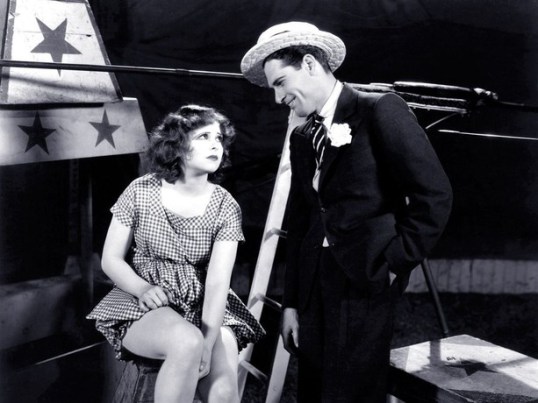
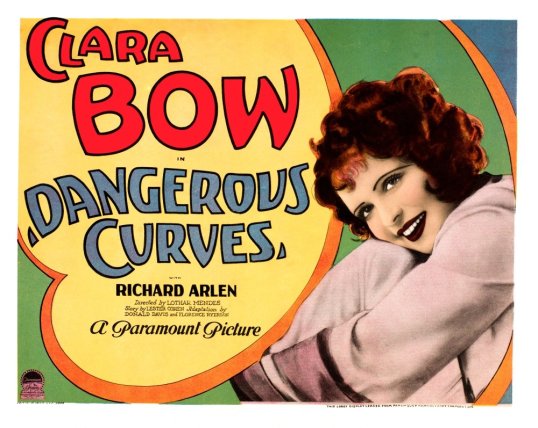
That said, the main appeal of this film is that it features Clara Bow in one of her early sound-era performances.  Bow became a star during the silent era but, unlike many of her contemporaries, she was able to make the transition to sound.  I absolutely love Clara Bow and this film features one of her best performances.  She’s determined and energetic and she plays the stereotypical “good” girl with just enough of a mischievous glint in her eye to make her compelling.  She may be willing to help Larry get back on the tightrope and then subsequently learn how to walk the tightrope herself but she also shows that she’s not going to put up with him taking her for granted.  As well, both Clara and Kay Francis get to wear a lot of cute outfits, which is always one of the pleasures of a pre-code film.

Dangerous Curves is worth watching for the chance to see Clara Bow at her best.


Cleaning Out The DVR #19: The Awful Truth (dir by Leo McCarey)


(For those following at home, Lisa is attempting to clean out her DVR by watching and reviewing 38 films by this Friday.  Will she make it?  Keep following the site to find out!)

Theawfultruth1937

First released way back in 1937, The Awful Truth is one of the most delightful comedies that I’ve ever seen.  In fact, if I could recommend one movie for you to make an effort to see, it would be The Awful Truth.  This is definitely the best film to ever have the word “awful” in the title.

(Speaking of being the best, The Awful Truth is also the rare screwball comedy to receive a nomination for best picture.  However, it lost to the far more serious The Life of Emile Zola.)

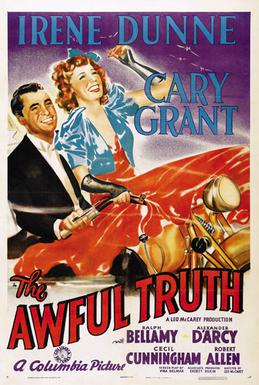
Jerry (Cary Grant) and Lucy Warner (Irene Dunne) are young, married, stylish, and rich.  They seem to have it all but, as the result of Jerry’s lies and a misunderstanding concerning Lucy and her music teacher (Alexander D’Arcy), they end up getting a divorce.  Fortunately, they still share a common bond.  They both love their dog, Mr. Smith (played by Skippy, the same adorable and incredibly talented dog who played Asta in The Thin Man).  Lucy wins custody of Mr. Smith and takes him with her when she moves in with her eccentric Aunt Patsy (Cecil Cunningham).

(It’s not a screwball comedy without an eccentric aunt.)

Jerry, however, has weekly visitation rights with Mr. Smith.  It’s during once such visit that Jerry discovers that, with only two months to go before the final divorce decree, Lucy has become engaged to her next door neighbor, Dan (Ralph Bellamy).  Dan is from Oklahoma and spends most of his time wistfully talking about tumbleweed, oil, and cattle.  He also can’t wait to marry Lucy so that they can both move back to Oklahoma City.  Dan is a nice guy but he’s no Cary Grant.  (He’s also dominated by his judgmental mother.)  Realizing that he still loves Lucy, Jerry wants to reconcile with her but complications and misunderstandings ensue.

(It’s not a screwball comedy without complications and misunderstandings.)

Eventually, in order to prove that he is over Lucy, Jerry starts to date a vacuous heiress, Barbara Vance (a hilariously shallow performance from Molly Lamont).  Suddenly, Lucy finds herself in the same situation that Jerry was in with her and Dan.  Now, it’s her turn to try to break up Barbara and Jerry…

Meanwhile, the day of the final divorce decree approaches…

There’s a lot of reasons to love The Awful Truth.  There’s the snappy dialogue, the physical comedy (at one point, three different men are scurrying around Aunt Patsy’s apartment, two trying to hide from each other and one totally oblivious to everything going on around him), and Leo McCarey’s fast paced direction.  There’s Mr. Smith, a dog so talented that even a confirmed cat person like me loved watching his performance.  There’s the wonderful supporting turns of Ralph Bellamy and Molly Lamont.

But the main reason to see the film is because of the wonderful chemistry between Cary Grant and Irene Dunne.  Grant is so smooth and effortless in his charm that it’s a lot of fun to watch him having to deal with the progressively strange world that he finds himself living in.  The Awful Truth works best when Grant simply reacts to all the craziness around him.  Grant could do more with one look than most actors could do with a Shakespearean monologue.  Meanwhile, Irene Dunne … well, who wouldn’t want to get in a time machine, go back to 1937, and be Irene Dunne for a day?  She’s lively, she’s beautiful, she’s witty, she’s classy, and she’s just neurotic enough to be relatable.

The Awful Truth is pure joy.  If you haven’t seen it, you’re missing out.  If you have seen it, watch it again.

http://www.youtube.com/watch?v=B0-euBr_vRU