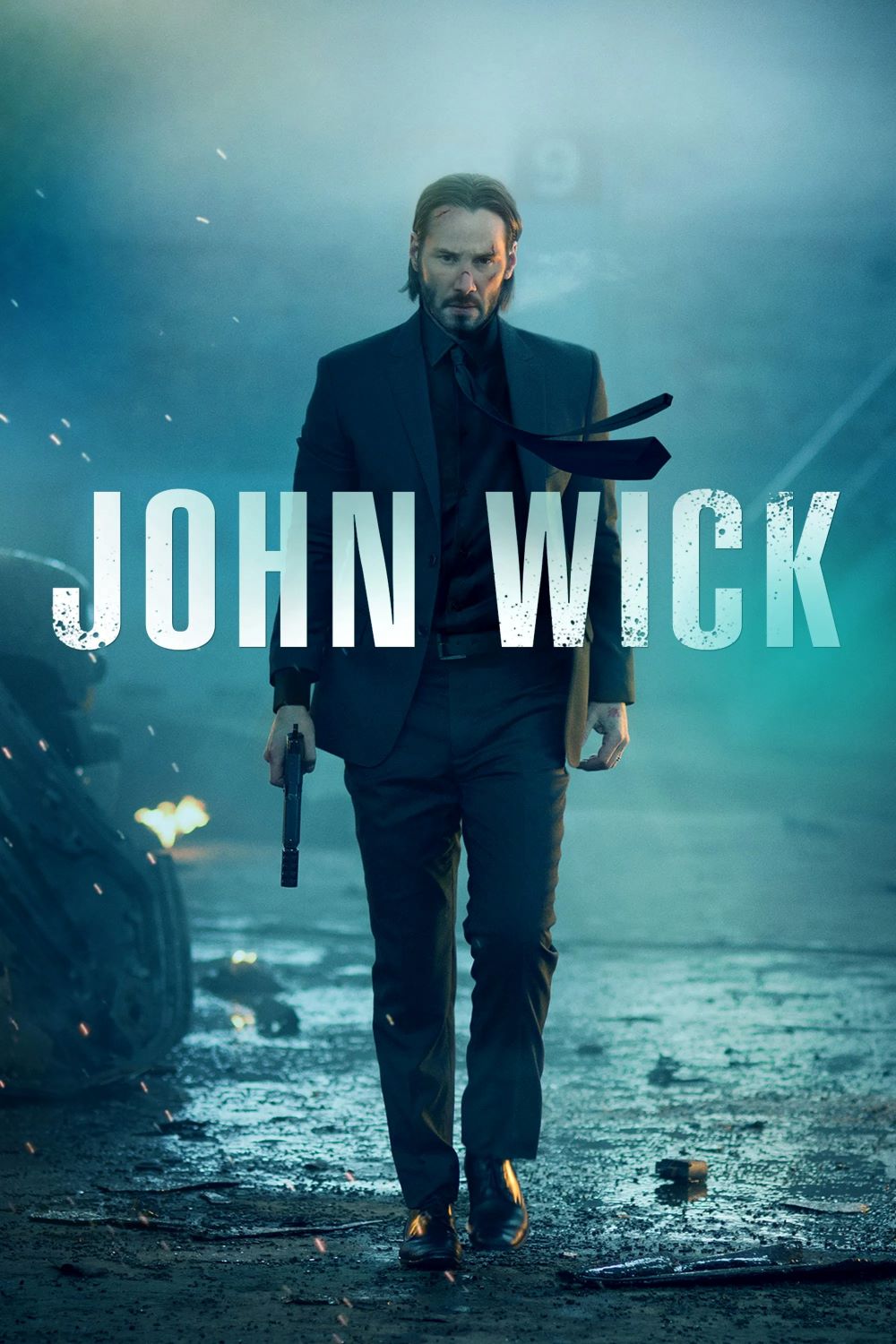
Review: John Wick (dir. by Chad Stahelski)


“John is a man of focus, commitment, sheer will… something you know very little about. I once saw him kill three men in a bar… with a pencil, with a fucking pencil.” — Viggo Tarasov

John Wick kicks off with a simple, gut-punching premise that hooks you right away. Keanu Reeves plays the titular character, a retired hitman trying to leave his bloody past behind after the death of his wife. She leaves him a beagle puppy as a final gift, symbolizing a chance at normalcy, but some punk Russian mobsters steal his prized Mustang and kill the dog, setting off a revenge rampage. It’s a revenge story done right—straightforward, no frills, and fueled by raw emotion rather than convoluted twists. Directed by Chad Stahelski and David Leitch, who share a stunt background, the film feels like a love letter to classic action flicks from the ’80s and ’90s, but with a modern polish.

What sets John Wick apart from the glut of forgettable action movies is its relentless focus on craftsmanship. The action sequences are balletic and brutal, blending gun-fu—a mix of precise gunplay and martial arts—with practical stunts that avoid overreliance on CGI. This gun-fu draws directly from the Center Axis Relock (CAR) system, a real-world self-defense close-combat technique where the pistol is held close to the chest at a forward cant for better retention and control in tight quarters. Reeves, at 50 when the film was made, moves like a man possessed, his long-limbed frame perfect for the choreography. Watch the nightclub shootout: bodies drop in waves as Wick reloads with one hand while pistol-whipping foes with the other, all grounded in CAR’s principles that have since become a staple in action films. It’s exhilarating, almost musical in rhythm, thanks to a thumping soundtrack featuring artists like Aloe Blacc and Kaiser Chiefs that amps up the tension without overpowering the visuals.

Keanu Reeves carries the film on his stoic shoulders, and it’s one of his best turns since The Matrix. John Wick isn’t a chatterbox; he’s all simmering grief and quiet menace, his thousand-yard stare conveying depths of loss that words don’t touch. That opening montage of him and his wife—tender beach walks, her terminal illness—hits hard because it’s so understated. Reeves sells the puppy’s death not with histrionics but a single, shattered sob, making his vengeance feel earned. Supporting players elevate the mix too: Michael Nyqvist chews scenery as the mob boss Viggo, Willem Dafoe shines as a sympathetic mentor figure, and Ian McShane adds suave authority as the Continental hotel’s manager. Alfie Allen, pre-Game of Thrones fame, nails the cocky antagonist role without caricature.

The world-building is another standout, introduced efficiently without info-dumps. The Continental Hotel emerges as a neutral ground for assassins, complete with gold coins as currency and strict no-business-on-premises rules—hints at a larger universe that sequels would expand. It’s a clever nod to pulp noir and spy thrillers, giving the violence a code of honor. Stahelski’s visual style, with its neon-drenched nights and stark lighting, evokes The Raid while carving its own path. The Mustang chase is a highlight: tires screech, bullets ping off chrome, and Wick dispatches goons from the driver’s seat with cold efficiency. Production design shines in details like the mobsters’ gaudy mansions contrasting Wick’s minimalist home, underscoring his outsider status.

John Wick isn’t flawless. The plot is paper-thin, essentially “bad guys kill dog, hero slaughters 100 dudes,” with little character depth beyond Wick. Supporting characters get one-note arcs; Viggo monologues about Wick’s legend, but we learn more through reputation than growth. Some viewers find the 101-minute runtime padded by repetitive shootouts—after the first dozen kills, the thrill dips into redundancy for all but the most action-addicted. Women are scarce and sidelined: Wick’s wife appears mostly in flashbacks, and the few female roles are functional at best. It’s a dude-bro fantasy at heart, prioritizing spectacle over substance, which alienates if you’re craving nuance or social commentary.

Pacing stumbles early too. The first act drags with somber setup, mourning the wife and puppy, before exploding into chaos. Once it hits gear, though, it rarely brakes, building to a cathartic finale at Viggo’s compound. Some criticize the violence as gratuitous—headshots galore, blood sprays like a Tarantino wet dream—but it’s stylized, not sadistic, with clear rules (headshots for efficiency) that heighten tension. Compared to contemporaries like Taken, which leaned on gruff one-liners, John Wick opts for silence, letting deeds speak. It’s refreshing, but purists might miss emotional beats amid the bullet casings.

Stylistically, the film borrows heavily yet innovates. Influences from Hong Kong cinema (Hard Boiled, John Woo) shine in the balletic-style of action, while the “gun fu” term coined by critics fits perfectly, elevated by that CAR-inspired hold that’s now echoed in blockbusters everywhere. Cinematographer Jonathan Sela’s work—wide lenses for spatial awareness in fights—makes every room a battlefield, unlike shaky-cam hacks. The music for the film was courtesy of Tyler Bates and Joel L. Richard, pulsing with industrial beats that sync to gunfire like a heartbeat. Budgeted at $20-30 million, it grossed over $86 million worldwide, proving audiences craved this stripped-down revenge tale amid superhero fatigue.

Reeves’ commitment deserves props; he trained rigorously in judo, jiu-jitsu, and firearms, selling every beatdown with authentic CAR posture. Stahelski, his longtime stunt double, directs with intimacy, framing close-quarters brawls to feel visceral. The film’s legacy? It revived Reeves’ career, birthed a franchise (now four films deep, plus spin-offs), and influenced action design industry-wide—expect “John Wick”-style choreography, complete with Center Axis Relock grips, in everything from Netflix shows to indies. Yet its simplicity invites backlash: online threads buzz with “overhyped” takes, arguing it’s style sans soul. Fair point—it’s not Heat‘s operatic depth—but as popcorn entertainment, it delivers uncut adrenaline.

Culturally, John Wick taps male grief mythology: the Baba Yaga legend (Wick as unstoppable boogeyman) mirrors real loss through mythic fury. No preachiness, just catharsis. Drawbacks persist—predictability (you know Wick wins), thin Russian accents straining credulity, and a sequel-bait ending that feels calculated. Still, it revitalized the genre post-Avengers dominance, proving solo heroes endure. For fans of Die Hard or Léon, it’s essential; others might yawn at the body count.

In a landscape of quippy Marvel flicks, John Wick stands tall for earnestness. It doesn’t pretend to be profound, owning its B-movie roots with A-grade execution. Reeves mourns, fights, repeats—rinse with blood. Flaws and all, it’s a blast: taut, stylish, and unapologetic. If action’s your jam, dive in; just don’t expect Shakespeare.

Weapons used by John Wick throughout the film

  • Heckler & Koch P30L: His signature primary pistol (custom compensator), used throughout—from the home invasion to the Red Circle club.
  • Glock 26: Backup compact pistol, pulled out during the bathhouse shootout when ammo runs low.
  • Coharie Arms CA-415: Short-barreled rifle (HK416 clone) for the church assault and parking lot shootout.
  • Kel-Tec KSG: Bullpup shotgun commandeered from goons after church assault and parking lot shootouts.
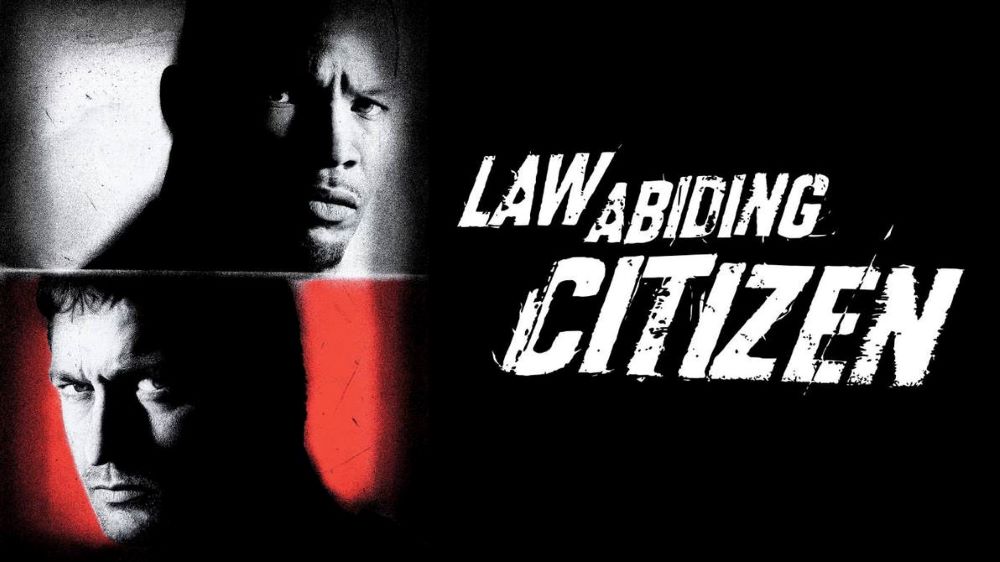
Review: Law Abiding Citizen (dir. by F. Gary Gray)


“Christ! Whatever happened to right and wrong!? Whatever happened to the people!? Whatever happened to justice!?” — Clyde Shelton

Law Abiding Citizen is one of those thrillers that grabs you right from the start and refuses to let go, even as it spirals into moral chaos. Directed by F. Gary Gray and released in 2009, the film pits two central performances—Gerard Butler as Clyde Shelton and Jamie Foxx as Nick Rice—against each other in a brutal chess match of justice, revenge, and control. On the surface, it’s a revenge thriller about a man wronged by a broken justice system. But dig a little deeper, and it becomes a dark commentary on the limits of law, the manipulation of morality, and the ethics of punishment. It’s not perfect—it veers toward implausibility at times—but it’s undeniably gripping, stylishly cold, and lingers in your mind long after the credits roll.

The film begins with a horrifying scene that immediately sets the tone for what’s to come. Clyde Shelton, an inventor and family man, watches helplessly as his wife and young daughter are brutally murdered in their home. When the killers are caught, Assistant District Attorney Nick Rice cuts a deal that lets one murderer go free in exchange for testifying against his partner. The decision, made in the name of efficiency and legal pragmatism, destroys Clyde’s faith in the justice system. Ten years later, when the murderer is executed under mysterious and gruesome circumstances, Clyde resurfaces—not as a grieving victim but as a brilliant, calculated force determined to expose the system’s corruption in the most explosive way imaginable.

What makes Law Abiding Citizen so effective early on is its sympathy play. The audience initially feels the same fury Clyde does. We understand his pain and disillusionment, and for a brief moment, we want him to succeed in making the system accountable. Butler captures that emotional transition perfectly—from quiet devastation to methodical vengeance. The scene where Clyde calmly watches his first victim die, having orchestrated the man’s death with near-surgical precision, is shocking yet disturbingly satisfying. This is where the film hooks its audience: it asks whether revenge can ever be justified when justice fails.

But as the killings pile up and Clyde’s plan grows more elaborate, that empathy begins to slip. The real tension of the film lies in that moral gray space—where Clyde’s righteous anger turns monstrous. His war isn’t just against the criminals but against the entire justice system, targeting judges, lawyers, and anyone he sees as complicit. Nick Rice, on the other hand, becomes the face of that system. He’s young, successful, and smug—a prosecutor obsessed with his win-loss record. Jamie Foxx’s performance gives Rice an icy veneer of confidence that slowly cracks as Clyde’s campaign escalates. The interplay between these two men—the avenger and the pragmatist—is the film’s heartbeat. It’s less about who will win and more about whether either man can still claim moral authority when the dust settles.

From a narrative standpoint, Law Abiding Citizen is structured like a dark puzzle. Each scene unveils another layer of Clyde’s intelligence and ruthlessness. The tension comes not from knowing who’s doing it—we know—but from wondering how he’s doing it. The film’s most audacious twist is that Clyde continues orchestrating murders even while locked in a high-security prison cell. This push toward psychological warfare turns the story into a cat-and-mouse game with shades of Seven and The Silence of the Lambs. However, where those films maintained a clear thematic direction, Law Abiding Citizen sometimes stumbles under the weight of its ambition. The logic of Clyde’s omnipotence starts to stretch believability, and the film sacrifices realism for spectacle. Still, it’s hard to look away when the spectacle is this sharp and aggressive.

Visually, F. Gary Gray directs with a crisp, metallic style. The cinematography uses muted tones and sharp contrasts to reflect the film’s moral ambiguity. The more the story dives into Clyde’s schemes, the colder and more sterile the visuals become, echoing his detachment from human empathy. The editing is snappy and kinetic, especially during the interrogation scenes and courtroom exchanges. Brian Tyler’s score underscores the tension with brooding, pulsing beats that heighten the sense of dread. Every technical element supports the emotional core—revenge as obsession, intelligence as a weapon.

Gerard Butler, best known for roles that highlight his physicality, delivers one of his most controlled performances here. His portrayal of Clyde is chilling because of how calm it is. He doesn’t yell or flail; his menace is intellectual. Even in scenes where the dialogue leans toward theatrical monologues about justice and morality, Butler maintains focus, grounding the performance in conviction rather than chaos. Jamie Foxx, meanwhile, brings subtlety to Nick Rice. His transformation from ambitious lawyer to shaken moralist is gradual. By the final act, Nick’s self-assurance has eroded into doubt—about the system, his choices, and his own complicity. Foxx and Butler’s dynamic never feels forced; it’s built on escalating tension, mutual respect, and bitter irony.

Where Law Abiding Citizen truly provokes is in its ethical questioning. What does justice mean when the system serves convenience instead of truth? Is it right to play by the rules if those rules protect the guilty? Clyde’s crusade, as twisted as it becomes, emerges from a very real frustration—one viewers can sympathize with, especially in a world full of technicalities that favor the powerful. But the film also serves as a warning. In trying to dismantle corruption, Clyde becomes its reflection. His vigilante justice ultimately mirrors the same indifference he condemns. By the time the film reaches its explosive climax, viewers are left torn—not cheering for Clyde’s punishment, but not wanting him to win either. This ambiguity gives the film an edge that lingers long after the credits roll.

That said, the story’s final act is where opinions tend to divide. Once strategy gives way to spectacle, the film trades nuance for action. The ending, while satisfying in terms of closure, feels somewhat abrupt and simplified compared to the build-up. The moral complexity that defined the first two acts begins to blur into a conventional revenge-thriller showdown. Still, even in its imperfections, the film sustains a dark fascination. It never feels lazy or hollow—it’s just that its ideas might have deserved a slightly more refined execution.

Despite its narrative stretches, Law Abiding Citizen remains a standout in the late-2000s thriller landscape. It’s unapologetically intense, dramatically charged, and philosophical enough to make its explosions feel earned rather than gratuitous. The film thrives on its contradictions: it condemns violence while indulging in it, critiques the system while sensationalizing its collapse. For all its over-the-top plotting, the emotional truth stays intact—when justice becomes negotiable, vengeance becomes inevitable. And whether viewers side with Clyde or Nick, the uneasy feeling the film leaves behind is its greatest triumph.

At its core, Law Abiding Citizen is less about revenge and more about control—who wields it, who loses it, and how the pursuit of it can consume both sides. F. Gary Gray’s direction, backed by two commanding performances, turns what could’ve been a formulaic thriller into something more charged and psychological. It’s a film that asks uncomfortable questions about morality, justice, and the price of vengeance, even if its answers are messy. And maybe that’s the point—justice, like humanity, rarely fits into a clean equation.