Late Night Retro Television Review: Highway to Heaven 4.23 “Heaven Nose, Mr. Smith”


Welcome to Late Night Retro Television Reviews, a feature where we review some of our favorite and least favorite shows of the past!  On Thursdays, I will be reviewing Highway to Heaven, which aired on NBC from 1984 to 1989.  The entire show is currently streaming on Tubi and several other services!
This week …. oh, where to begin?

Episode 4.23 “Heaven Nose, Mr. Smith”

(Dir by Michael Landon, originally aired on March 30th, 1988)

This episode was bad.

How bad?

Let me count the ways.

  1. Jonathan is driving the car, for once.  He and Mark are going to get some time off.  Suddenly, a very shrill alarm goes off.  Jonathan says that he has to go up to Heaven to meet with the never-before mentioned Sycopomp, who is in charge of handing out angel assignments.  Jonathan vanishes, leaving the car without a driver.  Mark nearly crashes before he gets control of the wheel.
  2. How have we gone for four seasons without the alarm going off earlier?
  3. Since when has Jonathan gotten assignments from anyone other than The Boss?
  4. Does Jonathan not realize Mark could have been killed as a result of him suddenly vanishing?
  5. The Sycopomp is played by Bob Hope.  Yes, the comedian Bob Hope.  Bob Hope was 85 when he appeared in this episode and, not surprisingly, he doesn’t do much.  In fact, he does so little that you have to wonder why it was necessary to have the character at all.
  6. The Sycopomp explains that the Boss has computerized Heaven — “Modern technology,” he says, with a shrug.  Why would the Boss do that since the Boss is God and God knows everything and can do anything?
  7. The computers have malfunctioned.  How could a computer built by God malfunction?
  8. As a result of the computer malfunction, an angel named Max (Bill Macy) has been assigned to help fix the marriage of Stanley (John Pleshette) and Constance (Murphy Cross).  The problem is that Max is Stanley’s deceased father and he’s always disliked Constance so, instead of helping Stanley and Constance, he’s instead trying to get Stanley to leave Constance for his childhood girlfriend, Nel (Anna Stuart).
  9. What?  Okay, Jonathan got mad and yelled at the Boss a few episodes ago and he was immediately stripped of his powers.  Yet somehow, Max is able to do a lot worse without any sort of punishment.
  10. Jonathan and Mark are sent to stop Max.  They meet Stanley and Constance.  While Constance’s main flaw is that she has a terrible hair style, Stanley is a total wimp who has never finished anything in his life.  Stanley is so unlikable that it’s hard not to feel that Constance would be better off without him.
  11. Jonathan and Max both reveal themselves to be angels to Stanley.  Yeah, Jonathan has revealed himself to be an angel in the past but it still feels like lazy writing.
  12. From out of nowhere, wimpy, middle-aged Stanley is revealed to be a fast runner.
  13. Jonathan and Max bully Stanley into entering a marathon.
  14. Stanley nearly dies during the marathon but makes it to the end.  He comes in last place but Constance doesn’t care.  What matters is that he finished something!  And it looks like the marriage has been saved but Stanley is so sweaty and out-of-breath that one still expects him to drop dead right there.
  15. Sara (Patti Karr), Max’s wife, is sent down as an angel as well.  She doesn’t accomplish anything but she’s sent down nonetheless.
  16. Why would someone as self-centered as Max be made an angel in the first place?
  17. With the assignment completed, everyone leaves.  Constance and Stanley are back together!  Except, earlier, we were told that Constance and Stanley’s marriage was in trouble because Constance wanted children and Stanley didn’t.  That storyline is never resolved.  In fact, it’s just kind of dropped.
  18. Other than Jonathan and Mark, there are no likable people in this episode.  This episode tires to mix comedy and drama and it just doesn’t work.

This just wasn’t a good episode.  The story just feels unfinished.

Next week, season 4 comes to a close!
Late Night Retro Television Review: Highway to Heaven 3.14 “All That Glitters”


Welcome to Late Night Retro Television Reviews, a feature where we review some of our favorite and least favorite shows of the past!  On Thursdays, I will be reviewing Highway to Heaven, which aired on NBC from 1984 to 1989.  The entire show is currently streaming on Tubi and several other services!

This week, a conman seeks refuge in a church.

Episode 3.14 “All that Glitters”

(Dir by Michael Landon, originally aired on January 7th, 1987)

There’s a fire raging in the city and elderly homeowners are being forced to evacuate.  “Father” Jonathan and “Father” Mark open up an abandoned church so that the people have some place to stay while the fires are burning.  Good for them and also good for this show for finally acknowledging Catholicism.

Also hiding out in the church and disguised as a priest is Charley Trapola (John Pleshette), a con artist who, despite his criminal profession, actually has a good heart.  Charley has a briefcase with him, one that is full of money.  A group of criminals want the briefcase back but, at least initially, they know better than to try anything in the church.  Instead, they decide to wait for Charley to come out.  Inside the church, Charley gets to know Wanda (Didi Conn), a shy but kind-hearted woman who goes to Confession every day.

This episode was okay.  Usually, when Jonathan and Mark go undercover as clergyman, they’re portrayed as being wishy-washy Episcopalians or vaguely liberal Methodists so I was happy that they were Catholic for this episode.  John Pleshette and Didi Conn were both well-cast as this episode’s guest stars.  They eventually made for a very sweet and likable couple.  My main issue with this episode is that it tried to do a bit too much.  Not only did we have Charley being chased by the gangsters but we also had Wanda dealing with her shyness and Mark and Jonathan dealing with the people were seeking shelter and looking for their loved ones.  This episode — and not that weird marriage counseling episode — would have benefitted from an extra hour.  As it was, it just felt a bit overstuffed.  As well, this is another episode in which Jonathan reveals early on that he’s angel and, oddly enough, Charley has no hesitation about believing him.  I always prefer the episodes where Jonathan doesn’t reveal who he really is.  When Jonathan reveals that he’s an angel, it almost seems like cheating.  The show is always more effective when people decide to open up their hearts on their own as opposed to doing so because they feel they’ve been ordered to.

There’s an odd scene where the three thugs break into the church and pull a gun on Jonathan.  After Jonathan gives them fair warning about “the boss,” the main thug attempts to shoot Jonathan.  Needless to say, the bullets don’t have any effect on an angel.  However, a sudden blue lights fills the church and suddenly, the three men are apparently zapped out of existence.  Jonathan later jokes that he’s not sure where the three men are but that they probably aren’t happy.  So, did the three men go straight to Hell?  Are they dead?  I understand the logic behind the scene but it’s not really something you expect from a show where the main theme is usually that everyone has a chance for redemption.

Next week, Dick Van Dyke plays a homeless puppeteer …. uh oh.  This sounds like it could a little bit cringey …. well, we’ll see.


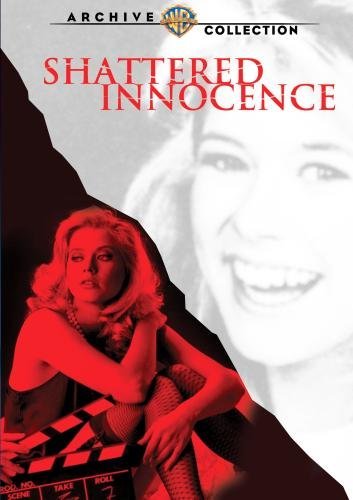
Retro Television Review: Shattered Innocence (dir by Sandor Stern)


Welcome to Retro Television Reviews, a feature where we review some of our favorite and least favorite shows of the past!  On Sundays, I will be reviewing the made-for-television movies that used to be a primetime mainstay.  Today’s film is 1988’s Shattered Innocence!  It  can be viewed on YouTube.

Shattered Innocence starts with a young woman shooting herself in a nice bedroom, while someone on the outside bangs on the door.

The rest of the movie shows the events the led up to the suicide of Pauleen Anderson (Jonna Lee).  On the one hand, starting a film with a literal bang is definitely a way to capture the audience’s attention.  On the other hand, letting us know that the story is going to end with a suicide pretty much robs the story of the element of surprise or the ability to take the viewer by surprise.  We know how the story is going to end and it doesn’t take long for us to figure out why it’s going to end that way.

From the minute we see Pauleen as a naive cheerleader with an overprotective family, we know that she’s going to end up hooking up with Cory (Kris Kamm), the local bad boy.  As soon as she graduates from high school and gets a job as a waitress, we know that Pauleen is not going to be staying in Kansas.  As soon as she and Cory end up in California and Cory suggests that Pauleen is pretty enough to be a model, we know that she’s going to end up modeling topless and that she’s going to deal with her nerves and her weight by snorting cocaine.  We also know that she’s going to end up appearing in adult films and that her concerned mother (Melinda Dillon) is constantly going to be begging her to come back home and forget about Los Angeles and its sinful ways.

Apparently based on a true story, there’s not really anything surprising about Shattered Innocence.  It tells a sordid story but, because it was made-for-TV, the scene usually ends right before anything really explicit happens.  (Ironically, by keeping the sordid stuff off-camera, the film invites the audience to imagine scenarios that are probably a hundred times more trashy than anything that could be recreated on film.)  Shattered Innocence gets by on innuendo, with frequent scenes of people saying stuff like, “Did you see the pictures?” or “You may recognize her from her centerfold.”  Nerdy Mel Erman (John Pleshette), who becomes Pauleen’s business partner, first meets her when he asks her to autograph the cover of Penthouse.  Otherwise, this film is actually pretty tame.

In fact, the one scene that really jumped out and made me go “Agck!” was a scene in which Pauleen’s nose suddenly started bleeding as a result of all the cocaine that she had recently done.  That was frightening, just because I’ve always had to deal with nosebleeds due to my allergies.  I hate them and the taste of blood in the back of my throat.  In that scene, I could relate to Pauleen’s shock and embarrassment.

Shattered Innocence tells a story that’s as old as Hollywood itself, which is a bit of a problem.  Too often, the movie just seems to be going through the expected motions.  Jonna Lee was a bit dull in the lead role but Melinda Dillion and John Pleshette both did well as the only two people who seemed to really care about Pauleen.  For the most part, though, Shattered Innocence was sordid without being memorable.

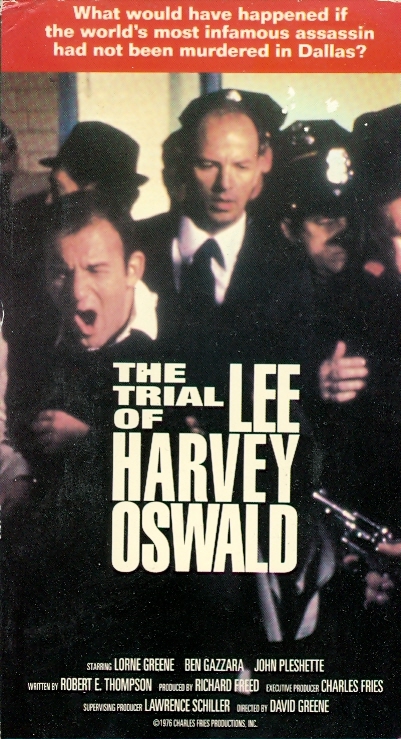
The Trial of Lee Harvey Oswald (1977, directed by David Greene and Gordon Davidson)


What if, instead of being shot by Jack Ruby, Lee Harvey Oswald had survived and been put on trial for the murder of President John F. Kennedy?

That’s the question asked by this television film.  John Pleshette plays Lee Harvey Oswald while Lorne Greene plays his attorney, Matt Weldon and Ben Gazzara plays the prosecutor, Kip Roberts.  The film imagines that the trial would have been moved to a small Texas town because Oswald presumably wouldn’t have been able to get a fair trial in Dallas.  While Roberts is forced to deal with his own doubts as to whether or not Oswald actually killed the President, Weldon is frustrated by Oswald’s paranoid and self-destructive behavior.  Oswald insists that he’s a patsy and that he was framed by “them” but he refuses to tell Weldon who they are.

With a running time of four hours, The Trial of Lee Harvey Oswald is a courtroom drama that tries to be fair to both sides and which ends with a frustrating cop-out.  While Weldon presents all of the evidence that real-life conspiracy theorists frequently cite in their attempts to prove Oswald’s innocence, Roberts makes the case that was presented in the Warren Commission.  Unfortunately, the film ends up trying too hard to avoid coming down on one side or the other and just proves that it’s impossible to be even-handed when it comes to conspiracy theories around the Kennedy assassination.  It’s either buy into the idea that it was all a huge conspiracy involving mobsters and intelligence agents or accept that it was just Oswald doing the shooting as a lone assassin.  Trying to come down in the middle, as this film does, just doesn’t work.

John Pleshette does a good job as Oswald and bears a passing resemblance to him.  Because the movie refuses to take a firm stand on whether or not Oswald’s guilty, the character is written as being a cipher who claims to be innocent but who, at the same time, also refuses to take part in his defense.  Pleshette plays up Oswald’s creepy arrogance, suggesting that Oswald was capable of trying to kill someone even if he didn’t actually assassinate JFK.  Both Greene and Gazzara are convincing as the two opposing attorneys, even if neither one of them really does much more than offer up a surface characterization.

The majority of the movie takes place in the courtroom, with a few flashbacks to Oswald’s past included to keep things from getting too stagnant.  When the film was made, people were still learning about the conspiracy theories surrounding the Kennedy assassination and The Trial of Lee Harvey Oswald might have had something new to tell them.  Seen today, the majority of the film’s evidence seems like old news.  The Trial of Lee Harvey Oswald never escapes the shadow of later films, like Oliver Stone’s JFK.

It’s hard not to regret that The Trial of Lee Harvey Oswald wasn’t willing to come definitively down on one side or the other.  Instead, it ends by telling us that we’re the jury and that the only verdict that matters is that one that we come up with.  They could have just told us that at the start of the movie and saved us all four hours.

A Movie A Day #66: Deadly Game (1991, directed by Thomas J. Wright)


Seven strangers are invited to a remote island by a mysterious billionaire named Osiris.  There is a doctor, a dancer, an auto mechanic, a mercenary, a football player and his agent, and a member of the Yakuza.  The auto mechanic points out that, in Egyptian mythology, Osiris judged mankind’s sins.  For some reason, none of the seven think twice about going to the island but, once they arrive, they soon discover that they should have.  Osiris is willing to give them seven million dollars but to get it, they have to reach the other end of the island without being killed by Osiris or his men.

Of the many movie adaptations of The Most Dangerous Game, this is probably the worst.  The cast, which includes Michael Beck, Marc Singer, Jenny Seagrove, Mitch Ryan, John Pleshette, Soon-Tek Oh, and Roddy McDowall, isn’t bad but the script is terrible, full of overwrought dialogue and plot holes.  Across the island, Osiris has left clues that are designed to trigger flashbacks and lead to each member of the seven explaining what it is that they did in the past.  But for that to work, Osiris would have to know exactly what route the seven of them were going to use to cross the island and he would also have to know who would still be alive by the time that they came across each clue.  Also, whenever they come across the clue, everyone stands around and wastes valuable time arguing about it.  Considering that there are armed men trying to kill them, no one seems to be in that much of a hurry to make it to the other side of the island.  The flashbacks themselves are interesting in how clumsily they are put together.  40ish Marc Singer plays himself as a senior in high school.

Like Hitler’s Daughter, Deadly Game was originally made for the USA network.  The first time I saw it was in the UK where, for some reason, it seemed to air frequently during the mid-1990s.  (Possibly this was because it starred quintessential Hollywood Brit Roddy McDowall.  That’s the only reason I can think of.)  It’s now on YouTube, for anyone who wants to sit through it.