After the Cuban ambassador to the United States is assassinated, the CIA worries that someone is trying to create trouble between the USA and Cuba. With another Cuban-American summit due to be held in Prague, CIA Agent Dolph Lundgren is sent to arrest the assassin and bring her back to America to be tried before she can cause anymore trouble. The CIA claims that the assassin is a sniper-turned-club owner named Simone (Maruschka Detmers) but, once it becomes obvious that whoever wants to keep her from going to America want to not only kill him but also her as well, Dolph starts to suspect that there’s a bigger conspiracy at work.
Hidden Assassin was the last feature film to directed by Ted Kotcheff and, while it’s definitely a direct-to-video action flick, it’s still a cut above similar films that were being released at the time. Not surprisingly, the director of FirstBlood and UncommonValor knew how to shoot action films but he also did a good job directing the actors and everyone gives it their all in this film. Amongst the lower-tier action films of the 90s, Dolph Lundgren was always a better actor than Van Damme and he also more likable than Seagal. (Of course, a rabid bobcat is more likable than Steven Seagal.) Lundgren is at his best here, believable as both an action star and a spy. John Ashton of Beverly Hills Cop fame plays his partner and Gavan O’Herlihy plays his superior. They’re both pros who know exactly how to handle the material.
Hidden Assassin has some plot holes, the least of which anyone would go through that much trouble to sour relations between America and Cuba. America and Cuba haven’t gotten along for a very long time. Still, the movie makes great use of Prague as a location and Lundgren is characteristically strong as the film’s hero. There’s even some moments of deliberate humor that work surprisingly well. Lundgren and Kotcheff were a killer combination and it’s too bad they didn’t do more movies together.
We all know the story. Eddie Murphy is Axel Foley, a streetsmart detective in Detroit whose childhood friend, Mickey (James Russo), is murdered because of something that he saw while working as a security guard in Beverly Hills. Axel plays by his own rules and gets results even as he gives his boss, Inspector Todd (Gil Hill), heartburn. Todd refuses to allow Foley to investigate Mickey’s death so Axel puts in for some vacation time and catches the first plane to Beverly Hills.
In Beverly Hills, he meets up with another childhood friend, Jenny (Lisa Eilbacher). Axel thinks that Mickey’s murder was ordered by a shady businessman named Victor Maitland (Steven Berkoff). The Beverly Hills Police Department orders Axel to leave Maitland alone and to return to Detroit. Axel won’t go until he gets justice for Mickey. Lt. Bogomil (Ronny Cox) assigns Taggart (John Ashton) and Rosewood (Judge Reinhold) to follow Axel in Beverly Hills.
Like 48 Hrs., the story is serious but the comedy comes from how the well-drawn characters interact with each other and from seeing how Axel reacts to the strange and wealthy world of Beverly Hills. Axel has the same reactions that we would have but, because he’s played by Eddie Murphy, he always has the perfect response to everything that he sees, whether it’s dealing with a snooty hotel clerk or with someone like Serge (Bronson Pichot), Jenny’s co-worker who speaks with an unidentifiable accent. Even more so than in 48 Hrs or Trading Places, Murphy reveals himself to be a natural star here. One reason why we like Axel is because he’s not just funny but he’s also the type of confident hero that we all wish we could be. He’s not intimidated by Beverly Hills for a second.
It’s now impossible to picture anyone else in the role of Axel Foley but, when the film’s script was first being shopped around, it was originally offered to Sylvester Stallone, who said the story had potential but was missing something. He rewrote the script and took out all of the humor, turning it into a grim and serious action film. (It is rumored that Stallone later turned his version of the script into Cobra.) Fortunately, Stallone eventually dropped out of Beverly Hills Cop so that he could co-star with Dolly Parton in Rhinestone. Producers Don Simpson and Jerry Bruckheimer, then at the start of their producing careers, then offered the role to Eddie Murphy, who took Stallone’s script and added back all of the humor. Murphy also ended up ad-libbing several of the film’s best one-liners, improvising the hotel lobby scene and the meeting with Serge on the spot.
Beverly Hills Cop was a huge success, cementing Murphy’s status as a star and proving that Murphy could carry a movie on his own. The film still holds up, certainly better than any of the sequels that followed. Even though Murphy was clearly the main attraction, the movie also gave actors like John Ashton, Judge Reinhold, Ronny Cox, Bronson Pinchot, and even Paul Reiser a chance to shine. The villainous performances of Steven Berkoff and Jonathan Banks would serve as a model for countless bad guys through the 80s and 90s. Beverly Hills Cop is a movie that makes you happy that Sylvester Stallone didn’t have a better sense of humor.
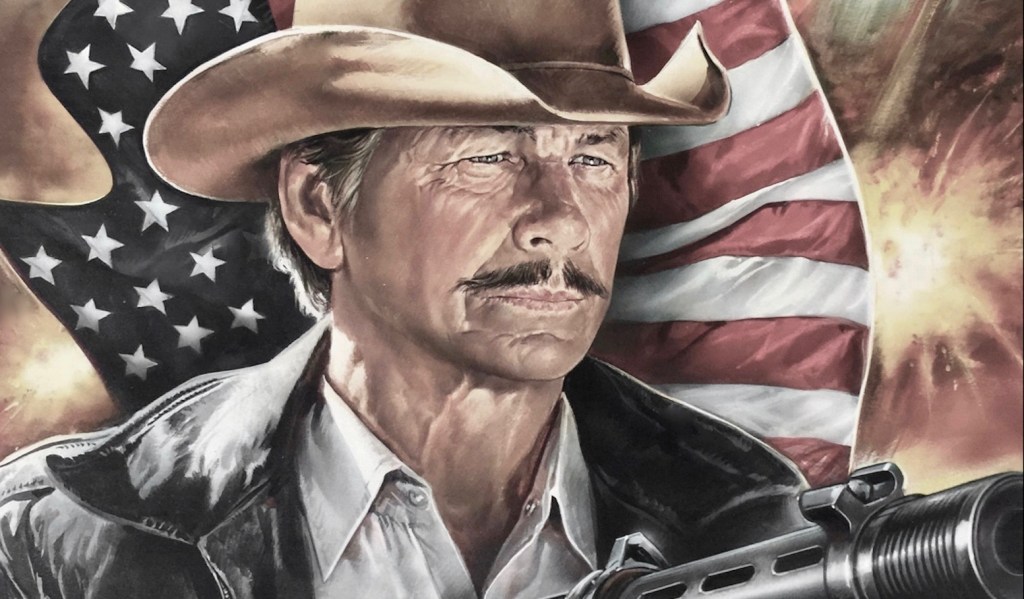
After a couple of decades of toiling away in TV and supporting roles, Charles Bronson became a huge international film star in 1968 when he starred in the films FAREWELL, FRIEND (with Alain Delon), and Sergio Leone’s ONCE UPON A TIME IN THE WEST (with Henry Fonda). For the next 5 years, Bronson would star in successful international co-productions, before hitting it big in the United States with the influential 1974 blockbuster, DEATH WISH. From 1974 to 1977, Bronson had his pick of any role that he wanted. This was probably the most interesting time in his career as he truly tried to expand his range with films like the depression-era HARD TIMES (1975), the romantic comedy FROM NOON TILL THREE (1976), the Raymond Chandler-esque ST. IVES (1976), and the surreal western THE WHITE BUFFALO (1977). But after 1977’s TELEFON and a series of underwhelming box office returns in the states, Bronson’s star was on the wane. He wouldn’t have his next #1 box office hit until he joined forces with the infamous Cannon studios in 1982 for the sequel to his biggest hit and DEATH WISH II. Cannon Studios would provide Bronson with a guaranteed paycheck and a non-stop presence on cable TV and at the video store for the remainder of the decade. I call the films that Bronson made between 1977 and 1982 the in-betweens. They don’t really fit into his European phase (1968-1973), his post-DEATH WISH phase (1974-1977) or his Cannon phase (1982-1989). To be completely honest, it seemed his career was somewhat in limbo at this point, and the movies he made during these years are some of his least well-known.
One of the movies that Charles Bronson made during the in-between years was 1980’s BORDERLINE. In this film, he plays Jeb Maynard, a border patrolman and expert tracker who will stop at nothing to find the human smuggler responsible for killing his friend and fellow patrolman Scooter, played by Wilford Brimley. I like this lower-key Bronson film. Director Jerrold Freedman has made a more realistic film than a lot of the movies in Bronson’s filmography. Outside of the murder that gets the story going, and the final showdown with the lead smuggler (a young Ed Harris), most of the film is made up of good old-fashioned field work and investigation. Bronson even based much of his performance on the technical advice of legendary border patrolman Albert Taylor. Now that doesn’t mean there aren’t some solid, action-packed scenes during the movie. My favorites include a scene where an undercover Maynard goes into Mexico with the mother of a young Mexican boy who was accidentally killed at the same time as Maynard’s friend Scooter. Maynard poses as a family member of the woman in hopes of being smuggled across the border so he can see how the illegal immigrants are being brought in. When thieves intercept the group, all hell breaks loose, and Maynard and the woman must fight their way out. Another badass moment occurs when Bronson beats needed information out of one of the smugglers in a nasty bathroom. This last scene is especially enjoyable for us Bronson fans.
There are so many good actors in this film. Outside of Bronson, Brimley, and Ed Harris, the cast is filled out by other veterans like Bruno Kirby, Bert Remsen, Michael Lerner, John Ashton, and Charles Cyphers. On a side note, Ed Harris gets the “introducing” credit here, even though he had appeared in several TV shows, as well as the movie COMA with Michael Douglas. This was his first major role in a feature film though. I also want to throw out special mention to Karmin Murcelo. She’s not a household name, but she’s excellent as the mother of the young boy who gets killed with Wilford Brimley’s character, who then helps Bronson in his quest to find the killer. Her career extended over 3 decades, and it’s easy to see why based on this performance.
BORDERLINE may not be an explosive action film like some of Bronson’s other work, but it’s an effective drama with a good performance from the star. I think he embodies the character perfectly. It’s also just as relevant in 2025 as it was in 1980, and I give the film a solid recommendation.
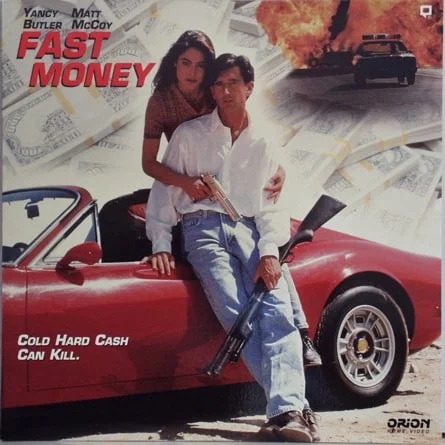
First released in 1996, Fast Money opens with Francesca March (Yancy Butler) stealing a car.
This is what Francesca does for a living. She steals cars and she’s good at it. She’s the type of who can look in any trashcan and find something that she can use to pick a lock. She’s master at hot-wiring a car. I personally have no idea how to hot-wire a car but, judging from the movies that I’ve seen, it appears to be the easiest thing in the world to do. Francesca doesn’t just steal cars for the money. She sincerely enjoys doing it, to the extent that it’s a compulsion for her. If she sees a car, she has to steal it.
This has not made her popular with the LAPD. In fact, an entire taskforce has been set up to stop her. Realizing that she has to get out of town, she rushes to the airport. It’s there that she runs into Jack Martin (Matt McCoy), a nerdy journalist who is working on a story that could take down a powerful U.S. Senator. Jack is looking to catch a flight to Reno. For reasons that aren’t particularly clear, Francesca rushes up to Jack and pretends to be his wife and the recently widowed Jack goes along with it.
Further complicating matters is that Francesca impulsively decides to seal one last car and the one that she picks just happens to have 3 million dollars in mob money and a bunch of counterfeit printing plates in the trunk. The evil Sir Stewart (Jacob Witkin) wants his money back and he sends Regy (Trevor Goddard) and corrupt detective Lt. Diego (John Ashton) to track down Francesca and Jack.
Soon, Francesca and Jack are desperately trying reach the Mexican border while dodging corrupt cops, FBI agents, and mobsters. It leads to a lot of car chases, explosions, helicopters, and shoot-outs. (The otherwise meek Jack turns out to be a surprising good shot. Neither he nor Francesca freaks out after he shoots multiple people, which is the sort of thing that I would probably freak out about.) Francesca and Jack also find themselves falling in love but wondering just how much they can trust each other. Stolen money does that to people.
Fast Money is a cheerfully dumb but entertainingly fast-paced movie, one in which the chase never stops long enough for the viewer to have too much time to try to figure out why the ultracool Francesa would be willing risk her freedom for a relationship with someone as whiny as Jack. Yancy Butler plays Francesca as being so confident and so fearless that it’s hard not to admire her but there’s also no way that she seems like she would ever have much use for someone as meek and repressed as Jack, regardless of how deadly his aim might be. One gets the feeling that the only thing keeping this couple together is the adrenaline rush of being hunted. If Jack and Francesca do make it to safety, their relationship will probably be over by the end of the week.
Though Fast Money is ultimately a fun but somewhat generic direct-to-video action film, I appreciated the film’s vision of a world where everyone from the mob to the police to the FBI were basically working together to track down one career criminal and one innocent man. When even the usually likable John Ashton is trying to murder you in a cheap motel, you know you have reached the other side of the looking glass. Jack learns what Francesca has always understood, which is that one should be suspicious of authority. Though it may not have been the film’s intent, Fast Money‘s ultimate message becomes, “Trust no one but yourself.”
I ask because I just watched Breaking Away, a 1979 nominee for best picture. Breaking Away was shot on location in Bloomington, Indiana and on the campus of Indiana University. And though the film doesn’t go out of its way to idealize either the state, the town, or the university –in fact, the title refers to the desire of several characters to break away from their life in Bloomington — it still manages to make Indiana look like the nicest place on Earth. Add to that, Indiana University is home to the Eskenazi Museum of Art, which I will someday visit.
Breaking Away is actually a film about a lot of things: it’s a comedy, it’s a quasi-love story, it’s bittersweet coming-of-age story, it’s a sports film, and it’s a sweet, good-natured film that made me cry. At the heart of the film is Dave Stoller (Dennis Christopher), who has just graduated from high school and whose cheerful and eccentric exterior hides the fact that he appears to have no real future. Dave is obsessed with bicycle racing and idolizes that the Italian cycling team. In fact, he idolizes them so much that he decides to be Italian. He rides around Bloomington, greeting people with a merry “Ciao!” At home, he listens to opera and renames the family cat “Fellini.” While his mother (Barbara Barrie) is understanding, his father (Paul Dooley) cannot understand what’s happening to his son. Of course, Dave doesn’t truly believe that he’s Italian. He just desperately wants to be something other than who he is.
And who is Dave? He’s a citizen of Bloomington, a town that is divided between the upper class students at Indiana University and the blue-collar townies. The students call Dave and his friends “cutters,” because the only real industry in town is working in the quarry, cutting stone. The students look down on the cutters and the cutters resent the students.
Dave has three close friends, all of whom were big in high school and who are now facing an uncertain future of anonymity. Cyril (Daniel Stern) is the funny and quirky one, the former basketball player who talks about how he would like to be a cartoon character. Moocher (Jackie Earle Haley) is usually easy-going but loses his temper whenever anyone mentions that he’s short. (At one point, Moocher’s boss orders him to, “Punch the time clock, Shortie!” Moocher literally does just that.) And finally, there’s Mike (Dennis Quaid). Mike is their leader, a former high school quarterback who idolizes the Marlboro Man and who knows that he’s destined to spend the rest of his life in Bloomington, going from “20 year-old Mike” to “mean old man Mike.”
When Dave meets a student named Katherine (Robyn Douglass), he pretends to be an Italian exchange student and, soon, he’s serenading her on the lawn of her sorority house. That doesn’t make Katherine’s boyfriend, Rod (Hart Bochner), happy. Rod and his friends beat up Cyril, which leads to another fight at a bowling alley. (Cyril, for his part, gets his finger stuck in a bowling ball.) Seeking to broker some sort of peace and understanding between the students and the town, the university president (played by John Ryan, who was the real-life President of Indiana University at the time) announces that the cutters will be invited to take part in the annual Little 500 bicycle race at Indiana University.
And you can probably guess how the race turns out. It’s a feel-good sports film so you already know who is going to win and that he’s going to have to win after initially falling behind and sacrificing a big lead. You know all that but it doesn’t matter. Breaking Away is such a sweet and well-acted movie that it still brought tears to my eyes even if the ending didn’t surprise me.
And really, the film does have a few surprises. For one thing, Rod turns out to be not as bad a guy as you initially think he’s going to be. Over the course of the film, he gets two small reaction shots, both of which hint that he’s not as much of a jerk as he often appears to be. It’s a minor detail and it’s easy to miss but what’s important that it’s there and it’s one of the many small details that makes Breaking Away feel alive. After watching the movie, I feel like I could go to Bloomington and still find all these character hanging out at the quarry.
There’s another scene that I want to mention. This is the scene that made me cry. Dave and his father walk around the university and his dad talks about how he and the fathers of all of Dave’s friends helped to cut the stone that was used to build campus. His dad admits that, even though he helped to build it, he’s never felt comfortable on the campus and then tells his son that he doesn’t have to be a cutter. And it’s such a heartfelt scene and so beautifully performed by Paul Dooley and Dennis Christopher that I started to cry. Perfectly acted, perfectly directed, and perfectly written, what a great scene! Fantastico!, as Dave might say.
For the past two and a half weeks, I’ve been reviewing, in chronological order, some of the best, worst, most memorable, and most forgettable teen films ever made. We started with two films from 1946 and now, we find ourselves coming to the close of the decade that is often considered to be the Golden Age of teen films, the 1980s. For our 44th entry in Back to School, we take a quick look at 1987’s Some Kind of Wonderful.
Why a quick look?
Because, quite frankly, there’s not that much to say about it.
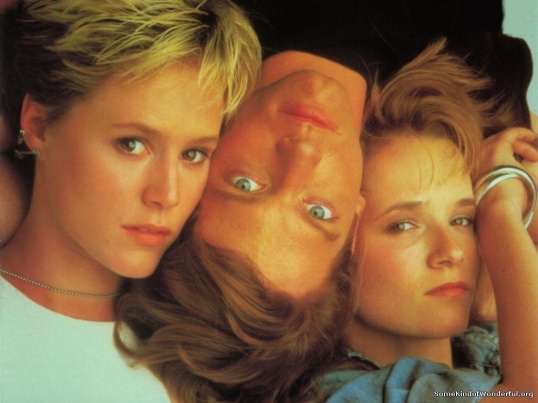
Some Kind of Wonderful is a story about an artistic, lower-class misfit who has a crush on one of the popular kids. The only problem is that the popular kid is being cruelly manipulated by one of the richest students in school. The misft also has a best friend who is totally in love with the misfit but the misft has somehow failed to notice this. Eventually, the misfit does get to date the popular kid. Both the popular kid and the misft are given a hard time by the members of their collective clique but they still manage to go on one truly amazing date. Finally, the film ends with a big show down at a party and two people kissing outside.
Sound familiar?
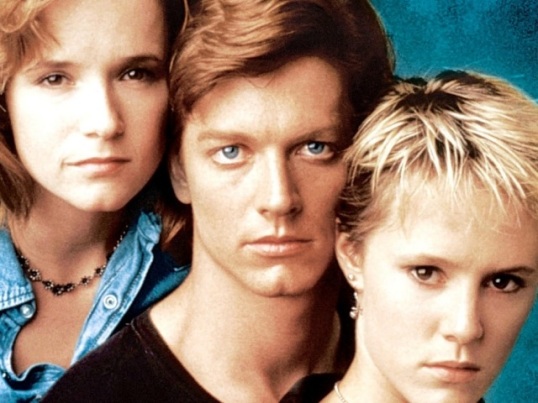
If it does, that probably means that you’ve seen Pretty In Pink. Some Kind of Wonderful is basically a remake of Pretty In Pink, the only difference being that the genders have been reversed and that the film is a lot more heavy-handed (and predictable) when it comes to examining class differences. (Not coincidentally, both films were written by John Hughes and directed by Howard Deutch and it must be said that when it comes to Some Kind of Wonderful, it’s easy to feel that both of them were simply going through the motions.) The misfit is an aspiring painted named Keith (Eric Soltz). His best friend is a drummer named Watts (Mary Stuart Masterson). The object of Keith’s affection is Amanda (Lea Thompson). Unfortunately, even though she lives in the same poor neighborhood as Keith and Watts, Amanda is dating the rich (and therefore, evil) Hardy (Craig Sheffer).
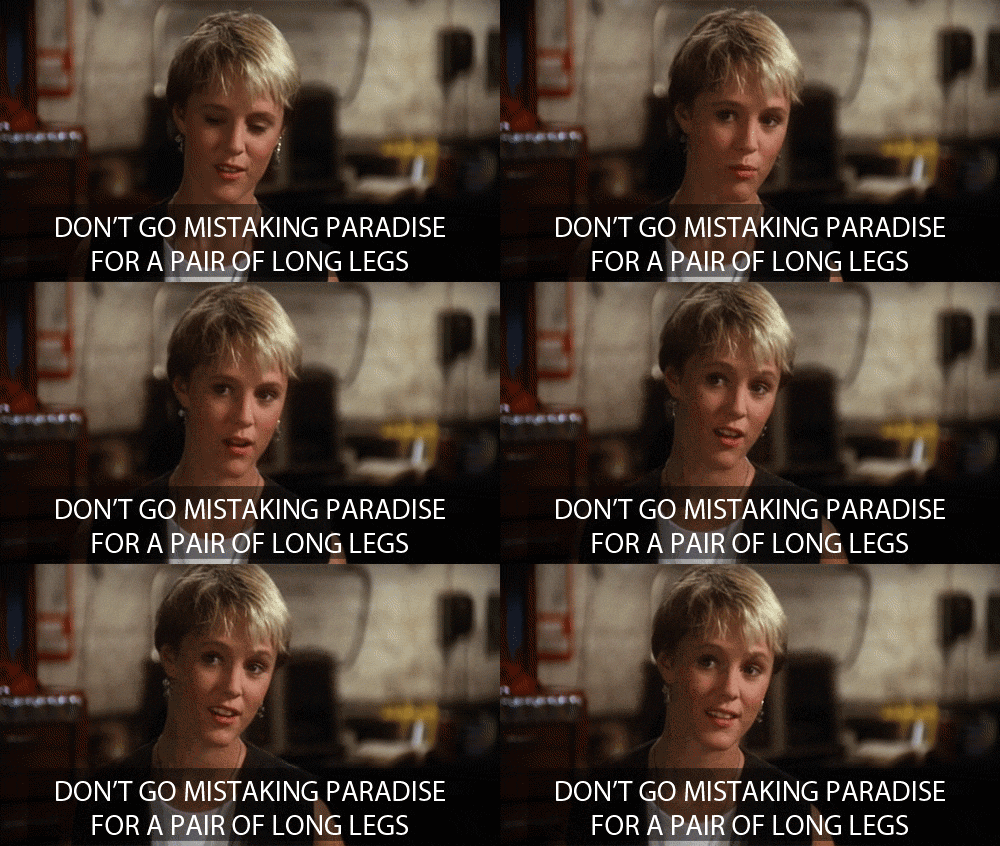
When Keith finally works up the nerve to ask out Amanda, he doesn’t realize that she’s just broken up with Hardy and is on the rebound. Watts is skeptical, telling Keith, “Don’t go mistaking paradise for a pair of long legs,” and I’m just going to admit that, as the proud owner of a pair of long legs, that line really annoyed me. I guess it’s because I’ve known people like Watts, who always act like there’s something wrong with wanting to look good.
Shut up, Watts.
With the help of Watts and Duncan (Elias Koteas), the school bully that Keith managed to befriend in detention, Keith takes Amanda out on an amazing date and shows her a wonderful portrait that he’s painted of her. At the same time, Hardy — angry because someone from a lower class is now dating his ex-girlfriend — starts to plot his own revenge…
There are some positive things about Some Kind of Wonderful. There are two really good and memorable scenes that, momentarily, manage to elevate the entire film. There’s the moment when Keith shows Amanda the painting. And then there’s the erotically charged scene in which Keith and Watts practice how to kiss. Koteas, Thompson, and Masterson all gives good performances. Eric Stoltz is, at times, a bit too intense to sell some of the film’s more comedic moments but overall, he’s well-cast here. (In fact, the only performance that I really didn’t care for was Craig Sheffer’s. Sheffer one-dimensional villain only served to remind me of how good James Spader was in Pretty In Pink.)
That’s no James Spader
And yet, there’s just something missing from Some Kind of Wonderful, something that keeps this film from being … well, wonderful. I have to wonder if I had never seen Pretty In Pink, would I have thought more of Some Kind of Wonderful? Perhaps. Whereas Pretty In Pink was full of the type of small details and clever moments that make it a joy to watch and rewatch, Some Kind of Wonderful is one of those films that you can watch once and enjoy it without ever necessarily feeling the need to ever watch it again.
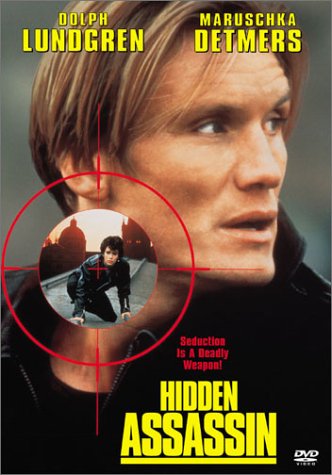 After the Cuban ambassador to the United States is assassinated, the CIA worries that someone is trying to create trouble between the USA and Cuba. With another Cuban-American summit due to be held in Prague, CIA Agent Dolph Lundgren is sent to arrest the assassin and bring her back to America to be tried before she can cause anymore trouble. The CIA claims that the assassin is a sniper-turned-club owner named Simone (Maruschka Detmers) but, once it becomes obvious that whoever wants to keep her from going to America want to not only kill him but also her as well, Dolph starts to suspect that there’s a bigger conspiracy at work.



 Through the Shattered Lens