Late Night Retro Television Review: CHiPs 5.2 “Vagabonds”


Welcome to Late Night Retro Television Reviews, a feature where we review some of our favorite and least favorite shows of the past!  On Mondays, I will be reviewing CHiPs, which ran on NBC from 1977 to 1983.  The entire show is currently streaming on Prime!
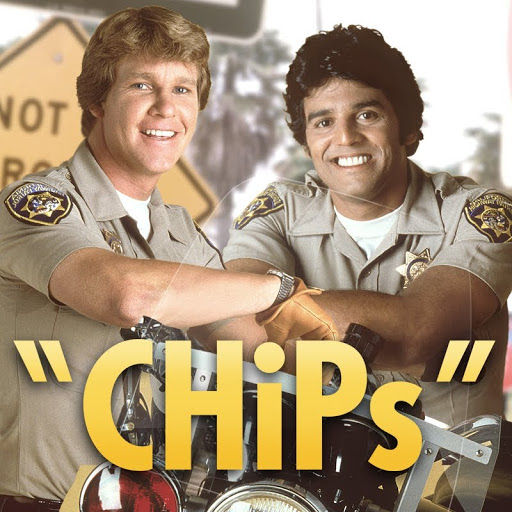
This week’s episode features a future Oscar nominee!

Episode 5.2 “Vagabonds”

(Dir by Bruce Kessler, originally aired on October 11th, 1981)

The saying goes that “everyone had to start somewhere,” and, for actor Ed Harris, somewhere included guest-starring on an episode of CHiPs.

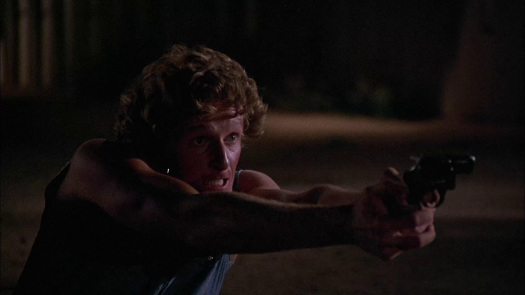
The future Oscar nominee appears as Lonny Wilson, the scion of a family of a hillbilly con artists.  He and his brother, Daws (Jesse Vint), purposefully cause auto accidents and con their victims out of their money in return for not calling the police or the insurance company.  Lonny’s young son, Jamie (James Calvert), is looking forward to joining the family business until he actually is injured while taking part in one of the family’s cons.  Lonny reconsiders his way of life and, by the end of the episode, he’s cooperating with the highway patrol.

Does Ed Harris come across as being a future star in this episode?  Well, he definitely has charisma.  He has screen presence.  That said, this is also CHiPs, a show that was mostly about capturing potentially serious auto accidents in slow motion.  No one came across as being a future star on ChiPs and that was actually a part of the show’s appeal.  The stars on CHiPs were always the motorcycles, the cars flipping over on the freeway, and Ponch’s blinding smile.  That said, Ed Harris gives a good performance.  For that matter, so does Jesse Vint as his brother.  This is a well-acted episode of CHiPs.  Such things do exist.

In all fairness, I should also note that, when this episode aired, Harris had already starred in George Romero’s Knightriders so, while Harris may not have been a household name, it’s probably still debatable whether or not this was really at the start of his career.  Ultimately, the important thing is that, two years after appearing this episode, Ed Harris would play John Glenn in 1983’s The Right Stuff and firmly established himself as one of our best character actors.

As for this episode, it also features the Highway Patrol taking part in a “supercycle” race, which is a race featuring bicycles that you lie down on as you peddle.  I don’t know why anyone would want to do that but whatever.  Jon Baker wins.  Yay, Highway Patrol!

On that note of victory, Retro Television Reviews is going on a holiday break so that I can focus on the Oscar precursor awards and reviewing Christmas movies so this will be last CHiPs review of 2025!  CHiPs will return on January 5th, 2026!
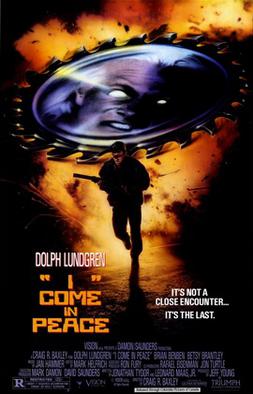
I Come In Peace (1990, directed by Craig R. Baxley)


“I come in peace.”

“And you go in pieces.”

How have I not reviewed this one yet?

Dolph Lundgren is Jack Crain, a Houston cop who teams up with FBI agent Larry Smith (Brian Benben) to investigate who is killing criminals in H-town.  The killer is a drug dealer but not your everyday drug dealer.  He’s an alien named Talec (Matthias Hues) and he’s figured out how to say “I come in peace,” but the rest of the English language is beyond him.  “I come in peace,” turns out to be the scariest phrase you can hear when you’re being pursued by a white-haired, intergalactic mass murderer.  His targets include Jesse Vint and Michael J. Pollard.  This terminator wannabe is after character actors!

On the second-tier action stars of the 90s, Lundgren was the one who could actually act.  Van Damme could actually do all the acrobatic stunts his characters did but he couldn’t show emotion like Lundgren.  Steven Seagal seemed like he could handle himself in a fight but he lacked Lundgren’s self-aware humor.  Lundgren plays Jack as almost being a parody of the type of hard-boiled cop who is always getting yelled at by the commissioner for wasting the city’s money.  Brian Benben is remembered, by some, as the star of HBO’s Dream On, the sitcom that convinced a generation of young men that there’s nothing women love more than obscure pop cultural obsessions.  Benben is actually pretty funny in I Come In Peace.  He’s the everyman who can’t believe he’s having to deal with an intergalactic drug dealer.  Good heroes need a good villain and Matthias Hues is just right as the drug dealing alien who literally doesn’t know what he’s saying.

If you want to see a Terminator rip-off with nonstop action, a memorable villain, frequently (and intentionally) funny dialogue, an Al Leong cameo, and Dolph Lundgren as a hero who pushes people around just because he feels like it, I Come In Peace is the movie for you!

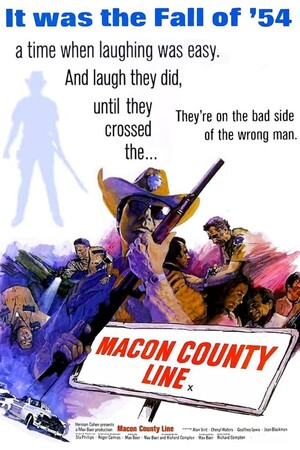
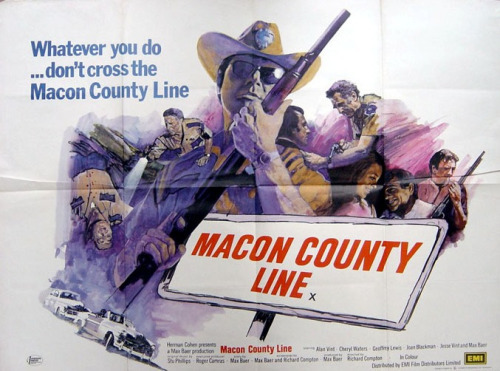
MACON COUNTY LINE – Jethro goes mad!


Max Baer, Jr. co-wrote, co-produced and co-starred in this southern fried thriller about a couple of good ‘ole boys (brothers Alan & Jesse Vint) who break down in the wrong county. The sheriff (Baer), who’s somewhat suspicious of the boys, goes after them with fierce vengeance when his wife is murdered.

I’m a big fan of this classic drive-in film. For one, I think it’s cool that Max Baer Jr., so well known as Jethro Bodine in the classic sitcom THE BEVERLY HILLBILLIES, took on this role of the somewhat racist sheriff who goes mad with rage in this movie. I enjoyed his performance very much. I also like these ‘70’s drive-in films. You get exactly what you expect in this tale, and it’s very entertaining. Finally, I like the Vint Brothers. Alan had an important role a year after this film was made in the Charles Bronson film BREAKOUT.  And what can I say about Jesse. Over the last few years, he’s actually become a friend in real life. He’s such a great guy, and he’s very proud of this movie. He told me one day that Tarantino had said it was one of “the best stories in cinema!” In the first season of his Video Archives podcast, I’ve personally heard Tarantino really brag on Jesse’s performance in the movie THE FORBIDDEN WORLD. I love it when good things happen to good people.

Drive-In Saturday Night 3: MACON COUNTY LINE (AIP 1974)/RETURN TO MACON COUNTY (AIP 1975)


gary loggins's avatarcracked rear viewer


Yee-haw! Southern Fried Exploitation was box office gold during the 1970’s, a  genre that usually had one or more of the following elements: race cars, moonshine, redneck sheriffs, scantily clad country girls, shotguns, and/or Burt Reynolds .  One of the foremost practitioners of this art was Max Baer, namesake son of the heavyweight boxer and erstwhile Jethro Bodine of TV’s THE BEVERLY HILLBILLIES, who scored a surprise hit when he produced, wrote, and costarred in 1974’s MACON COUNTY LINE.

The story’s set in the 50’s, complete with some vintage tunes on the soundtrack (The Chords’ “Sh-Boom”, Laverne Baker’s “Jim Dandy”, Big Joe Turner’s “Corrine, Corrina”). “The story is true”, reads a pre-credits scrawl, “only the names have been changed” (Actually, the story was concocted by Baer and director Richard Compton, but what the hey…). Brothers Chris and Wayne Dixon (played by brothers Alan and Jesse Vint ) are a pair…

View original post 781 more words

Existential Exploitation: BOBBIE JO & THE OUTLAW (AIP 1976)


gary loggins's avatarcracked rear viewer

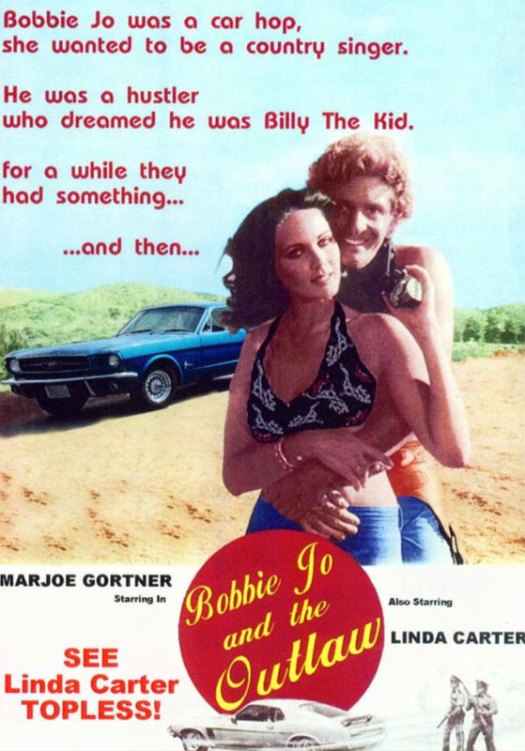
I discussed filmmaker Vernon Zimmerman in a post on his UNHOLY ROLLERS back in January. Zimmerman wrote the script (but did not direct) for 1976’s BOBBIE JO & THE OUTLAW, which on the surface is just another sex’n’violence laden redneck exploitation film. Yet after a recent viewing, it seemed to me Zimmerman was not just delving into exploitation, but exploring something more: disaffected youth, gun culture, the cult of personality, and violence in America, themes that still resonate today.

Former child evangelist turned rock star turned actor Marjoe Gortner is Lyle Wheeler, a drifter who enters quick draw contests and idolizes Billy the Kid. Lyle’s a hustler, as we find out as he pulls into a gas station and steals a Mustang from a travelling salesman. Lyle outruns a police car hot on his tail, causing the cop to go off the road, and revs into the next town, where…

View original post 458 more words

Embracing the Melodrama Part II #36: WUSA (dir by Stuart Rosenberg)


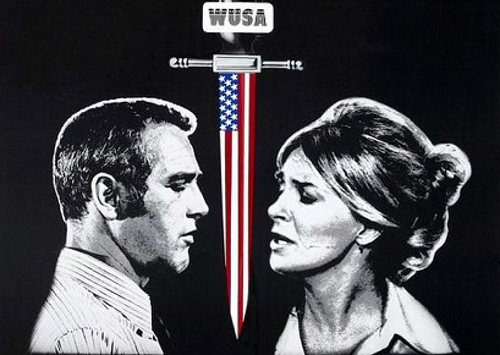
wusaI recently saw the 1970 film WUSA on Movies TV.  After I watched it, I looked Joanne Woodward up on Wikipedia specifically to see where she was born.  I was surprised to discover that she was born and raised in Georgia and that she attended college in Louisiana.

Why was I so shocked?  Because WUSA was set in New Orleans and it featured Joanne Woodward speaking in one of the most worst Southern accents that I had ever heard.  A little over an hour into the film, Woodward’s character says, “What’s all the rhubarb?”  And while “What’s all the rhu…” sounds properly Southern, the “…barb” was pronounced with the type of harshly unpleasant overemphasis on “ar” that has given away many Northern actors trying to sound Southern.  Hence, I was shocked to discover that Joanne Woodward actually was Southern.

That said, her pronunciation of the word rhubarb pretty much summed up every problem that I had with WUSA.  Actually, the real problem was that she said “rhubarb” in the first place.  It came across as being the type of thing that a Northerner who has never actually been down South would think was regularly uttered down here.  And I will admit that WUSA was made 16 years before I was born and so, it’s entirely possible that maybe — way back then — people down South regularly did use the word rhubarb.  But, for some reason, I doubt it.  I know plenty of old Southern people and I’ve never heard a single one of them say anything about rhubarb.

As for WUSA, it’s a long and slow film.  A drifter named Reinhardt (Paul Newman) drifts into New Orleans and, with the help of an old friend who is now pretending to be a priest (Laurence Harvey), Reinhardt gets a job as an announcer at a right-wing radio station.  He reads extremist editorials that he doesn’t agree with and whenever anyone challenges him, he explains that he’s just doing his job and nothing matters anyway.

Reinhardt also gets himself an apartment and spends most of his time smoking weed with long-haired musician types, the exact same people that WUSA regularly denounces as being a threat to the American way.  Living in the same complex is Geraldine (Joanne Woodward), a former prostitute who has a scar on her face and who says stuff like, “What’s all the rhubarb?”  She falls in love with Reinhardt but finds it difficult to ignore what he does for a living.

Meanwhile, Geraldine has another admirer.  Rainey (Anthony Perkins) is an idealistic and neurotic social worker who is regularly frustrated by his efforts to do good in the world.  Reinhardt makes fun of him.  The local crime boss (Moses Gunn) manipulates him.  And WUSA infuriates him.  When Rainey realizes that WUSA is a part of a plot to elect an extremist governor, Rainey dresses up like a priest and starts carrying around a rifle.

Meanwhile, Reinhardt has been assigned to serve as emcee at a huge patriotic rally.  With Geraldine watching from the audience and Rainey wandering around the rafters with his rifle, Reinhardt is finally forced to take a stand about the people that he works for.

Or maybe he isn’t.

To be honest, WUSA is such a mess of a film that, even after the end credits roll, it’s difficult to figure out whether Reinhardt took a stand or not.

Anyway, WUSA is not a lost masterpiece and I really wouldn’t recommend it to anyone.  The film’s too long, there’s too many scenes of characters repeating the same thing over and over again, and neither Newman nor Woodward are particularly memorable.  (You know a movie is boring when even Paul Newman seems like a dullard.)  On the plus side, Anthony Perkins gives such a good performance that I didn’t once think about the Psycho shower scene while watching him.

As boring as WUSA is, I have to admit that I’m a little bit surprised that it hasn’t been rediscovered.  Considering that it’s about a right-wing radio station, I’m surprised that there haven’t been hundreds of pretentious think pieces trying to make the connection between WUSA and Fox News.  But, honestly, even if those think pieces were out there, it probably wouldn’t do much for WUSA‘s repuation.  According to the film’s Wikipedia page, Paul Newman called it, “the most significant film I’ve ever made and the best.”  Paul Newman’s opinion aside, WUSA is pretty dire.