The Sixth Annual Academy Awards: 1919


At the 1919 Academy Awards, Evelyn Preer makes history, Harry Houdini is rewarded for playing himself, and Bolshevism goes on trial!

Jedadiah Leland's avatarThrough the Shattered Lens Presents The Oscars

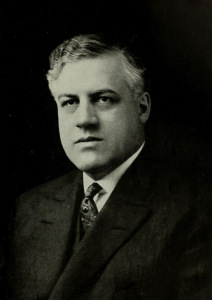
Attorney General A. Mitchell Palmer Attorney General A. Mitchell Palmer

In 1919, as the Spanish Flu continued to infect and kill millions, the world tried to recover from World War I.  After spending six months at the Paris Peace Conference, President Woodrow Wilson returned to the U.S. and launched an ultimately unsuccessful campaign to bring the United States into the newly formed League of Nations.  On September 25th, while barnstorming across the nation in support of the League, a physically exhausted Wilson collapsed and never truly recovered.  On October 2nd, a stroke left him partially paralyzed and blind in one eye.

Even before Wilson’s physical collapse, the U.S. population had reason to feel uncertain about the future.  On January 6th, the wildly popular Theodore Roosevelt died in his sleep.  Before his death, Roosevelt had been widely expected to run for President in 1920 and hopefully return the U.S. to the peace and prosperity…

View original post 1,108 more words
The Fourth Annual Academy Awards: 1917


Lisa and I continue to reimagine the Oscar history, one year at a time. Today, we look at 1917. The U.S. enters World War I, the Pickfords take over Hollywood, and, for the first time, the entire membership of the Academy gets to vote.

Jedadiah Leland's avatarThrough the Shattered Lens Presents The Oscars

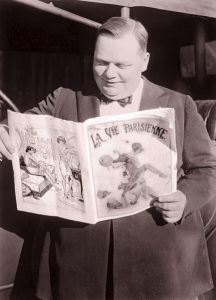
The host of the 4th Annual Academy Awards, Roscoe "Fatty" Arbuckle The host of the 4th Annual Academy Awards, Roscoe “Fatty” Arbuckle

On March 4th, 1917, President Woodrow Wilson took the oath of office and began his second term of President.  Just a few months earlier, he had run for reelection on a platform of maintaining American neutrality in the war that was ravaging Europe.  His slogan was “He Kept Us Out Of War,” and it was enough to allow him to survive one of the closest elections in U.S. History.

One month later, the U.S. declared war on Germany and entered into what would come to be called World War I.

Whereas the previous year had been dominated by films, like the Award-winning Civilization, that promoted neutrality and world peace, 1917 saw the release of several films that were designed to support the American war effort.  The pacifism of Civilization was forgotten as the box office embraced…

View original post 1,241 more words