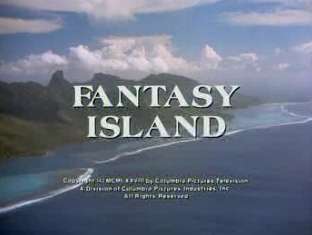
Retro Television Review: Fantasy Island 6.22 “Love Island/The Sisters”


Welcome to Retro Television Reviews, a feature where we review some of our favorite and least favorite shows of the past!  On Tuesdays, I will be reviewing the original Fantasy Island, which ran on ABC from 1977 to 1984.  Unfortunately, the show has been removed from most streaming sites.  Fortunately, I’ve got nearly every episode on my DVR.
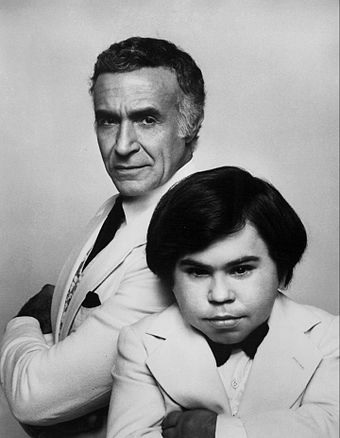
Today, the sixth season of Fantasy Island comes to a close and so does Tattoo’s time on the show.

Episode 6.22 “Love Island/The Sisters”

(Dir by Philip Leacock, originally aired on May 14th, 1983)

This is it.  This is not only the finale of season 6 but it’s also the final episode to feature Tattoo as Mr. Roarke’s assistant.

Why did Herve Villechaize leave Fantasy Island after the end of the sixth season?  The story that you always hear is that Villechaize wanted more money to continue working on the show.  He felt that he deserved to be paid as much as Ricardo Montalban.  The show’s producers disagreed.  To them, Montalban was not only the star of the show but also someone who has just appeared in a hit movie, Star Trek II: The Wrath of Kahn.  They felt that they could keep the show going without Villechaize and …. well, it turns out they were totally and completely wrong about that.

I have not seen much of the seventh season, in which Villechaize was replaced by Christopher Hewett.  And, due to the vagaries of my DVR, there’s a lot of season 7 that I won’t be able to review.  What I do know is that the show went from being #39 to bring ranked #47 in the ratings after Villechaize left.  Obviously, being the 39th ranked show was nothing to brag about but it was still a helluva lot better than #47.  Villechaize left and a lot of the audience left with him.

I’ve made a lot of jokes about Roarke and Tattoo’s relationship.  Especially during the early seasons, Roarke and Tattoo sometimes did seem to be friendly rivals.  (That was when Roarke was a far more enigmatic fellow and Tattoo always seemed to be trying to figure out a way to make some extra money on Fantasy Island.)  Remember when Tattoo ran against Mr. Roarke in an Island election?  That said, Roarke and Tattoo’s relationship really was the heart of the series.  The fantasies themselves were often forgettable.  How many times can you get excited about seeing a member of the Brady Bunch as a guest star?  The thing that people really remember about Fantasy Island is the relationship between Roarke and Tattoo.  Regardless of what went on behind the scenes, Montalban and Villechazie had a good on-camera chemistry.  It was fun to watch them interact.  I always enjoyed the episodes that allowed Villechaize to reveal Tattoo’s sensitive side.  (In real life, Villechaize was an advocate for abused children, often taking the time to personally visit with children who had been rescued from abusive households.)

This is all my long-winded way of saying that they should have just agreed to pay Herve Villechaize more money.

At the very least, they should have given him a proper goodbye episode.  The sixth season ends with a rather basic episode, with no mention made of Tattoo leaving or even thinking of leaving.  Instead, we get Maureen McCormick going to a mysterious mansion to rescue her old sister (Britt Ekland) from an abusive man (played by Peter Mark Richman).  And then we get Bob Denver and Paul Kreppel as two wannabe womanizers who end up in prehistoric times, trying to romance a cavewoman while dealing with dinosaurs.  The dinosaur effects were cheap but likable but they were also the only thing that really made either of their fantasies stand-out.

And so, season 6 ends, not with a bang but a whimper.  Tattoo waves goodbye one last time.  I’m going to miss him.
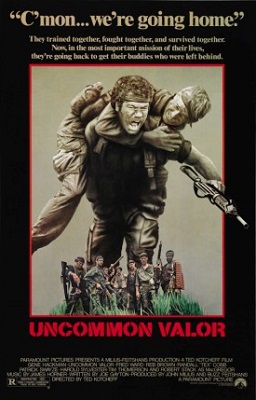
Uncommon Valor (1983, directed by Ted Kotcheff)


Retired Marine Colonel Jason Rhodes (Gene Hackman) and oilman Harry MacGregor (Robert Stack) share a tragic bonf.  Both of them have sons that served in Vietnam and are listed as being MIA.  Believing that their sons are still being secretly held in a POW camp in Loas, Rhodes and MacGregor put together a team to sneak into Southeast Asia and rescue them.

With MacGregor supplying the money and Rhodes leading the mission, the team includes Blaster (Red Brown), Wilkes (Fred Ward), Sailor (Randall “Tex” Cobb), and Charts (Tim Thomerson), all of whom served with Rhodes’s son.  Also joining in his helicopter pilot Curtis Johnson (Harold Sylvester) and former Marine Kevin Scott (Patrick Swayze), whose father was also listed as being MIA in Vietnam.  After a rough start, the group comes together and head into Laos to bring the prisoners home!

Uncommon Valor is one of the many movies released in the 80s in which Vietnam vets returned to Asia and rescued those who were left behind.  In the 80s, there was a very strong belief amongst many Americans that soldiers were still being held prisoner in Vietnam, Cambodia, and Laos and Hollywood was quick to take advantage of it.  The box office success of Uncommon Valor set the stage for films like Rambo and Missing In Action, film in which America got the victory that it had been denied in real life.

What set Uncommon Valor apart from the films that followed was the cast.  Not surprisingly, Gene Hackman brings a lot more feeling and nuance to his performance as the obsesses Col. Rhodes than Sylvester Stallone and Chuck Norris brought to their trips to Vietnam.  The film surrounds Hackman with a quirky supporting cast, all of whom represent different feelings about and reactions to the war in Vietnam.  Fred Ward’s character suffers from PTSD.  Randall “Tex” Cobb, not surprisingly, is a wild man.  Patrick Swayze’s character is trying to make the father he’ll never know proud.  Robert Stack and Gene Hackman represent the older generation, still trying to come to terms with everything that was lost in Vietnam and still mourning their sons.  The raid on the POW camp is exciting but it doesn’t feature the type of superhuman action that’s present in other POW-rescue films.  Col. Rhodes and his soldiers are ordinary men.  Not all of them survive and not all of them get what they want.

Uncommon Valor started out as a screenplay from Wings Hauser, though he’s not present in the cast of the final film and he was only given a “story” credit.  John Milius served as producer. Director Ted Kotcheff is best-known for First Blood, another action film about America’s struggle to come to terms with the Vietnam War.

Lisa Marie Reviews An Oscar Nominee: Reds (dir by Warren Beatty)


In the 1981 film Reds, Warren Beatty plays Jack Reed, the radical journalist who, at the turn of the century, wrote one of the first non-fiction books about Russia’s communist revolution and then went on to work as a propagandist for the communists before becoming disillusioned with the new Russian government and then promptly dying at the age of 32.

Diane Keaton plays Louise Bryant, the feminist writer who became Reed’s lover and eventually his wife.  Louise found fame as one of the first female war correspondents but then she also found infamy when she was called before a Congressional committee and accused of being a subversive.

Jack Nicholson plays Eugene O’Neill, the playwright who was a friend of both Reed and Bryant’s and who had a brief affair with Bryant while Reed was off covering labor strikes and the 1916 Democratic Convention.

Lastly, Maureen Stapleton plays Emma Goldman, the anarchist leader who was kicked out of the country after one of her stupid little dumbass followers assassinated President McKinley.  (Seriously, don’t get me started on that little jerk Leon Czolgosz.)

Together …. well, I was going to say that they solve crimes but that joke is perhaps a bit too flippant for a review of RedsReds is a big serious film about the left-wing activists at the turn of the century, one in which the characters move from one labor riot to another and generally live the life of wealthy bohemians.  Reed spends the film promoting communism, just to be terribly disillusioned when the communists actually come to power in Russia.  For a history nerd like me, the film is interesting.  For those who are not quite as obsessed with history, the film is extremely long and the scenes of Reed and Bryant’s domestic dramas often feel a bit predictable, especially when they’re taking place against such a large international tableaux.  At its best, the film is almost a Rorschach test for how the viewer feels about political and labor activists.  Do you look at Jack Reed and Louise Bryant and see two inspiring warriors for the cause or do you see two wealthy people playing at being revolutionaries?

Reds was a film that Warren Beatty spent close to 20 years trying to make, despite the fact that the heads of the Hollywood studios all told him that audiences would never show up for an epic film about a bunch of wealthy communists.  (The heads of the studio turned out to be correct, as the film was critically acclaimed but hardly a success at the box office.)  It was only after the success of the 1978, Beatty-directed best picture nominee Heaven Can Wait that Beatty was finally able to get financing for his dream project.  He ended up directing, producing, and writing the film himself and he cast his friend Jack Nicholson as O’Neill and his then-romantic partner Diane Keaton as Louise Bryant.  (Gene Hackman, Beatty’s Bonnie and Clyde co-star, shows up briefly as one of Reed’s editors.)  One left-wing generation’s tribute to an early left-wing generation, Reds is fully a Warren Beatty production and, for his efforts, Beatty was honored with the Oscar for Best Director.  That said, the Reds lost the award for Best Picture to another historical epic, Chariots of Fire.  Chariots of Fire featured no communists and did quite well at the box office.

The film is good but a bit uneven, especially towards the end when we suddenly get scenes of Louise Bryant trudging through Finland as she attempts to make it to Russia to be reunited with Reed.  The film actually works best when it features interviews with people who were actual contemporaries of Reed and Bryant and who share their own memoires of the time.  In fact, the interviews work almost too well.  The “witnesses,” as the film refers to them, paint such a vivid picture of the Reed, Bryant, and turn of the century America that Beatty’s attempt to cinematically recreate history often can’t compete.  One can’t help but feel that Beatty perhaps should have just made a documentary instead of a narrative film.

(Interestingly enough, many of the witnesses were people who were sympathetic to Reed’s politics in at the start of the century but then moved much more to the right as the years passed.  Reed’s friend and college roommate, Hamilton Fish, went on to become a prominent Republican congressman and a prominent critics of FDR.)

That said, Jack Nicholson gives a fantastic performance as Eugene O’Neill, adding some much needed cynicism to the film’s portrayal of Reed and Bryant’s idealism.  Keaton and Beatty sometime both seem to be struggling to escape their own well-worn personas as Bryant and Reed but Beatty does really sell Reed’s eventually disillusionment with Russia and the scene where he finally tells off his Russian handler made me want to cheer.  Fans of great character acting will want to keep an eye out for everyone from Paul Sorvino to William Daniels to Edward Herrmann to M. Emmet Walsh and IanWolfe, all popping up in small roles.

Reds is not a perfect film but, as a lover of history, I enjoyed it.