A Movie A Day #219: Wild Bill (1995, directed by Walter Hill)


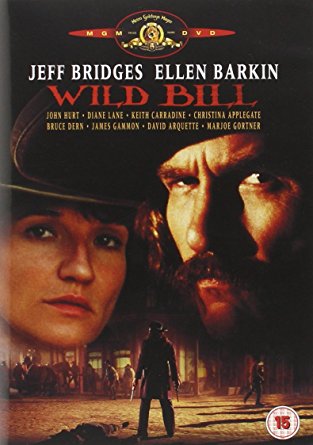
The year is 1876 and the legendary Wild Bill Hickok (Jeff Bridges) sits in a saloon in Deadwood and thinks about his life (most of which is seen in high-resolution, black-and-white flashbacks).  Hickok was a renowned lawman and a sure shot, a man whose exploits made him famous across the west.  Thanks to his friend, Buffalo Bill Cody (Keith Carradine), he even appeared on the New York stage and reenacted some of his greatest gun battles.  Now, Hickok is aging.  He is 39 years old, an old man by the standards of his profession.  Though men like Charlie Prince (John Hurt) and California Joe (James Gammon) continue to spread his legend, Hickok is going blind and spends most of his time in a haze of opium and regret.

Hickok only has one true friend in Deadwood, Calamity Jane (Ellen Barkin).  He also has one true enemy, an aspiring gunslinger named Jack McCall (David Arquette).  McCall approaches Hickok and announces that he is going to kill him because of the way that Hickok treated his mother (played, in flashback, by Diane Lane).  Hickok does not do much to dissuade him.

Based on both a book and a play, Wild Bill is a talky and idiosyncratic Western from Walter Hill.  Hill is less interested in Hickok as a gunfighter than Hickok as an early celebrity.  There are gunfights but they only happen because, much like John Wayne in The Shootist, Hickok has become so famous that he cannot go anywhere without someone taking a shot at him.  Almost the entire final half of Wild Bill is set in that saloon, with Hickok and a gallery of character actors talking about the past and wondering about the future.

At times, Wild Bill gets bogged down with all the dialogue and philosophizing.  (To quote The Good, The Bad, and the Ugly: “When you have to shoot, shoot.  Don’t talk.”)  Luckily, the film is saved by an intriguing cast, led by Jeff Bridges.  In many ways, his performance was Wild Bill feels like an audition for his later performance in True Grit.  David Arquette is intensely weird as the jumpy Jack McCall and Ellen Barkin brings the film’s only underwritten role, Calamity Jane, to life.  Smaller roles are played by everyone from Bruce Dern to James Remar to Marjoe Gortner.

United Artist made the mistake of trying to sell Wild Bill as being a straight western, which led to confused audiences and a resounding flop at the box office.  Ironically, years after the release of Wild Bill, Walter Hill won an Emmy for directing the first episode of HBO’s Deadwood, an episode the featured Wild Bill cast member Keith Carradine in the role of Hickok.
A Movie A Day #217: Wyatt Earp (1994, directed by Lawrence Kasdan)


Once upon a time, there were two movies about the legendary Western lawman (or outlaw, depending on who is telling the story) Wyatt Earp.  One came out in 1993 and the other came out in 1994.
The 1993 movie was called Tombstone.  That is the one that starred Kurt Russell was Wyatt, with Sam Elliott and Bill Paxton in the roles of his brothers and Val Kilmer playing Doc Holliday.  Tombstone deals with the circumstances that led to the Gunfight at the O.K. Corral.  “I’m your huckleberry,” Doc Holliday says right before his gunfight with Michael Biehn’s Johnny Ringo.  Tombstone is the movie that everyone remembers.

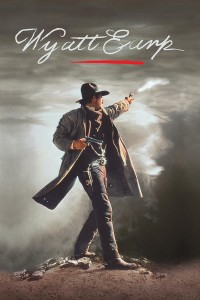
The 1994 movies was called Wyatt Earp.  This was a big budget extravaganza that was directed by Lawrence Kasdan and starred Kevin Costner as Wyatt.  Dennis Quaid played Doc Holliday and supporting roles were played by almost everyone who was an active SAG member in 1994.  If they were not in Tombstone, they were probably in Wyatt Earp.  Gene Hackman, Michael Madsen, Tom Sizemore, Jeff Fahey, Mark Harmon, Annabeth Gish, Gene Hackman, Bill Pullman, Isabella Rossellini, JoBeth Williams, Mare Winningham, and many others all appeared as supporting characters in the (very) long story of Wyatt Earp’s life.

Of course, Wyatt Earp features the famous Gunfight at the O.K. Corral but it also deals with every other chapter of Earp’s life, including his multiple marriages, his career as a buffalo hunter, and his time as a gold prospector.  With a three-hour running time, there is little about Wyatt Earp’s life that is not included.  Unfortunately, with the exception of his time in Tomstone, Wyatt Earp’s life was not that interesting.  Neither was Kevin Costner’s performance.  Costner tried to channel Gary Cooper in his performance but Cooper would have known better than to have starred in a slowly paced, three-hour movie.  The film is so centered around Costner and his all-American persona that, with the exception of Dennis Quaid, the impressive cast is wasted in glorified cameos.  Wyatt Earp the movie tries to be an elegy for the old west but neither Wyatt Earp as a character nor Kevin Costner’s performance was strong enough to carry such heavy symbolism.  A good western should never be boring and that is a rule that Wyatt Earp breaks from the minute that Costner delivers his first line.

Costner was originally cast in Tombstone, just to leave the project so he could produce his own Wyatt Earp film.  As a big, Oscar-winnng star, Costner went as far as to try to have production of Tombstone canceled.  Ironically, Tombstone turned out to be the film that everyone remember while Wyatt Earp is the film that most people want to forget.

Back to School #19: The Pom Pom Girls (dir by Joseph Ruben)


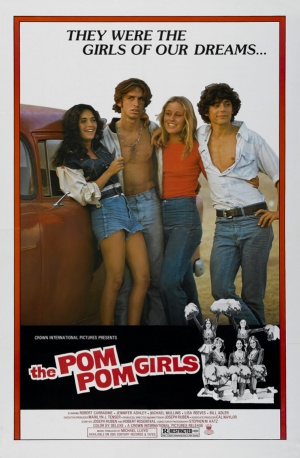
The Pom Pom Girls was released in 1976, the same year as Massacre at Central High.  It also features two actors who made quite an impression in Central High — Robert Carradine and Rainbeaux Smith.  However, that is where the similarities end because, whereas Central High was a political allegory disguised as an exploitation film, The Pom Pom Girls is an almost prototypical 70s teen comedy.  Whereas Central High was all about subtext, The Pom Pom Girls has no subtext.  Try to look between the lines of The Pom Pom Girls and all you’ll find is blank space.  And, finally, while Central High remains a difficult film to see, I’ve lost track of how many of my Mill Creek box sets include The Pom Pom Girls.

300px-Pompom_girls_2

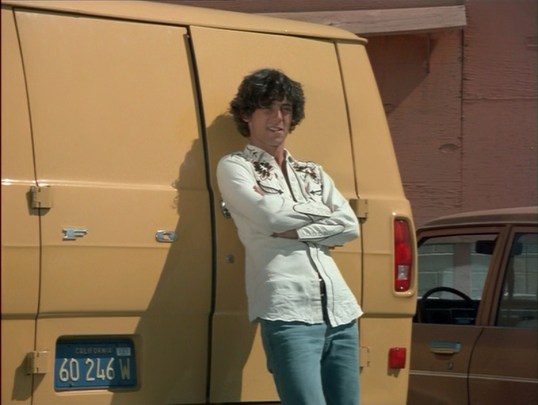
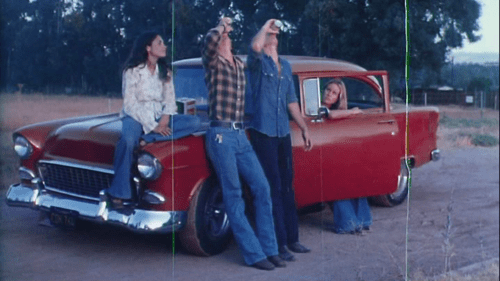
The Pom Pom Girls is about … well, close to nothing.  Johnnie (Robert Carradine) and Jesse (Michael Mullins) are students at Rosewood High School in California.  Because the film was made in 1976, they spend most of their time driving around in a van and listening to MOR radio stations.  Johnnie and Jesse are also star football players, which is one of the odd things about the film because, while Carradine is genuinely likeable and Mullins makes for a plausible sullen high school student, neither one of them comes across as if they could be football players.  The big game comes up against rival Hardin High, so there’s a prank war that involves a little more nudity than the ones on Saved By The Bell ever did.  Johnnie and Jesse also have girlfriends, both of whom are cheerleaders.  Jesse cheats on his girlfriend but apparently, the audience is supposed to sympathize with him because she refused to go to the beach with him.  Johnnie, meanwhile, has a leather jacket-wearing nemesis named Duane (Bill Adler), who is upset because Johnnie is dating his ex.  As often happens, it all ends with a recreation of the famous “chicken run” from Rebel Without A Cause.  We watch a car explode from three different angles. In order to leave you with some suspense, I will not mention whether anyone was in the car.

You’re welcome.

And a fun time was by all...

And a fun time was by all…

One of the strange things about The Pom Pom Girls is that while the two main characters and their girlfriends are all presented as being rebels, they’re also presented as being the most popular kids in school.  Johnnie and Jesse are the captains of the football team.  They’re dating the captains of the cheerleading squad.  Despite the movie’s attempts to convince us otherwise, these people are not rebels fighting the establishment.  Instead, they are the establishment.  This is actually something that The Pom Pom Girls has in common with Richard Linklater’s far superior Dazed and Confused.  The difference, however, is that Dazed and Confused actually calls its character out on the hypocricy of their posturing while The Pom Pom Girls just tries to have the best of both worlds.  Johnnie is both a star football player and the class clown who breaks the rules.  Jesse is both a great team player and an angry individualist.  I guess that’s the 70s for you.

He owns a van.  It has shag carpeting and a strobe light.

He owns a van. It has shag carpeting and a strobe light.

Back in high school, I was often asked to try out for cheerleading but I never did.  For one thing, I didn’t see why I should have to try out when they could have just easily approached me and said, “Hi, will you please be the new head cheerleader?”  Even beyond that, I couldn’t stand the idea of always having to be happy.  And, perhaps most importantly, my sister was already a cheerleader and I wanted to establish my own thing.  However, I still made Erin watch The Pom Pom Girls with me and I asked her if the film was a realistic portrait of high school cheerleading.  In response, she rolled her eyes which I believe was her way of saying no.

But, even if it isn’t exactly Bring It On, The Pom Pom Girls still does have some worth as a time capsule of the clothing, attitudes, and vans of the 70s.  To be honest, that’s probably the only thing of value that The Pom Pom Girls has to offer because, otherwise, it’s basically a film about a likable guy who spends all of his time hanging out with a guy who will literally not stop whining about being a football player and how nobody is willing to go to the beach with him.

Incidentally, The Pom Pom Girls was released by Crown International Pictures.  Much like the company’s previous film, The Young Graduates, the main message here appears to be that the 70s kind of sucked.

CIP_Logo