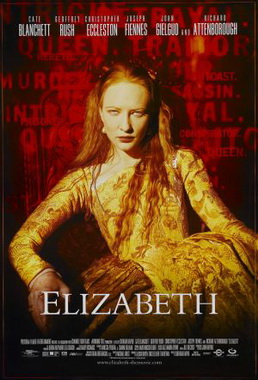
Embracing the Melodrama Part II #97: Elizabeth (dir by Shekhar Kapur)


Elizabeth_Poster“I am no man’s Elizabeth!”

— Queen Elizabeth I (Cate Blanchett) in Elizabeth (1998)

I have to admit that I always feel guilty about the fact that I love movies about British royal history.  After all, I have roots in Northern Ireland and I was raised Catholic.  If anything, I should refuse to watch films about British royalty on general principle.  I should be writing more reviews of films like Bloody Sunday.

But I can’t help myself.  Whether it’s because I enjoy looking at all of the costumes or I just have a thing for movies set in drafty old castles, I have a weakness for films about British royalty.  (And I will also admit that I sat through the entire royal wedding and I have a bit of a girlcrush on both Pippa and Kate Middleton.  As I said, I just can’t help myself.)

Of course, some of it definitely has to do with the fact that I’m an unapologetic history nerd.  I am fascinated with how people lived in the past.  And, of course, anyone who shares my obsession understands that, when it comes to history, there’s both the official story and the truth.  The official story is something that’s passed down over the centuries.  It’s what we learn in school.  The truth, however, is always far more obscure.  The truth is what historians piece together from what little gossipy evidence has managed to survive the passage of time.

We all know that the official story of Queen Elizabeth I is that she was England’s greatest Queen, she defeated the Spanish Armada, and she never married.  She was the “Virgin Queen,” forsaking love to serve her nation.  That’s the official story but is it the truth?

That’s the question at the heart of the 1998 Best Picture nominee Elizabeth.  Now, don’t get me wrong.  I’m not arguing that Elizabeth represents the truth.  Historically, the film is messy and full of speculation that is less based on evidence and more on the desire to keep things cinematic.  But still, Elizabeth is an interesting film specifically because it takes a historical figure and dares to suggest that she may have been human before she became an icon.

Cate Blanchett gives a great performance in the role of Elizabeth.  When we first meet her, she’s a somewhat silly girl who is less concerned with politics and religion and more concerned with her boyfriend, Robert Dudley (Joseph Fiennes).  Elizabeth is also the protestant half-sister of Catholic Queen Mary (Kathy Burke).  Mary is planning on ordering Elizabeth’s execution but dies of stomach cancer before she gets around to singing the order.

Suddenly, Elizabeth is Queen of England.  Young and insecure, she is, at first, manipulated by advisors like William Cecil (Richard Attenbrough), who pressures her to marry the cross-dressing Henry III (Vincent Cassel) of France.  Meanwhile, the Pope (John Gielgud) signs an order calling for Elizabeth’s death.  Catholic nobleman Thomas Howard (Christopher Eccleston) and mysterious priest John Ballard (Daniel Craig) conspire to assassinate Elizabeth.  With even Robert Dudley giving her reason to distrust him, Elizabeth discovers that her only ally is the enigmatic and ruthless “spymaster,” Francis Walsingham (Geoffrey Rush). It all ultimately ends in a sequence that basically transports the finale of The Godfather to the Elizabethan era.

I really should not like Elizabeth.  It’s undoubtedly an anti-Catholic film, though it’s nothing compared to the histrionic anti-Catholicism of its sequel, Elizabeth: The Golden Age.  But I can’t help myself, I enjoyed Elizabeth.  It was impossible for me not to relate to Cate Blanchett’s passionate performance.  (And there was just something so incredibly hot about the way Joseph Fiennes, with his intense eyes, would stare at her.)  When you ignore the film’s protestant bias and just concentrate on the performances and the gorgeous production design, you can’t help but love Elizabeth.
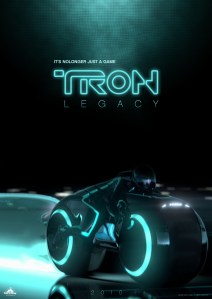
A Guilty Pleasure – Tron:Legacy


For January, one of the themes for this month were “Guilty Pleasures”- those films that you simply can’t get enough of, despite how good or bad they may actually be. My first contribution for this is 2010’s Tron: Legacy.

When I look at Tron:Legacy, I see two things. I see a missed opportunity in trying to break new ground for the story, and a hint of promise from it’s director, Joseph Kosinski. I attended the premiere for the movie at the IMAX with a friend and his son, and was totally with it for the first half of the film. However, in it’s second half, it slowed down just like the film before it and admittedly, I almost fell asleep. Let’s face it, Tron as an overall universe was never really that strong.

And yet, I watch it just about every time it’s on, if only for the Lightcycle Race and Clu’s speech. Seeing the grid in an updated view and the new look of the light cycles always brings a smile to my face. Granted, it could be listed just as a Scene I Love, but I find I can tolerate most of the film.

Let’s go with the Missed Opportunities first.

Tron: Legacy’s biggest problem is it really only gave the audience a rehash of the original tale. While the angle with Sam and Kevin Flynn were interesting, along with Clu being a villain this time around, I feel the writers really could have taken the story places. Instead, they went the lazy route and decided to go with what anyone who saw the original film could remember – a problem that I feel plagues many sequels / remakes of old films. I figure if you’re going to do a sequel to film that’s more than 5 years old, be seriously prepared to throw something (at least one thing) new on the table.

When James Cameron made Aliens back in 1986, he took Ridley Scott’s tale and built on it, expanding on the Aliens universe with the addition of the Colonial Marines and the Alien Queen, giving the creatures themselves a sense of heirarchy. For Tron: Legacy, the only real new element would be the ISO’s, but then we’re never really shown just what they’re capable of, within or outside of the grid. It’s an empty element that only serves the purpose for bring Sam and Kevin together.

Tron: Legacy also suffers from a Video Game Tie-In Syndrome, something I’ve hated ever since The Matrix Reloaded. Back when that movie was due to come out, Warner Bros. And Atari came up with the idea of making a Video Game that would bridge the gap between certain elements in the story. If you play Enter the Matrix, you’ll actually have a slightly more complete story than you would by just seeing the film. That robs the audience of content. Granted, they don’t need to know everything, but Tron: Legacy has a few elements that are only really understood in the story for it’s video game, Tron: Evolution.

Then there’s the sense of promise.

Joseph Kosinski was originally a commercial director, his most famous being one for the game Gears of War that featured the Gary Jules version of “Mad World”. Between this and his Halo commercials, it made sense that for the visual style that Tron: Legacy needed, he’d make a perfect fit. Tron needed something new, wasn’t that critical of a franchise to play with and gave Kosinski the freedom to take it wherever he wanted to go (within the constraints of what the writers gave him, of course). For a first time film director, I think he did very well, but that’s just me. It should also be noted that it was his idea to bring on Daft Punk for the soundtrack. If the movie is remembered for anything over time, it’ll be for the music, because that score is just cool.

Tron:Legacy on a visual scale is really beautiful, and it’s cool to see the design updates in the machines, by way of Digital Domain and other F/X companies. That alone is enough for me to watch this repeatedly (it’s on as I’m writing this). I haven’t found myself compelled to pick up the Blu-Ray, but Starz and Netflix have it available to watch.

If he’s lucky, Kosinski may end up getting a project that he’ll really take off with. Maybe it’ll be something of his own making or another remake, but for me it’ll be interesting to see where he goes.

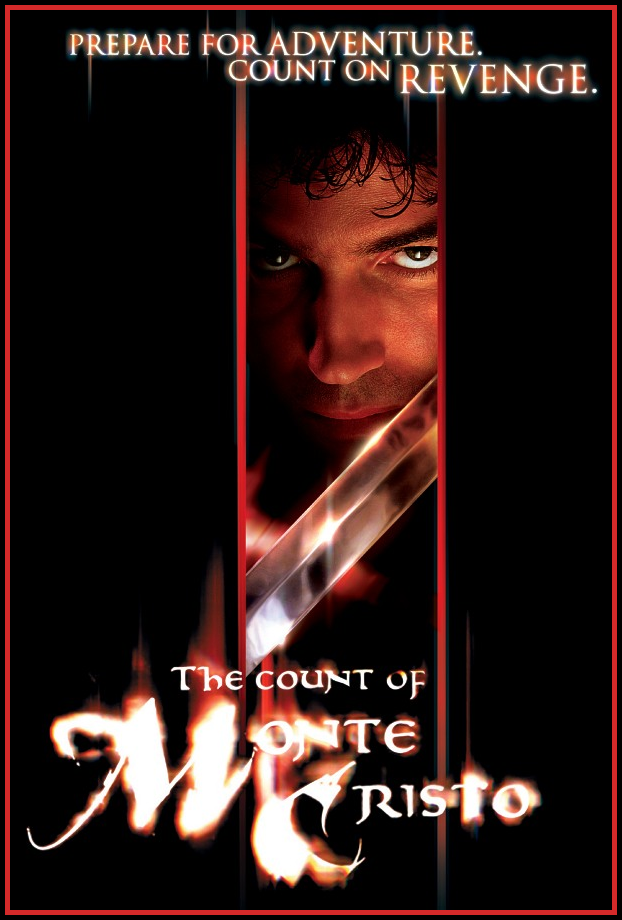
Review: The Count of Monte Cristo (dir. by Kevin Reynolds)


In what has become an unofficial ritual for myself whenever my birthday rolls around I always end up watching a film from 2002 that flew under the radar of most people. While it made modest box-office returns it wasn’t the head-turning blockbuster that some of its producers hoped it would turn out to be. It’s a romantic adventure piece by Kevin Reynolds and for readers of classic literature they’d recognize the title of the film, The Count of Monte Cristo. A film loosely based on the classic novel of adventure, revenge and redemption by French author Alexandre Dumas. The film ends up being a fun, thrilling throwback to films of an era which had marquee stars such as Errol Flynn and Basil Rathbone.

The story is one known well enough. It’s a tale of a man, Edmond Dantès wrongly accussed of a capital crime and imprisoned in the Alcatraz-like prison Chateau d’If through the machinations of three individuals: his best friend Fernand Mondego, first mate Danglars and the ambitious deputy prosecutor Villefort. Dantès spends the next several years in Chateau d’If under the cruel and sadistic eyes of it’s warden, Armand Dorleac (played by Michael Wincott with his usual flair for sadism). It’s while Dantès  has started to contemplate suicide after rejecting God for the pain and suffering he has had to endure that he has a fortuitious meeting with another guest of Chateau d’If. It’s this relationship between Dantès and Abbé Faria (Richard Harris in the mentor role he had begun to play in his later years) which take up the bulk of the first third of the film.

Dantès tells him of the circumstances which led to his imprison in Chateau d’If and the thoughts of vengeance on those responsible for his predicament. Faria tries to turn him from his dark path, but seeing how determined his young friend seems on journeying down its twisted path he agrees to teach him how to become adept at being a noble, finances and in swordcraft in exchange for help in digging themselves out of their prison. Taking several more years to complete the education Dantès needs to exact his revenge it ends at the death of Faria and his mentor’s final gift to his student. The location of a treasure so vast that Dantès could retire to a life of peace and contemplation or fund his plans of vengeance.

The middle section of the film shows Dantès finding the treasure and remaking himself through his newfound wealth as the Count of Monte Cristo to better insinuate himself amongst the wealthy and noble-born his targets mingle in. With the help of a bandit whose life spares after a duel in Jacopo (Luis Guzman) the plans Dantès has worked on for years begin to bear fruit as he manipulates and fools Fernand, Villefort and Danglars into his confidence to better see to their downfall. It’s during this time he meets his former fiancee Mercedes (played by the ridiculously beautiful Dagmara Dominczyk), now Countess Mondego after being told of Edmond’s execution earlier in the film, and Fernand’s son Albert. The circumstances of how his former love having had a child and married to one of the men who had conspired against him brings a new complication to Dantès plans.

The last third of the film shows the culmination of Dantès and his elaborate plans to bring about the downfall of all those who had wronged him. While the plans, at times, strain the bonds of disbelief at actually having fooled and worked against his enemies the way the film makes the audience root for Dantès to succeed helps. This is a Dantès who comes off as noble despite being of commoner origins who we stand behind and support in his plans of vengeance. With the amount of wealth at his disposal it’s not too difficult to put oneself in the same shoes and not think of vengeance as well to strike a balance.

It’s a testament to the direction of filmmaker Kevin Reynolds that the film and it’s story never bogs down despite a story with many elaborate plots and secondary characters introduced midway. The fact that the film only borrows some of its complexity from an even more labyrinthine novel shows how the filmmakers actually had to simplify the story as to not make it so complex that it loses the bulk of its audience.

The Count of Monte Cristo also benefit from a strong cast led by Jim Caviezel in the titular role with Guy Pearce playing his former friend and betrayer Fernand Mondego and James Frain as the prosecutor Villefort. Caviezel plays his role as Dantès and as the Count of Monte Cristo as two different people with distinct personalities. There’s Dantès the earnest sailor who just wanted to get back to his love, Mercedes and then there’s the sophisticated and ruthless Count whose machinations would lead to the destruction of lives and reputations. It’s a mystery why Caviezel hasn’t become the star he surely was in the making and this film showed that he had the talent to become one of the industry’s new leading men. I blame Mel Gibson in casting him as Jesus in The Passion of the Christ for having put a curse on Caviezel.

Guy Pierce in the role of Fernand plays the conniving and remoreless villain role to the hilt. With an overbearing and effete noble bearing to his performance it was a character written to inspire hatred not just in its main protagonist but in the audience as well. Pearce knows what his roles represent and has fun playing up the role as main heavy.

Richard Harris as the priest Faria did his usual great work as the elder mentor to a younger man. It was a role he began to be known for starting with Ridley Scott’s Gladiator right up to his final mentor role as the wizard Dumbledore in the Harry Potter film franchise. It’s hard to explain to people that Harris was not always this wise and mentoring father figure, but one who played roles where he’d play womanizers, charming cads and roguish rebel.

The Count of Monte Cristo ended up being more fun than it should be with enough complexities in its storytelling that the film doesn’t dumb down too much the story it was adapted from. To be honest the only way one could truly adapt Dumas’ novel of revenge and redemption is through a long-form tv series. It is just that complex with so many characters that a film adaptation would just be too long or just unnecessarily crowded with characters the audience would care to know. It’s a good thing that the film by Kevin Reynolds was still able to keep to the spirit of the original source while whiling away the story down to its basic core.

It’s a film that plays like a throwback to the swashbuckling films from Hollywood of the 30’s and 40’s and it wouldn’t be too difficult to see Caviezel in the roles Errol Flynn once inhabited. There’s very little special effects in the film which adds more to this sense with swordfight scenes as expertly choreographed as any of the past. The Count of Monte Cristo, for some reason still unknown to me, continues to be the one thing that keeps airing on my birthday and the fact that it’s such a fun and thrilling film that I continue to watch it everytime my day of days roll around. Can’t wait for next year.