October Positivity: My Brother’s Crossing (dir by Ricky Borba)


I have to admit that, when I see Joe Estevez’s name in the credits, I’m usually not expecting to see him cast as a saintly man whose faith holds his family together and gives people a reason to keep on living.

That’s nothing against Joe Estevez.  Estevez is the youngest brother of actor Martin Sheen and there’s definitely a family resemblance between the two.  That said, while Martin is best-known for playing priests and absurdly left-wing presidents, Joe Estevez has often been cast as villains.  If Joe Estevez plays a cop, you can bet he’ll turn out to be dirty.  If he plays a politician, he’ll turn out to be corrupt.  If he’s a CEO, you can bet his company is going to be pouring sludge into the reservoir.  Some actors just get typecast as villains and that seems to be the case with Joe Estevez.

That makes My Brother’s Crossing a definite change-of-pace.  Estevez appears as Bobby Clark, a former fireman who rides a motorcycle and who tells all of his bickering relatives, including brother JT (Daniel Roebuck), that they need to turn their lives over to God.  Bobby is married to Pam (Eliza Roberts) and they’re both beloved members amongst their community.

One night, both Bobby and Pam are killed when they collide with a car.  The driver of the car is CJ Martin (James Black), a pastor.  As a stunned CJ sits in an ambulance, he’s approached by a biker (Duane Whitaker) who introduces himself as Pastor Mike Price.  Pastor Mike says a prayer over CJ.  As he walks away, he’s approached by two EMTs who say, “Pastor, we want to serve your God.”  Mike looks up to Heaven and gives praise to Bobby for bringing people to God, even in death.

Yep, this is one of those movies.  It’s a low-budget, not particularly well-made, painfully slow faith-based movie.  CJ is forgiven by Bobby’s daughter and indeed, the entire Clark family eventually comes to forgive him.  He’s even invited to eat dinner with surviving members of the family.  At first, JT is driven by his need for revenge but, ultimately, he not only insists that CJ not be charged with vehicular manslaughter but he also pays CJ’s fine for reckless driving.  “Praise Jesus,” CJ says.  Oh, the mixed feelings!  I’m all about forgiveness but everything about the accident suggests that the vehicular manslaughter charge was totally justified.  Forgiving someone doesn’t mean that there shouldn’t be consequences for their actions.

To be honest, though, I almost feel guilty about giving this film a negative review, just because it’s based on a true story and it’s told so earnestly (if also amateurishly).  My father died a few months after he was involved in a car accident.  This woman and her lawyers attempted to sue his estate after he passed and, for months, I was consumed by hatred for her and the people representing her in court.  Eventually, I realized that I had to let go of that hate and I had to forgive her, if just so I could move on.  That doesn’t mean that I’m obligated to like her, though.  I did give that some thought while I watched this movie and that’s probably the compliment that I can give My Brothers’s Crossing.
Late Night Retro Television Review: Pacific Blue 1.3 “No Man’s Land”


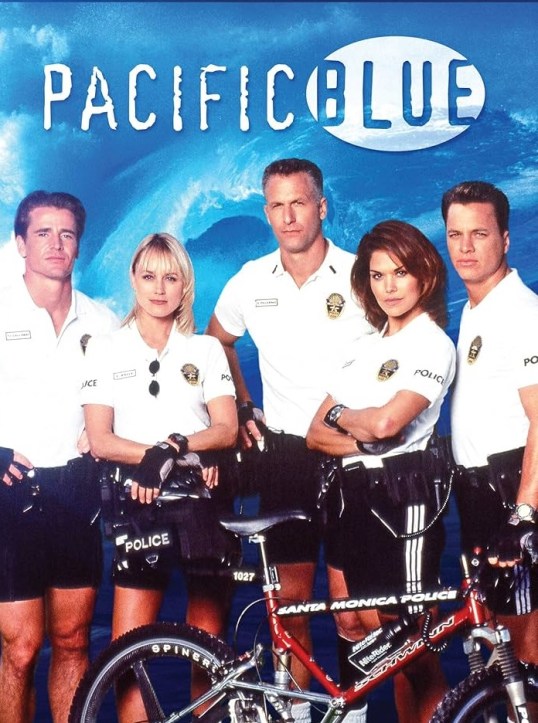
Welcome to Late Night Retro Television Reviews, a feature where we review some of our favorite and least favorite shows of the past! On Tuesdays, I will be reviewing Pacific Blue, a cop show that aired from 1996 to 2000 on the USA Network!  It’s currently streaming everywhere, though I’m watching it on Tubi.

It’s time for another trip to the beach!

Episode 1.3 “No Man’s Land”

(Dir by Michael Levine and John Bush, originally aired on March 16th, 1996)

Uh-oh!  There’s Nazis on the beach.

We know that Carl (Ryan Alosio) is a Nazi because he owns a bar that is decorated, on the outside, with a swastika.  Then, on the inside, there are many more swastikas and a German flag and a picture of Adolf Hitler hanging on the wall.  My question is who sold the bar to Carl and how exactly is he not violating any zoning laws?  Throughout the show, we’re constantly told that Carl can do whatever he wants on his property but don’t most towns have rules about what you can and cannot display in a business district?  We’re told that Carl has a criminal record and his arms are covered in Nazi tattoos so, once again, I have to wonder who sold him the bar.  There are a lot regulations and paperwork involved in opening up your own small business.  That’s especially true if your business is going to be selling alcohol.  I guess my point is that I just have a hard time believing that Carl’s Nazi bar would be allowed to stay open on the boardwalk.

Bizarrely, ordinary non-Nazis keep entering Carl’s Nazi bar.  Wouldn’t the swastika turn most people away?  I’m just saying that personally, I would not go in a building that was decorated with a swastika.  Anytime anyone who  is not a Nazi goes in Carl’s bar, Carl beats them up.  You really have to wonder how Carl is managing to stay in business.  I mean, let’s just accept that there’s enough Nazis in Santa Monica for Carl to have a steady customer base.  Carl is still asking those people to step into a building that is decorated with a swastika and basically announce their opinions to the world.  I would think at least some of the Santa Monica Nazis would be like, “No, I’d rather keep it a secret and go drink at a politically neutral bar.”  I mean, this isn’t some isolated club, like the place in Green Room.  This bar is sitting right in the middle of the boardwalk, where hundreds of people walk by each day.  Apparently, Santa Monica Nazis have no fear of being outed.

Like all Nazis, Carl is a jerk.  He beats up a vendor for selling churros in front of his bar.  He also harasses all of the non-white surfers.  You would think that this episode’s hero would be Officer Del Toro but instead, it falls to the very white T.C. Callaway to stand up to Carl and eventually drag him off to jail.  Callaway explains that he hates bullies.  That’s fine but it’s still more emotionally satisfying to watch a bully get beaten up by the bullied as opposed to by a concerned bystander.

We also get B-plot about a young graffiti artist named Melo (Christopher Babers) and Cory’s attempt to get Melo to see the error of his ways and instead use his artistic talent for something good.  And Mayor Mickey Dolenz spends the episode panicking because there’s an election to coming up to determine whether or not to allow on the nudity on the beach.  It’s pretty dumb but it’s hard not to smile at Mickey Dolenz playing himself.

The main problem with this episode and the show as a while is that the cops look silly riding around on their bikes.  When Cory and Victor head down a flight of stairs to catch Melo tagging a tunnel, they have to pick up and carry their bikes with them and it was hard not to laugh.  Whenever someone says, “This is Bike 1 responding,” to a crime call, I just imagine a dispatcher grimacing and thinking, I was hoping for a real cop.  Watching CHiPs and then this episode made me appreciate how much better motorcycles are than bicycles.

14 Days of Paranoia #6: Lockdown 2025 (dir by Mike Hall)


2021’s Lockdown 2025 tells the story of a neighborhood on the edge.

Clarence McGee (Glenn Plummer) has a got a nice house in the suburbs.  He has a nice view of the city in the distance and, even though we don’t learn much about what he does for a living, he appears to be very well off.  He has a wife named Carmen (Marie-Francoise Theodore) and three children, conspiracy theorist Junior (Marcus T. Paulk), daughter Crystal Marie (Parker McKenna Posey), and youngest Evan (Cristian Fagins).

To the outsider, it might look like Clarence has the perfect life but the reality is far different.  As a father, Clarence has been neglectful and, as his own wife points out, Evan is the only one of the kids with whom he  seems to have a strong connection.  Meanwhile, Crystal is pregnant and, while she’s told her boyfriend Marcos (Stewart Flores), neither one of them is quite sure how they’re going to tell Clarence.  And what is one to make of the burly police detective (James Black) who is sitting in his car and watching Clarence’s home?

Clarence is excited because he’s convinced that he’s finally going to win the lottery and become a billionaire.  However, just as the lottery numbers are about to be announced, the broadcast is interrupted by the National Alert System.  “This is not a test,” a voice says, before going on to explain that the president has declared a national emergency.  The country is under martial law.  There will be a 24-hour curfew.  No one is to leave their houses.

Suddenly, the skies are glowing and lightning bolts are streaking from the sky to the ground.  Explosions are heard in the distance.  The streets are full of “police soldiers” and anyone caught outside is subject to execution.  When Clarence’s neighbor tries to flee his house, he is executed on the spot.  Both Marcos and Junior suggest that maybe it’s all because of an online terrorist group known for being “pill-popping, weed-smoking, new age religious fanatics!”  Clarence says you can’t believe anything you see on YouTube.  For one thing, they let Junior on YouTube!

Meanwhile, a countdown clock appears on the television and starts to slowly tick down, from 80:00 to zero.  What happens the clock hits zero?  That’s what everyone is wondering.

As you can probably guess, things don’t go well for the McGees.  Being stuck in the house together not only makes them paranoid but it also leads to them revealing all of their deep, dark family secrets.  Soon, Clarence is loading a rifle.  When the detective finally enters the house and reveals his own secret, it leads to a violent confrontation.  Have you ever wondered how many people can accidentally get shot by two men firing guns at each other in a small enclosed space?  This film will tell you!

The plot description probably makes all of this sound more intriguing than it is.  Sadly, It’s not a very good movie, one that is marked by bad acting and bad special effects.  Not even the talented Glenn Plummer can do much with his role.  The initial apocalypse scenes are actually effective but soon, the Birdemic-style visuals kick in.  Worst of all, the film’s ending is the type of cheat that makes you feel stupid for getting in any way invested in the story.  An ending like this might have worked for a 15-minute short film but not for a film that drags on for 90 minutes.

This film was apparently produced by the Jehovah’s Witnesses and one of the final images is of a chastised, former doubter letting two Jehovah’s Witnesses into his home.  (Seriously, on the rare occasion that any of them are in my neighborhood, I hide in my room and don’t make a sound.)  I doubt this inspired anyone to pick up a copy of The Watch Tower.

14 Days of Paranoia:

  1. Fast Money (1996)
  2. Deep Throat II (1974)
  3. The Passover Plot (1976)
  4. The Believers (1987)
  5. Payback (1999)

What Lisa Watched Last Night #140: Murder in Mexico (dir by Mark Gantt)


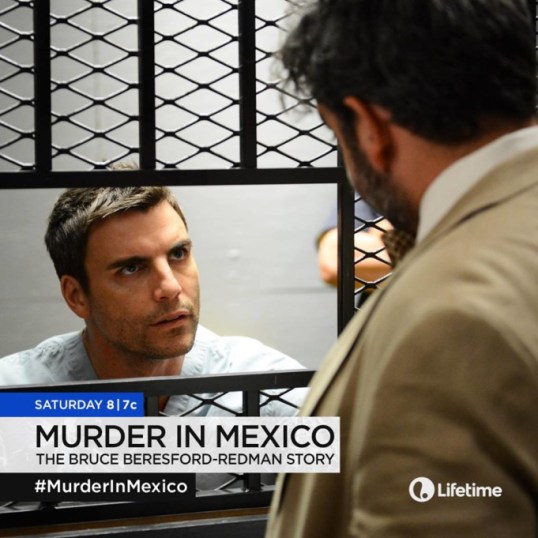
Last night, I watched the latest Lifetime original film, Murder in Mexico!

MiM

Why Was I Watching It?

I may be on vacation but that doesn’t mean that I’m not going to watch and live tweet the latest Lifetime film!

What Was It About?

This was one of those based-on-a-true-crime-story Lifetime productions!  Bruce Beresford-Redman (Colin Egglesfield) is a successful reality TV producer who has trouble being loyal to his wife (Leonor Varela).  When they take a vacation in Cancun, Bruce’s wife is murdered and Bruce quickly becomes the number one suspect.

What Worked?

Colin Egglesfield and Leonor Varela were both well-cast.  Also, the scene where Bruce crosses the Mexico-US border reminded me of the border scenes from No Country For Old Men.

What Did Not Work?

Just speaking as somebody who enjoys live tweeting Lifetime films, it’s always hard to know how to deal with these “true crime” movies.  The whole point of live tweeting is to be snarky and that can be difficult when you’re talking about real murderers, real victims, and real children who will now grow up without their mom and knowing their dad is in prison.  For that reason, Murder in Mexico was not as fun to live tweet as A Deadly Adoption or The Unauthorized Full House Story.

Beyond that, it was hard not to feel that Bruce Beresford-Redman and his crimes were not worthy of the attention that this movie gave to him.  The film attempted to make him interesting by playing up his past as a reality tv producer and trying to maintain some ambiguity as to whether or not Bruce was actually guilty but, ultimately, Bruce just came across as your standard cheating asshole.  In the end, both his guilt and his motives were too obvious to be intriguing.

“OH MY GOD!  Just.  Like.  Me!” Moments

In 2008, I went to Cancun for Spring Break and it was a blast!  Seriously, I had a great time and did a lot of things that I probably shouldn’t post in public.  However, none of those things involved murder and I suppose that’s a good thing.

Lessons Learned

Once a cheater, always a cheater.