Familiar Faces #7: Jack Norton, Hollywood’s Favorite Souse


gary loggins's avatarcracked rear viewer

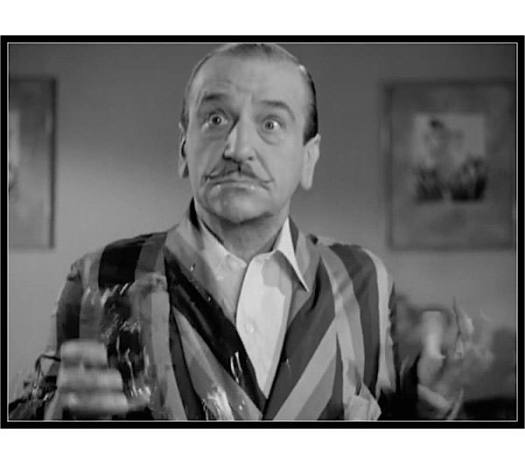
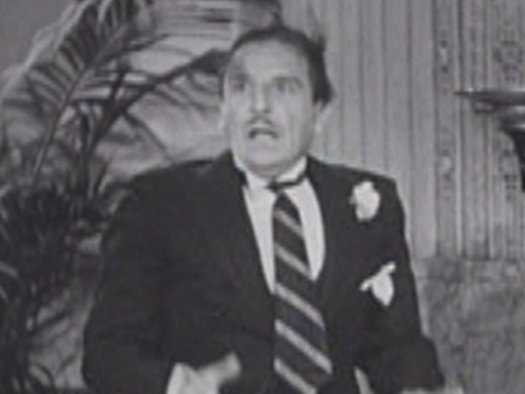
For fifteen years, whenever Hollywood producers needed a drunk, they called Jack Norton. The perpetually inebriated man with the funny moustache made a career out of playing drunken barflies, mostly in uncredited bit parts. Everyone knew they were in for a good laugh when Jack, the ultimate Familiar Face, staggered onscreen. In real life, Jack Norton was a teatottler who never touched the stuff, and learned to “play drunk” by following tipsy people around and copying their mannerisms. Now that’s dedication to your craft!

Jack in 1934’s “A Duke for a Day”

Jack Norton was born in Brooklyn in 1882, and began his show biz career in vaudeville. He soon moved to Broadway, starring in Earl Carroll’s Vanities. Coming to Hollywood in 1934, Jack played his first lush in FINISHING SCHOOL, an early effort for Frances Dee and Ginger Rogers. After that, his specialty would be in constant demand, though…

View original post 397 more words

The Fabulous Forties #43: The Sin of Harold Diddlebock (dir by Preston Sturges)


Film1947-TheSinOfHaroldDiddlebock

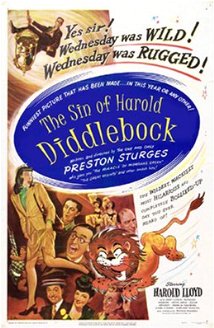
The 42nd film in Mill Creek’s Fabulous Forties box set was a 1947 comedy called The Sin of Harold Diddlebock.

As a classic film lover, I really wish that The Sin of Harold Diddlebock was better than it actually is.  The film was a collaboration between two of the biggest names in cinematic comedy history: director/writer Preston Sturges and legendary actor Harold Lloyd.  In fact, this was the first film that Sturges directed after leaving the studio system so that he could make bring his unique brand of satire to life without having to deal with interference.  He managed to convince Harold Lloyd to come out of retirement to star in the movie and the film even works as a quasi-sequel to one of Lloyd’s most beloved silent comedies, The Freshman.  In a perfect world, The Sin of Harold Diddlebock would have been a comedy masterpiece that would have perfectly shown off the talents of both men.

Unfortunately, that’s really not the case.  The Sin of Harold Diddlebock is consistently amusing but it’s never quite as funny as you want it to be.  This is one of those films that sounds like it should be hilarious but, when you actually watch it, you see that the film is oddly paced and Lloyd never seems to be fully invested in his role.  I suppose the natural inclination would be to blame this on interference from the notoriously eccentric Howard Hughes, who co-produced the film with Sturges.  After Harold Diddlebock failed at the box office, Hughes withdrew it and spent three years personally reediting the film before re-releasing it under the title Mad Wednesday.  However, by most reports, Hughes wasn’t really the problem.  If Wikipedia is to be believed (and God do I hate starting any sentence with that phrase), Lloyd and Sturges did not have a good working relationship.  As sad as that is, it’s also understandable.  Geniuses rarely work well together.

The Sin of Harold Diddlebock does get off to a good start, seamlessly incorporating the last reel of The Freshmen with footage shot for Harold Diddlebock.  (Somewhat sweetly, the film starts with a title card informing us that the what we are about to see was taken from The Freshman.)  After college freshman Harold Diddlebock scores the winning touchdown in a football game, impressed advertising executive J.E. Waggleberry (Raymond Walburn) offers Harold a job.  However, Harold wants to finish college so Waggleberry tells Harold to look him up in four years.

Four years later, recently graduated Harold goes to Waggleberry for a job and discovers that J.E. Waggleberry has totally forgotten him.  Harold ends up working in the mailroom but is told that, as long as he is ambitious and smart, he will easily move up in the company.  22 years later, Harold is still working in the mailroom.  He is secretly in love with Miss Otis (Frances Ramsden).  Of course, he was also in love with each of Miss Otis’s six older sisters, all of whom worked at the company before the current Miss Otis.  Harold bought an engagement ring when the oldest Otis sister was with company.  Years later, he’s still carrying it with him and dreams of giving it to the current Miss Otis.

However, that might be difficult because Harold has just been fired.  J.E. Waggleberry feels that Harold’s unambitious attitude is setting a bad example.  As severance, Harold is given a watch and $2,946.12.

The normally quiet and reserved Harold reacts to losing his job by doing something very unusual for him.  He goes to a bar and, with the help of a con man (Jimmy Conlin) and a bartender (Edgar Kennedy), he gets drunk.  The bartender even creates a special drink called the Diddlebock.  Harold drinks it and wakes up two days later, wearing a huge cowboy hat and owning a bankrupt circus…

And it only gets stranger from there….

While The Sin of Harold Diddlebock doesn’t quite work, I appreciated the fact that it not only created its own surreal world but that it just kept getting stranger and stranger as the film progressed.  It was Harold Lloyd’s final film and there’s even a scene where he and a lion end up on the edge of a skyscraper that’s almost as good as the famous comedic set pieces from his silent classics.  It’s a pity that the film doesn’t really come together but I’d still recommend seeing it just for history’s sake.

Cleaning Out The DVR #11: Going My Way (dir by Leo McCarey)


GoingmywayBing

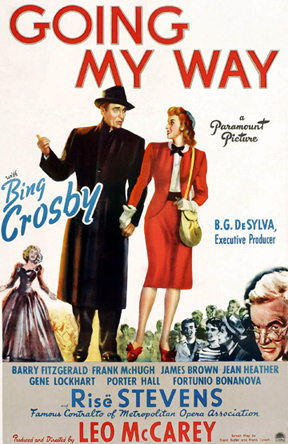
Last night, continuing my effort to watch 38 movies in 10 days (and, for the record, I have 7 days left as of today), I watched the 1944 musical-comedy-drama Going My Way.

Going My Way tells the episodic story of Father Chuck O’Malley (Bing Crosby), a priest from St. Louis who is assigned to take charge of a struggling parish in New York City.  O’Malley is meant to replace Father Fitzgibbon (Barry Fitzgerald), a stubbornly old-fashioned priest who is struggling to keep up with a changing world.  Though O’Malley is to take charge of the parish’s affairs, Fitzgibbon is to remain the pastor.  However, the compassionate O’Malley doesn’t tell Fitzgibbon about the arrangement and allows Fitzgibbon to believe that O’Malley is only meant to be his assistant.

It’s obvious from the start that Fitzgibbon and O’Malley have differing approaches.  Fitzgibbon is a traditionalist.  O’Malley, on the other hand, is a priest who sings.  He’s a priest who understands that the best way to prevent the local teens from forming a street gang is to convince them to start a choir instead.  When it appears that 18 year-old Carol (Jean Heather) is “living in sin,” it is the nonjudgmental O’Malley who convinces her to marry her boyfriend.

And, slowly but surely, Fitzgibbon and O’Malley start to appreciate each other.  O’Malley is even able to convince Fitzgibbon to play a round of golf with him, while Fitzgibbon tells O’Malley about his love for his mother in Ireland.

What’s interesting is that we learn very little about O’Malley’s past.  In many ways, he’s like a 1940s super hero or maybe a less violent and far more ethical version of one of Clint Eastwood’s western heroes.   He shows up suddenly, he fixes things, and then he moves on.  Instead of a cape or a poncho, he wears a collar.

(And, of course, he doesn’t kill anyone.  Actually, that’s probably a lousy analogy but I decided I’d give it a try anyway…)

At one point, O’Malley does run into an opera singer named  Genevieve Linden (Rise Stevens).  He and Genevieve (whose real name is Jenny) talk briefly about their past and it becomes obvious that they once had a romantic relationship.  We don’t learn the exact details but it does bring some unexpected melancholy to an otherwise cheerful film.  It reminds us of what O’Malley gave up to become a priest.

Fortunately, Genevieve is more than happy to help out with O’Malley’s choir, even arranging for them to meet with a record executive (William Frawley).  The executive doesn’t have much interest in religious music but then he hears Bing O’Malley sing Swinging On A Star.

It’s a bit strange to watch Going My Way today because it is a film that has not a hint of cynicism.  There’s no way that a contemporary, mainstream film would ever portray a priest as positively as Father O’Malley is portrayed in this film.  Indeed, it says something about the world that we live in that I instinctively cringed a little whenever O’Malley was working with the choir, largely because films like Doubt and Spotlight have encouraged me to view any film scene featuring a priest and an pre-teen boy with suspicion.  O’Malley is the ideal priest, the type of priest that those of us who were raised Catholic wish that we could have known when we were young and impressionable.  Bing Crosby does a pretty good job of playing him, too.  Watching Going My Way felt like stepping into a time machine and going to a simpler and more innocent time.

In the end, Going My Way is a slight but watchable film.  It doesn’t add up too much but, at the same time, it’s always likable.  Though the film may be about a priest, the emphasis is less on religion and more on kindness, charity, and community.  Going My Way was a huge success at the box office and even won the Oscar for best picture.

Personally, I would have given the Oscar to Double Indemnity but Going My Way is still a likable movie.

Speaking of likable, the Academy was so impressed with Barry Fitzgerald’s performance that they actually nominated it twice!  He got so many votes in both categories that Fitzgerald ended up nominated for both Best Actor and Best Supporting Actor.  Subsequently, the Academy changed the rules and decreed that a performance could only be nominated in one category.  As for Fitzgerald, he won the Oscar for best supporting actor.  He later broke the Oscar while practicing his golf swing.
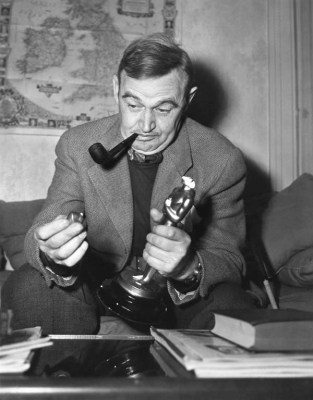
Barry and Oscar

Barry and Oscar

(Don’t worry.  The Academy sent him a replacement.)