The TSL’s Horror Grindhouse: Hell of the Living Dead (dir by Bruno Mattei)


Hell of the Living Dead, a 1980 Italian zombie film, is a movie known by many different names.  Some of these names are more memorable than others.

For instance, it’s known as Virus, which isn’t a very good name.  It’s kind of boring.  Plus, a virus could lead to anything.  Sure, a virus could turn someone into a zombie but it could also just mean a week in bed.  Plus, there’s already a thousand movies called Virus.

Night of the Zombies is a bit more specific, though still rather generic.  Just about every Italian horror film that came out in 1980 was about zombies and most of them took place at night.

Island of the Living Dead, at the very least, let’s you know where the majority of the movie takes place.  That said, it’s kind of a dishonest title.  The island isn’t just occupied by the living dead.  There’s also a primitive tribe, the members of which pop up occasionally to throw spears at a group of soldiers and a journalist.

I absolutely love the title Zombie Creeping Flesh.  Seriously, I don’t know why they bothered to come up with so many alternate titles when they already had Zombie Creeping Flesh.

However, this film is best known as Hell of the Living Dead and, actually, I guess that’s a pretty good title.  I mean, it’s totally and completely over the top.  Add to that the title almost feels like a challenge being specifically issued to the fans of George Romero’s zombie films.  It’s as if the film is saying, “If you can’t handle the Night or the Dawn, the Hell is absolutely going to kill you!”

Anyway, this is an extremely low-budget film from director Bruno Mettei and screenwriter Claudio Fragasso.  The team of Mattei/Fragasso were famous for producing some of the most ludicrously silly horror films to ever come out of Italy.  (Outside of his collaboration with Mattei, Fragasso is best known for directing Troll 2.)  A typical Mattei/Fragasso film is entertaining without being particularly good.  They were never ones to allow a thing like a lack of money to stand in the way of their narrative ambitions.

For instance, in Hell of the Living Dead, there’s one isolated scene that’s supposed to take place at the United Nations.  The scene appears to have been filmed in a lecture hall at a small university.  One delegate angrily declares that he is sick of everyone exploiting his zombie-occupied country.  Someone else suggests that maybe they should take a break until tomorrow.  It’s an incredibly inauthentic scene that adds nothing to the story but that didn’t keep the team of Mattei and Fragasso from including it in the film.  They were determined to have a UN scene and they weren’t going to let a lack of money or access stop them.

Anyway, the majority of the film deals with a zombie outbreak on a small tropical island.  The island is almost exclusively made up of stock footage.  A typical scene will feature a character like journalist Lia (played by Margit Evelyn Newtown) standing in the middle of the frame.  She looks to the right and we get some grainy stock footage of a bat or something similar.  She looks to her left and we get some faded stock footage of a tiger.

As I mentioned previously, the island also has primitive natives.  Whenever you hear the drums in the distance, it’s important to toss off your shirt, paint your face, and start jogging.  Otherwise, you might get killed.  You know how that goes.

And then there’s the zombies, of course.  The zombies get an origin story, something to do with an accident at top secret chemical plant.  At the start of the film, a rat attacks a scientist.  I’m assuming the rat was carrying the virus but it’s just as possible that Mattei just decided to throw in a random rat attack.  (His best film was literally just 90 minutes of rat attacks.)  Regardless, the zombie effects actually aren’t that bad but the problem is that whenever the zombies show up, they have to compete with all of the stock footage.  When the zombies aren’t dealing with animal footage that was originally shot for a mondo film, they keep busy by eating nearly everyone that they meet.  A group of soldiers have been sent to take care of the zombies but since none of them are particularly bright, they don’t have much luck.

Hell of the Living Dead has a reputation for being one of the worst zombie films ever made.  I don’t know if I would go that far.  It’s watchable in a “what the Hell did I just see?” sort of way.  And in the end, isn’t that kind of the point of a film like this?

The TSL’s Horror Grindhouse: Spasmo (dir by Umberto Lenzi)


http://www.youtube.com/watch?v=uY3AIPR-Mhs

Yesterday, Italian horror fans were saddened to hear of the passing of director Umberto Lenzi.

Over the course of his long career, Lenzi worked in almost every possible genre of Italian film.  He directed spy films.  He directed westerns.  He did a few comedies.  He directed two movies about Robin Hood.  In the wake of the international success of The French Connection, he was one of the leading directors of Italian crime films.  Among fans of Italian horror, he is best known for his cannibal films and his work in the giallo genre.  He even directed the first fast-zombie film, Nightmare City, a film that very well may have served as an inspiration for 28 Days Later.  According the imdb, Lenzi is credited with directing 65 films.  Some of them were good.  Many of them, if we’re to be honest, were rather forgettable.

But none were as strange as 1974’s Spasmo.

Attempting to detail the plot of Spasmo is a challenge.   Even by the twisty standards of the giallo genre, the mystery at the heart of Spasmo is a complicated one. According to Troy Howarth’s So Deadly, So Perverse Volume Two, even Lenzi admitted that Spasmo‘s storyline made no sense.  Add to that, Spasmo features so many twists and turns that it’s difficult to judge just how much of the movie’s plot you can safely describe before you start spoiling the film.

Spasmo tells the story of a man named Christian (Robert Hoffman).  While Christian is out walking on the beach with his girlfriend, they come across a woman lying face down in the surf.  The woman is named Barbara (Suzy Kendall) and, though she declines to explain why she was lying in the middle of the beach, Christian still becomes obsessed with her.  Barbara runs off but then he just happens to run into her at a party that’s being held on a boat.  Christian may be with his girlfriend and Barbara may be with her boyfriend but they end up leaving together.  Barbara says she will make love to Christian but only if he shaves his beard.

Meanwhile, lingerie-clad mannequins are being found on the beach.

Christian ends up getting attacked by a man named Tatum.  Christian shoots Tatum but then the body disappears.  Christian and Barbara hide out at a lighthouse.  There’s another couple at the lighthouse and where they came from is never quite clear.  They say that a dead body has recently been discovered but, when Christian demands to know what they mean, they say that they’re just joking.  Later, Christian thinks that he sees Tatum walking around but, just as suddenly, Tatum’s gone.

Christian is convinced that his brother, Fritz (Ivan Rassimov) can help him.  Barbara says that there is no hope.  We know better than to trust Fritz because he’s played by Ivan Rassimov.  Possessing the best hair in Italian horror, Ivan Rassimov almost always played the heel…

Meanwhile, mannequins continue to be found on the beach.

That may sound like I’ve described a lot of plot but I’ve actually only begun to scratch the surface.  Even by the standards of Italian thrillers, Spasmo is chaotic.  The film may not make any sense but it’s never boring.  Between the mannequins and the murders, it’s pretty much impossible to follow the plot but who cares?  As directed by Lenzi, Spasmo plays out like a dream, full of surreal images and memorably weird performances.  Robert Hoffman and Suzy Kendall are ideally cast while Ivan Rassimov is wonderfully slick and enigmatic as Fritz.  Spasmo is a film that keeps you guessing.  Whether it keeps you guessing because the plot is clever or because the plot itself is deliberately designed (and filmed) to make no sense is something that viewers will have to determine for themselves.  Personally, I think it’s a little of both.

Lenzi may not have cared much for Spasmo but it’s one of his most memorable films.

4 Shots From 4 Films: Happy Birthday Mario Bava!


4 Shots from 4 Films is just what it says it is, 4 shots from 4 of our favorite films. As opposed to the reviews and recaps that we usually post, 4 Shots From 4 Films lets the visuals do the talking. Today is the birthday of Mario Bava (1914-1980), Italian maestro of the horror and giallo genres. Here are 4 Shots from some of my favorite Bava films:

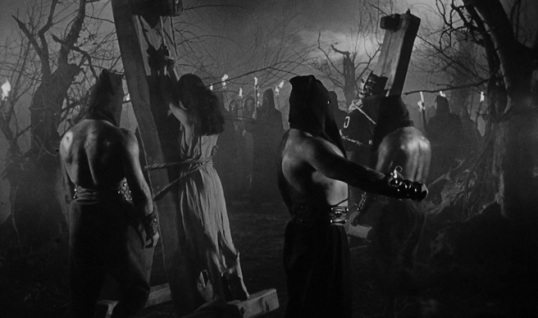
                                                      Black Sunday (1960)

                                                          Black Sabbath (1963)

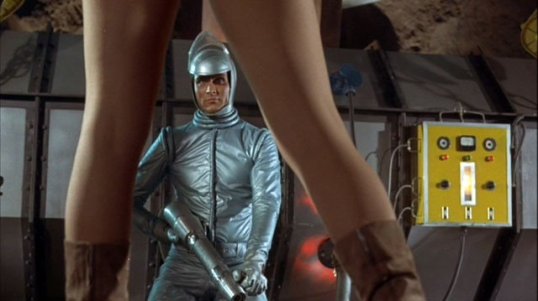
                                                          Danger: Diabolik (1968)

                                                       Lisa and the Devil (1972)

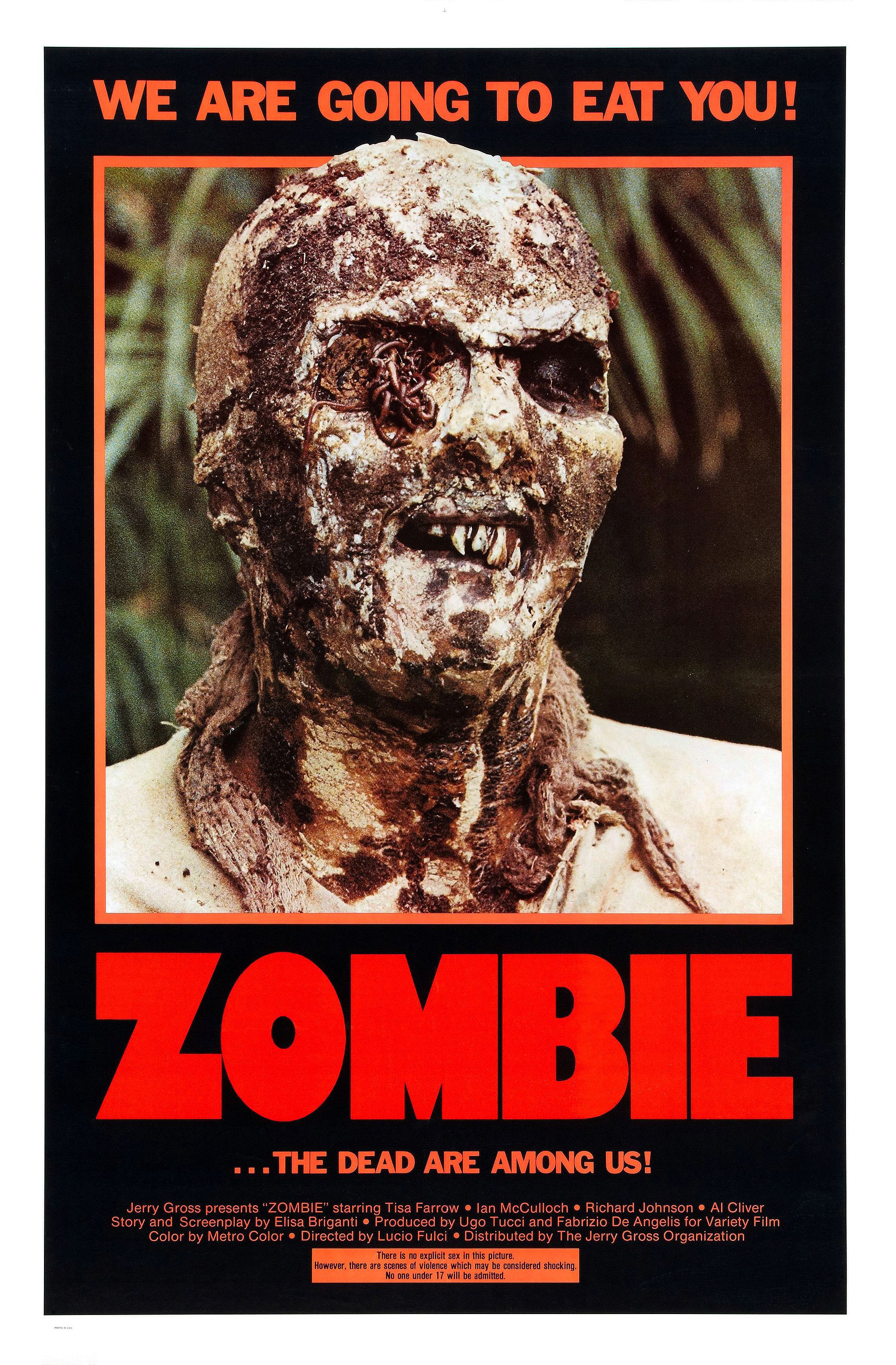
Halloween Havoc!: ZOMBIE (Variety Film 1979)


gary loggins's avatarcracked rear viewer

zomb1

I’ll admit, I’m a latecomer to the Lucio Fulci bandwagon. I viewed my first film by The Maestro, THE HOUSE BY THE CEMETERY , earlier this year, and absolutely loved it! I’ve been looking for more Fulci films to discover ever since, and recently recorded his most famous, ZOMBIE, off the El Rey Network (which I highly recommend to Grindhouse fans out there). ZOMBIE goes by many names, but this is the title I watched it under, so we’ll stick with that.

zomb2

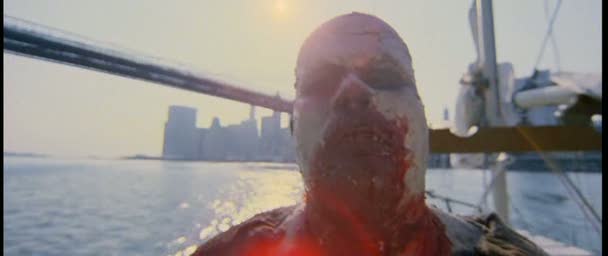
From that opening shot of a gun pointed at the camera, then blasting the head of a rising corpse, I knew I was in for a good time! After the credits roll, we see a derelict ship floating in New York harbor. The harbor patrol boards it, and find it deserted, with rotting food and supplies strewn everywhere. One of the cops investigates further, and is killed by a zombie…

View original post 746 more words

4 Shots From 4 Films: Macabre, Demons, Demons 2, Dinner With A Vampire


4 Shots From 4 Films is just what it says it is, 4 shots from 4 of our favorite films. As opposed to the reviews and recaps that we usually post, 4 Shots From 4 Films is all about letting the visuals do the talking.

Happy birthday, Lamberto Bava!

4 Shots From 4 Films

Macabre (1980, dir by Lamberto Bava)

Macabre (1980, dir by Lamberto Bava)

Demons (1985, dir by Lamberto Bava)

Demons (1985, dir by Lamberto Bava)

Demons 2 (1986, dir by Lamberto Bava)

Demons 2 (1986, dir by Lamberto Bava)

Dinner With A Vampire (1987, dir by Lamberto Bava)

Dinner With A Vampire (1987, dir by Lamberto Bava)

4 Shots From 4 Films: Lisa Loves Giallo Edition


4 Shots From 4 Films is just what it says it is, 4 shots from 4 of our favorite films.  As opposed to the reviews and recaps that we usually post, 4 Shots From 4 Films is all about letting the visuals do the talking.

4 Shots From 4 Films

Forbidden Photos Of A Lady Above Suspicion (1970, directed by Luciano Ercoli)

Forbidden Photos Of A Lady Above Suspicion (1970, directed by Luciano Ercoli)

Torso (1973, directed by Sergio Martino)

Torso (1973, directed by Sergio Martino)

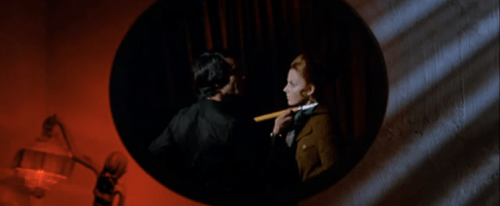
Spasmo (1974, directed by Umberto Lenzi)

Spasmo (1974, directed by Umberto Lenzi)

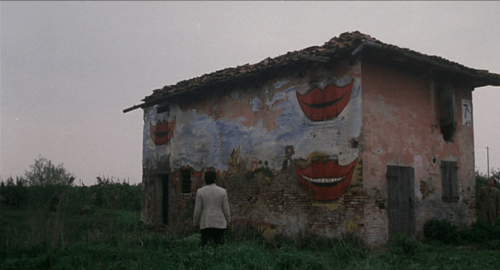
The House With Laughing Windows (1976, directed by Pupi Avati)

The House With Laughing Windows (1976, directed by Pupi Avati)

4 Shots From 4 Films: Special Daria Nicolodi Edition!


Daria Nicolodi in Tenebra (1982, dir by Dario Argento)

Daria Nicolodi in Tenebrae (1982, dir by Dario Argento)

4 Shots From 4 Films is just what it says it is, 4 shots from 4 of our favorite films.  As opposed to the reviews and recaps that we usually post, 4 Shots From 4 Films is all about letting the visuals do the talking.

I have to admit that I’m breaking the rules here.  When Arleigh first suggested 4 Shots From 4 Films as a feature here on Through the Shattered Lens, I promised myself that I would pace myself and, at most, only contribute once on a weekly basis.

But then, after Arleigh posted the first entry in 4 Shots From 4 Films, I realized that it was Lucio Fulci’s birthday and, being the lover of Italian horror that I am, there was no way that I could pass up the chance to post a Fulci-themed 4 Shots From 4 Films.  And now, less than 24 hours later, I find myself posting yet another 4 Shots From 4 Films.

But can you blame me?  It’s Daria Nicolodi’s birthday and, if you love Italian horror, then you know just how important an actress Nicolodi is.  Not only did Daria Nicolodi serve as the inspiration for what is arguably Dario Argento’s best film, Suspiria, but she also appeared in Mario Bava’s classic Shock.  The combination of her undeniable talent and her outspoken and eccentric style — there is no such thing as a boring Daria Nicolodi interview — has made Daria Nicolodi into an icon of horror cinema.

And, on top of all that, she’s Asia Argento’s mother!

So, indulge me because, as a lover of Italian horror, there is no way that I could pass up a chance to present our readers with 4 Shots From 4 Films: The Special Daria Nicolodi Edition!

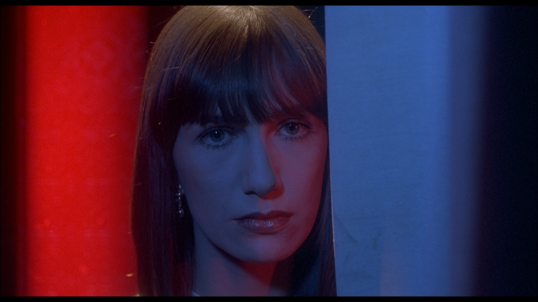
Deep Red (1975, dir by Dario Argento)

Deep Red (1975, dir by Dario Argento)

Shock (1977, dir by Mario Bava)

Shock (1977, dir by Mario Bava)

Inferno (1980, dir by Dario Argento)

Inferno (1980, dir by Dario Argento)

Delirium (1987, directed by Lamberto Bava)

Delirium (1987, directed by Lamberto Bava)


This Holiday Season, Giovanni Lombardo Radice Needs Your Help!


If you’re a fan of Italian horror, then you know who Giovanni Lombardo Radice is.  He danced for you in The House On The Edge of the Park.  He came back from the dead and helped to destroy the town of Dunwich in City of the Living Dead.  He went on an eating binge at a movie theater in Cannibal Apocalypse.  He’s appeared in three films directed by Michele Soavi, he recorded one of the greatest DVD commentaries ever for Cannibal Ferox, and he was a contributor to one of the most important books about Italian horror cinema, Eaten Alive.

However, there’s more to Giovanni Lombardo Radice than just a resume of showy roles in bloody movies.  He’s also a director, a writer, and an animal lover.  As anyone who follows him on Facebook knows, he can discuss the intricacies of William Shakespeare with the best of them.  He has appeared in films directed by people like Martin Scorsese and he is one of Quentin Tarantino’s favorite actors.

Most importantly, while he has always claimed to be somewhat bewildered by the popularity of some of his films, Giovanni Lombardo Radice is an actor who has always been kind and gracious to his fans.   I’ve met several Italian horror fans who have told me about how excited they were to get a reply to a question from Giovanni or how touched they were to get a gracious message from him.  Myself, I can still remember how excited I was when Giovanni responded to a rather odd dream that I had posted in my online dream journal.  (The dream and his response can be read here and here.)

Recently, Giovanni posted the following on his Facebook page:

MY dog Tommy has hernia and most probably must have surgery. Just what I needed….if you read that someone robbed a bank to cure his dog it will be me.

Anybody who is lucky enough to be friends with Giovanni on Facebook knows how much he loves animals and how much he loves Tommy.  Speaking as someone who spends 8 hours a day looking at cute cat pictures, my heart went out to him.

Earlier today, Giovanni announced (again on Facebook) that Tommy’s operation had been a success!  However, Giovanni is also flat broke.  People tend to assume that a cult film star like Giovanni Lombardo Radice must be rich but that’s rarely the case.  It’s been over 30 years since Giovanni made (and was paid for) the films that most people know him from and films like The House On The Edge of the Park and Cannibal Apocalypse didn’t become cult films until several years after they were first released.  When someone buys a DVD or a Blu-ray of a film like The House On The Edge of the Park, the money goes to the film’s distributor, not to the actors who appeared in the film.  Though Giovanni Lombardo Radice is definitely a star to many of us, he’s also just a working actor who struggles to make ends meet just like everyone else.

So, Giovanni Lombardo Radice is currently asking for help.  He has set up a paypal account connected to his e-mail address, info@giovannilombardoradice.com and he is accepting donations of any amount to help pay for Tommy’s surgery.

As an actor, Giovanni has always been there for his fans.  Hopefully, some of them will now be there for him.

Thank you for reading this and for your consideration.  And, to Tommy and Johnny, I wish both of you all the best this holiday season.  Buona fortuna!

Tommy

Tommy

Scenes I Love: Zombie


Lisa Marie picked her favorite scene from Lucio Fulci’s classic Zombie (aka Zombi, Zombie Flesh Eaters) and now I counter with my own favorite scene from this film.

This scene has a simple set-up. The wife of the doctor researching zombification on the island of Matool gets herself in a sort of a pickle. Zombies have laid siege to her island home and most of her servants have either fled into the night or have become zombie chow. She’s barricaded herself in a room as zombie begin to batter down doors to get to her. It’s in the sequence where she has thought herself safe as she’s barricaded the door to her room when the hand and arm of a zombie breaks through the door (for some reason quite flimsy and prone to splintering) and grabs her by the hair and begins to pull her out through the splintered hole in the door.

I could continue to describe the scene, but I think it’s better for people to see why this scene is the one I love from Lucio Fulci’s Zombie.

Film Review: Black Demons (directed by Umberto Lenzi)


(Hi!  This is actually a review that I wrote a while ago for an anthology of B-movie reviews that a “friend” of mine was planning on self-publishing.  Much like this site, the book would be made up of different reviewers giving each film their own individual spin.  We were going to call it Dinner and a Cannibal Movie.  I came up with that title, by the way.  Unfortunately, the project was eventually abandoned but not before I’d written a handful of reviews.  Here’s one of the shorter ones, for Umberto Lenzi’s Black Demons.  Oh, and be warned: Because of the nature of the project it was written for, this review is full of spoilers.)

Black Demons.

My ex-roommate Kim and I have a long-standing argument concerning this film.  I claim that it’s an Umberto Lenzi zombie film that was made in 1991, long after Italian zombie cinema had run its course.  It is also my contention that we saw this movie in October of 2004.  Admittedly, we were performing our own private pagan ritual during most of the film’s 90-minute running time but we still paid enough attention to not be impressed by it.  Kim, on the other hand, argues that we never watched Black Demons and that, furthermore, there is no such film as Black Demons.  I suspect that a combination of her own rather prodigious liberal guilt and the film’s own utter banality has led her to repress the memory of it in much the same way as the protagonist of a Dario Argento thriller will often forget a key detail of a murder he has witnessed.

            Black Demons tells the story of five young people who find themselves on the bad end of some black magic.  For reasons that are never really made all that clear (largely because the entire cast has a bad habit of mumbling their dialogue), English Kevin is in Brazil with his American girlfriend, Jessica.  Tagging along with them is Jessica’s half-brother, a morose young man who is recovering from a nervous breakdown and who has the rather unfortunate name of Dick.  Along with having a vaguely incestuous relationship with Jessica (whether this was intentional on Lenzi’s part or just a case of bad acting is up for debate), Dick is also fascinated by black magic and has a tendency to wander off by himself a lot.  This leads to a lot of scenes of Kevin and Jessica repeatedly shouting, “Dick!  Dick!” as they search for him.  This provided both me and Kim a lot of giggly amusement if nothing else.

            Anyway, Dick attends a black magic ceremony that he records on audio tape and then proceeds to obsessively listen to whenever the movie needs an excuse to bring on a few zombies.  The morning after the ceremony, our threesome’s jeep breaks down out in the middle of nowhere.  Luckily, two hikers – Jose and his girlfriend, Sonya – come along and invite everyone to spend the night at Jose’s villa.  As luck would have it, there’s a big cemetery located right behind the villa and idiot Dick decides to play his little audio tape right in the middle of it. 

            (I think Kim may have exclaimed, “God, what a dick,” at this point but she denies it along with the movie itself.)

            Needless to say, this causes six zombies to rise from their graves and the usual hilarity follows.  It turns out that these zombies were, in life, African slaves who rebelled against their white masters and were put to death as a result.  Their eyes were plucked out as they died, though this doesn’t seem to keep them from being able to see once they come back to life.  It turns out that the mission of these six black zombies is to kill six white people to even the score.  Unfortunately, most of this is explained by Jose who has such an incredibly thick accent that it is next to impossible to understand a word he says.  Therefore, the plot may actually be a bit more complex than I realize.

            Though, I doubt it.

            As Kim and I immediately realized, the zombies need to kill six white people.  Yet there are only five white people in the film.  Whether this was a case of lazy writing or maybe an actor walked off the film at the last minute, I do not know.  However, Lenzi ingeniously handles this problem by killing an anonymous, never-seen white guy offscreen and then having our heroes hear about it on the radio.  Still, you have to wonder why these zombies, seeking vengeance for being slaves in their past life, would only feel the need to kill six white people.  Sure, it works out in the sense that there are six zombies and this way they only have to kill one person apiece.  But still, it seems like they’re letting the white race off a little bit easily here.  Indeed, if the solution to all of the world’s racial strife is simply to kill off the five, uninteresting losers in this film, then I have to side with the zombies on this one.

            Unfortunately, Kevin and Jessica aren’t willing to sacrifice themselves for world harmony and insist on surviving until the end of the movie.  Kevin eventually figures out that the zombies can be stopped by a well-thrown Molotov cocktail.  How exactly he figured this out isn’t really clear.  Perhaps he saw it in another, better zombie film.  (Like Lucio Fulci’s Zombie 2, for instance.  Unfortunately, beyond the Molotovs, the bad acting of the female lead, and a grisly fetish for showing eyeballs getting damaged, these two films have little in common.)  Kevin’s plan works though not before the tragic ends of Sonya, Jose, the phantom sixth white guy, and yes, even Dick.  Leaving behind a bunch of smoldering slaves, Jessica and Kevin flee the villa for a world still torn apart with racial strife and anger.  Thanks a lot, guys!

            Almost all good horror is to be found in subtext.  Such as, Dracula may be pretty intimidating with his fangs and his blood drinking and all, but it’s as a symbol of unbridled lust and secret fantasies that he’s been able to become and remain an icon for over a century.  And while Frankenstein might be frightening to look at, his true power comes from being a sign of what happens when man attempts to play God.  In an admittedly less literary vein, what else is a truly scary slasher but proof positive over how little control we truly have over our own future?  Strictly on paper, Black Demons should be a film awash in powerful subtext.  After all, these zombies wouldn’t even exist if they hadn’t been enslaved and treated like property by the ancestors of the film’s heroes.  In a world that is still struggling (and failing) to deal with the legacy of racism, a film in which a bunch of slaves come back to life and seek vengeance on only whites should have quite a bit to say.   Perhaps if Black Demons had been directed by Fulci or Deodato, it would have done just that.  However, this film was directed by Umberto Lenzi which means that it ends with Kevin assuring Jessica that their nightmare is over with the camera ominously (and, quite frankly, obscenely) pans over to a bunch of black children playing on the side of the road, basically equating those living children with a bunch of bloodthirsty, vengeful zombies on the basis of the color of their skin.  Whether Lenzi realized what he was doing or not, this one camera movement manages to be a hundred times more offensive than anything found in Cannibal Apocalypse.

Perhaps, in this case, Kim had the right idea.