Late Night Retro Television Review: Highway to Heaven 2.15 “Change of Life”


Welcome to Late Night Retro Television Reviews, a feature where we review some of our favorite and least favorite shows of the past!  On Thursdays, I will be reviewing Highway to Heaven, which aired on NBC from 1984 to 1989.  The entire show is currently streaming on Freevee and several other services!
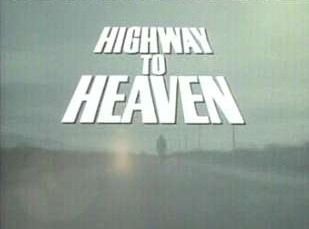
This week, things get freaky, as in Friday.

Episode 2.15 “Change of Life”

(Dir by Michael Landon, originally aired on January 29th, 1986)

Once again, Jonathan and Mark find themselves in Hollywood.  It’s interesting just how many of Jonathan’s heavenly assignments involved helping a film or television star feel better about life.  Given that Michael Landon was heavily involved in the show as a producer, director, writer, and star, I’ve usually assumed that the Hollywood episodes were his way of dealing with his own possibly conflicted feelings about being a part of the entertainment industry.

(Interestingly, the Hollywood episodes always seem to take place in a sort of old-fashioned fantasy of Hollywood, where anyone can become a star and where westerns and historical epics were still being shot on studio backlots.)

This time, Jonathan and Mark find themselves assigned to work with actress Linda Blackwell (Anne-Marie Martin).  Jonathan is her new bodyguard and Mark is her hairdresser.  Mark totally freaks out when he discovers that he’s not only going to have to cut hair but that God has lied and provided him with a fake beauty school diploma.  Everyone, including Linda and head of studio security Sam Quigley (Greg Mullavey), assumes that Mark and Jonathan are a couple.  Jonathan is amused by it but Mark freaks out.

(Seriously, though,  Mark and Jonathan are two single, middle-aged men who drive around the country and regularly rent apartments together.  What does Mark think everyone’s been assuming for the last years and a half?)

Anyway, Mark thinks that being a woman is easy.  Linda thinks that men spend all of their time being pigs.  No sooner can you say “Freaky Friday” then the lights have switched on-and-off and Mark and Linda have switched bodies.  Mark discovers what it’s like to be objectified and Linda discovers that Sam isn’t a jerk but instead, he’s a sensitive guy who wants to marry her.

It’s a pretty simple episode, even by the standards of Highway to Heaven.  There’s a bit too much gay panic humor, with Mark overreacting to such an extent that it’s hard not to wonder if maybe there’s some truth to what everyone is assuming.  But, on the plus side, both Victor French and Anne-Marie Martin do a good job portraying Mark and Linda, both before and after they switch bodies.  There’s nothing at all subtle about Victor French’s performance here but, considering that his usual role on Highway to Heaven was to be kind of gruff and stoic, it’s a nice change-of-pace to see him not only doing physical comedy but also showing himself to be fairly adept at it.

The episode ends with both Mark and Linda back in their original bodies.  Linda marries Sam.  As for Mark, he mentions that cows never have to worry about any of the stuff that humans do.  Uh-oh, Mark, don’t give God any ideas….

TOO LATE!

The episode ends with Mark, who is driving, mooing while a cow chases after Mark and Jonathan’s car.  God apparently enjoys playing little tricks on Mark.  Hopefully, the car didn’t end up crashing.
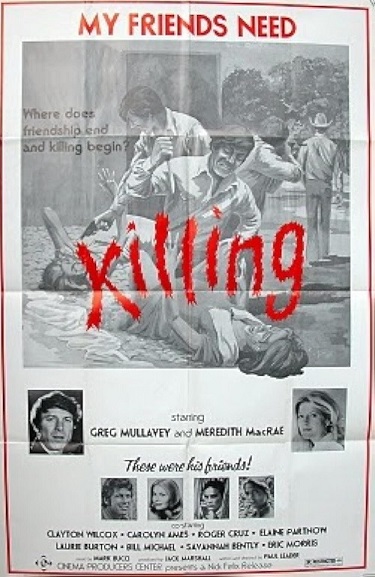
The TSL Horror Grindhouse: My Friends Need Killing (dir by Paul Leder)


At the start of 1976’s My Friends Need Killing, Gene Kline (Greg Mullavey) and his wife, Laura (Meredith MacRae) lie in bed together.  Gene can’t sleep.  He’s haunted by the sounds of gunfire and explosions and people barking out orders at him.  A Vietnam vet, Gene has been seeing a Dr. MacLaine (Eric Morris) for help with dealing with his wartime PTSD but it hasn’t done him much good.  Without telling Laura, Gene has been sending letters to the former members of his platoon, letting them know that he will soon be visiting them in each of their home cities.  Gene says that he’s just dropping by for a visit but the reality is that Gene has decided that his friends need killing.

Without telling his wife, Gene leaves home in the morning and heads to San Francisco.  While Laura is looking at old pictures of Gene and having flashbacks to their perfect wedding day, Gene is stalking the people with whom he committed an atrocity in Vietnam.  Like Gene, the former members of his platoon have struggled to adjust to returning home.  One lives in Texas, loves to hunt, and brags about how he never thinks about the war.  Another has found work as a trucker.  Another has a nice big house and a pregnant wife and still suffers from flashbacks of his own.  Perhaps the most tragic of Gene’s friends is Les Drago (Roger Cruz), who is now a performance artist and an anti-war activist and who recites Lady MacBeth’s “out damn spot” speech while discussing his activities during the war.

My Friends Need Killing is a short but intense movie.  It may only have a 73-minute running time and a portion of that running time may be taken up with filler but Gene pursues his mission with a relentless and ruthless determination that is ultimately very unsettling to watch.  As played by Greg Mullavey, Gene wanders through the film with the thousand-yard stare of a man who has truly snapped.  Years after the war, he can’t forgive anyone, including himself.  To him, it doesn’t matter that someone like Les returned from Vietnam and decided to dedicate his life to preventing another pointless war.  What matters to Gene is getting vengeance on those who he blames for his sins.  Even though the film makes clear that Gene’s actions are due to his experiences during the war, Gene himself never becomes a sympathetic figure.  He’s too vicious in his murders, even targeting the wife of one of his platoonmates.

Adding to the film’s unsettling and grim atmosphere is the film’s rather ragged editing.  Scenes begin and end abruptly, sometimes in mid-conversation.  Each murder is followed by a shot of an airplane landing in another city as Gene continues his mission.  Scenes of Gene having flashbacks are haphazardly mixed with scenes of Laura and Dr. MacLaine trying to figure out where Gene has disappeared to.  One is tempted to smile at the film’s score, which sounds more appropriate for a 70s cop show than a movie about a murderous vet, but even the score ultimately adds to the film’s off-center feel.  The score feels as out-of-place as the happiness of his friends does to Gene.  My Friends Need Killing ultimately feels like a film about a world that is spiraling out of control.  The film ends on a truly odd note, one that suggests that there is hope for the future, even if there’s no place for Gene in it.

Much like Bob Clark’s Deathdream, My Friends Need Killing suggested that mainstream America would never be ready to fully accept what happened in Vietnam.

The TSL Horror Grindhouse: I Dismember Mama (dir by Paul Leder)


Ugh.  It’s hard for me to think of any film that left me feeling as icky as the 1972 film, I Dismember Mama.  Seriously, who would have guessed that a film with a title like I Dismember Mama would be disturbing and offensive?

Zooey Hall stars as Albert, a puritanical young man who idealizes the Victoria Age, when “men were gentlemen and women were pure.”  Albert has tried to murder his rich mother three times for being “a whore,” and he’s now living in a minimum security mental hospital where he spends his time watching pornographic movies.  When Albert escapes from the mental hospital, he heads straight to his mother’s house.  His mother isn’t there but Alice (Marlene Tracy), the maid, is.  After raping and murdering Alice, Albert heads down to the living room where he meets Alice’s 9 year-old daughter, Annie (Geri Reischl, who would later take on the role of Fake Jan on the Brady Bunch Variety Hour).  Albert doesn’t know Annie but Annie instantly recognizes Albert from the pictures that his mom has up around the house.

Suddenly enchanted by Annie and her innocence, Albert lies and tells Annie that Alice has been taken ill and had to go see a doctor but she asked Albert to keep an eye on Annie until she got back.  (Is there a reason why everyone’s name starts with an A?  My ADD is going crazy just trying to type this up.)  Albert then takes Annie for a ride around town, telling her about how much he loves the Victoria era and eventually checking into a motel with her.  (Ewwwwww!)  When Albert murders a woman that he picked up at a bar, Annie runs away from the hotel and Albert, suddenly convinced that Annie is now a harlot, chases after her.  It all leads to a properly violent conclusion.  Say what you will about the film but the final five minutes make great use of slo mo of doom as Albert and Annie run through a mannequin factory in slow motion.

My favorite character in this film was the police detective played by Greg Mullavey.  When Albert’s liberal doctor (Frank Whiteman) argues that even Albert can be cured with the right amount of treatment, the detective just smirks and complains about how his tax dollars are being used “to baby murderers.”  Normally, I would argue that the doctor has a point but Albert is such a creep and his fixation on Alice is so disturbing that I was totally on the Detective’s side.  Whether he could be cured or not, Albert deserved a bullet in the head.

It’s a competently-made and well-acted film and Zooey Hall deserves a lot of credit for making Albert into an all-too plausible madman.  It’s also a thoroughly icky film, the type of film the features flashbacks to scenes of rape and violence that occurred mere minutes before.  This is one of those grimy films that leaves the viewer feeling as if they’re going to need to take multiple showers after watching.

The film is today is best remembered for the gimmicks that were used to promote it.  Theater patrons were given an upchuck cup, in case the film proved to be too intense for them.  And, of course, the film’s famous trailer featured people who had been driven insane by watching the film.

Director Paul Leder and Greg Mullavey would reunite for another grindhouse horror film, My Friends Need Killing.  Look for my review of that film tomorrow!

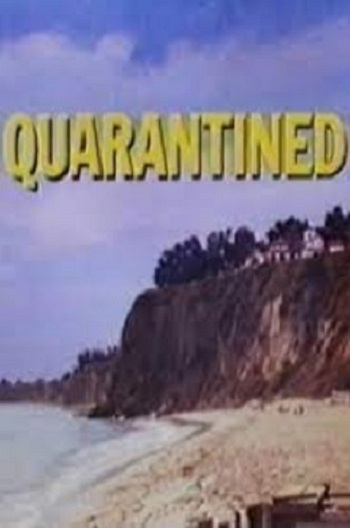
Retro Television Reviews: Quarantined (dir by Leo Penn)


Welcome to Retro Television Reviews, a feature where we review some of our favorite and least favorite shows of the past! On Sundays, I will be reviewing the made-for-television movies that used to be a primetime mainstay. Today’s film is 1970’s Quarantined! It can be viewed on YouTube!

The John C. Bedford Clinic sits atop a cliff overlooking the ocean.  Though it may be a small hospital, it’s also widely respected.  The clinic was started by John Bedford (John Dehner) and the majority of its employees are related to him.  His three sons — Larry (Gary Collins), Bud (Gordon Pinset), and Tom (Dan Ferrone) — are all doctors and they all work at the clinic.  Bud’s wife, Margaret (Susan Howard), is a psychologist and she also works at the clinic, encouraging the older patients not to give up hope in their twilight years.  John Bedford is a stern taskmaster and his youngest son, Tom, resents always having his father and his older brothers staring over his shoulder.  John and Larry explain that they are simply treating Tom the way that they would treat any new doctor.  Tom isn’t so sure.

When the Bedfords aren’t hanging out in the tasteful ranch house that sits next to the clinic, they’re checking on their patients.  As Quarantined opens, they’ve got quite a few to deal with.  The most famous is Ginny Pepper (Sharon Farrell), a film star who has come to the clinic because she’s been suffering from back pain.  Larry quickly diagnoses her as suffering from kidney failure and announces that she’s going to need to get an immediate transplant.  Ginny is not happy to hear that and spends most of her time trying to make both Larry and Nurse Nelson (Virginia Gregg) miserable.  Of course, it eventually turns out that Ginny’s not so bad.

Meanwhile, Margaret attempts to cheer up a dying old man named Mr. Berryman (Sam Jaffe) and an eccentric man named Wilbur Mott (Wally Cox) hangs out in the hospital hallway.  Martha (Terry Moore) and Lloyd Atkinson (Madison Arnold) are at the hospital to visit their son, Jimmy (Mitch Vogel).  Unfortunately, while in Jimmy’s hospital room, Lloyd suddenly collapses and subsequently dies.  John takes one look at Lloyd and announces that Lloyd might have Cholera and, as a result, no one can leave or enter the hospital until the test results come back.

In other words, the John C. Bedford Clinic is …. QUARANTINED!

If you’re thinking this sounds a little bit dull …. well, you’re not wrong.  Quarantined has a 73-minute running time and a large cast but it really does just feel like an episode of a not particularly interesting medical drama.  It wouldn’t surprise me to discover that this movie was actually meant to serve as a pilot for a show that would have followed day-to-day life at the clinic.  Each member of the Bedford family is given a hint of characterization, just enough to suggest what type of situations they would get involved in on a weekly basis.  Larry was the straight shooter who was dedicated to saving lives.  Bud was the well-meaning middle child while Margaret was the one who encouraged the men to talk about their feelings.  Tom was the idealistic but impulsive youngest child.  John was the wise patriarch.  They’re all kind of boring.

The same can be said of Quarantined as a movie.  As directed by Leo “Father of Sean” Penn, the movie promises a lot of drama but it never really delivers and there’s something rather annoying about how casually John announces that no one is allowed to leave the clinic.  He even calls the police and has them set up road blocks around the clinic.  On the one hand, John is doing the right thing.  No one wants a cholera epidemic.  On the other hand, everyone’s so quick to accept that idea of John being a benign dictator that …. well, one can only imagine what a pain in the ass the Bedfords would have been during the COVID era.

As far as I know, there was never a TV show about the Bedford family and their clinic on a cliff.  Personally, I’m okay with that.  

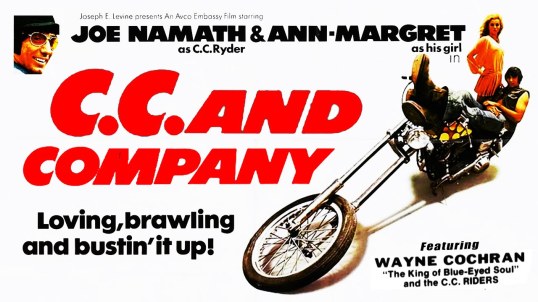
The TSL’s Grindhouse: C.C. and Company (dir by Seymour Robbie)


As our long-time readers know, I’ve seen my share of bad movies but it’s been a while since I’ve seen one as bad as 1970’s C.C. and Company.

C.C. and Company is about a drifter named C.C. Ryder (played by Joe Namath, who was a pro football quarterback at the time).  Ryder rides through the desert on his dorky motorcycle.  He doesn’t have a job.  He doesn’t have much money.  He does have a lot of hair and he also has a lot of teeth.  We know that because it’s rare that there’s ever moment when C.C. isn’t smiling.  C.C. is perhaps the most cheerful amateur criminal that I’ve ever seen.  Even when C.C. really shouldn’t be smiling, he’s smiling.  There are moments when people try to kill C.C. and he responds with a smile.  This could be a sign of C.C.’s devil-may-care-attitude but I think it has more to do with Joe Namath being a really bad actor.

C.C. is apparently a member of a motorcycle gang.  I say apparently because no one in the gang seems to like him and they’re constantly beating up on him.  The leader of the gang is Moon (William Smith) and among the members of the gang is an intimidating figure named Crow (Sid Haig).  Smith and Haig were both professional actors and genuine tough guys.  They not only knew how to act on camera but they also knew how to throw a punch without faking it.  Having them act opposite Namath doesn’t really accomplish much beyond emphasizing just how terrible an actor Namath was.  Even though Moon is a Mansonesque creep, you still find yourself rooting for him whenever he and C.C. get into a fight because Smith creates an actual character whereas Namath…. well, he doesn’t.  I sat through this entire film and never once did I find myself wondering what C.C.’s initials stood for.  That’s how uninterested I was in C.C.’s life.

Anyway, C.C. meets the wealthy and chic Ann McCalley (Ann-Margaret) after Ann’s limo breaks down in the middle of the desert.  C.C. not only fixes the limo but he also saves Ann from Crow and Lizard (Greg Mullaney).  It’s love at first sight but, unfortunately, Ann has places to go so she drives off and C.C. returns to the biker camp and watches as Moon sends his girlfriend, Pom Pom (Jennifer Billingsley), out to make money on the highway.  As I watched all of this, I found myself wondering how everyone else in the gang got stuck with names like Moon, Lizard, Crow, Rabbit, Pom Pom, and Zit-Zit (my favorite) but somehow C.C. was able to keep his innocent initials.  The movie never explained the ritual behind receiving motorcycle gang names and I think that was a missed opportunity.

Eventually, C.C. trades in his dorky motorcycle for a Kawasaki, largely because Kawasaki apparently paid the film’s producers a lot of money.  C.C. enters a race and wins.  Ann sees him win and falls even more in love with him.  C.C. gets into a fight with the gang and then he and Ann head to …. well, it looked a lot like Reno but honestly, who knows for sure?  Eventually, Moon and the gang track C.C. and Ann down and it all leads to one last fight.  We never do find out if the “company” of the title referred to Ann and her rich friends or Moon and the gang.  Not even C.C. seems to know for sure.

So, there’s a lot of reasons why C.C. and Company doesn’t really work but mostly it all comes down to the lead non-performance of Joe Namath as C.C.  There’s nothing tough or intimidating or rebellious about Namath.  C.C. is the biker you can bring home to meet your parents.  William Smith and Sid Haig are a lot more fun but they’re playing totally disreputable characters.  Namath and Ann-Margaret have zero romantic chemistry and the entire film has the look of a cheap made-for-TV movie.  Between C.C. and Company and Altamont, 1970 was not a good year to be a biker groupie.

That said, there is one good scene in C.C. and Company, where C.C. and Ann go out dancing.  While Joe Namath awkwardly shakes his shoulders while flashing that ever-present grin, Ann-Margaret dances as if the fate of the world depended upon her.  One year after the release of this movie, she would prove herself as dramatic actress and receive her first Oscar nomination for Carnal Knowledge.

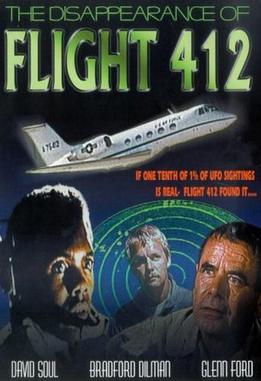
The Disappearance of Flight 412 (1974, directed by Jud Taylor)


Because of recent electrical surges aboard its aircrafts, the commander of the Whitney Air Force Base 458th Radar Test Group sends a four-man crew up in Flight 412 to try to figure out what’s happening.  Colonel Pete Moore (Glenn Ford) and Major Mike Dunning (Bradford DIllman) assume that it will just be a routine flight.  Instead, they find themselves at the center of a government cover-up when Captain Bishop (David Soul) and the other members of the crew spot what appears to be a UFO.  When two jets are sent out to intercept the object, the jets vanish.

Suddenly, Flight 412 is ordered to land at a seemingly deserted military base in the desert.  When they do, the airplane is impounded and the crew is forced to undergo an 18-hour debriefing led by government agents.  The agents demand that the crew members sign a statement saying that they didn’t see anything strange in the air before the jets vanished.  Until all four of the men sign the release, the crew of Flight 412 are officially considered to be missing and will not be released until they agree to deny what they saw.

Meanwhile, Col. Moore tries to learn what happened to his men but the government, led by Col. Trottman (Guy Stockwell), is not eager to tell him.

This movie was made-for-television, at a time when people claiming to have been abducted by aliens was still a relatively new phenomenon.  It was also made during the Watergate hearing and in the wake of the release of the Pentagon Papers, so the film’s sinister government conspiracy probably felt relevant to viewers in a way that it wouldn’t have just a few years earlier.  I appreciated that the movie took a semi-documentary approach to the story but that it tried to be serious and even-handed.  The film shows how witnesses can be fooled or coerced into saying that they saw the opposite of what they actually did see.  Unfortunately, The Disappearance of Fight 412 is ultimately done in by its own cheapness.  The overreliance on familiar stock footage doesn’t help the film’s credibility and there’s too many familiar faces in the cast for the audience to forget that they’re just watching a TV movie.  The Disappearance of Flight 412 doesn’t really succeed but it is still interesting as an early attempt to make a serious film about the possibility of alien abduction and the government covering up the existence of UFOs..  Three years after this film first aired, Steven Spielberg would introduce these ideas to an even bigger audience with Close Encounters of The Third Kind.

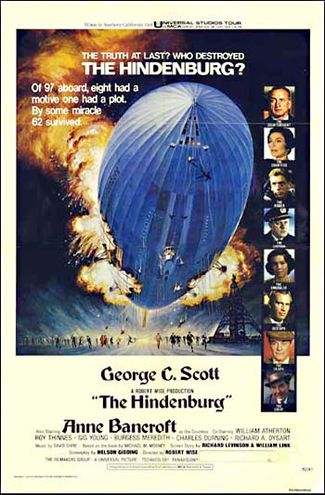
Film Review: The Hindenburg (dir by Robert Wise)


80 years ago, on May 6th, 1937, the Hindenburg, a German airship, exploded in the air over New Jersey.  The disaster was not only covered live by radio reporter Herbert Morrison (whose cry of “Oh the humanity!” continues to be parodied to this day) but it was also one of the first disasters to be recorded on film.  Looking at the footage of the Hindenburg exploding into flame and sinking to the ground, a mere skeleton of what it once was, it’s hard to believe that only 36 people died in the disaster.  The majority of those who died were crew members, most of whom lost their lives while helping passengers off of the airship.  (Fortunately, the Hindenburg was close enough to the ground that many of the passengers were able to escape by simply jumping.)

Not surprisingly, there was a lot of speculation about what led to the Hindenburg (which has successfully completed 63 flights before the disaster) exploding.  The most commonly accepted explanation was that it was simply an act of God, the result of either lightning or improperly stored helium.  Apparently, there was no official evidence found to suggest that sabotage was involved but, even back in 1937, people loved conspiracy theories.

And really, it’s not totally implausible to think that the Hindenburg was sabotaged.  The Hindenburg was making its first trans-Atlantic flight and it was viewed as being a symbol of Nazi Germany.  One of the ship’s passengers, Captain Ernest Lehman, was coming to the U.S. in order to lobby Congress to give Germany helium for their airships.  With Hitler regularly bragging about the superiority of German industry, the theory was that an anti-Nazi crewman or passengers planted a bomb on the Hindenburg.  Since no individual or group ever stepped forward to claim responsibility, the theory continues that the saboteur must have perished in the disaster.

At the very least, that’s the theory put forward by a film that I watched earlier today, the 1975 disaster movie, The Hindenburg.

A mix of historical speculation and disaster film melodrama, The Hindenburg stars George C. Scott as Col. Franz Ritter, a veteran of the German air force who is assigned to travel on the Hindenburg and protect it from saboteurs.  Ritter is a Nazi but, the film argues, he’s a reluctant and disillusioned Nazi.  Just a few weeks before the launch of the airship, his teenage son was killed while vandalizing a synagogue.  Ritter is a patriot who no longer recognizes his country and George C. Scott actually does a pretty good job portraying him.  (You do have to wonder why a seasoned veteran of the German air force would have a gruff, slightly mid-Atlantic accent but oh well.  It’s a 70s disaster film.  These things happen.)

Ritter is assigned to work with Martin Vogel (Roy Thinnes), a member of the Gestapo who is working undercover as the Hindenburg’s photographer.  Tt soon becomes obvious that he is as much a fanatic as Ritter is reluctant.  Vogel is a sadist, convinced that every Jewish passenger is secretly a saboteur.  Thinnes is chilling in the role.  What makes him especially frightening is not just his prejudice but his casual assumption that everyone feels the same way that he does.

And yet, as good as Scott and Thinnes are, the rest of the cast is rather disappointing.  The Hindenburg features a large ensemble of actors, all playing characters who are dealing with their own privates dramas while hoping not to burn to death during the final 15 minutes of the film.  Unfortunately, even by the standards of a typical 70s disaster film, the passengers are thinly drawn.  I liked Burgess Meredith and Rene Auberjonois as two con artists but that was mostly because Meredith and Auberjonois are so charming that they’re fun to watch even if they don’t have anything to do.  Anne Bancroft has one or two good scenes as a German baroness and Robert Clary does well as a vaudeville performer who comes under suspicion because of his anti-Nazi leanings.  Otherwise, the passengers are forgettable.  Whether they die in the inferno and manage to make it to the ground, your main reaction will probably be to look at them and say, “Who was that again?”

Anyway, despite all of Ritter and Vogel’s sleuthing, it’s not much of mystery because it’s pretty easy to figure out that the saboteur is a crewman named Boerth (William Atherton).  Having seen Real GeniusDie Hard and the original Ghostbusters, I found it odd to see William Atherton playing a sympathetic character.  Atherton did okay in the role but his attempt at a German accent mostly served to remind me that absolutely no one else in the film was trying to sound German.

Anyway, the main problem with The Hindenburg is that it takes forever for the airship to actually explode.  The film tries to create some suspense over whether Ritter will keep the bomb from exploding but we already know that he’s not going to.  (Let’s be honest.  If you didn’t already know about the Hindenburg disaster, you probably wouldn’t be watching the movie in the first place.)  The film probably would have worked better if it had started with the Hindenburg exploding and then had an investigator working backwards, trying to figure out who the saboteur was.

However, the scenes of the explosion almost make up for everything that came before.  When that bomb goes off, the entire film suddenly switches to black-and-white.  That may sound like a cheap or even sensationalistic trick but it actually works quite well.  It also allows the scenes of passengers and crewmen trying to escape to be seamlessly integrated with actual footage of the Hindenburg bursting into flame and crashing to the ground.  The real-life footage is still shocking, especially if you’re scared of fire.  Watching the real-life inferno, I was again shocked to realize that only 36 people died in the disaster.

In the end, The Hindenburg is flawed but watchable.  George C. Scott was always at his most watchable when playing a character disappointed with humanity and the real-life footage of the Hindenburg disaster is morbidly fascinating.

Oh, the humanity indeed!