October True Crime: Sins of the Mother (dir by John Patterson)


In the city of Spokane, Washington, Kevin Coe (Dale Midkiff) is a real estate agent who always tries to come across as being the slickest guy in the room.  With his quick smile and his moderately expensive suits, Kevin certainly seems to fit the stereotype.  It’s only when you start to look a little closer that the surface starts to crack.

For someone who goes out of his way to come across as being confident, Kevin is actually very immature and more than a little whiny.  He’s living with a perfectly nice young woman named Ginny (Heather Fairfield) but it’s obvious that he’s keeping secrets from her.  He comes home one morning with scratches on his face and, when she asks about them, he claims that 1) he got mauled by a dog and 2) he doesn’t need any sort of medical attention.  Kevin is someone who frequently loses his job because he’s just not that good at it.  When one boss fires him, Kevin replies that he’s going to start his own business and someday, maybe he’ll be the one doing the hiring and firing.  It’s classic empty cope.

And then there’s Kevin’s mother.  Ruth Coe (Elizabeth Montgomery) is someone who likes to present herself as being a grand diva, in the manner of a Golden Screen star.  She’s extremely close to her son, at times overprotective and at times overly critical.  Kevin often goes from yelling at his mom to dancing with her within minutes.  Ruth makes it clear that she doesn’t like Ginny and Ginny eventually grows to dread seeing Ruth wandering around their house, uninvited.  And yet, despite all of the time that Kevin spends talking about how wants to get away from his mother and to live his own life, Kevin doesn’t really make much of an effort to do that.

Meanwhile, Detective Liz Trent (Talia Balsam) is investigating a series of rapes that have been committed in Spokane.  When she comes to suspect that Kevin is the rapist, Kevin claims that it’s not true and it’s just another case of the world treating him unfairly.  Ruth stands by her son and eventually shocks everyone with just how far she’s willing to go to try to keep him out of prison.

Sins of the Mother is based on a true story.  Kevin Coe may have only been convicted of four rapes but he is suspected of having committed at least 41.  In prison, he insisted he was innocent and refused to attend any counseling programs.  He also refused to apply for parole, even after he became eligible.  After his criminal sentence was completed in 2008, he was sent to the Special Commitment Center on Washington’s McNeil Island, which is a institution that houses sexual predators who are likely to reoffend.  I’m writing this review on September 15th.  Coe, as of this writing, is scheduled to be released from McNeil on October 3rd so, by the time you’re reading this, he could already be out.  Coe is 78 and is reported to be in fragile health.

As for the movie, it’s mostly memorable for Elizabeth Montgomery’s over the top performance as Ruth Coe.  Sweeping into every scene and delivering her lines in what appears to be a deliberately fake-sounding Southern accent, Montgomery chews the scenery with gusto.  While the rest of the cast often seems to be going through the motions, Montgomery grabs hold of this movie and refuses to surrender it.
Late Night Retro Television Review: Highway to Heaven 4.13 “A Mother’s Love”


Welcome to Late Night Retro Television Reviews, a feature where we review some of our favorite and least favorite shows of the past!  On Thursdays, I will be reviewing Highway to Heaven, which aired on NBC from 1984 to 1989.  The entire show is currently streaming on Tubi and several other services!

This week, Mark is abandoned in the park.

Episode 4.13 “A Mother’s Love”

(Dir by Michael Landon, originally aired on January 6th, 1988)

It’s time for Jonathan and Mark to start a new assignment!  This week, Jonathan gets to be a teacher (again!) and Mark gets to be …. homeless.

Seriously, Mark is dropped off in the park and told to live there.  Eventually, Jonathan shows up and gives Mark a tent and some cooking supplies.  That was nice of him but still, you have to wonder why Mark always seems to get assignments that are designed to aggravate him.  “Thanks for giving up your independence to work with my angel,” the show’s version of God seems to be saying, “Now, here …. go live in the park.”

Also living in the park are four brothers whose mother has recently died.  They’re living in a van and are trying to not get sent to foster care.  Fortunately, there’s a teacher at Jonathan’s new school who regrets that she never had a family.  Guess who is going to end up adopting four kids!

This was pretty much the epitome of Highway to Heaven, sweet-natured, sentimental, shamelessly manipulative, and so earnest that it worked even when it shouldn’t have.  That said, I hope Jonathan will put a good word in for Mark.  The guy deserves at least one easy week!

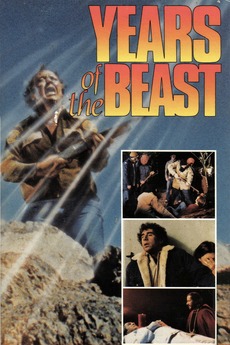
Film Review: Years of the Beast (dir by D. Paul Thomas)


This low-budget 1981 film opens with a professor, Stephen Miles (Gary Bayer), giving his last lecture at Seattle’s University of Washington.  He’s been laid off from his job.  He’s depressed.  The students around him don’t seem to be interested in anything that he has to say.  The world seems to be plunging deeper and deeper into chaos.  Society seems to be collapsing.  Stephen just can’t understand why everything just seems to be getting so bad.

Having taught his last class, Stephen walks across campus and drops in on his friend, Dr. Carl Kilneman (Malcolm McCaimen).  Dr. Kilneman says that things may look bad now but they’re only going to get worse.  He then talks about how his research has led to him discovering that every bad thing in the world was previously predicted by the Bible.  Stephen starts to laugh him off but he’s interrupted by what sounds like an overhead explosion.  Suddenly, Dr. Kilneman has vanished.

Dr. Kilneman is not the only person who has vanished.  In fact, every believer in the world has vanished.  Without any Christians around telling people how to behave, it doesn’t take long for Seattle to descend into chaos.  (Seattle in chaos?  Well, it was bound to happen someday….)  Soon, people are raiding the grocery stores and roving bands of frat boys are flooding the streets, openly drinking beer and smoking weed….

Yes, I know that actually kind of sounds like the sort of stuff that happens everyday and not just in Seattle but you have to remember that this film is from 1981 and, from what I can tell, it was apparently mostly shown to church groups.  So, for the time, maybe it was shocking….

Anyway, Stephen and his wife, June (Alana Rader), decide to go out to June’s father’s farm.  They manage to get out of Seattle and probably not a minute to soon as Seattle itself is soon wiped off the face of the planet by a storm of biblical proportions.  When Stephen and June reach the farm, they discover that her father has vanished.  They also meet up with one of the farmhands, Gary (Jerry Houser) and a young woman named Cindy (Sarah Reed), who needs a place to stay.

Meanwhile, with the world in chaos, an enigmatic man known as the Prime Minister (Michael Amber) takes control and promises to bring peace to the planet but only if people agree to follow him and be branded with a special mark.  At one point, the Prime Minister gets shot in the head and then comes back to life a few days later so …. well, we all know what that means.

Stephen, June, Gary, and Cindy do not want to take the mark so they go running into the wilderness.  Pursuing them is the local sheriff (James Blendick), who is determined to make sure that the law is followed even if the law is being written by Satan.

Years of the Beast is a bit of an oddity.  On the one hand, it’s an extremely low-budget film and the pace is often painfully slow.  One of the reasons why the film’s destruction of Seattle is so much fun to watch is because the special effects are so extremely cheap that they’re almost charming but, at the same time, the film’s narrative momentum dies right after the city.  Unlike a lot of faith-based film, the cast was made up of character actors who actually had a career in mainstream cinema so, on the whole, the performances are better than you might expect to find in a film like this but, at the same time, none of the characters have much depth.  They start out as nonbelievers and then they become believers and that’s pretty much it as far as their characterization tends to go.  I liked the fact that the outwardly friendly Sheriff was actually a fascist but that has more to do with my own natural distrust of authority than anything else.

At the same time, if you’re looking for a time capsule of tacky 80s fashion and interior design, Years of the Beast will deliver.  I especially liked the interior of Stephen and June’s home in Seattle, which was basically so bland that it become oddly fascinating.  Actually, oddly fascinating is a good way to describe the entire film.  It’s hard not to enjoy epic film making at discount prices.  It’s almost like a bit of outsider art.  For all of its flaws, it did get made and it apparently did play in theaters and now, nearly 40 years later, it can still be found on YouTube.  Such is the power of cinema.


The TSL’s Horror Grindhouse: Psycho III (dir by Anthony Perkins)


Norman Bates is back!

Released in 1986 and directed by Anthony Perkins himself, Psycho III picks up a few months after Psycho II ended.  Norman (Anthony Perkins, of course) is still free.  He’s still got his motel.  He’s still talking to his dead mother.  Of course, at the end of Psycho II, Norman was told that the woman who Norman thought was his mother actually wasn’t his mother.  Instead, Emma Spool told Norman that she was his mother, which led to Norman promptly hitting her with a shovel and then keeping her preserved body hidden away in the motel.  Got all that?  Great, let’s move on….

In Psycho III, business suddenly starts booming at the Bates Motel!  All sorts of people come by to visit.

For instance, there’s the obnoxious tourists who show up at the motel so they can watch a football game and get drunk.  Future director Katt Shea plays one of the unfortunate tourists, who ends up suffering perhaps the most undignified death in the history of the Psycho franchise.  Shea later ends up being stored in the motel’s ice chest.  At one point, the local sheriff grabs a piece of ice and tosses it in his mouth without noticing that it’s covered in blood.

And then there’s Duane Duke (a young Jeff Fahey!), who is superhot but also super sleazy.  For reasons that are never quite clear, Norman hires Duke to be the assistant manager at the motel.  Duke turns out to be thoroughly untrustworthy but he’s Jeff Fahey so he remains strangely appealing even when he shouldn’t be.

Red (Juliette Cummins) shows up at the motel so that she can have sex with Duke and then get stabbed to death while taking off her top in a phone booth.  That, I guess, is Psycho III‘s equivalent of the first film’s shower scene.  Later, Duke comes across Norman mopping up all the blood in the phone booth but he doesn’t say anything about it.  Duke knows better than to ask why there’s blood in the phone booth.

Tracy Venable (Roberta Maxwell) is a journalist whose sole purpose in life is to prove that Norman murdered Emma Spool.  Tracy’s main function in this film is to explain just why exactly so many different women have claimed to be Norman’s mother.  It’s a rather complicated story and you’ll get a migraine if you think about it for too long.

And finally, there’s Maureen (Diana Scarwid), the former nun who has lost her faith and her sanity.  She shows up at the motel and stays in Marion Crane’s old room.  She takes a bath instead of a shower and slits her wrists.  When Norman storms into the room to kill her, the barely lucid Maureen mistakes him for the Virgin Mary and sees his knife as being a crucifix.  Maureen survives and Norman is hailed as a hero for rescuing her.  Later, Norman and Maureen fall in love.  You can guess how that goes.

When compared to the first sequel, Psycho III is much more of a standard slasher film and there’s certainly never any doubt over who is doing the killing.  However, Perkins again does a great job in the role of Norman, making him both sympathetic and creepy.  Fahey, Scarwid, Maxwell, and Hugh Gillin (as the hilariously clueless sheriff) all provide good support.  There’s really not a single character in this film who doesn’t have at least one odd or memorable quirk.  Duane Duke, for instance, is one of the most amazingly sleazy characters in the history of American cinema.  Just when you think that the character can’t get any worse, he proves you wrong.

As mentioned above, Perkins directed this film.  It was one of two movies that Perkins would direct before his death.  As a director, Perkins had a good visual sense, even if he did allow the narrative to meander a bit.  There’s nothing particularly subtle about Perkins’s direction and several of the scenes — like the sex scene between Duke and Red — are so over the top that they become rather fascinating to watch.  That said, there was really no longer any need to be subtle when it came to Norman Bates and his story.

With the exception of the weird Gus Van Sant remake with Vince Vaughn, Psycho III would be the last Psycho film to be released into theaters.  It would also be Perkins’s second-to-last time to play Norman.  (The last time would be in a 1990 made-for-TV sequel, Psycho IV: The Beginning.  Despite it’s title, Psycho IV pretty much ignored everything that happened in the previous two sequels.)  Perkins passed away in 1992, at the age of 60 but the character of Norman Bates would live on, both in his own performances and in the later work of Freddie Highmore in Bates Motel.

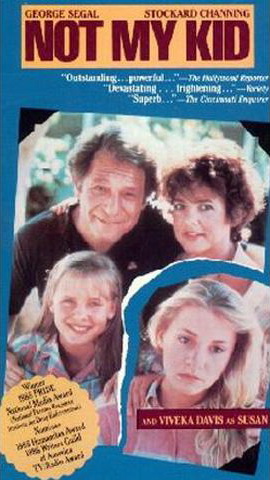
Back to School Part II #18: Not My Kid (dir by Michael Tuchner)


Not_my_kid

Not My Kid, a made-for-television from 1985, opens with 15 year-old Susan Bower (Viveka Davis) in a car with her friends.  They’re drunk.  They’re stoned.  They’re laughing.  And soon, they’re screaming as the driver loses control and the car ends up getting overturned!  (I’ve had that happen before.  It wasn’t fun but I survived with only a few cuts and bruises.)  Susan isn’t seriously hurt but, at the hospital, it’s discovered that she has alcohol and drugs in her bloodstream.

“NOT MY KID!” her father, surgeon Frank Bower (George Segal), declares.

“NOT MY KID!” her mother, Helen Bower (Stockard Channing, totally wasted in a thinly written role), agrees.

“Totally your kid!” her younger sister, Kelly (Christa Denton), says before then revealing where Susan hides her drugs.  This leads to Kelly getting beaten up by Susan and her drug addict boyfriend, Ricky (Tate Fuckin’ Donavon, decades before playing a hostage in Argo.).

Anyway, neither Frank nor Helen want to admit that Susan has a drug problem so instead, they go to see a smug family counselor who tells them that they are both being too hard on their daughter and that they need to just let Susan be Susan.  That sounds like a good (and easy) plan but then Susan runs away and disappears for two days.  After she’s finally found, stoned and hiding out in the family’s boat, her parents finally decide to send her to rehab.

The rehab is run by Dr. Royce.  Dr. Royce is played by Andrew Robinson and it took me a while to recognize him as being the same actor who played the Scorpio Killer in Dirty Harry.  Perhaps that explains why Dr. Royce came across as being such a creepy character.  As I watched this movie, I kept waiting for the big reveal where Dr. Royce would turn out to be a murderer or something.  That never happened, of course.  In the world of Not My Kid, the harsh and confrontational Dr. Royce is the only thing keeping the entire teenage population for shooting up heroin.

The majority of the film takes place at the rehab and it gets annoying pretty quickly.  This is one of those places where everything is done as a group activity.  Whenever someone says something, everyone in the group replies with, “We love you, so-and-so.”  When Susan doesn’t act properly ashamed of herself, the group gangs up on her.  “You’re a phony!” someone says.  “You’re full of crap!” another person adds.  “We love you, Susan,” the group chants.

AGCK!  Seriously, the rehab scenes totally freaked me out because it came across less like therapy and more like brainwashing.  I spent the entire movie waiting for Susan to escape and when she did, I was happy for her.  She may have been a self-destructive drug addict but at least wasn’t a mindless zombie like everyone else in the movie!  But then she ended up getting caught by her father and taken back to the rehab.

Meanwhile, her parents are going through therapy as well.  Again, it’s all group therapy.  When Frank tries to talk about how Susan’s behavior makes him feel, someone says, “You’re a phony!’  Another person adds, “You’re full of crap!”  And the group chants, “We love you, Frank.”  Okay, to be honest, I’m taking some dramatic license with the dialogue here but hopefully, you get the general idea.

I mean, seriously — I understand that I was supposed to be like, “Yay rehab!” while watching the movie but the rehab came across more like some sort of creepy cult.  It reminded me of both a Canadian film called, Ticket To Heaven and a Texas film called Split Image.  As I watched Not My Kid, I kept waiting for James Woods to show up as a cult deprogrammer.

Anyway, don’t worry.  Everything turns out well in the end.  This was a made-for-TV movie, after all.  Not My Kid is way too heavy-handed for its own good and it lacks a certain self-awareness.  On a more positive note, George Segal does a good job in the role of Frank.

You can watch Not My Kid below!