On the Rain-Slick Precipice of Gaming!


Unfortunately, this particular editorial can’t pass without some background information being passed around first. The story is a sad one at times, but I think you’ll find the resolution as satisfying as I have! Do let me know!

Some of you may have heard of the popular webcomic Penny Arcade. A much smaller chunk of you are probably familiar with the two games that Penny Arcade released in the year 2008, parts one and two of On the Rain-Slick Precipice of Darkness… a story which blended Penny Arcade’s unique style of humour and its unique visual style with a modern RPG engine to create a new gaming experience. Most of you who bought the first two games are further familiar with the catastrophic announcement in 2010 that Hothead Games was going to proceed with the Deathspank franchise over producing the third title in the Penny Arcade series… and that… the Penny Arcade series was cancelled.

Ouch.

Double ouch to people who really enjoyed the first two titles, and were looking forward to the conclusion of the story of Tycho Brahe and Jonathan Gabriel.

But then in 2011, a ray of hope emerged. Zeboyd Games, producers of such titles as Breath of Death VII: The Beginning and Cthulu Saves the World, had signed on to the project. In development? Rain-Slick 3. Only now, instead of using Penny Arcade’s comic book visual style and a more modern RPG engine, we were going to experience a fully pixelated 16-bit treatment of the story and the world, and it was to be released in a more Indie fashion.

Fine by me!

Now, in mid-2012… the new game is here. I have played it. And I would like to tell you all about it.

Rain-Slick 3 continues the story immediately after it left off at the end of Rain-Slick 2. Our heroes Tycho Brahe and Jonathan Gabriel, of the Startling Developments Detective Agency, have slain two Gods, and by a prophecy spoken by Tycho’s own father, this has brought the world to the brink of oblivion. Unfortunately, it seems, we must balance that against the fact that the ongoing presence of these ancient Gods has infused a great amount of evil into the world, from wicked hobos and rampaging mimes to the occurrence of ghosts, ghouls, and other supernatural critters. Railing against this destiny, Tycho and Gabe enlist the help of a head in a jar and a mysterious woman detective who shares a past connection with Tycho, in an effort to halt the ongoing conflict before it spirals out of control.

The gameplay is pure 16-bit RPG. Characters use a job system which is not unlike a pared-down version of that used in any Final Fantasy game, with jobs having certain special abilities gained as they level up. However, Rain-Slick wants to be fun for the player, and actually doesn’t allow you to grind (enemy groups disappear when defeated, and do not return!), so un-used jobs level up concurrently with those currently equipped, albeit at a slower rate, and your characters can equip multiple jobs with no penalty. Combining a useful suite of skills can create truly devastating fighters, so there is definitely a strategic aspect to how you equip your jobs, and how you choose equipment which can either cover weaknesses or heavily accent strengths. It gives a decent feel of customisation to the player, which is otherwise somewhat lacking as the player’s own avatar is absent from the game’s cast of characters (although referenced several times as having participated in previous events) and the game plays like a traditional RPG – there are no Mass Effect style conversation wheels to be found here.

The game’s charm is in its simplicity, and its storytelling. Although the story is predictably broken up by long chunks of combat-heavy dungeon, it remains infused with the humour and ability of the guys from Penny Arcade – not insubstantial! – and hints of that artwork style, used for character portraits and enemy models. Of particular amusement value are the names of enemies, always accompanied by a short description, which really rekindle the feel of the first two games. Zeboyd has done a marvelous job in continuing the saga, even though the game plays absolutely differently from the original two titles.

If you still have any interest in this series, I highly encourage a purchase! Rain-Slick 3 is available on Xbox Live Marketplace or Steam, or through the Penny Arcade store. The official site also notes that it should become available for iOS and Android in the future, and Penny Arcade notes the possibility of free updates to expand upon the core game. For a pittance of $5, this game is likely to do nothing but impress you from start to finish.
Mass Effect 3


I finished Mass Effect 3! The first video game I’ve ever finished! … Or, at least, for a long time.

Shall we talk about it?

Mass Effect 3 is (ostensibly, we know how sequels work these days) the conclusion to the story of one Commander Shepard, a human of exceptional skill, whose whole history is determined by the player. Shepard has journeyed long and hard to make people aware of the threat posed by the Reapers, synthetics bent on annihilating all organic life. From what I’ve seen, Mass Effect 3 is receiving decidedly mixed reviews. I think most of the negativity is oriented toward the ending, and we’ll talk about that later, but I’m going to start with a list of things that are ‘to like’ about this game. Even though if you have even the slightest interest in the franchise, you’ve already bought it.

Mass Effect 3 improves on the gameplay of Mass Effect 2.

Let that statement hang in the air for a moment. Why? Because I already thought Mass Effect 2’s gameplay was incredible; the game’s best feature, aside from its variety of characters and character interactions.

It still pads its play time by giving you lots of relatively minor quests, and forcing you to scan systems for ‘War Assets’ which involve running from Reaper forces and wasting a bunch of time. This is nothing new. After all, we drove the Mako around identically featureless planets in ME1, and we scanned for resources in ME2. The difference to me is that while we’re running around the Citadel recovering missions in ME3, we’re also subjected to background conversations between the inhabitants of that great space station. Their lives are affected by the war, and overhearing snippets of conversation lets us understand how so. It drew me into the setting of a (seemingly) hopeless war more than any activity aboard the Normandy. After all, Commander Shepard runs a stealth vessel with the most deadly folks around aboard. We don’t have any reason to fear the Reaper forces for the most part, because we’re better than they are. But on the Citadel, the Everyman is on the run. The Everyman fears that they will never see loved ones again.

In a holding area for Refugees, there’s a teenage girl waiting for her parents who has a variety of conversations with a C-Sec officer about her parents, and their transport, and when it’s going to arrive. It’s kind of heartwrenching. But also extremely appropriate.

In the field I suspect players will find much to like. The variety of enemy types is vastly improved over Mass Effect 2, as you combat the forces of the Reapers (now with more than just Husks and minibosses!), the forces of Cerberus (who are varied and deadly, very appropriate) and the traditional Geth opponents as well. I often felt that ME2’s opposition was pretty vanilla, but the unique properties of the enemies in ME3 make them feel much more varied even if (as I suspect) the actual number of “different” enemy types is not much different. The variety of powers IS improved, and now re-implements the use of grenades (an odd omission from ME2!) while keeping the basic gameplay mechanics of the second game intact. The most tangible difference is that you can now see Shepard’s hit points reflected in a bar with five segments. Once a segment is totally depleted, it only replenishes with the use of Medi-Gel. This is a significant feature of the game, especially on the harder difficulties.

Weapon upgrades are back with a vengeance. They operate like they did in the original Mass Effect, only +1. Now, you can acquire more advanced versions of weapons, and install increasingly powerful upgrades, to customize weapons to fit your playstyle. All classes now wield any weapon you like, with the newly devised penalty of heavier weapons slowing the recharge time of your special powers. So, a Biotic Adept is fully free to carry a sniper rifle and assault rifle, but it may mean that their Singularity cools down three times slower. Is that trade-off worth it? The answer is no, but it’s still definitively up to the player.

I was favourably impressed with the character moments and interactions in this game. Your own mileage will vary based on choices in previous games (and yes, while I have heard complaints that your choices don’t have a significant enough impact on the ending, they certainly have a significant impact on the game at large) but I was treated to a number of unexpectedly poignant and emotional character moments from both new and old faces. To me, this is the best work BioWare has done yet in terms of the characters involved… perhaps even exceeding Dragon Age II (although that entire game is so character-based, it’s a tough comparison). Some may be disappointed that many of the discussions no longer involve choosing options on the conversation wheel, but rather just talking it out after the fashion of conversations with companions Zaeed Massani and Kasumi Goto in Mass Effect 2.

I hesitate to say more, because it’s a story game, and I won’t be the one to spoil things for those who haven’t completed it.

Multiplayer!

Yes, there is now a multiplayer mode. It feeds the single player in that you can use any multiplayer character of level 20 as a War Asset, and in that it improves your Galactic Readiness score. For anyone who is wondering why your Galactic Readiness sits at a mediocre 50%, this is why! The multiplayer mode is a horde-styled mode where you fight against any of the three enemy forces (Geth, Cerberus, or Reaper) on one of several small maps, over the course of 10 waves, and then a “bonus” wave in which your squad waits for extraction. Three difficulty levels are available, which mirror normal, hardcore, and insanity level enemies, and thereby force different tactics to be used by the players.

I’d heard rumours that the single player was also supposed to support the multiplyer, but I’ve seen no evidence of that.

If you’re into Horde modes, you’ll almost certainly enjoy the multi-player here. Just be aware that you’ll have to work your way through a lot of matches to earn weapons and characters if you want the full experience, and getting a character to level 20, while not hard per se, can be time consuming. If you’re only looking to supplement your single player experience, your mileage will vary with the multiplayer mode.

And that’s where I’ll stop. I’d be happy to answer any specific questions, but I certainly don’t want to spoil the game for you. Just know that it’s a good game, and I hope you like it.

2011 in Review: Video Games!


    The Games of 2011!

Yes, a year-end wrap-up column in lieu of an actual review of an actual game! Why, you ask? Because I can’t stop playing Star Wars ToR, of course! I haven’t played anything new that I can talk about, aside from a little daliance with Dynasty Warriors 7 – actually, more than a little daliance. It’s getting talked about in this very column!

Now, after I went through everything I played this year, I realized I didn’t have enough material to make a list of good games or bad games. I just didn’t play enough different games this year. That’s the tragedy of writing about a medium where I either have to wait a while for availability (still plodding along with Gamefly. I haven’t mastered the magic of RedBox yet) or spend $60 in order to play the game. The other problem is that it takes me ages to finish things off; even RedBox might not be able to save me.

So in lieu of some kind of ferentic rankings column where I attempt to explain which game I liked best, I’m instead going to count down 10 games I liked from this year in a numerically ranked order, then give some honourable mentions.

10. Bulletstorm
A game which received seemingly almost universally positive reviews, but only Arleigh and I seem to have ever played. Granted, it has its obsession with peurile humour – it stirred up some heated controversy with morons. However, the game has a rich environment (with refreshingly brilliant backgrounds, colour is everywhere!) and its storyline is full of dark humour which I very much appreciated. The gameplay is exactly like a Gears of War title that doesn’t take itself seriously. This was a solid title.

9. Madden NFL 12 / NCAA Football 12
Neither of these games merits full consideration. If you don’t like paying the Madden Tax, you probably buy these games only when your current copy begins to feel dated. It’s worth mentioning that the dynasty modes in NCAA Football 12 have expanded considerably in scope, and Madden NFL 12 has a (relatively) credible electronic opponent. The online franchise mode in Madden is worth owning one of the newer titles (I believe it was introduced in Madden 10) if you have other folks you want to break on the interwebs.

8. L.A. Noire
The motion-capture technology used to produce this game remains one of the most stunning achievements I’ve ever come across in video games. I also think it’s an inspired choice by Rockstar to make a game that breaks away from the style of both GTA and Red Dead. Although many of the controls are the same, L.A. Noire is a very distinct experience from Rockstar’s other offerings. Note that it does not have a number after its name. That’s kind of exciting! I will say, the game seems to demand to be played in small doses… there are only so many faces I can analyze for tiny lies in one feverish night before they start to blend together, and it’s not always ‘traditionally’ fun to play. My other main complaint? The game doesn’t do nearly enough to tell the player what level of accusation we should be leveling at the suspect.

7. Call of Duty: Modern Warfare 3
I don’t have too much to add about this one. I think it’s an improvement on the previous installments of the game. I find it more accessible, I like the weapon selections, and I greatly prefer shotguns being a primary weapon. That having been said, the map selection in this title doesn’t offer enough variety of ranges. It’s missing a big, sniper-friendly map. That really encourages people to quickscope more, and nothing frustrates me more (well, when I’m not the one doing it) than a lot of quickscopers running around. Bah.

6. Marvel vs. Capcom 3: Fate of Two Worlds
This game’s stock took a huge hit when they abandoned trying to support it and decided to put out a re-issue instead. At least the re-issue isn’t going to cost me $60 when I get around to picking it up. I did like the title enough to pay for a bunch of new characters…. I guess. But this was still mishandled. Disappointing!

5. Bastion
This game would have made my top ten list (not that I’m doing a rankings column) if there was a bit more meat to it. I actually thought the game experience was roughly of perfect length, but I have a thought process issue where I associate longer games giving me more pleasure for the same amount of money with… oh, wait, Bastion was just an Arcade title? That’s why I loved it! There’s so much to this little title. The narration is a standout – the game’s best feature, and the storytelling style makes it quite unique in feel, even if the gameplay itself is something we’ve seen before.

4. Star Wars: The Old Republic
Yeah, it’s pretty good. I had huge reservations about this one going in, but it’s so much better than I had ever expected. Congratulations BioWare, you might have managed to climb your way back to the top of my video game developer power rankings.

3. Deus Ex: Human Revolution
This is a great game. I never did get around to reviewing it, because it took me ages to beat… but I loved the fact that the game encouraged and rewarded me for handling things stealthily. I haven’t played a game that truly, really, madly, deeply, embraced stealth from start to finish in… I don’t know, when did Thief II come out? Yikes!

2. Might and Magic Heroes VI
I’m a lifelong fan of this series, which is the same as Heroes of Might and Magic, despite the inexplicable re-arrangement of the words in the title. I was grievously disappointed with Heroes V (apparently in the minority on this, although I seem to remember hearing a lot of negative comments. Maybe people just hated that PC-crippling DRM it came with?) and found Heroes IV, while enjoyable, to be too much of a departure from the classical gameplay style. This franchise hit its pinnacle in Heroes of Might and Magic III, but this new installment… well, it took me back. I don’t necessarily approve of the degree to which it has simplified the resource management and strategy aspect of the original games, but it has plenty of improvements to make up for that, and the total control over your hero’s skill progression is a change I very much appreciate.
I should probably just review this game. Let’s move on.

1. Dragon Age 2
Well, I certainly played it the most. I was unbelievably impressed with the characters and conversations and interactions in this game. I fully understand the issues people had with it; I had some of the same issues, but every time someone asks me about this game I find that I just don’t care about its flaws. I love it so much that I totally overlook its imperfections. I can’t even be objective. I don’t know why I’m still talking.

    Other Titles


And, just as importantly, why are these other titles not on this list?

Gasp! Dragon Age 2 at number 1? Where, you ask, is Gears of War 3? You’re violently shaking me, wondering how I could have liked Bulletstorm better. The truth is? Gears of War 3 is still in its wrapping. I haven’t even played the damn game.

Well what about Arkham City? I haven’t played that one either. The market is saturated with games!

Assassin’s Creed? Looking at borrowing this one soon. What I heard about it kind of killed the series’ momentum for me, even though I’m certain this is still a fine title and enjoyable to play.

As I mentioned in the column intro, I’ve played a lot of Dynasty Warriors 7 lately. It’s exactly the same game as ever. I’m not sure what I can tell you about it that you don’t already know. I’d try anyway if I was going to do a full review; we’ll see about that.

I think I’ll do a full review on Forza Motorsport 4 when I have time to play it more thoroughly. I didn’t know I liked racing games until I got a free copy of Forza 3 with my 360 Arcade console (I had never cared much for racing games earlier in my life). Anyway, it’s an excellent title so far, but I wouldn’t feel good about slotting it anywhere at the moment. Maybe it’s like

    Final Thoughts

So, that’s it. That’s the list. Those are the games I played this year that I liked the most. I know I ranked them from 10 to 1 like some kind of rankings column (which is a kind of column I don’t do) but I’ll be honest; aside from Dragon Age at the top of the list, the rest of the order is probably arguable. And here’s the part where you argue with me! Use that handy-dandy leave a comment button below, and set your synapses firing. I want to hear why I’m wrong, and I want to hear impassioned pleas for games I either haven’t played or hated.

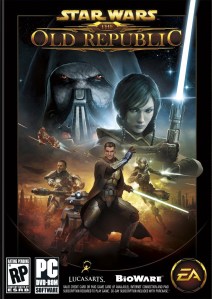
Star Wars: The Old Republic


As BioWare’s ad campaign boldly proclaims… the wait is over.

I don’t know how many Star Wars fans are still willing to embrace new products that come out without some measure of hesitation. I’m certain that many people still love Star Wars, and refuse to let their love be tainted by any of the more questionable decisions that the brand has made over the years. As a boy, I would certainly have counted myself amongst that group; as an adult, I simply feel free to make the choice not to give money to things that I don’t enjoy. It was definitely with a significant measure of hesitation that I placed a pre-order for BioWare’s brand-spankin’-new MMO, Star Wars: The Old Republic.

As the name implies, this game takes place during that lengthy and largely unexplored time of the Old Republic. Since the Republic persisted for thousands and thousands of years, it makes for a seemingly endless breeding ground for unique and individual stories without the need to be concerned with the absolute canon of the six Star Wars films. In other words, the further removed we are from characters like Luke Skywalker and Darth Vader, the easier it is to make a game that still feels like Star Wars… but doesn’t even attempt to infringe upon the films or their core events. The setting for The Old Republic is set some time after the events of the two “Knights of the Old Republic” games. Darth Revan, at least, is considered to be an almost-mythical figure in this time period. It still follows the progress of ongoing hostilities (if not outright war) between the Sith Empire and the Republic. Beyond that, the game’s story depends heavily (at least insofar as I’ve progressed myself) on which character class you’ve selected. Unlike other MMORPGs that you might have played in the past, the Old Republic is designed to provide a story and interaction-rich single player leveling experience. It uses a dialogue wheel with a variety of options and relies heavily on interactive conversations with NPCs to determine which quests your character obtains, what rewards you get from them, your alignment toward the Light or Dark sides of the Force, and how much your companions (more on this in a moment) like you. There are definitely still periods in your leveling experience which feel like a traditional grind; you will find yourself completing circuits of non-individual quests to shore up your XP total and bring in much-needed credits.

Based on your character class, you have a main personal story that you’re progressing through. My character, a bounty hunter, is attempting to be the overall winner in a massive competition of bounty hunters staged by the Mandalorians that requires me to go around the galaxy hunting the most difficult of targets – and the other hunters who have been assigned to the same targets. The missions specific to this bounty hunter storyline are accessed through single-character “phases” – areas only accessible to you – and serve to give the player the impression that they are advancing their character’s story along with their skills. Because these events are personal to the player and follow a linear progression, the NPCs involved become increasingly impressed with you, your reputation, and your abilities. Compared to other MMO-style games where your personal contribution to the world is rarely felt in any meaningful way, this game goes out of its way to try and make the player feel involved and important. This is particularly important, I think, in the context of the Star Wars setting. While of course the game involves fighting through seemingly endless hordes of creatures, rebels, insurgents, bandits, etc. in the wilds and in quest areas, the pacing of the game and the structure of the quests all seem bent toward keeping the feel of a Star Wars adventure. The game is not encouraging a long grind against increasingly formidable types of bats; your character has important business to be about, and just has to scythe through bad guys of various competency levels in order to complete that business.

Further adding to the immersion of the game is the aforementioned companion system. As you progress through your story, your character will acquire access to different companions. As you’d expect, these companions (one of them, anyway) joins you in battle and helps by fighting your enemies. In addition, your companions deal with the responsibility of gathering and crafting for the game’s profession system, which boasts an impressive variety of skills, from which your character may select three. Since your companions take care of most of this nonsense, it might sound like the professions are fairly hands-off. Fortunately or unfortunately, this is not really the case; you still must micromanage your crew of companions, dispatch them on missions, and set them to crafting. You cannot simply queue up a list of things for them to make or do, and it can quickly become tiresome to constantly refer to your crew management window and dispatch your minions. Unlike most of the game’s other features, this one does feel like it breaks the rhythm of your individual Star Wars story.

Incidentally, your friends still can have plenty to do with your experience in the game; situations called Flash Points call for parties to group up and take on significant challenges together (much like a dungeon in Everquest’s Lost Dungeons of Norrath, or in World of WarCraft). End game content is also available, but even with my early access, I certainly haven’t achieved such a high level as to be involved in any of that yet. Still, given the composition of the game so far, there is reason for me to remain optimistic about continuing game content.

The last thing rolling off my tongue is a little discussion of the space combat system. Yes! There is space combat! You can take your starship into space combat missions which are worth XP and credits for your character. They use a Starfox-style system of controls; your ship moves toward your mouse cursor, you have both lasers and missiles, and you can perform a barrel roll (the default key is the space bar!) You’ll have to deal with both enemy starfighters and capital class starships, and complete different objectives like escorting a friendly starship to safety, or destroying certain elite enemy targets, etc. It’s very much in the background (most of the action takes place ‘on the ground’ for your character) of the game, but it’s certainly a lot of fun, and the XP rewards are more than worth delving into it if you find the space combat minigame at all playable. My recommendation is to try it and have fun.

Halo: CE Anniversary


Some of you may remember, back to a day just over 10 years back, when a little console called the XBox launched. It was, at the time, a seemingly suicidal attempt to challenge the dominance that Sony held over the home console market – albeit without much relevant interference from previous juggernaut Nintendo – and to establish a new console master. The XBox had such innovative features as an onboard hard drive (only standard on PCs since they were conceived) and a more interactive BIOS that let the owner of the console do things that had never really been possible with a home entertainment console before. At its launch, the XBox boasted such titles as Dead or Alive 3… Project Gotham Racing… Jet Set Radio Future (and I don’t think this launched in the US!) annnnnnnnd a very tiny game called Halo: Combat Evolved.

Most game fans, at least those who dabble in first person shooters, have played Halo: CE. Even in 2011, ten years after CE’s launch, with a whole new generation of gamers. At the very least, contemporary gamers are familiar with the Halo franchise, which has now spawned seven games (counting the offshoot Halo Wars), as well as novels, comics, and even an animated feature which tried to delve deeper into the mythology of the Halo universe. All of that – a billion dollar franchise – was spawned by this one little, innovative title.

Before I begin my review of the new game, launched a mere week ago, I think it’s important that we take a peek at the significance of Halo: Combat Evolved, as a franchise. Until CE launched, the gold standard for console FPS games was 007: Goldeneye, on the Nintendo 64. Now, Goldeneye is a fine game, and it actually incorporates many of the same elements that Halo would later exploit to their fullest potential, but there was never any danger of Goldeneye challenging PC titles like Counterstrike. At the time, the keyboard and mouse were irrefutably better for the world of the first person shooter. Goldeneye was really the pioneer that taught us how much fun it could be to play locally with a few friends split screen and try to kill one another. But Halo perfected this art; we learned to love the 16 player LAN, with a game that had faster pacing and a shallower learning curve than any PC-based shooter title, and was dramatically more advanced than Goldeneye.

You can look back and criticize the game now. It had poor multiplayer balance (well, really, the balance was excellent, so long as everyone had only a human pistol or sniper rifle), the single player re-used a lot of set pieces and enemy models, and the lack of true multiplayer – to be fair, XBox Live did not exist at this point! – made it impossible for Halo to truly outshine fully multiplayer active PC titles. But there is simply no denying that Combat Evolved launched a franchise which is now viewed as the flagship title of the XBox and Xbox 360, and one of the most successful shooter games of all time. Even Call of Duty, the chief rival in the field, has adapted a number of features from Combat Evolved over time.

Flash-forward to November, 2011.

I belatedly remembered that Microsoft Studios, in a shameless attempt to milk more revenue out of the franchise, was releasing the 10th Anniversary edition of Combat Evolved. Bungie has released the Halo franchise, and stated over and over that they’ll release no new Halo titles. Microsoft Studios, on the other hand, spun off 343 Studios (343 Guilty Spark, anyone?) specifically to create more Halo games. This remake of the original is just the beginning, as Halo 4 is already slated to be released sometime during 2012. Many fans may be turned off by Bungie’s dissociation with the brand, and I assume most every fan is going to look with some skepticism at this Anniversary Edition release of Halo: CE. To be honest; if I’d had to pay $60 US for a copy of this 10th Anniversary Edition, there’s simply no chance that I would have. Instead, I was able to rent the game, and so guilt-free I offer the following review:

The graphics are good. They are not cutting edge, and certainly do not test the limits of the XBox 360’s hardware. In a very real sense, the graphics of this updated remake were obsolete even before the launch. They don’t compare to the visual spectacle that we see in the level and model design of, say, Modern Warfare 3. So, those expecting some kind of visual masterpiece had best look elsewhere. However, the updated graphics are so far beyond the capabilities of the original XBox (the original graphics, like many XBox Arcade titles, are available with one button press). A couple of swaps between the original graphics and the updated ones should be more than enough to demonstrate how far graphical processors have come in such a short time.

If you’ve ever waxed nostalgic for the single player mode of Halo: CE, the Anniversary edition is for you. It adds nothing. Literally; nothing. But it does take us back to a game that many of us now lack the means to play; a classic title, but with beautiful new set pieces. The control setup feels very ‘classic Halo’, right down to the speed the Master Chief moves, and the way that he jumps. This will be unsettling for players of contemporary titles like Halo: Reach at first, but you’ll settle back in without too much trouble.

As for multiplayer, the Anniversary Edition builds on Halo: Reach. It features a number of remakes of original Halo maps, including Battle Creek, Damnation, Prisoner, Hang ’em High, and the Halo 2 map Headlong. All of these maps are set in the Halo: Reach multiplayer engine, so Halo multiplayer diehards will find nothing new here beyond the maps.

Of course, the Anniversary Edition also includes Online Co-Op, so you can play the story mode with friends across the world. Don’t sell that short; Halo’s storyline has always been more involved than people give it credit for.

Call of Duty: Modern Warfare 3


So. At long last, here it is. The latest installment from the shell that remains of Infinity Ward, bringing back those endlessly popular features like sniper rifles, killstreaks that build on one another, and host migration that keeps the multiplayer modes playable!

The first reaction I’ve heard from people on the fence about this game (and, let’s be honest, there aren’t that many) is that they don’t want to pay the Madden Tax to play yet another Call of Duty that, much like any sports game, just isn’t that different from year to year. If you’re of that mindset, you’ve likely already made up your mind about this title. This review probably isn’t going to change your mind either way about this title, so I’m going to try and keep the review brief and focused upon specific observations I have about this game, the ground it breaks (or doesn’t break, as the case may be), etc.

Before I do some quick hits on the game though, it’s worth visiting the game’s new mode. The outstanding mode in Modern Warfare 3 is Survival Mode, which is an offshoot of the single/multi player Covert Ops mode from Modern Warfare 2. Like that title, Modern Warfare 3 includes a panel of special missions (based on levels that appear in the single player, of course) that you can run through that pose unique challenges. New this incarnation, however, is a wave-based horde mode that is very much in the vein of (nearly) identical modes in the last couple of Halo or Gears of War games. If you found those modes satisfying in Halo or Gears (or another title I’ve forgotten. Please forgive me?) you’ll like Modern Warfare 3’s take on it as well. The only possible downside is that, like the true PvP mode, Modern Warfare 3’s survival demands that its players level up to unlock certain equipment pieces. The problem is that the equipment curve in Survival begins with an even more boring selection of equipment. It’s worth noting that the level curve is so much lower that you should earn the equipment you really want in no-time flat, if you’re dedicated to doing so.

So, assuming you’re one of three human beings sitting on the fence today… you’re asking the question, do I want to buy this game? (Or, perhaps more probably, is this game right for X gift recipient?)

FULL DISCLOSURE: I pre-ordered and received the ‘Hardened’ Edition of Modern Warfare 3. I’ll try not to harp on pre-order features, but I’m not going to guarantee I’ve got it right. In addition, I am playing this title on the XBox 360. Addressing technical aspects of the game is pertinent only to the XBox 360 game system.

The Good!
– Multiplayer mode features more guns than ever. Not all of them seem powerful, but none of them seem un-useable (with the possible exception of the handguns, which I don’t deal in).
– Story isn’t bad, actually. It’s well-conceived, and fun to play. The variety in the level design is a nice change!
– Multiplayer mode rewards you for past service by giving you a head start if you’re achieved prestige mode in a previous title (going back to CoD 4!)
– The Prestige Mode now has its own shop that gives you a choice of rewards. Prestiging players can now keep a piece of equipment (such as a favourite gun) through the Prestige Mode. Players are, of course, free to go with more traditional benefits such as adding a custom class or gaining a bonus title and emblem set. The player is able to choose between options at each Prestige level.
– Netcode is very passable. The game will hand off host in extreme circumstances in order to improve gameplay (this was the single biggest downfall of Call of Duty: Black Ops, and no, it’s not close)
– The gun customization in this game is awesome. Adding the customize menu (including such benefits as reducing gun kick, or equipping two attachments) on top of the attachments available really makes you feel like you can get the gun you want to play with.
– New Strike Package system in multiplayer is endless fun.

The Un-Good

– Frankly, it’s Call of Duty. There’s no real innovation here, just a lot of touch-ups. It’s up to you to decide if that’s worth it!
– This game pushes the hardware limits of the console hard, and fast. I’ve noticed some weird system lag issues as a result of this, and the game frankly just doesn’t run as crisply as earlier entries (particularly, CoD 4).
– Story contains a horrifying twist… although, this can be disabled in the game options, much like the level ‘No Russian’ in Modern Warfare 2.
– Weapon balance is – as ever – questionable. Why bother including some weapons that feel utterly useless at higher difficulty levels and in multiplayer arenas? It’s worth noting that all weapons have some (read: dramatically more) use in the single player modes as opposed to the multiplayer environment, but it still feels like some weapons are universally strong, useful, and sustainable… and most others just simply aren’t. Given how many incarnations of Call of Duty we’ve suffered through now, this is the sort of thing that should have started to be fixed.
– Online players are as annoying as ever. Need proof? Take a look back at this review. I’ll see you on XBox Live. 🙂

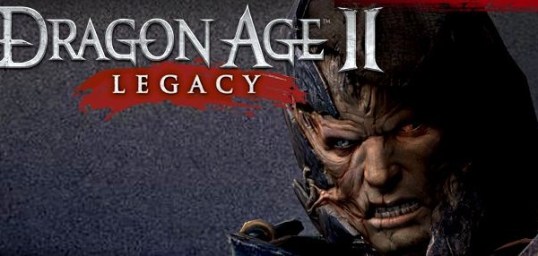
Review: Dragon Age II: Legacy


Dragon Age: Legacy is the first post-release DLC available for BioWare’s hit dark fantasy epic. Available for 800 MS Points (or $10), this DLC is launched from your in-game home (whether this is Gamlen’s House or the Hawke Estate, depending on when you launch the DLC) by interacting with a creepy statue that you’ve apparently kept as a memento. Depending on your difficulty settings, level, and party make-up, the DLC will take about 2 hours to complete. It is not noticeably more or less difficult than the primary game, but it does introduce a number of new adversary types that were not present in Dragon Age II (more on that later).

This DLC is visually impressive, using all new set pieces (including a set of desert ruins, a Carta base, and the interior of a Grey Warden fortress) and a location outside of Kirkwall or its immediate vicinity. Hawke and a chosen party of three head into the Vinmark Mountains in pursuit of a group of dwarven Carta members who have made an assassination attempt against Hawke. I have not completed the DLC with all of the different party members available, but I can safely say that there are significant (and pleasant) tie-ins for Varric, Anders, and Bethany (presumably Carver as well) as you proceed through the DLC. Although it is told largely through the prism of combat, as you would expect, there is a fairly hefty dose of story in Legacy. Several smaller stories are told through side quests, and the main plot thread takes us some place unexpected in the climactic scene as you confront the DLC’s final boss. The encounters in this DLC are a little more thought out than many of the ones in the original game, with scenarios such as enemy archers attacking from raised positions, and areas you are herded into that have been deliberately trapped (complete with activation levers! Try turning some of these traps on their owners instead!) New enemies include brontos (the large dwarven pack animals) which make charge attacks that will bowl members of the party over and have tough hides, the re-designed genlocks (who are now quite distinct from the hurlocks; especially their alphas!) and the Alpha darkspawn that were absent from Hawke’s foray into the Deep Roads in the original game. Also returning are the deep stalkers, who are in large-scale battles with spiders at several points during the DLC.

Legacy also features no fewer than three boss encounters that have some unique elements to them. The final boss uses a lot of impressive visual effects and set pieces, but quickly grows repetitive. You’ll see what I mean.

One of the selling points of this DLC will no doubt be the large amount of gold and gear that can be obtained by playing it. You should note before launching the DLC that you will find a goodly number of useful green items scattered throughout it, and the relative power of these items is determined by Hawke’s level when you enter the DLC. None of the new items improve as you level, so if you visit Legacy very early in the game (when you’re still leveling frequently and replacing gear often) you may not get the best bang for your buck. In addition, only Hawke’s new weapon is truly awesome; the other items may not be as useful later in the game when you have access to many powerful items. I personally attempted Legacy a few quests before proceeding into the Deep Roads, and then in a post-game save. Hawke’s new weapon (typed appropriately for you based on your weapon group, i.e. a dagger or a longsword) is pretty dang awesome. It will begin with a high damage for your level and add a little to a key attribute for your class. As you make your way through the Grey Warden fortress, it will gain three upgrades that you’ll select from a total pool of twelve, including an elemental damage upgrade.

Even before the sale of junk items from Legacy, you’ll have easily made 40 gold or more. In addition, your party will gain a large amount of experience in the play-through (for example, I leveled from 11-14 just through playing the DLC); especially if you complete all of the available side quests.

I genuinely enjoyed this one. It’s easily worth the $10 in my estimation, and shows the care that I thought was typical of DLC in the original

On Special: 4 DLCs


Micro-transactions… are the future. In the future, the principle game will be less important than it even now is. We’ve already learned to expect from pioneers in the DLC field like BioWare that a retail game may be half of what it ends up being… and not through the antiquated idea of a full expansion (although those are still nice and profitable too, I’m sure) but rather through add-ons. DLC. Updates. Extras. Once we’re paying for little tidbits to enhance the game we’ve already paid full retail for, we are just walking, talking wallets for the developer.

In a way? This is actually a good thing. We can expect more content to be established over time and to bridge the gap from release to release. Does this seem lazier, and a way to push retail titles out faster? Unquestionably. However, even with full eyes-wide-open knowledge that I’m being exploited somehow… I’d earnestly rather be able to download and play a few new scenarios over the course of a year that eventually complete the game I had purchased… rather than finishing a more-complete-at-retail-launch game… and having nothing to play for a year.

Unfortunately, I think the developers realized this even before I did… and it led them to release games that weren’t even ready to go, reasoning that they could be completed later. Still, the idea of rushed production isn’t new. Let’s take the example that I’m sure some of us are still angry about… Knights of the Old Republic II. Obsidian’s sequel offering to the critically acclaimed original threatened to be better than BioWare’s classic original in literally every way. We had more characters, more sophisticated interactions, a more diversified playing field in terms of character customization as well as available items. We threatened to go to more places, more diverse locales, and places not quite so stubbornly grounded in the Star Wars trilogy canon. In short, the game threatened to be an all-time great. Oh, except that a third of the content was cut before release. It was released with roughly ten trillion bugs. It was released, in short, because the producers wanted to make money for Christmas… rather than put out a game that would endure even through 2011.

But if Knights of the Old Republic II were released in 2011… we would have gotten the HK factory. It would have been a $5 (U.S.) add-on, but we would have gotten it. We would have gotten patches and updates to make the game stable and play-able so that we could have gotten the HK factory. So that we could have gotten the Sith Academy. Or whatever else cut content we found ourselves to be lacking.

Given that I was going to buy Knights of the Old Republic II either way… and given that I’m going to buy incomplete DLC-driven money-grubbing games today… I guess I’ve just accepted, at this point, the inevitability of DLC and micro-transactions in general. If I can spend $5 at a time for some cool add-on, I do it almost without thinking. At least, for my favourite games. If the retail release is garbage, I’ll never think about it again. So I suppose that’s the line that developers have to walk in this brave new world. Make it good enough that I’m willing to play it on-and-off for a year. This will keep the game always in my head, so I’m already thinking about the sequel… and it will keep me happy, so that I don’t write scathing reviews about your product.

Phew. Rant over. Alright, here’s something that might potentially become a regular feature for me. Four (or more, but this time, four) DLCs or add-ons I played recently. My impressions, whether they were worth the money I shelled out, and what they did to the overall game. These are, in this case, in no particular order, but I did include the launch DLC for Dragon Age II… just because.

Jill Valentine / Shuma Gorath – Additional Characters for Marvel vs. Capcom 3 – It’s been two weeks (or more?) and I still earnestly can’t believe what I paid for these characters. As anyone could have guessed (and, really, since these two at least were in the game files anyway, it didn’t take a savant to anticipate) the first ‘major’ DLC for MvC3 is the addition of fan-favourites from MvC2. Unfortunately for my wallet, the idea of being able to use Jill Valentine and Shuma Gorath again somehow justified the cost. Given that these add-ons were basically unlocks (costing me roughly 100 KB of space on my XBox 360’s hard drive) and not new content at all, I’m extremely unimpressed with their addition. Couldn’t I have gotten this as a bonus for pre-ordering? I already forgave developers for adding cut content on later as DLC packs, but I feel like this reaches a point where content is deliberately cut in order to make a few extra dollars. Are video games not enough of a growth industry? I’ve got an idea – make a better game. Sell me a half dozen characters as an add-on, not two individual ones each of which cost me a few bucks. As much as it pains me, I really can’t discourage this DLC enough. What a disappointment!

The Golems of Amgarrak – Add-on Scenario to Dragon Age: Origins – I reviewed this just today, so I won’t spend a ton of time on it. Considering its cost, and how much I enjoyed the original game, I can’t say that I regretted this purchase. After playing it, I’m sternly disapproving of the marketing of this DLC as some kind of super ultimate difficult challenge. I thought the Emerald and Ruby Weapons in Final Fantasy VII were harder… and they were literally just a matter of patience in game-play. And fine, say what you will, that in a game that allows tactical thinking you can’t make a challenge that is difficult for everyone yet also possible for everyone… but don’t try to tell people who really enjoyed the tactical combat of Origins and were hoping for more just how hard Golems would be. Because it wasn’t.

Arrival – Add-on Scenario to Mass Effect 2 – Very much following in the vein of the Overlord DLC, we are treated to what is ultimately an elongated single mission. For this scenario, we have Commander Shepard rolling solo, and the scenario is quite a bit more challenging than normal – mostly as a result of this solo-Shepard format. However, I can’t argue with the scenario design, which is fun to play through. The DLC is about the average BioWare-single-scenario-add-on length… but yet again, the marketing let me to expect something that I don’t feel like I got. Arrival didn’t do much to bridge ME2 and ME3 for me. Now, of course, I’ve envisioned scenarios in which it stands as a direct bridge, but the DLC still felt a little lazy to me… and not something that profoundly changes the way I felt about the setting. I was earnestly disappointed after the DLC that we’d received from the ME2 team in the past, with Shadow Broker, Kasumi’s Stolen Memory, and Project Overlord all head-and-shoulders above this offering. Still, it was fun, and if you’re hungry for a re-visit to ME2, Arrival isn’t a terrible choice.

The Black Emporium / The Exiled Prince – Launch DLC for Dragon Age IIAs a pleased pre-order customer of this game, I received both of these DLC packs via the usual unwieldy 4957 digit prize code entry which gave me permission to spend twenty minutes downloading add-on content for my launch copy of Dragon Age II. My fundamental issues with the format aside, I’m reasonably happy with the fact that I got these add-ons for free. The Black Emporium is little more than a curiousity, despite its potential. Its existence provides a solid jump to your Hawke in the early stages of the game, but you earnestly may never visit the in-game Emporium more than once… maybe twice.

As for the Exiled Prince… it was actually a very strong DLC. I may not have liked Sebastian Vael as much as I liked the game’s stock companions, but he has a very complete role in the story. He’s interwoven with elements of the plot, with events from the previous game, and with the most important underlying themes of Dragon Age II. He feels like an integral part of the story if you take the time to do each of his plot scenarios and speak with him when the opportunity is given. Of course, as is common with this game, the overall sheen of Exiled Prince is marred by the bugs it launched with. Most notable amongst them? Not being able to earn achievements from the DLC. I don’t mean to sound overly critical… but this is just unacceptable, particularly for customers who would have purchased this add-on after market, not received it for free with a pre-ordered copy.

Video Game Power Rankings


Recently, as I settled myself into my cheap office chair, I realized that there was a stack of 360 games which was sitting on the table between my actual workspace (computers, etc.), and the TV with the 360 hooked up to it. My mouth twisting in annoyance, I inspected these games, determining which ones needed to go where on ‘the rack’. The rack is where games go to die after they’ve escaped immediate interest, especially in a climate like March of 2011… a climate in which new games are constantly being released.

A few games went on the rack. Others, I knew, had to stay out. Why? Because they’re go-to games. They’re games I need on-demand. This is 2011. If it takes me longer than 20 seconds to achieve video game bliss, I am doing it wrong. But it did get me thinking. What games are sitting on top of that stack? Which ones does Steam claim I’m addicted to? Which PC games are relevant enough to where I actually keep track of their DVDs?

So I thought, why not talk about video games the way I talk about sports? Why not have a power poll? After all, there are games which dominate my time, and those which do not. Not all of the games which occupy my attention are new. Not all of them are critically acclaimed. Not even all of them I would take the time to review (unless someone really wanted me to, I guess. I can probably write 2,000 words about any video game at this point). But these games do share a certain quality which sets them above and beyond the average title. These are games that I actually want to keep playing. Some games might make the list, from time to time, simply because I need to finish them in order to write a review (or, from a more fiscally responsible standpoint, mail them back to Gamefly) … but not all. Not even most. That stack which remains ever at my fingertips is video gaming bliss.

At least, today, it is. Tomorrow, who knows? So I thought I would share a few titles from ‘the stack’. You can think of that as a metaphor from now on. It represents the sum total of my gaming experience, from 360 titles through Steam downloads. These are the kind of games that I’d think about, for a flickering flame of an instant before slapping myself back to reality, turning down sex for. These are games which I can disappear into, and later boast about the accomplishments rather than hanging my head in shame over the time-sink. I think that’s enough adieu. Let’s agree to stop for now, shall we? Instead, let’s dive into the power poll, in reverse order…

8. Call of Duty: Black Ops – Not nearly the time-sink that it used to be. This reduction in attention has nothing to do with the game itself – which is still pretty fun – but rather due to the inundation of new games forcing their way in. If I had to pick just one multiplayer game to jump into with my friends, it would still be this one… but I’m not sure there’s any reason to play Black Ops solo right now.

7. Command and Conquer: Red Alert 3 – Steam tells me that I love this game, and that I’ve spent prohibitive amounts of time playing it. Unfortunately in this case, Steam is right. I actually had never picked up RA3 on its retail release, but I was unable to refuse Steam’s recent sale on latter-day C&C products. I was hooked pretty much on entry, through a combination of nostalgia and longing for a legitimate RTS release. Ever since I burned out on StarCraft II for no discernible reason, I’ve been looking for another strategy game to fill the void. I guess this one is it. At least, for now.

6. Civilization 5 – A perennial power-poll contender. The Civ series is a fall-back position for me. Anytime I hunger for immersion and a way to kill a two-hour-block, I fall back on this series. Ever since I embraced the latest incarnation over Civilization IV it’s been a no-brainer.

5. Bulletstorm – As I’ve stated before, this is a great game. I’m just not sure how replayable it really is. Given time, I’m sure I could play through the single player again and love every instant of the carnage… but in the meantime, the lack of variety in the multiplayer mode has this one shelved behind some of the newer titles, and some of my perennial all-stars.

4. Marvel vs. Capcom 3: Fate of Two Worlds – The DLC for Jill Valentine and Shuma Gorath is hideously overpriced. That having been said, having Jill back in the fold has totally re-ignited my interest in the game. I now play it as a kind of bridge between other more ‘serious’ games. I remain terrible at multiplayer MvC3. If you want easy winds, challenge me.

3. League of Legends – Continuing their unending trend of new champions, game state patches, and new content, Riot Games continues to impress with their tactical multi-player smash. I’m sure the microtransactions in this game are making everyone involved rich, too… which bothers me only in that I’m not involved in the collection of cash.

2. MLB 2K11 – I play two sports games every season; MLB 2KXX and Madden NFL. I will sometimes also trot out NCAA Football… but not often. Anyway, the latest version of MLB 2K isn’t exactly a re-invention of the wheel. We’ve known the rules of major league baseball since 1898, and Bud Selig remains as committed to stagnation as ever. There’s not a ton of new features to be desired in this latest incarnation, but the graphics are even better than ever, and the pitching and hitting controls are as good as I could conceive of a way to make them. There isn’t much to hate in this latest title.

1. Dragon Age II – Immersive doesn’t begin to cover this one. I’ve heard a lot of the complaints about this game… and my succinct retort would probably be something like: “I love this game. I hate listening to reason. So let’s not discuss it.” Frankly, that, and the enormity of what I have to say about this title, are the core reasons that I haven’t tried to review it yet. Fear not… thoughts are forthcoming… but I suppose after a certain point a true review doesn’t do anyone any good.

Initially, I had intended to make this a ten-game feature.. .but then I figured, why push it? These are the games that currently snare me. I’m playing them a lot. If you don’t know them, they might be worth checking out, and I’m certainly open to discussion. Also, if anyone wants to suggest new games to me that you’d desperately like to see reviewed, or that you think I’d really like… well… don’t be a stranger.

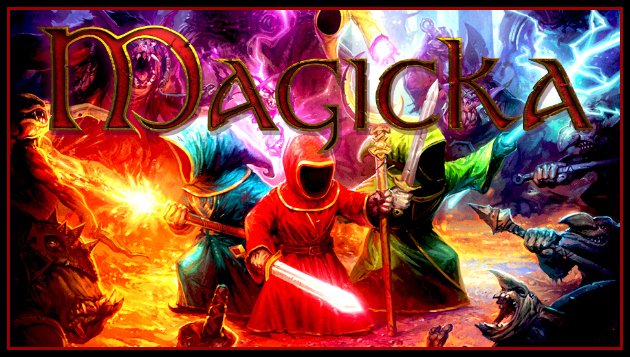
Quick Take: Magicka


Quick Take

If you ever asked yourself how much fun it would be to randomly combine 10 different “elements” to create an absurdly large array of spell effects this game answers the question. For the rest? Don’t ask questions.

Unfocused Ramblings

I have, upon reflection, a soft spot for games that are developed by groups of Swedish students. I mean – in a broader sense, if you can make a game that people will enjoy, then why not? And through the magic of Steam, this game becomes available to the world. I know a lot of people have already played Magicka, and but I’m hoping more people will take the plunge into it.

So what is Magicka? It’s a humorous adventure-RPG-ish-game set in a world that parodies a number of mythologies as well as aspects of pop culture. You’ll see a ton of references to pop culture icons like Star Wars, 300, and literally dozens of others. The opening movie which introduces the setting and the premise is chock full of pop culture references and popular memes, and it doesn’t slow down from there. The player takes command of a nameless mage clad in an obscuring robe who has been taught at the academy of magic, and learned to wield eight ‘basic’ elements in order to weave together ever-more-impressive spells. If that weren’t enough, you quickly learn about two basic combines which produce two other, we’ll say “hidden”, elements (which, themselves, are frequently used to create still more sophisticated spells). With these ten building blocks, tens of thousands of combinations are possible. And, since the game doesn’t really force you to progress forward, and even your most tenderly beloved allies are valid targets for your spells, the game really does encourage you to play with these elements until you create something you really like. And from there, to use that spell until you get tired of the animation… and develop something new… and so on.

And yes, there are some big booms available in the more sophisticated spell combinations.

On top of just randomly mixing and matching various elemental building blocks to create beams, balls, streams, and walls, there also exist a repertoire of ‘Magicka’; defined spells that you learn the combination to which have particularly powerful effects (such as Revive, which restores a dead ally, Haste, which allows your mage to run at incredible speed, or Grease which deposits some very flammable fun on the ground).

Your mages can collect weapons from time to time which have some special effects, but for the most part, the game attempts to steer clear of any kind of level-up or power-up type stuff. The focus is very much on the interplay of the spell combinations, and the limitless fun you can have blasting your friends up, over, and through the landscape elements using your magical powers.

All of that sounds good, right? Well, it is. But the game does have some problems, and I would be remiss if I didn’t warn you about them before you shell out your hard-earned cash for a copy of Magicka.

The single-player version of this game just doesn’t stand up well on its own. For several reasons. The most important one is that it’s very easy to kill yourself in Magicka, and if you do so when playing solo, you’ll find yourself regressing to a checkpoint that could be a good ways back. Quit the game? You’ll end up restarting the entire chapter. This glaring weakness still exists in multiplayer, but with a team of four, you can revive your comrades and hopefully not all die at once. This is tough in single player.

– There are some bugs. Let’s not mince words about this. In addition to wacky things that can happen with spell effects (many of which will send you or your enemies flying around the screen) the game seems to crash occasionally, and it just doesn’t feel quite as polished as you might expect from EA’s latest release.

– They made some inexplicable choices with the multi-player, such as not being able to reconnect to a game in progress, and the cut-scenes not being skip-able except by the host (and they’re pretty lengthy cut scenes at that. You can skip ahead of the cut-scene even if you’re not hosting, but you just stare at a loading bar until the cut-scene ends anyway).

– Despite having its own tutorial section, Magicka really doesn’t teach you much about how to play. Pay close attention to the controls it does show you, and don’t be afraid to experiment, but also don’t spend a lot of time looking for the game to guide you… because it won’t. That having been said, it’s not a crippling problem since experimentation is half of the fun in this title.

– Although the game is clearly more friendly for multi-player use, you’re definitely going to prefer putting together a group of four friends as opposed to playing open multiplayer. Friendly fire is a huge part of this game, and you’ll enjoy it more with your friends. Trust me.

The Bottom Line

Personally, I love Magicka. It’s a great multi-player experience and the combination of spell effects is a lot of fun. But it’s not a polished experience; it has some bugs, some of which are frustrating, and as a single player experience it leaves quite a bit to be desired. For what you’re going to pay for Magicka, however, you’ll feel as if you’ve gotten your money’s worth.